Hormuz Weekend Update as Diplomacy Surges but Ship Traffic Stays Thin
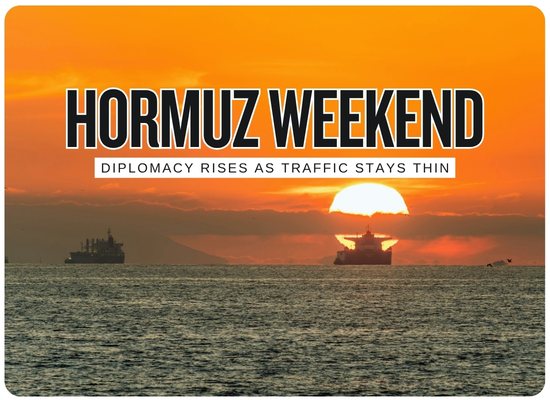
The Strait of Hormuz entered the new week with a sharp change in political tone but only limited improvement in the physical shipping picture. Iran said it was working with Oman on a temporary passage arrangement, while Washington paused a planned military operation and signaled that negotiations could begin. Tehran separately denied that direct U.S. talks were already underway and maintained that a full reopening remained tied to a broader end to American military pressure. Commercial traffic stayed far below normal, with only nine vessel transits reported Sunday, and the weekend began with Iran saying it had stopped two ships from leaving the strait and ordered four others to turn back. Oil markets reacted quickly to the prospect of de-escalation, sending Brent and WTI sharply lower Monday, but operators were still facing an unsettled mix of restricted movement, uncertain routing terms, recent vessel attacks, elevated war-risk exposure, and no confirmed return to normal traffic separation through the chokepoint.
Diplomatic Signals Improved Faster Than Vessel Movement
The weekend produced a possible opening for managed passage, but operators still entered Monday without proof that normal commercial navigation had returned.
Operator Impact Snapshot
The 72-Hour Sequence
The Route Is Not Yet Back to Normal
The weekend’s clearest development was a transition from immediate escalation toward possible managed navigation. That is not the same as unrestricted commercial passage. The discussions with Oman appear focused on a temporary route that balances navigation with Iranian security demands, while Tehran continues to reject a simple return to the pre-conflict operating arrangement.
Operators therefore still face a fragmented routing environment. A vessel may be able to transit, but the movement may depend on coastal-state coordination, risk assessment, vessel identity, cargo, flag, destination, and the security situation during the intended window.
Diplomatic progress is reducing the probability of an immediate large-scale strike, but it has not yet restored predictable vessel flow, ordinary traffic separation, or a dependable schedule for ships waiting inside and outside the Gulf.
Hormuz Weekend Pressure Table
A current operating view for owners, charterers, brokers, insurers, energy traders, port interests, and marine suppliers.
| Pressure Lane | Current Level | Latest Position | Operator Exposure | Near-Term Trigger | Practical Planning Response |
|---|---|---|---|---|---|
Physical traffic flow Actual eastbound and westbound movement through the strait. |
High | Sunday traffic remained exceptionally low, with only nine reported transits despite renewed diplomacy. | Delayed fixtures, uncertain arrival windows, berth planning problems, and weak confidence in voyage schedules. | A sustained multi-day rise in successful transits without interceptions or vessel damage. | Treat isolated successful passages as individual movements until a broader traffic trend becomes visible. |
Oman passage negotiations Temporary routing through or alongside Omani waters. |
Watch | Iran says discussions with Oman are approaching a temporary safe-passage arrangement, but no final operating framework has been publicly confirmed. | Operators lack clear certainty on eligibility, coordination, timing, routing, and the durability of any security assurances. | Publication of agreed coordinates, contact procedures, vessel sequencing, and coastal-state responsibilities. | Prepare vessel and voyage information in advance, but do not treat political statements as sailing instructions. |
U.S. military escalation Prospect of a wider American operation against Iran. |
Easing | A planned strike was paused while regional states pushed for negotiations and a Hormuz reopening arrangement. | The immediate probability of wider escalation decreased, helping oil prices and financial markets reprice lower. | Failure of the Oman channel, renewed attacks on U.S. forces, or another serious commercial shipping casualty. | Keep escalation clauses and contingency plans active because the pause is diplomatic, not a permanent settlement. |
Iranian transit control Direct stopping, redirecting, or conditioning of vessel movement. |
High | Iran said Friday that it stopped two ships and turned back four others, showing that passage remained actively controlled. | Vessel selection, flag, ownership, cargo, destination, insurer, and geopolitical profile can affect practical passage risk. | A formal Iranian commitment to allow broad commercial transit without discretionary interruption. | Increase counterparty, flag, cargo, and voyage-profile screening before fixing or committing to a transit window. |
War-risk insurance Premiums, exclusions, notice requirements, and voyage approval. |
Watch | Diplomatic movement supports some easing, but the underlying loss environment still includes dozens of confirmed incidents and recent fatalities. | Premium relief may lag political headlines, especially for higher-value tankers, LNG carriers, LPG carriers, and exposed crews. | Several days of safe passage supported by a recognized framework and no new attacks. | Reconfirm cover, cancellation language, geographic definitions, additional premium timing, and voyage reporting obligations. |
Oil and bunker pricing Crude benchmarks, regional bunker spreads, and supply expectations. |
Falling | Brent and WTI dropped sharply Monday after the planned strike was canceled and negotiations were signaled. | Lower benchmarks can reduce bunker pressure, but regional availability and delivery risk may remain disconnected from headline crude prices. | Proof that Gulf crude and product exports are recovering rather than merely expected to recover. | Separate global crude direction from local bunker availability, barge risk, credit terms, and port-specific premiums. |
Stranded ships and crews Vessels still waiting for dependable outbound passage. |
High | The IMO-supported evacuation framework remains paused, and thousands of seafarers continue to be affected across the Gulf region. | Extended waiting creates crew fatigue, stores pressure, medical exposure, contractual disputes, and technical-readiness concerns. | Reactivation of a phased evacuation process with renewed safety guarantees. | Maintain crew welfare, machinery readiness, stores, communications, and documentation as if the delay may continue. |
The key separation for this week is between diplomatic de-escalation and operational normalization. The first has begun. The second has not yet been demonstrated through sustained traffic.
Hormuz Transit Readiness and Waiting-Cost Estimator
Estimate your current transit-readiness score, daily financial exposure, and strongest operating posture while passage conditions remain unsettled.
The current profile suggests that passage planning should continue, but the vessel does not yet have enough confirmed routing and traffic evidence to treat immediate transit as the stronger option.
Higher scores reflect stronger routing, insurance, traffic, and vessel-readiness support.
Daily opportunity cost multiplied by the entered additional waiting period.
Estimated waiting exposure plus entered war-risk and security cost.
Days of waiting equal to the entered war-risk and security cost.
This estimator is for preliminary editorial and commercial planning. It does not replace navigational judgment, coastal-state instructions, underwriter approval, legal advice, flag requirements, charter-party review, or a vessel-specific security assessment.
We welcome your feedback, suggestions, corrections, and ideas for enhancements.
Please click here to get in touch