Maersk Tankers Launches New Era With 93,000-CBM Ammonia Giant
🔔 Subscribe to ShipUniverse Weekly →
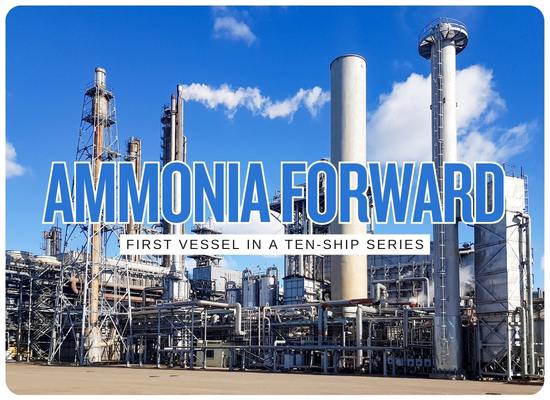
Maersk Tankers has taken delivery of the Jane Maersk, a 93,000-cubic-meter very large ammonia carrier built by HD Hyundai Samho in South Korea. The vessel is designed to transport both liquefied ammonia and LPG and is the first ship in Maersk Tankers’ new VLAC/VLGC series. HD Hyundai Samho says the ship measures about 221 meters long, 36.5 meters wide and 23.6 meters high, while specialized cargo-handling features include a high-level alarm system intended to reduce misloading risk when carrying ammonia. Maersk Tankers says the Jane Maersk is the first vessel in a ten-ship series now under construction, while the original program was launched through an affiliated company with Mitsui & Co. joining as co-investor in the first four vessels. One important distinction is that this is an ammonia carrier first. Current delivery material emphasizes its ability to transport ammonia and LPG, while earlier project statements said ammonia-fuel capability depended on engine, regulatory and customer decisions.
Operator Impact Snapshot
A 93,000-cbm VLAC adds meaningful scale for future low-carbon ammonia trade and large-volume LPG service.
The vessel should not automatically be read as an ammonia-fueled ship. Current delivery information centers on cargo capability.
The delivery adds another large benchmark vessel to a rapidly expanding VLAC orderbook.
Large-scale ammonia handling will require compatible storage, transfer systems, safety controls and trained personnel.
A Large Carrier Built Around Cargo Flexibility
The Jane Maersk is built to move either liquefied ammonia or LPG, giving the operator commercial flexibility while the clean-ammonia market develops. That dual-cargo capability matters because ammonia trade volumes tied to power generation, hydrogen supply chains and marine fuel are still developing unevenly across regions.
Ammonia Changes the Cargo System More Than the Label Suggests
Ammonia is more demanding than conventional LPG in several important respects. It is toxic, corrosive and handled under tightly controlled conditions, so tank material selection, cargo piping, seals, ventilation, gas detection, loading safeguards and emergency procedures all become central parts of the ship design.
HD Hyundai Samho specifically highlighted a specialized high-level alarm arrangement designed to react during ammonia loading and reduce the risk of misloading. That kind of detail gives a better sense of the technology challenge than the broad “green ship” label often attached to VLAC projects.
Important distinction: Jane Maersk is being delivered as a very large ammonia/LPG carrier. Earlier Maersk Tankers project material said the company was working toward ammonia propulsion capability, but engine installation decisions depended on regulatory and customer support.
The Series Extends Beyond One Demonstration Ship
The scale of the program is notable. Maersk Tankers says ten vessels are now under construction, while HD Hyundai Samho says follow-on ships in the series are scheduled for sequential delivery through September 2028. Maersk Tankers originally structured the project through an affiliated company, with Mitsui & Co. joining as co-investor in the first four vessels.
That makes the Jane Maersk less of a standalone technology demonstration and more of the opening ship in a new commercial gas-carrier platform.
Jane Maersk and the VLAC Market in One Table
| Item | Jane Maersk | Operational Significance | Commercial Angle | Next Signal |
|---|---|---|---|---|
Cargo capacity 93,000 m³ |
Very large ammonia/LPG carrier built by HD Hyundai Samho. | Provides enough scale for long-haul bulk ammonia movements rather than small demonstration cargoes. | Large VLACs can support emerging producer-to-importer corridors if low-carbon ammonia demand develops as projected. | Charter employment, cargo nominations and the first repeat routes will provide a clearer picture of commercial utilization. |
Cargo flexibility Ammonia + LPG |
Designed to transport both liquefied ammonia and LPG. | Allows the vessel to operate in the established LPG market while ammonia volumes build. | Flexibility can reduce the risk of dedicating a newbuild solely to a still-developing ammonia trade. | Watch the split between ammonia and conventional LPG employment during the early years of the series. |
Dimensions 221 m long |
HD Hyundai Samho lists approximately 221 m length, 36.5 m beam and 23.6 m height. | Terminal compatibility, berth limits and loading-arm arrangements become important as VLAC dimensions and cargo volumes increase. | Ports targeting future clean-ammonia trades may need to plan around larger carrier calls rather than smaller early-stage shipments. | New ammonia terminal investments and berth specifications will show which regions are preparing for VLAC-scale trade. |
Safety systems High-level alarm |
Specialized loading protection has been added for ammonia cargo operations. | Toxicity and corrosiveness raise the importance of transfer safeguards, detection systems and disciplined cargo procedures. | Safety equipment, training, terminal interfaces and emergency-response systems could become a meaningful procurement category around VLAC growth. | Watch for additional class requirements, terminal standards and operator-specific ammonia procedures. |
Series size 10 under construction |
Maersk Tankers says Jane Maersk is the first vessel in a ten-ship series. | A multi-vessel program creates repeatable operational experience instead of relying on a one-ship trial. | Fleet scale improves the ability to offer regular transport capacity to ammonia producers and buyers. | Follow-on deliveries through 2028 will gradually increase available capacity. |
Shipyard backlog 22 VLACs |
HD Hyundai Samho reports 22 VLACs in its current order backlog worth about $2.55 billion. | The builder is moving beyond prototype-scale experience into repeated construction of the vessel class. | Standardization and yard learning could become increasingly important as more owners enter the VLAC market. | Further orders will indicate whether current VLAC contracting is ahead of actual ammonia demand or tracking it closely. |
Fuel capability Separate question |
Current delivery material confirms ammonia cargo capability but does not describe Jane Maersk as an ammonia-fueled ship. | Carrying ammonia and burning ammonia are technically different steps with different machinery and safety requirements. | Operators can participate in ammonia logistics before committing fully to ammonia propulsion. | Engine specification and retrofit or propulsion announcements for later vessels will be worth watching closely. |
Vessel dimensions and cargo-system details are based on HD Hyundai Samho’s delivery announcement. Series information reflects Maersk Tankers’ current description of its VLAC/VLGC newbuild program.
VLAC Cargo Scale Estimator
Estimate the tonnes of ammonia, indicative cargo value and annual throughput represented by a Jane Maersk-sized VLAC.
Capacity Utilization View
We welcome your feedback, suggestions, corrections, and ideas for enhancements.
Please click here to get in touch