Matarbari Yard Plan Puts Bangladesh Into the Big Ship Repair Race
🔔 Subscribe to ShipUniverse Weekly →
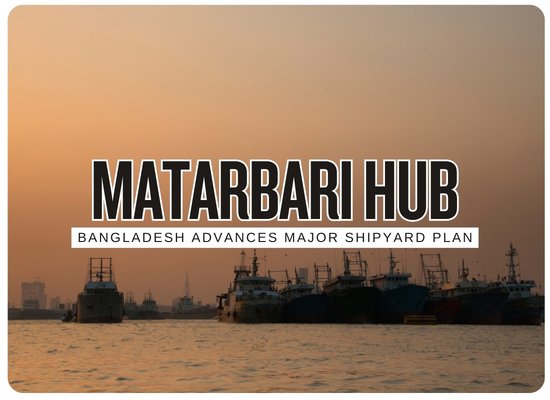
Bangladesh is moving forward with a proposed $1 billion green dockyard and shipbuilding facility at Matarbari, adding a major repair and industrial services layer around the country’s emerging deep-sea port in Cox’s Bazar. The project has received Ministry of Shipping approval to proceed into the public-private partnership review process, with Chattogram Port Authority retaining ownership of the land under a landlord-style structure while private capital funds the buildout. The facility is being framed as a large-vessel docking, maintenance, emergency repair, and shipbuilding hub for domestic ships, foreign ocean-going vessels, Bay of Bengal traffic, and state maritime fleets, including navy and coast guard vessels. Reported plans call for a 600-meter dry dock, environmental systems, wastewater controls, hazardous-waste handling, and a workforce pipeline of skilled engineers, technicians, and maritime suppliers.
Ship Universe Yard Development Watch
Operator Impact Snapshot
The Matarbari plan adds large-vessel repair ambition to Bangladesh’s deep-sea port buildout.
The project is still moving through appraisal, but the approval step gives ship repair, shipbuilding, and port-service companies a clearer signal to track Bangladesh’s next maritime industrial push.
Large repair capacity signal
The proposed 600-meter dry dock would give Bangladesh a much larger domestic repair option for ocean-going ships, emergency repairs, and port-related vessel support.
Deep-sea port support
Matarbari’s port program is designed for larger ships, making nearby repair capacity a strategic add-on for vessel safety, turnaround time, and marine services.
PPP appraisal path
The proposal still needs technical and financial review, so the near-term focus is project structure, concession terms, financing, approvals, and final execution timeline.
Regional yard competition
If delivered, the facility could capture work that might otherwise move to Singapore, the UAE, China, or other Asian repair centers.
Supplier and workforce demand
The project creates a procurement and training opportunity across steel, coatings, cranes, pumps, valves, waste systems, power, controls, safety, and skilled labor.
Commercial Reading
Matarbari is developing into more than a cargo gateway. The dockyard proposal adds a maintenance, repair, and shipbuilding layer that could anchor a larger maritime industrial cluster around the Bay of Bengal.
- Shipowners: track future dry dock access, emergency repair capability, class approvals, and turnaround performance.
- Ports and terminals: monitor vessel-service reliability, channel incident response, repair availability, and support for larger port calls.
- Suppliers: prepare for demand tied to cranes, steel, coatings, pumps, valves, power, welding, wastewater, and hazardous-waste systems.
- Insurers and brokers: watch yard certification, safety systems, repair standards, incident response, and class-linked documentation.
- Government and naval users: evaluate domestic repair options for coast guard, naval, survey, support, and public-sector vessels.
Matarbari Yard Board
Investment, Dry Dock Scale, and Service Hub Signals
The proposed yard adds repair capacity, green systems, and supplier demand around Bangladesh’s first deep-sea port district.
Project Setup
Privately financed PPP proposal for a green dockyard and shipbuilding facility.
Expected site area on port-owned land near Matarbari’s deep-sea port zone.
Reported dry dock dimension for large international commercial vessel work.
Combined direct and indirect jobs based on reported skilled and supporting roles.
Development Table
| Issue Area | Latest Detail | Market Effect | Stakeholder Move | Pressure Meter |
|---|---|---|---|---|
| PPP Approval Stage Appraisal moving ahead | The Ministry of Shipping has allowed the proposal to advance into technical and financial appraisal under the PPP process. | Gives the project a stronger development signal, but final commercial terms and delivery schedule remain key. | Track concession terms, financing close, land handover, environmental approval, and EPC packaging. |
Watch
|
| Dry Dock Scale Large-vessel repair | The proposed 600-meter by 95-meter dry dock would be sized for large ocean-going commercial vessels. | Creates the possibility of domestic repairs for larger ships that currently may leave Bangladesh for major work. | Shipowners should monitor class approvals, crane capacity, berth access, workshops, and emergency repair capabilities. |
High
|
| Deep-Sea Port Link Matarbari gateway | Matarbari’s port development is expected to accommodate ships around 100,000 DWT and reduce transshipment dependence. | Larger direct port calls increase the need for nearby repair, inspection, emergency response, and spare-part services. | Connect yard planning with port traffic forecasts, pilotage plans, tugs, agents, bunkers, and customs procedures. |
High
|
| Green Yard Systems Wastewater and emissions | Plans include low-emission energy systems, closed-loop wastewater treatment, and hazardous-waste management. | Environmental systems may improve yard acceptance for international owners, lenders, class societies, and insurers. | Suppliers should prepare proposals for waste treatment, power efficiency, coatings capture, monitoring, and compliance reporting. |
Medium High
|
| Domestic Repair Capture Foreign currency and delay control | The project is intended to reduce reliance on foreign yards for major repairs and emergency work. | More repair spending could remain inside Bangladesh while reducing repositioning time after breakdowns. | Build service packages around fast diagnostics, class repairs, hull work, steel renewal, coatings, mechanical systems, and spares. |
High
|
| Workforce and Supplier Base Industrial cluster effect | The project is expected to generate skilled direct jobs and support engineering, steel, logistics, and maritime SMEs. | Creates demand for training, certification, QA systems, safety culture, subcontractor management, and local supply capacity. | Prepare workforce plans, welding certifications, HSE procedures, equipment vendor lists, and class-compliant quality systems. |
Medium High
|
Matarbari Yard Capacity Planner
Estimate dry dock capacity, repair revenue potential, workforce intensity, and regional service-hub strength.
This tool helps shipowners, yard planners, investors, suppliers, port users, and service firms test the operating scale of a large dockyard around a deep-sea port.
Length Fit Margin
370m
Estimated remaining length margin after the average vessel size is placed in the dock.
Annual Docking Slots
14 vessels
Estimated annual vessel throughput based on repair days, turnover time, and utilization.
Annual Yard Revenue
$52.7M
Planning estimate for dry dock and repair activity revenue under the selected assumptions.
Capital Recovery Profile
19.0 yrs
Simple payback estimate before financing costs, taxes, reinvestment, and operating margin adjustments.
Yard Development Signal
The selected assumptions show a strong service-hub case, especially if repair capture, green systems, class approvals, and workforce training advance together.
We welcome your feedback, suggestions, corrections, and ideas for enhancements.
Please click here to get in touch