Hormuz Shipping Reopens Unevenly as Control Dispute Returns to the Surface
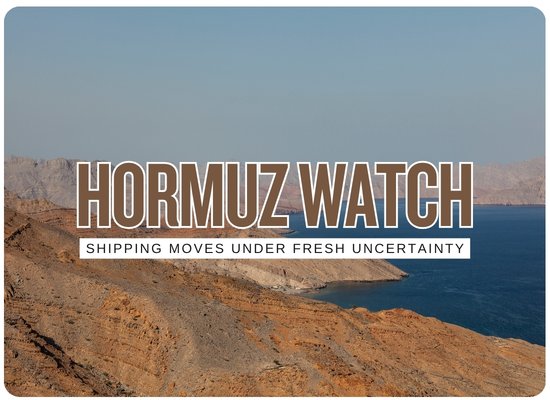
The latest Hormuz news over the last 24 hours points to a fragile reopening rather than a return to normal shipping. U.S. and Iranian technical talks in Doha are now focused directly on vessel flow through the strait, but Iran is simultaneously insisting it should retain control over passage and eventually charge ships again once the current interim period ends. Traffic has partially resumed, yet it remains patchy and unpredictable, and South Korea said one of the ships still stranded in the strait, the HMM-operated Namu, is not expected to exit until at least mid-July after repairs from an earlier attack. Iranian state media also reported that a foreign container ship ran aground after moving into shallow water outside the route designated by Iranian authorities.
Operator Impact Snapshot
Hormuz Shipping Is Moving Again but the Terms of Movement Are Still Being Fought Over
The last 24 hours brought a clearer but not calmer picture. The reopening story is continuing, yet it is now being shaped by a direct dispute over who controls passage and on what terms. Technical talks are under way in Doha to secure continued vessel movement, but Iran is pressing for international recognition of its control over the strait and says it could resume charging ships once the interim no-charge window ends. That means ship traffic is improving inside a framework that still looks politically unstable.
South Korea said two vessels remain stranded in the strait, including Namu, which is now expected to leave only after repairs are completed.
Recent vessel counts show traffic has improved sharply from wartime lows, but it is still far below the prewar norm and not yet close to normal flow.
The current arrangement allows temporary fee-free passage, but it does not settle the longer dispute over control of the waterway.
Market participants are still describing the reopening as uneven and hard to read cleanly from one headline or price move alone.
Control Risk Is Now Sitting Beside Transit Risk
For operators, the most important change in tone is that the conversation is no longer only about physical security. It is also about governance of passage. Iran’s push to formalize control, define routes, and potentially charge fees later means shipping companies are dealing with two risks at once. One is whether the voyage can move. The other is whether the rules around movement become commercially harder to predict.
Market read: A strait that is technically reopening can still remain commercially distorted if routing, authorization, and passage-cost assumptions are still under negotiation.
Traffic Is Better but Not Cleanly Recovered
Recent vessel counts and tanker commentary show a market that has improved from its wartime trough but is still operating below its former scale. More cargo is moving out than before, yet confidence is not fully rebuilt. One reason is that empty ships still appear less willing to head back in westbound to reload, which keeps Gulf producers and operators from behaving as though the system is truly normalized.
Commercial caution: A partial shipping restart can make the market look healthier than it really is if outbound movements recover faster than confidence in inbound reloading and repeat transit.
| Latest Lane | Current Readout | Fresh Development | Shipping Importance | Stakeholders Hit First | Signal to Watch Next |
|---|---|---|---|---|---|
|
Doha technical talks
Shipping flow is now one of the central live negotiation points.
|
Active | U.S. and Iranian technical discussions are now explicitly focused on the future movement of ships through Hormuz. | Negotiated passage creates the possibility of steadier traffic, but also confirms that shipping remains tied to unresolved political bargaining. | Owners, charterers, Gulf cargo interests, and marine insurers. | Whether talks produce a clearer durable passage framework or just extend temporary ambiguity. |
|
Iran control demand
Tehran wants recognition of its control and potential fee rights.
|
High | Iran says it wants recognition of control over passage and could resume charging ships after the current interim phase ends. | That adds long-range uncertainty to routing costs, authorization rules, and the legal-commercial environment around transit. | Shipowners, tanker operators, freight markets, compliance teams. | Whether any fee framework becomes formal policy or remains leverage inside negotiations. |
|
Ships still stranded
The recovery is incomplete in practical vessel terms.
|
Watch | South Korea said two vessels remain stuck in the strait, including Namu, which is still under repair. | That is a direct reminder that reopening headlines do not erase the operational backlog or past damage. | Asian operators, cargo interests, claims handlers, insurers. | How quickly the remaining trapped or damaged vessels can actually clear the system. |
|
Patchy traffic recovery
Vessel movement has improved but not normalized.
|
Watch | Recent traffic counts show a sharp rebound from wartime lows, but still far below prewar weekly levels. | Shipping may be moving again, yet freight and insurance markets still cannot treat the strait as fully restored. | Brokers, tanker owners, oil traders, cargo planners. | Whether ballast traffic and repeat loading patterns recover more convincingly. |
|
Route discipline risk
Navigation still appears tightly controlled and less forgiving.
|
Medium | Iranian state media said a foreign container ship ran aground after entering shallow water outside the route designated by Iranian authorities. | Even if that incident does not redefine the market, it reinforces the message that route compliance and passage discipline remain central. | Bridge teams, operators, managers, security advisers. | Whether more routing incidents or warnings emerge as traffic volume increases. |
Hormuz Transit Pressure Estimator
Use this tool to estimate where your operation is most exposed right now across route control, insurance sensitivity, cargo urgency, and fallback strength.
Your current profile suggests that route control and future passage terms are the biggest variables shaping Hormuz exposure right now.
The current mix points to a meaningful but still manageable Hormuz transit pressure profile.
Your contingency strength appears to be the factor most likely to amplify disruption when conditions tighten.
Movement is possible, but the operating picture still argues for discipline and careful commercial filtering.
This tool is editorial and planning oriented. It does not calculate actual premium, legal liability, transit approval, route clearance, or specific charter-party exposure.
We welcome your feedback, suggestions, corrections, and ideas for enhancements. Please click here to get in touch.