Panama Canal Emerges as a Major Shipping Winner From Gulf Trade Disruption
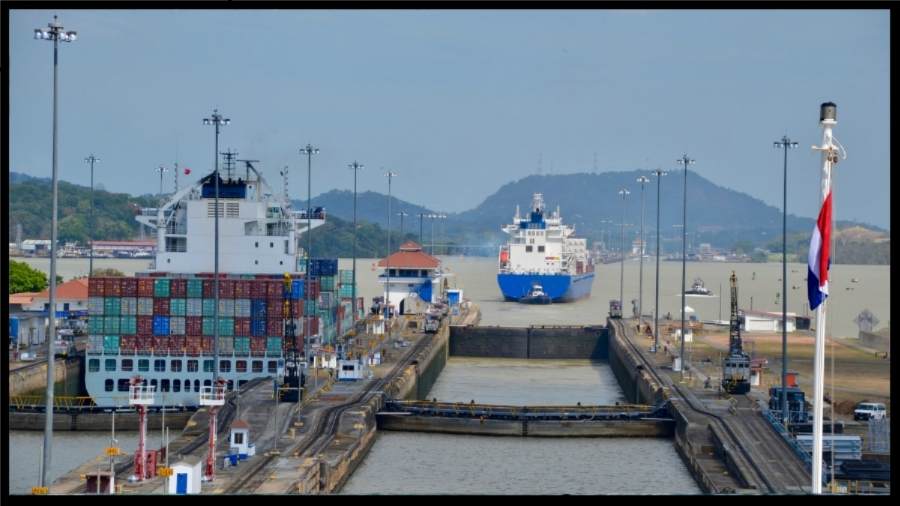
The Panama Canal is increasingly benefiting from the shipping disruption created by the Gulf conflict, as rerouted energy and cargo flows lift both traffic and the value of scarce transit access. Canal officials said first-half fiscal 2026 transits reached 6,288, up 224 from a year earlier, while daily averages climbed to 34 vessels in January and 37 in March, with peak days above 40. At the same time, average auction prices for last-minute slots rose to about $385,000 from roughly $135,000 to $140,000 before the conflict, and some vessels paid more than $1 million for passage priority. Canal management has said the system remains operationally reliable and that the price surge reflects temporary urgency rather than a structural breakdown, but the market signal is clear: one of the strongest secondary commercial effects of Gulf disruption is now showing up in Panama through heavier traffic, higher reservation pressure, and stronger demand from energy-linked cargoes moving between the United States and Asia.
The canal is benefiting because it sits on the most practical substitution route
The deeper story is that Panama is translating Gulf stress into measurable commercial gains without being physically inside the conflict zone.
The strongest case for Panama as a second-order winner is that the canal is capturing demand from ships and cargoes that were not originally planning to rely on it. That makes the current uplift different from a normal cyclical traffic increase. It is a rerouting event. Reporting in late April said the Gulf conflict had already produced a visible spike in vessel traffic through the canal, while canal officials described the effect as a direct result of owners and operators seeking safer or more workable alternatives as Middle East disruption spread through shipping lanes.
The pricing side confirms the same story. Some ships recently paid more than $1 million in auction fees, while average auction prices climbed to about $385,000 after the conflict began. Canal management stressed that these are optional, last-minute access prices rather than ordinary tolls, and said the waterway remains operationally stable. That distinction matters because it means the canal is not winning through a breakdown-driven bottleneck. It is winning because urgency itself has become more valuable and Panama is one of the few places where that urgency can still be monetized reliably.
Energy cargoes are doing much of the lifting
Officials highlighted strong container and LPG performance and said energy products are becoming increasingly important in total canal volumes. That points to a trade mix that is more time-sensitive and more willing to pay for certainty.
LNG has become part of the canal’s strategic growth lane
Canal leadership said it was operating at top capacity in March and planned to raise LNG passage access to one slot per day from just four per month previously. That shows the waterway is actively aligning itself with the rerouted gas trade.
Panama is gaining without a drought penalty this time
Unlike the canal stress period of 2023 and early 2024, current lake levels and rainfall have been described as supportive. That makes the present uplift commercially cleaner because demand is rising while water conditions are relatively favorable.
The access market is now a live barometer of rerouting pressure
Because only three to five slots are typically auctioned daily, marginal urgency can produce very large price moves. That makes the canal’s auction system one of the clearest real-time indicators of how hard Gulf disruption is pressing on global routing choices.
Signals on the board now
The key next indicators are whether average auction values stay close to current levels, whether more LNG and LPG traffic keeps flowing through the canal, whether the year-on-year vessel-count advantage widens again, and whether energy demand continues setting the marginal price for late passage.
Panama Canal Winner Scorecard
Model how rerouted demand, higher auction values, and energy-heavy cargo mix can turn Gulf disruption into measurable upside for Panama-linked transit economics.
This model is designed to show why Panama can win commercially from disruption elsewhere. It combines traffic growth, price uplift, and route-value capture into one view of indirect shipping upside.
We welcome your feedback, suggestions, corrections, and ideas for enhancements. Please click here to get in touch.