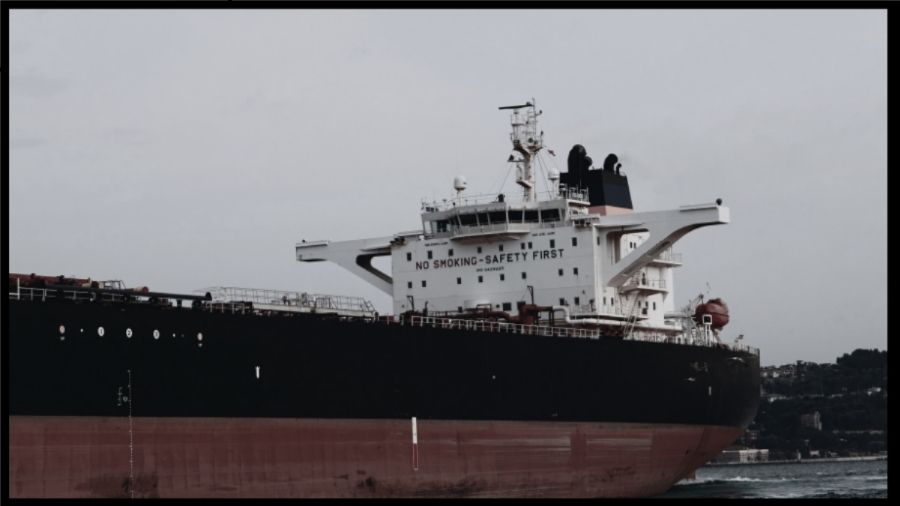
Swedish authorities have boarded and seized the tanker Jin Hui in Swedish territorial waters south of Trelleborg after the Coast Guard said the vessel was sailing under a suspected false flag and did not meet seaworthiness requirements under maritime law. The ship was described as likely unladen, with an unclear destination, and the Coast Guard said it appears on multiple sanctions lists, including those of the EU and the UK. A day later, Sweden’s Prosecution Authority said the ship’s Chinese captain had been arrested on suspicion of using false documents in a serious offense and for suspected violations of maritime law related to seaworthiness. The intervention is Sweden’s fifth such action this year as European authorities intensify pressure on Russia-linked shadow shipping.
Click here for 30 second summary
Sweden’s latest tanker seizure centers on flag identity, seaworthiness, and sanctions exposure
Swedish authorities have now moved beyond passive monitoring and into direct intervention against another suspected shadow tanker in the Baltic. The vessel, Jin Hui, was boarded in Swedish territorial waters south of Trelleborg after the Coast Guard said it was likely sailing under a false flag and therefore did not satisfy international seaworthiness requirements. Officials also said the ship appeared on several sanctions lists and was probably not carrying cargo at the time. The action turns the case from a sanctions-screening issue into a live maritime-enforcement event with criminal, regulatory, and safety dimensions all in play at once.
Vessel name
Jin Hui
The tanker boarded by Sweden’s Coast Guard and police was identified as Jin Hui.
Flag concern
False Flag
Swedish authorities said the ship was sailing under a suspected false flag due to irregularities in its flag status.
Boarding area
Trelleborg
The boarding took place in Swedish territorial waters south of Trelleborg.
Cargo status
Unladen
The Coast Guard said the tanker was probably not carrying cargo when it was stopped.
Enforcement Signal
This was not a routine paperwork issue. Sweden treated the case as a direct maritime-law and seaworthiness intervention against a tanker already tied to sanctions risk.
The seizure sits at the junction of safety law, criminal exposure, and Europe’s wider shadow-fleet squeeze
A rebuilt narrow-layout section designed to fit tighter article widths without wide tables.
Captain status
Arrested
Sweden’s Prosecution Authority said the ship’s Chinese captain was arrested after the boarding.
Primary suspicions
2 Tracks
The investigation centers on suspected false documents and suspected maritime-law violations tied to seaworthiness.
Sweden interventions in 2026
5
Authorities described this as Sweden’s fifth such action this year against vessels raising similar concerns.
EU listed shadow vessels
632
The EU says 632 shadow-fleet vessels are now listed after the latest sanctions package.
Criminal escalation
The case has moved beyond inspection and into arrest, questioning, and prosecutorial handling.
Immediate read
Sweden is treating the matter as a criminal and maritime-enforcement issue, not only a sanctions-screening episode.
Why it matters now
That raises the stakes for other shadow-linked operators using questionable flag, ownership, or documentation structures in Baltic waters.
Commercial consequence
Ships with weak documentation chains face a higher risk of detention, crew exposure, and extended loss of trading time.
Next checkpoint
Watch for court developments, further questioning, and any formal charges beyond the initial arrest grounds.
False-flag focus
The Coast Guard said irregularities in the ship’s flag status were central to the intervention.
Immediate read
Flag identity remains one of the fastest pressure points authorities can use against suspect shadow shipping.
Why it matters now
A vessel that cannot support its stated registry cleanly becomes vulnerable on seaworthiness and legal-recognition grounds.
Commercial consequence
False-flag suspicion can trigger detention even without a spill, cargo issue, or sanctions-busting transfer caught in progress.
Next checkpoint
Watch whether Swedish authorities publish additional findings on registry, certificates, or ship-management identity.
Baltic enforcement pattern
Sweden has now made repeated interventions against ships suspected of spills, false flags, or other maritime offenses.
Immediate read
This is part of a broader Baltic enforcement pattern rather than a one-off episode.
Why it matters now
Repeated actions make the Baltic a less permissive operating space for shadow-linked tonnage.
Commercial consequence
Operators face higher route friction, more inspection risk, and more uncertainty around port-state and coastal-state intervention.
Next checkpoint
Watch whether neighboring Baltic states continue building similar enforcement patterns around safety and documentation breaches.
Sanctions context
The EU continues expanding its formal shadow-fleet list while member states raise practical enforcement pressure at sea.
Immediate read
The legal list and the on-water enforcement picture are now converging more clearly.
Why it matters now
Listing vessels is one layer. Boarding, detention, and prosecution create a much sharper commercial deterrent.
Commercial consequence
Shadow-fleet operators are facing a higher cost of movement as paperwork weakness, sanctions status, and safety concerns start reinforcing each other.
Next checkpoint
Watch whether more EU-listed ships are stopped on technical or documentation grounds rather than only sanctions grounds.
Enforcement Read
The important shift is not just that another tanker was stopped. It is that Sweden is using maritime-law, false-document, and seaworthiness angles to turn shadow-fleet pressure into real operational disruption.
Shadow Tanker Enforcement Monitor
A compact interactive block designed for tighter page widths and focused on how serious the current intervention looks.
Not every shadow-fleet stop carries the same operational weight. Some are minor inspections. Others combine a boarding, a false-flag allegation, a sanctions link, and a captain arrest. This tool scores the current Swedish case on those dimensions.
Build the enforcement profile
Enforcement Score
84
Strong enforcement signal. This looks materially more serious than a routine inspection because it combines detention, false-flag suspicion, and criminal exposure.
Case posture
Serious
The intervention looks like a hard maritime-enforcement action rather than a technical stop.
Best read
Criminalized Pressure
The pressure point has moved from sanctions visibility into real boarding, detention, and prosecutorial handling.
Main lever
Flag
The most powerful trigger in this case is the suspected false-flag and seaworthiness chain.
Closest live comparison
Current Sweden Case
Your settings match the Jin Hui intervention, where multiple enforcement layers landed at once.
Enforcement Read
Current settings point to a serious shadow-tanker case. The stop matters because it joins boarding, false-flag suspicion, sanctions exposure, and captain arrest in one action, which is much more disruptive than a normal inspection sequence.
Score bands
0 to 35
Low enforcement weight. The case would look more technical than strategic.
36 to 60
Moderate enforcement weight. The ship would face pressure, but without major criminal escalation.
61 to 80
High enforcement weight. The case would clearly disrupt operations and raise wider compliance concern.
81 to 100
Strong enforcement weight. The intervention looks materially more serious than a normal detention or document check.
Current market read
The current case sits in the top band because Sweden combined a boarding, a suspected false-flag finding, sanctions linkage, and the arrest of the captain in one enforcement sequence.
Directional commercial tool only. It is designed to translate the current seizure into an enforcement-intensity score, not to predict final court outcomes or release timing.