
SHIPUNIVERSE
Maritime Intelligence, Tools & Live Industry Radars

One place for live maritime intelligence, practical decision tools, industry events and focused reporting.

17Live Radars 286Maritime Tools
24/7Intelligence Focus
GlobalIndustry Coverage
RADARS
TOOLS
All Tools
Latest 20
Open to load latest items…
NEWS
All News
Latest 20
Open to load latest items…
REPORTS
All Reports
Latest 20
Open to load latest items…
TECH
All Tech
Latest 20
Open to load latest items…
CRUISE
All Cruise
Latest 20
Open to load latest items…
NAVAL
All Naval
Latest 20
Open to load latest items…
SHIPUNIVERSE REPORTING

Reports, news and industry coverage

Full analysis in the ShipUniverse intelligence layout.

← Back to latest posts ShipUniverse / NEWS

Aground After a Drone Hit: Shadow-Fleet Tanker Qendil Tests Turkey’s Response Playbook

🔔 Subscribe to ShipUniverse Weekly →

The sanctioned, Oman-flagged tanker Qendil ran aground off Turkey near Bozcaada after drifting from an anchorage, weeks after being reported as damaged in a Ukrainian long-range drone strike in the Mediterranean. The incident is being watched less for freight impact and more for what it exposes about shadow-fleet casualty handling near busy coastal routes: towing capacity, documentation and insurance clarity, and spill prevention readiness when a high-risk vessel gets into trouble close to shore.

Click here for 30 second summary

Qendil grounds off Bozcaada, putting shadow-fleet risk back on the near-shore radar

The crude tanker Qendil ran aground off Turkey’s Bozcaada on January 4, with Turkish coastal safety authorities dispatching tug support. Early reporting said the ship was in ballast, with no injuries or pollution reported at that stage, but the incident drew extra attention because Qendil was previously reported struck by Ukrainian aerial drones in the Mediterranean in December.

  • The trigger chain to watch
    A drift-from-anchorage grounding in heavy conditions is a different risk profile than an open-water casualty, especially near a busy choke-point entrance.
  • The paperwork drag factor
    When the vessel is tied to sanctions and shadow-fleet trading, verification and counterparties can add friction even after tugs arrive.
  • The immediate exposure lens
    Ballast condition lowers cargo spill risk, but bunker fuel and shoreline sensitivity still shape the response posture.
Bottom line
This grounding is a reminder that security incidents and operational failures can compound, and that near-shore shadow-fleet casualties can become as much about clearance and liability pathways as about the physical refloating.
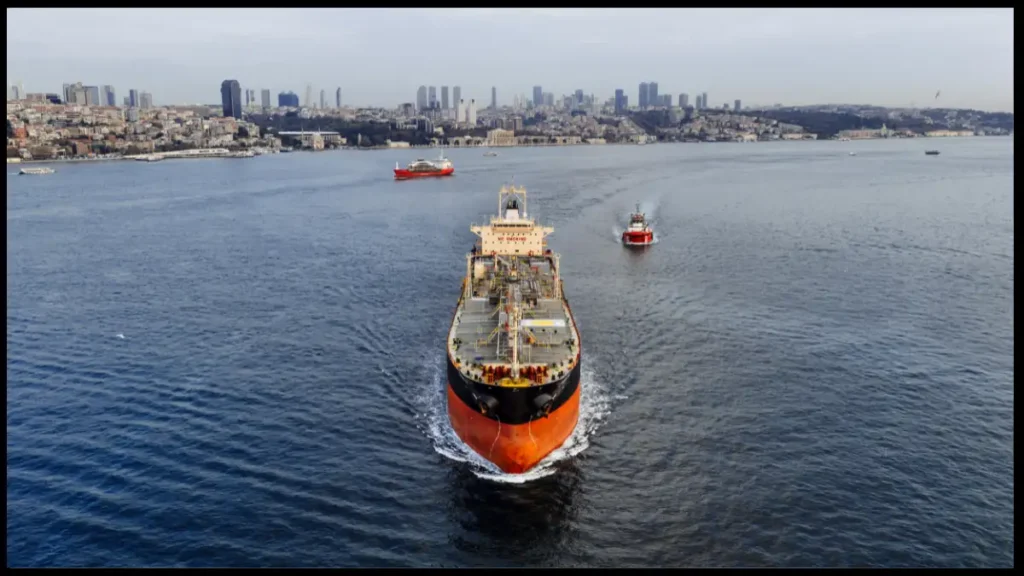
Shadow-fleet tanker Qendil aground off Turkey after reported drone-related incident
Topic Situation Operational context Impact lens
Incident Tanker reported aground near the Turkish coast following a drone-related event Details around the drone aspect remain limited, with reporting focused on the grounding outcome Adds to a growing pattern of security disruptions intersecting with navigation risk
Vessel profile Qendil, commonly described as operating within the shadow-fleet trade Such vessels often sail with opaque ownership, variable insurance cover, and frequent flag changes Complicates response, liability allocation, and follow-on port access
Location Waters off Turkey, close to established regional shipping routes High traffic density increases sensitivity to groundings and casualty management Raises monitoring and control pressure on coastal authorities
Security angle Incident reportedly linked to drone activity Drone sightings and interference have become a recurring risk factor in regional waters Pushes operators to reassess bridge procedures and situational awareness near coastlines
Regulatory exposure Grounding triggers coastal state oversight and potential detention Shadow-fleet status can slow inspections, documentation review, and clearance Increases off-hire risk and delays beyond physical refloating
Market signal Another casualty involving non-mainstream tonnage Highlights the operational fragility of vessels trading outside conventional frameworks Feeds into insurer, charterer, and port authority scrutiny of shadow-fleet movements

Qendil grounding: when a security story becomes a near-shore casualty

The tanker Qendil’s grounding off Turkey is being tracked as a layered event: a recent, widely reported drone strike history, then a drift-from-anchorage casualty close to shore. Early updates emphasized ballast condition and no initial pollution, but the shadow-fleet profile tends to add extra friction around documentation, liability routing, and clearance steps.

Fast facts readers keep coming back to

Where

Off Bozcaada, Turkey (Aegean Sea)

What happened

Grounding after reportedly drifting from an anchorage

Reported condition

Ballast or empty cargo, per early Turkish authority reporting

Response posture

Tug support dispatched; initial reporting said no injuries or pollution observed at that stage

Security backdrop

Qendil was reported struck by Ukrainian aerial drones in the Mediterranean on Dec 19, 2025

Timeline that explains the attention

Dec 19, 2025: reported drone strike in the Mediterranean

Reporting from multiple outlets cited an SBU source saying the tanker was hit more than 2,000 km from Ukraine and was empty at the time.

Late Dec 2025 to early Jan 2026: anchorage period near Bozcaada

Marine traffic reporting described the vessel holding in the area before the grounding sequence.

Jan 4, 2026: grounding off Turkey

Turkish coastal safety assets were mobilized and early reporting focused on ballast condition and the absence of an initial pollution report.

Why shadow-fleet casualties feel different in coastal waters

The physical sequence of a grounding is only one lane of the story. When the vessel is widely described as part of the shadow-fleet trade and tied to sanctions reporting, the administrative lane can get heavy: verifying parties, confirming coverage, determining who can contract salvage and services, and handling port and coastal authority checks.

  • Near-shore location increases urgency because shoreline sensitivity and traffic management become part of the response.
  • Ballast condition reduces cargo-spill exposure, but bunker fuel still keeps pollution risk on the table.
  • Security context can widen scrutiny of movements, paperwork, and counterparties even after tugs arrive.
The drone link: what it changes, and what it does not

The reported drone strike is important because it shifts the lens from routine casualty to compound risk. It does not automatically explain the grounding, but it keeps attention on potential latent damage, operational reliability, and the question of how quickly a vessel can return to normal trading after a high-profile security event.

  • If the earlier damage was significant, it can influence inspections and the refloating plan.
  • If the grounding is weather and seamanship driven, it still lands inside a high-scrutiny profile because of the vessel’s trading context.

Casualty friction dial (interactive)

Slide the inputs to see how quickly “time to normalize” can grow when the event is not just technical, but also administrative. Default settings reflect the broad contours of early reporting: sanctions exposure and a recent security incident are elevated; documentation clarity is not assumed.

Sanctions and counterparties sensitivity

80

Documentation clarity (coverage, parties, permissions)

45

Near-shore sensitivity (traffic, shoreline, attention)

70

Damage uncertainty (inspection and refloat complexity)

55

Friction level: High

Score: 0/100

This is a visualization tool, not a prediction. It is meant to separate the on-scene response from the follow-through steps that can stall progress.

What makes this episode sticky for the industry is the combination: a high-profile security narrative in December, followed by a grounding close to shore in January. Even when there is no cargo onboard, the event can still become time-consuming if verification and clearance steps expand around a sanctioned vessel profile.

The grounding of Qendil off Bozcaada sits at the intersection of two storylines: a near-shore casualty response in a sensitive, high-traffic area and the growing operational and administrative complexity tied to sanctioned, shadow-fleet trading. Early official updates emphasized ballast condition and no immediate pollution or injuries, while reporting around the vessel’s recent drone-strike history kept attention on how quickly a case like this can be stabilized and processed once it is close to land.

We welcome your feedback, suggestions, corrections, and ideas for enhancements. Please click here to get in touch.
By the ShipUniverse Editorial Team — About Us | Contact


← Browse more ShipUniverse posts
MARITIME DECISION TOOLS

Practical tools for real vessel and commercial decisions

Browse the latest 24 tools or instantly search every published ShipUniverse maritime tool.

24 latest toolsView all 286 →
TOOL

Port Waste Reception, MARPOL Delivery Notice, Disposal Logistics & Charge Verification Tool

🔔 Subscribe to ShipUniverse Weekly → Port Operations · MARPOL Waste…

Open →
TOOL

Maritime Crew Recruitment, Retention, Manning Agency Fees & Attrition Cost Tool

🔔 Subscribe to ShipUniverse Weekly → ShipUniverse · Fleet Crewing Economics…

Open →
TOOL

Container Rail Intermodal Connection, Terminal Dwell & Train Slot Tool

🔔 Subscribe to ShipUniverse Weekly → Ship-to-Rail · Intermodal Terminal ·…

Open →
TOOL

Bulk Grain Cargo Quality, Fumigation, Hold Readiness & Rejection Exposure Tool

🔔 Subscribe to ShipUniverse Weekly → Cargo quality · Hold inspection…

Open →
TOOL

Marine Equipment OEM Warranty, Service SLA & Repair Claim Tool

🔔 Subscribe to ShipUniverse Weekly → Equipment Reliability · OEM Claims…

Open →
TOOL

Freight Forwarder Shipment Quotation, Buy/Sell Rates, Routing & Margin Tool

🔔 Subscribe to ShipUniverse Weekly → Freight forwarding · NVOCC pricing…

Open →
TOOL

Ro-Ro Vehicle Terminal Yard Capacity, PDI & Vessel Loading Flow Tool

🔔 Subscribe to ShipUniverse Weekly → Vehicle terminals · PCTC &…

Open →
TOOL

Marine Hull & P&I Renewal, Premium Quote, Deductible & Coverage Comparison Tool

🔔 Subscribe to ShipUniverse Weekly → Marine Insurance · Renewal Tender…

Open →
TOOL

Offshore Support Vessel Charter Bid, Utilization & Campaign Profitability Tool

🔔 Subscribe to ShipUniverse Weekly → Offshore commercial operations · PSV…

Open →
TOOL

Marine Repair Tender, Shipyard Bid Comparison & Contract Cost Risk Tool

🔔 Subscribe to ShipUniverse Weekly → Ship Repair Procurement · Yard…

Open →
TOOL

Container Transshipment, Missed Connection, Rollover & Recovery Cost Tool

🔔 Subscribe to ShipUniverse Weekly → Container Liner Networks · Feeder-to-Mother…

Open →
TOOL

Vessel Pre-Purchase Technical Survey, Defect Valuation & Acquisition CAPEX Tool

🔔 Subscribe to ShipUniverse Weekly → Vessel S&P · Technical Due…

Open →
TOOL

Contract of Affreightment, Cargo Nomination, Fleet Allocation & Fulfilment Risk Tool

🔔 Subscribe to ShipUniverse Weekly → Dry Bulk Contracts · Cargo…

Open →
TOOL

Port Pilotage, Tug Dispatch, Berth Window & Marine Services Coordination Tool

🔔 Subscribe to ShipUniverse Weekly → Harbor Operations · Pilotage ·…

Open →
TOOL

Offshore Heavy Lift, Crane Spread, Weather Window & Installation Cost Tool

🔔 Subscribe to ShipUniverse Weekly → Offshore Construction · Heavy Lifts…

Open →
TOOL

Cruise Embarkation, Terminal Security, Gangway Queue & Passenger Processing Tool

🔔 Subscribe to ShipUniverse Weekly → Cruise Operations · Terminal Security…

Open →
TOOL

Dangerous Goods Declaration, Booking Acceptance & Documentation Readiness Tool

🔔 Subscribe to ShipUniverse Weekly → IMDG Documentation · Dangerous Goods…

Open →
TOOL

Marine Salvage, Wreck Removal, Pollution Response & Casualty Cost Tool

🔔 Subscribe to ShipUniverse Weekly → Marine Casualty · Emergency Salvage…

Open →
TOOL

Ferry Route Capacity, Timetable Reliability & Passenger Revenue Tool

🔔 Subscribe to ShipUniverse Weekly → Ferry Networks · Route Planning…

Open →
TOOL

Inland Barge Tow, Lock Delay, Fleet Utilization & Voyage Profitability Tool

🔔 Subscribe to ShipUniverse Weekly → Inland Navigation • Towboat Economics…

Open →
TOOL

Marine Bunker Procurement, Supplier Quote Comparison & Delivered Fuel Cost Tool

🔔 Subscribe to ShipUniverse Weekly → Bunker Procurement • Fuel Grades…

Open →
TOOL

Reefer Cargo Temperature Excursion, Cold Chain & Cargo Claim Exposure Tool

🔔 Subscribe to ShipUniverse Weekly → Reefer Cargo • Temperature Evidence…

Open →
TOOL

Electronic Bill of Lading, Cargo Release & Documentation Discrepancy Tool

🔔 Subscribe to ShipUniverse Weekly → Container Shipping • Digital Trade…

Open →
TOOL

Crew Change, Relief Logistics, Port Coordination & Cost Tool

🔔 Subscribe to ShipUniverse Weekly → Fleet Crewing • Seafarer Repatriation…

Open →