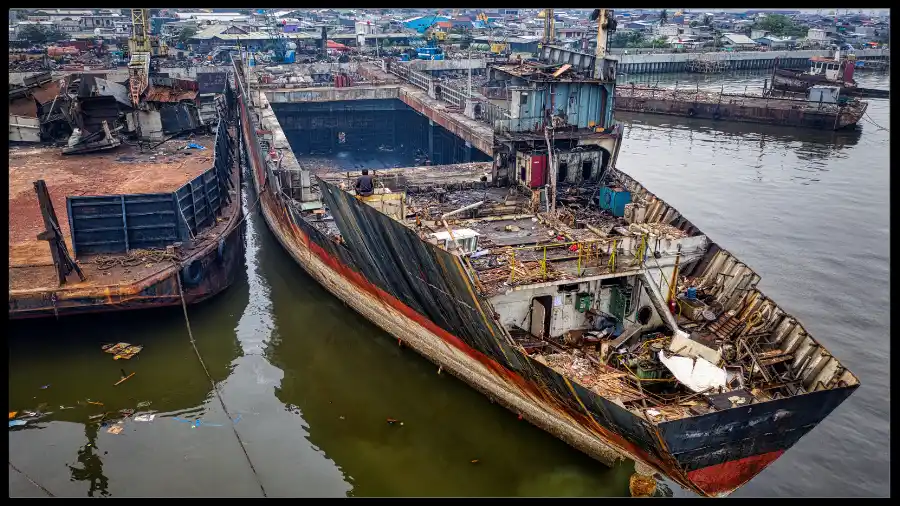
Ship fires in 2025 were not one single story, they showed up across multiple vessel types. Container operators dealt with cargo related ignition risk and misdeclared goods, while vehicle carriers faced the reality that battery involved fires can be difficult to stop once they gain heat and momentum. A late year NTSB report also put a bright light on a simple trigger that can turn serious in heavy weather: cargo that is not secured exactly as planned.
|
Fires on ships in 2025: Industry Developments
|
| Item |
Summary |
Business mechanics |
Bottom-line effect |
| 2025 pattern |
Insurers and operators spent 2025 tracking cargo driven fire risk closely, especially where lithium-ion batteries were involved or suspected.
|
Gard’s 2025 review of container fire claims described nearly twenty incidents in its records for the year, with fatalities and serious injuries reaching double figures and lithium-ion batteries appearing as a leading driver in their cases.
|
📉 Higher perceived risk pushes scrutiny, compliance workload, and claims intensity.
📈 Better cargo screening and documentation can protect service reliability and reduce extreme-loss events over time.
|
| Vehicle carrier flashpoint |
In June 2025, the car carrier Morning Midas suffered a major fire in the North Pacific while carrying about 3,000 vehicles including about 800 EVs. The crew evacuated safely after onboard systems could not bring it under control.
|
Reports indicated smoke was first seen from a deck carrying electric vehicles. Once a battery pack enters thermal runaway, heat, re-ignition risk, and access constraints can overwhelm shipboard firefighting and force a shift to salvage response.
|
📉 Potential for long-duration casualty, voyage interruption, and high salvage cost exposure.
📈 Accelerates demand for clearer vehicle battery carriage protocols and better loss prevention terms in contracts and insurance.
|
| Container ship in-port fire |
In November 2025, a fire on the container ship One Henry Hudson at the Port of Los Angeles burned roughly 100 containers and triggered an explosion mid-deck, with hazmat concerns and a temporary shelter-in-place order.
|
Officials said many burned containers carried dangerous materials and some included lithium-ion batteries and hazardous waste, though authorities noted uncertainty over which specific boxes burned. The ship was moved offshore while firefighting continued.
|
📉 Terminal disruption risk, emergency response cost, and investigation driven delays.
📈 Reinforces the commercial value of accurate declarations and stowage planning for high-risk cargo streams.
|
| Investigation spotlight |
The NTSB found that heavy weather plus improperly secured lithium-ion battery energy storage system cargo contributed to two fires aboard the cargo vessel Genius Star XI in late December 2023, causing an estimated $3.8 million in damage.
|
NTSB determined 41 BESS units broke free due to lashing belt issues, deforming units and leading to thermal runaway in three units. The crew used the vessel’s CO2 fixed gas system for the first hold fire and external cooling for the second.
|
📉 Shows how a securement gap can turn routine carriage into a high-loss fire event in heavy seas.
📈 Drives tighter verification culture around lashing plans, surveys, and acceptance criteria for battery cargo.
|
| Misdeclaration pressure |
A recurring theme in 2025 container fire discussions was cargo that appears to include lithium batteries but is booked under low-risk descriptions.
|
Gard described multiple examples of lithium battery related cargoes declared as ordinary consumer items (chargers, accessories, emergency bulbs, fans, and similar), alongside the reality that some IMDG special provisions can exempt certain batteries from full DG processes if criteria are met.
|
📉 Misdeclaration can shift risk onto carriers, crews, ports, and insurers without pricing signals.
📈 Screening programs and shared shipper intelligence can reduce repeat exposures across operators.
|
| Why severity escalates |
When fires persist, the largest costs often stack up after the initial ignition: salvage, port-of-refuge support, debris handling, repairs, and cargo delay.
|
Gard notes that container fires can run for weeks and generate complex waste and contaminated firefighting water issues, and that salvage and port-of-refuge services can run into very large sums depending on the case.
|
📉 Losses are not just hull and cargo, they can include long off-hire and network knock-on costs.
📈 Stronger early detection and containment can be the difference between a managed incident and a casualty.
|
|
Notes: Examples and figures are based on public reporting and official releases in 2025, including the Morning Midas car-carrier fire (June 2025), the One Henry Hudson container ship fire at the Port of Los Angeles (Nov 2025), Gard’s 2025 container fire claims discussion, and the NTSB findings on Genius Star XI (released Dec 2025). Commercial outcomes vary by cargo mix, detection speed, firefighting effectiveness, weather, access to a port of refuge, and salvage conditions.
|
Shipboard fire risk stayed a front-page issue through 2025 because the incidents drawing the most attention shared a similar outcome: once heat builds in battery-involved scenarios, controlling the event can take longer and cost more than traditional cargo fires. Late-year official findings from the NTSB reinforced that even a basic breakdown in cargo securing can be enough to trigger that chain under heavy-weather conditions, keeping the broader conversation focused on lithium-related carriage risk and fire severity rather than just incident counts.