
SHIPUNIVERSE
Maritime Intelligence, Tools & Live Industry Radars

One place for live maritime intelligence, practical decision tools, industry events and focused reporting.

17Live Radars 286Maritime Tools
24/7Intelligence Focus
GlobalIndustry Coverage
RADARS
TOOLS
All Tools
Latest 20
Open to load latest items…
NEWS
All News
Latest 20
Open to load latest items…
REPORTS
All Reports
Latest 20
Open to load latest items…
TECH
All Tech
Latest 20
Open to load latest items…
CRUISE
All Cruise
Latest 20
Open to load latest items…
NAVAL
All Naval
Latest 20
Open to load latest items…
SHIPUNIVERSE REPORTING

Company Spotlights

Explore the complete story in the ShipUniverse intelligence layout.

← Back to Company Spotlights ShipUniverse / SPOTLIGHT

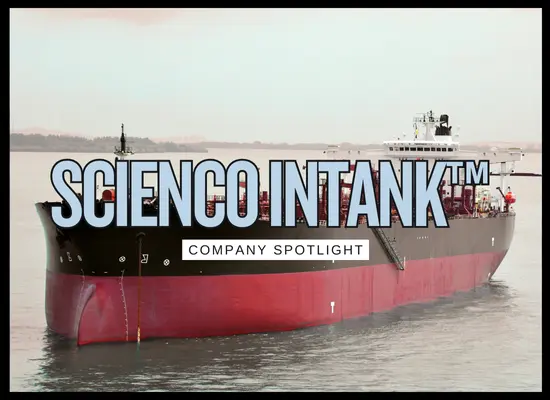
Scienco InTank™ BWTS Review: Filterless Ballast Compliance that protects your schedule

Scienco® InTank™ is pitched as a “compliance without compromise” ballast water treatment option for owners who hate filters, port-time surprises and marginal retrofit space. It treats ballast water in the tank during voyage using sodium hypochlorite dosing and in-tank recirculation, so you ballast and deballast normally in port while still hitting USCG and IMO (Revised G8) requirements.

Scienco/FAST • InTank BWTS: Fenton, Missouri base
200 Sun Valley Cir, Fenton, MO 63026, United States
Scienco InTank Benefits
  • In-voyage treatment, normal port operations: InTank treats ballast water in the tanks while the vessel is at sea, using a circulation loop and sodium hypochlorite dosing. You ballast and deballast as usual in port, without extra treatment steps competing with cargo operations.
  • No filters to clog or backflush: The system is filterless, which removes a major operational pain point in challenging waters. There is no filter backflushing, fewer moving parts and less sensitivity to sediment or high solids during intake.
  • USCG and IMO Revised G8 type approved: InTank holds both US Coast Guard and IMO (BWMS Code / Revised G8) type approvals, with capacities up to very large flows. That gives technical and compliance teams a single system that meets the main regulatory regimes.
  • Lower power demand in port: Because treatment happens in-tank during voyage, power demand in port is minimal compared with inline treatment systems. This matters when shore power, reefer loads and cranes are already close to your available margin.
  • Retrofit flexibility for older tonnage: With treatment hardware separated from ballast lines and no large filters in line, there can be more freedom to place modules where space and structure allow. That can simplify retrofits on older ships and heavy-lift or offshore units with complex ballast layouts.
  • Robust CT-based treatment logic: The system uses a concentration–time (CT) approach, monitoring TRO in the tank and allowing re-dosing as needed to hit target values. This helps maintain performance even when ballast water quality and oxidant demand vary between ports.
  • Options for shared or portable use: With InTankFITT containerised variants, the same core technology can be deployed as a portable system shared between project vessels, barges or other units that ballast infrequently, which can be more economical than one fixed BWTS per hull.
  • Backed by a water-treatment OEM: InTank sits inside Scienco/FAST, a BioMicrobics subsidiary that has long experience with marine sanitation and water treatment systems, so support and spares are tied into an existing global water-technology organisation.
  • Learn more from the source: For technical documentation, reference lists and animations of how the system works, owners can go directly to the InTank BWTS product pages. InTank BWTS overview .
Notes: This callout is a planning lens, not a substitute for your yard, class and flag conversations. Always align CT-values, dosing chemicals, holding times and power demand with the specifics of your ships, trades and retrofit windows.
Notable mentions and external references
A snapshot of where InTank shows up in trade press, interviews and product directories.
  • InTank BWTS adds to Scienco/FAST’s marine capabilities The Maritime Executive
    Corporate feature explaining how InTank’s in-tank, filterless process treats and neutralises ballast water during voyage and why Scienco/FAST added it to their marine portfolio. Read the article .
  • Q&A: Ballast Water Management Market Matures MarineLink
    Interview piece where Scienco/FAST discusses InTank adoption, particularly on semi-submersibles and project vessels that value in-tank treatment and controlled regrowth. See the Q&A .
  • BWMS Webinar: Inside the InTank Solution Maritime Professional / MarineLink
    Webinar listing focused on the InTank approach to treating and neutralising ballast water in-tank during voyage, pitched at owners and yards comparing options. Ballast water treatment news page .
  • InTank: a BWTS solution for semi-submersibles HeavyLift & Project Forwarding
    Sector-focused article describing how a filterless, in-tank BWTS like InTank can fit the ballasting profile and operational constraints of semi-submersible heavy-lift vessels. Read the case-style piece .
  • Product listings and technical directories MarShip / Environmental-Expert / NauticExpo
    Multiple product and technical directories carry InTank listings, emphasising its filter-free, in-voyage treatment, IMO & USCG type approval and suitability across tanker, bulker, heavy-lift and semi-sub fleets. MarShip product page  |  Environmental-Expert listing  |  NauticExpo overview .
This list is illustrative, not exhaustive. It shows InTank discussed as a distinct, filterless option alongside more conventional inline ballast water treatment systems.
Inline vs InTank downtime planner
Roughly compare the cost of ballast-water-related delays with a conventional inline system versus a filterless, in-tank approach like Scienco InTank.
Your ballasting picture
Sister ships or a segment (e.g. heavy-lift, semi-subs, larger tankers) where BWTS behaviour is similar.
Use TCE, project day rate or an internal “value of time” for that fleet slice.
Days lost to filter clogging, bad water, re-treatments, inspections or system faults.
Include any extra time for circulation, neutralisation or troubleshooting that impacts schedule.
Take total additional cost of choosing InTank over baseline (capex spread over years + opex delta).
Planning tool only. Replace defaults with your own incident logs, day values and cost assumptions for a more realistic view.
Indicative annual impact
Delay days avoided per year
0.0
Value of delay days avoided
$0
Net benefit after extra InTank cost
$0
Implied ROI on extra cost
—
Category Calculated value
Inline BWTS delay days per year (fleet) 0.0 days
InTank delay days per year (fleet) 0.0 days
Delay days avoided per year (fleet) 0.0 days
Value of avoided delay days (fleet) $0
Annualised extra InTank capex / opex $0
Net annual benefit (value – extra cost) $0
Net benefit per vessel in scope $0
Use this to frame internal discussions with tech, fleet and finance — not as a final investment case.

For owners, the Scienco InTank story is less about chasing a “clever” piece of kit and more about deciding how much ballast-water-driven disruption you are willing to tolerate between drydockings. If your logbooks show recurring port delays, filter alarms or inspection anxiety around ballast, the in-tank, filterless model gives you a different way to think about compliance: treat during voyage, neutralise before discharge, and arrive with ballast already under control. The mentions panel and downtime planner are there to help you sense-check whether that shift is worth exploring on your own fleet segment, using your actual day rates, incident history and retrofit constraints.

We welcome your feedback, suggestions, corrections, and ideas for enhancements. Please click here to get in touch.
By the ShipUniverse Editorial Team — About Us | Contact


← Browse more ShipUniverse posts
MARITIME DECISION TOOLS

Practical tools for real vessel and commercial decisions

Browse the latest 24 tools or instantly search every published ShipUniverse maritime tool.

24 latest toolsView all 286 →
TOOL

Port Waste Reception, MARPOL Delivery Notice, Disposal Logistics & Charge Verification Tool

Port Operations · MARPOL Waste Delivery · Reception Logistics · Procurement…

Open →
TOOL

Maritime Crew Recruitment, Retention, Manning Agency Fees & Attrition Cost Tool

ShipUniverse · Fleet Crewing Economics · Agency Evaluation · Retention Planning…

Open →
TOOL

Container Rail Intermodal Connection, Terminal Dwell & Train Slot Tool

Ship-to-Rail · Intermodal Terminal · Train Slots · Container Dwell Container…

Open →
TOOL

Bulk Grain Cargo Quality, Fumigation, Hold Readiness & Rejection Exposure Tool

Cargo quality · Hold inspection · Grain contracts · Port delay…

Open →
TOOL

Marine Equipment OEM Warranty, Service SLA & Repair Claim Tool

Equipment Reliability · OEM Claims · Warranty Terms · Contracted Service…

Open →
TOOL

Freight Forwarder Shipment Quotation, Buy/Sell Rates, Routing & Margin Tool

Freight forwarding · NVOCC pricing · Route selection · Commercial yield…

Open →
TOOL

Ro-Ro Vehicle Terminal Yard Capacity, PDI & Vessel Loading Flow Tool

Vehicle terminals · PCTC & Ro-Ro calls · Gate & rail…

Open →
TOOL

Marine Hull & P&I Renewal, Premium Quote, Deductible & Coverage Comparison Tool

Marine Insurance · Renewal Tender · Hull & Machinery · P&I…

Open →
TOOL

Offshore Support Vessel Charter Bid, Utilization & Campaign Profitability Tool

Offshore commercial operations · PSV · AHTS · MPSV · Construction…

Open →
TOOL

Marine Repair Tender, Shipyard Bid Comparison & Contract Cost Risk Tool

Ship Repair Procurement · Yard Selection · Contract Risk · Technical…

Open →
TOOL

Container Transshipment, Missed Connection, Rollover & Recovery Cost Tool

Container Liner Networks · Feeder-to-Mother Connections · Hub Recovery Container Transshipment,…

Open →
TOOL

Vessel Pre-Purchase Technical Survey, Defect Valuation & Acquisition CAPEX Tool

Vessel S&P · Technical Due Diligence · Class Records · Acquisition…

Open →
TOOL

Contract of Affreightment, Cargo Nomination, Fleet Allocation & Fulfilment Risk Tool

Dry Bulk Contracts · Cargo Nomination · Fleet Assignment · Laycan…

Open →
TOOL

Port Pilotage, Tug Dispatch, Berth Window & Marine Services Coordination Tool

Harbor Operations · Pilotage · Towage · Berth Allocation · Marine…

Open →
TOOL

Offshore Heavy Lift, Crane Spread, Weather Window & Installation Cost Tool

Offshore Construction · Heavy Lifts · Crane Spreads · Weather Windows…

Open →
TOOL

Cruise Embarkation, Terminal Security, Gangway Queue & Passenger Processing Tool

Cruise Operations · Terminal Security · Passenger Processing · Gangway Boarding…

Open →
TOOL

Dangerous Goods Declaration, Booking Acceptance & Documentation Readiness Tool

IMDG Documentation · Dangerous Goods Booking · Carrier Acceptance · Terminal…

Open →
TOOL

Marine Salvage, Wreck Removal, Pollution Response & Casualty Cost Tool

Marine Casualty · Emergency Salvage · Wreck Removal · Pollution Response…

Open →
TOOL

Ferry Route Capacity, Timetable Reliability & Passenger Revenue Tool

Ferry Networks · Route Planning · Vessel Availability · Passenger &…

Open →
TOOL

Inland Barge Tow, Lock Delay, Fleet Utilization & Voyage Profitability Tool

Inland Navigation • Towboat Economics • Lock Scheduling • Fleet Logistics…

Open →
TOOL

Marine Bunker Procurement, Supplier Quote Comparison & Delivered Fuel Cost Tool

Bunker Procurement • Fuel Grades • Supplier Offers • Port Deviation…

Open →
TOOL

Reefer Cargo Temperature Excursion, Cold Chain & Cargo Claim Exposure Tool

Reefer Cargo • Temperature Evidence • Cold Chain • Financial Claims…

Open →
TOOL

Electronic Bill of Lading, Cargo Release & Documentation Discrepancy Tool

Container Shipping • Digital Trade • Freight Documentation • Cargo Release…

Open →
TOOL

Crew Change, Relief Logistics, Port Coordination & Cost Tool

Fleet Crewing • Seafarer Repatriation • Travel Logistics • Port Clearance…

Open →