
SHIPUNIVERSE
Maritime Intelligence, Tools & Live Industry Radars

One place for live maritime intelligence, practical decision tools, industry events and focused reporting.

15Live Radars 256Maritime Tools
24/7Intelligence Focus
GlobalIndustry Coverage
NEW RADARS

Explore our latest intelligence radars

RADARS
TOOLS
All Tools
Latest 20
Open to load latest items…
NEWS
All News
Latest 20
Open to load latest items…
REPORTS
All Reports
Latest 20
Open to load latest items…
TECH
All Tech
Latest 20
Open to load latest items…
CRUISE
All Cruise
Latest 20
Open to load latest items…
NAVAL
All Naval
Latest 20
Open to load latest items…
SHIPUNIVERSE REPORTING

Reports, news and industry coverage

Full analysis in the ShipUniverse intelligence layout.

← Back to latest posts ShipUniverse / NAVAL

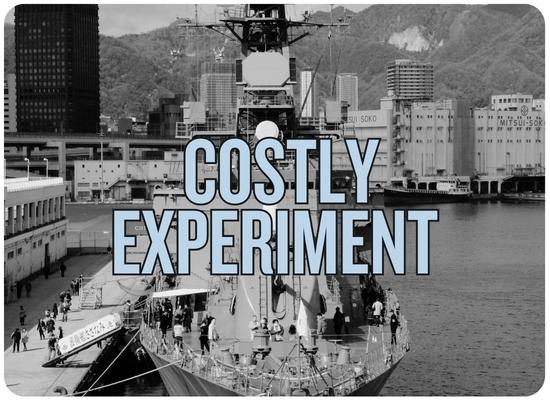
$99 Million Just to Finish and Sea-Trial One Destroyer: What Did the Zumwalt Experiment Really Cost?

🔔 Subscribe to ShipUniverse Weekly →

ShipUniverse Naval Decision Report

Two Guns Removed, 12 Hypersonics Added: Can CPS Finally Justify the Zumwalt Class?

The Navy has just added another $99 million to the final Zumwalt-class destroyer's path to sea. Lyndon B. Johnson began construction in 2012, reached Ingalls in 2022 for combat-system activation and is now being finished as a hypersonic-strike ship rather than the naval-gunfire destroyer originally envisioned. The three-ship experiment produced some of the Navy's most advanced surface-warship technology. It also produced two guns with no affordable ammunition, a class cut from 32 ships to three, billions in development cost spread across those three hulls and a second major weapons conversion before the third ship has even been delivered.

$99M Newest DDG-1002 sea-trial contract modification
32 → 3 Original planned class versus ships actually built
$10.6B GAO's 2025 acquisition-cost figure per ship
12 CPS Maximum planned hypersonic missiles per converted ship
The cost stack

There is more than one correct Zumwalt cost number

Program accounting changed across more than two decades, so historical then-year acquisition totals should not be mixed directly with newer inflation-adjusted GAO comparisons or later modernization spending.

Development
~$9.3B
Research and development ultimately spread across only three ships.
Procurement
~$13.3B
Combined three-ship procurement estimate in Navy budget-era accounting.
Historical acquisition
~$22.6B
Approximate R&D plus procurement using compatible historical figures.
GAO 2025 metric
$10.6B
GAO's newer per-ship acquisition-cost comparison, more than seven times the original unit estimate.
The $22.6 billion historical figure and GAO's $10.6 billion-per-ship figure use different cost bases. They are two ways of showing the program's scale, not numbers that should be added together.
How 32 became 3

The economics changed every time another ship disappeared

Stage Planned quantity Industrial effect Cost effect
DD-21 concept 32 ships Development, tooling and unique weapons spread across a large fleet High R&D could be amortized across decades of production
DD(X) restructure 16 ships Same technology program supported by half as many hulls Per-ship development burden rises
Later plan 8 ships Supplier quantities shrink again Unique components and ammunition lose economies of scale
Final class 3 ships Nearly bespoke fleet inside a much larger Navy Development and sustainment cost concentrated on three hulls

GAO's 2025 shipbuilding review uses the sequence 32 → 16 → 8 → 3 when explaining the program's quantity collapse and unit-cost growth.

The weapon that broke the mission

Two 155 mm guns became extremely expensive empty space

The Advanced Gun System was not a small secondary weapon. The ship was physically designed around two automated 155 mm mounts, deep magazines and the Long Range Land Attack Projectile.

Guns per ship
2
Automated 155 mm Advanced Gun Systems.
Planned LRLAP range
63 nm
Long-range precision naval gunfire for forces ashore.
Projected round cost
≥$800K
Projected projectile price when the Navy abandoned procurement.
Rounds bought
0 operational stock
The ships entered service without a viable operational ammunition supply for their main guns.

The quantity cut helped kill the ammunition

The projectile was intended to serve a much larger class. Once the fleet collapsed to three hulls, the production run became so small that the projected per-round price rose dramatically.

The Navy had already built the ships around the guns. The weapon therefore became a sunk-cost system whose removal later created the physical volume used for CPS.

Mission 2.0

The Navy is turning a gun destroyer into a hypersonic strike ship

Original architecture Converted architecture Result
Two 155 mm AGS mounts Guns removed The original naval-fire-support centerpiece disappears.
Forward AGS volume Four large missile launch tubes Creates space for CPS advanced payload modules.
One specialized projectile per shot Three CPS rounds per large tube Up to 12 hypersonic weapons per ship.
Shorter-range littoral fire support emphasis Strategic conventional deep strike The ship's mission moves from shore bombardment toward high-value defended targets.
80 Mk 57 peripheral VLS cells 80 Mk 57 cells retained Tomahawk, ESSM, Standard Missile and ASROC capacity remains separate from CPS.
The second bill

Saving the class for hypersonic strike adds another major cost layer

Platform conversion
~$900M
CBO's estimate to replace the guns with CPS launch capability across all three ships.
CPS per missile
$63–71M
GAO's April 2026 estimated range.
Average CPS
~$67M
Current GAO average estimate before serial procurement matures.
Full class load
~$2.4B
Illustrative 36 missiles × $67M. Not an official dedicated Zumwalt procurement total.
A fully loaded three-ship Zumwalt hypersonic force could carry 36 CPS rounds. At GAO's current average estimate, those missiles alone represent roughly $2.4 billion in weapon value.
The latest ship

Lyndon B. Johnson has been in its second shipyard since 2022

April 2012
Construction begins on DDG-1002 at Bath Iron Works.
December 2018
Lyndon B. Johnson is launched.
2021
Builder's trials prove out major hull, mechanical and electrical systems.
January 2022
The ship leaves Bath and arrives at HII Ingalls in Pascagoula for combat-system installation and activation.
2024
Navy adds major mission-system activation work while preparing CPS integration.
January 2025
DDG-1002 enters dry dock for continued mission-system and CPS work.
October 19, 2026
HII receives another $99 million modification for system testing and sea trials needed for delivery.
2028
GAO's July 2026 review lists expected final delivery of DDG-1002.
DDG-1002 contract trail

The $99 million award is not the first post-Bath completion bill

Selected publicly announced HII contract increments associated with combat-system activation, mission-system work and sea trials illustrate how much effort remained after the hull left Bath.

$41.6M
August 2022 contract modification to begin combat-system availability, including labor, facilities, material, installation, activation and testing.
$8.5M
April 2023 additional combat-system availability work.
$19.1M
September 2023 additional work items for the ongoing DDG-1002 combat-system availability.
$228.3M
2024 modification for Combat System Availability and Mission Systems Activation, extending work into 2027.
$99M
October 2026 modification for critical system testing and sea trials supporting final delivery.

Selected public increments: about $396.6 million

Those announcements are not a complete cost history for DDG-1002, and some work supports the changing mission-system baseline. They do show that leaving the construction yard did not mean the ship was close to ordinary fleet delivery.

The schedule problem

The hypersonic rescue is already two years late

Modernization delay
24 months
GAO's July 2026 assessment of the three-ship CPS modernization effort.
Original ship test
2025
Initial target for ship-launched CPS flight testing.
Current ship test
2027
Current planned flight test from USS Zumwalt.
Production goal
12 / yr
CPS annual production objective; GAO says current output remains well below it.

USS Zumwalt completed builder's sea trials after its conversion in January 2026. GAO reported the modernization was 94 percent complete that month, but additional work and testing remain before operational CPS capability is established.

The final ship is being converted before original new-construction delivery. USS Michael Monsoor, the middle ship in the class, will receive CPS later.

So was everything wasted?

No. Several technologies survived the mission failure

Power
78 MW integrated power
Propulsion, ship services and combat loads draw from the same electrical architecture.
Stealth
Tumblehome hull
Hull and superstructure were designed around drastically reduced radar signature.
Missiles
80 Mk 57 cells
Peripheral launch architecture separates missile cells around the hull rather than one centralized battery.
Automation
Small crew
Extensive automation was designed to reduce manpower on a 16,000-ton combatant.
Computing
Integrated architecture
The Total Ship Computing Environment attempted deeper software and network integration than earlier surface combatants.
Growth margin
Large internal volume
The ship's physical scale and power are exactly what allowed the Navy to insert unusually large hypersonic weapons later.
The paradox

The feature that saved Zumwalt was excess capacity

The ship was built with enormous electrical generation, internal volume and margins for systems that did not yet exist. Railguns and high-energy weapons were repeatedly discussed as future possibilities.

Those particular weapons did not arrive on schedule. CPS did.

A 16,000-ton technology demonstrator finally found a weapon big enough to need it

CPS rounds are nearly four stories tall. GAO says the Navy selected Zumwalt as the first sea platform partly because the ship's size and unique systems could accommodate the weapon.

The same expensive unused margin that looked excessive during the gun-system failure now gives the Navy a surface ship capable of carrying a weapon that cannot simply be dropped into a normal Mk 41 VLS cell.

What the fleet actually gets

Three rare ships with a very specific mission

Capability Zumwalt after CPS conversion Strategic value Constraint
CPS Up to 12 per ship Long-range conventional strike against valuable defended targets Very expensive missile and limited production rate
Conventional VLS 80 Mk 57 cells Tomahawk, air defence and ASW weapons Unique launcher and combat architecture adds sustainment complexity
Stealth Very low-observable surface design Supports forward strike mission Only three ships benefit from the design investment
Electrical power Approximately 78 MW installed Large margin for future sensors and weapons Unique complex electrical system has contributed to maintenance issues
Fleet scale 3 ships Small specialist force No fleet-wide economies of scale
What went wrong

The program stacked too many firsts on one hull

1

Twelve developmental technologies

GAO says the program attempted to mature 12 new technologies while the ship itself was being designed.

2

Quantity collapsed before development cost did

Cutting 32 ships to three did not make the billions already invested in technology development disappear.

3

The primary weapon was not proven first

The ship was designed and built around AGS before its unique projectile proved economically viable.

4

The threat environment moved

GAO notes roughly 15 years passed between the identified requirement and lead-ship construction while Navy priorities shifted away from littoral land attack.

5

Unique systems became permanent overhead

Three ships retain unique radar, computing, electrical and support architectures that GAO says are costly and difficult to sustain.

The acquisition lesson

A technology demonstrator and a fleet program are not the same thing

As an experiment, Zumwalt proved the Navy could put integrated electric drive, extreme signature reduction, extensive automation, a new computing architecture and large growth margins into a surface combatant.

As a fleet acquisition program, it failed to deliver the quantity or original mission promised for the money spent.

The central mistake was not experimentation itself. It was asking one production ship class to mature too many experimental technologies at the same time, then assuming enough hulls would be bought to make the economics work.

Interactive model

Zumwalt Cost Salvage Model

This separates sunk acquisition cost from the new money required to turn the three ships into hypersonic-strike platforms.

$7.53B Historical acquisition cost per ship
36 Initial CPS load across class
9 Modeled reserve CPS rounds
$3.02B Initial + reserve CPS missile value
$3.92B Conversion + modeled missile inventory
$26.52B Acquisition + modeled new-mission investment
At these assumptions, salvaging the three ships as hypersonic-strike platforms requires several billion dollars beyond the historical acquisition program, driven primarily by the missiles themselves.
Historical acquisition cost is user-adjustable and defaults to approximately $22.6 billion using historical DDG-1000 R&D plus three-ship procurement estimates. CPS platform conversion defaults to CBO's approximately $900 million estimate for all three ships. Missile cost defaults to GAO's April 2026 average estimate of approximately $67 million per CPS round. Reserve inventory is illustrative. The resulting economic total is a scenario, not an official Navy program total, and should not be combined with GAO's separate $10.6 billion-per-ship acquisition comparison because the figures use different accounting bases.
The final accounting

What did the Zumwalt experiment buy?

It did not buy the 32-ship stealth destroyer fleet once envisioned. It did not deliver its original naval-gunfire mission, and its third ship is still moving toward final delivery years after the other two entered the fleet.

It did buy a three-ship technology base with extreme electrical power, large internal volume, reduced signature, automation and a missile architecture flexible enough to accept a weapon the Navy did not plan when the hull was designed.

The final judgment depends on what happens next. If CPS becomes an important operational weapon and the three Zumwalts spend the 2030s holding high-value targets at risk from the Pacific, some of the experiment's unused capacity will finally have operational value. It will not make the original acquisition efficient. It will determine whether the Navy receives something strategically useful from one of the most expensive surface-ship experiments it has ever attempted.

Research base

Latest DDG-1002 award: HII, October 19, 2026 contract modification for system testing and sea trials.
Current DDG-1002 status: U.S. Navy DDG-1000 fact file and GAO July 2026 CPS modernization assessment.
Program cost: Congressional Research Service DDG-51/DDG-1000 program history and GAO 2025 shipbuilding review.
Quantity collapse: GAO Navy Shipbuilding: Enduring Challenges Call for Systemic Change.
AGS / LRLAP: CRS and GAO documentation on Advanced Gun System and Long Range Land Attack Projectile.
CPS conversion: Congressional Budget Office hypersonic-weapons analysis and GAO 2026 CPS report.
CPS cost: GAO July 2026 estimate of $63M–$71M per missile, approximately $67M average.
Zumwalt conversion: HII January 2026 builder's sea-trial announcement and U.S. Navy program material.
Ship technology: U.S. Navy Zumwalt fact files covering 78 MW integrated power, Mk 57 VLS and stealth architecture.
DDG-1002 contract history: HII and Department of Defense contract announcements from 2022–2026.
Feedback Welcome

We welcome your feedback, suggestions, corrections, and ideas for enhancements.

Please click here to get in touch
By the ShipUniverse Editorial Team — About Us | Contact


← Browse more ShipUniverse posts
MARITIME DECISION TOOLS

Practical tools for real vessel and commercial decisions

Browse the latest 24 tools or instantly search every published ShipUniverse maritime tool.

24 latest toolsView all 256 →
TOOL

Port Dredging Production, Sediment Disposal & Project Cost Tool

🔔 Subscribe to ShipUniverse Weekly → Ports / Dredging / Material…

Open →
TOOL

Offshore ROV/AUV Survey Productivity, Weather Window & Spread Cost Tool

🔔 Subscribe to ShipUniverse Weekly → Offshore Survey · ROV/AUV Operations…

Open →
TOOL

Freight Contract, Surcharge & Shipping Invoice Verification Tool

🔔 Subscribe to ShipUniverse Weekly → Freight Procurement • Carrier Contracts…

Open →
TOOL

Marine Cargo Damage, Shortage, Survey & Claims Recovery Tool

🔔 Subscribe to ShipUniverse Weekly → Marine Cargo • Shortage Reconciliation…

Open →
TOOL

Container Terminal Yard Capacity, Dwell Time & Truck Gate Congestion Tool

🔔 Subscribe to ShipUniverse Weekly → Port Logistics • Yard Density…

Open →
TOOL

Fleet Class Survey, Statutory Certificate & Expiry Planning Tool

🔔 Subscribe to ShipUniverse Weekly → Fleet Compliance • Class /…

Open →
TOOL

Drydock Project Critical Path, Work Package & Schedule Overrun Tool

🔔 Subscribe to ShipUniverse Weekly → Drydock • Work Packages •…

Open →
TOOL

Container Demurrage, Detention, Free Time & Storage Cost Tool

🔔 Subscribe to ShipUniverse Weekly → Container Logistics • Free Time…

Open →
TOOL

Naval Fleet Replenishment, Fuel Endurance & Sustainment Planning Tool

🔔 Subscribe to ShipUniverse Weekly → Naval Logistics • Fuel /…

Open →
TOOL

Cruise Tender Operations, Passenger Throughput & Excursion Revenue Tool

🔔 Subscribe to ShipUniverse Weekly → Cruise Port Calls • Tender…

Open →
TOOL

Ship Recycling IHM, Survey & Yard Readiness Tool

🔔 Subscribe to ShipUniverse Weekly → Ship Recycling • IHM Part…

Open →
TOOL

Port Berth Productivity, Crane Deployment & Vessel Turnaround Tool

🔔 Subscribe to ShipUniverse Weekly → Container Terminals • Berth Occupation…

Open →
TOOL

Offshore DP Capability, Thruster Failure & Station-Keeping Margin Tool

🔔 Subscribe to ShipUniverse Weekly → Offshore DP Operations • Directional…

Open →
TOOL

Ship-to-Ship Transfer Fender, Mooring, Hose & Transfer Planning Tool

🔔 Subscribe to ShipUniverse Weekly → Marine Operations • Fender Energy…

Open →
TOOL

Vessel Sanctions, AIS Anomaly & Counterparty Due Diligence Tool

🔔 Subscribe to ShipUniverse Weekly → Sanctions • AIS Integrity •…

Open →
TOOL

Marine Biofuel Compatibility, Fuel Changeover & Engine Readiness Tool

🔔 Subscribe to ShipUniverse Weekly → Biofuel Grades • FAME /…

Open →
TOOL

Charterparty Speed, Consumption, Weather & Performance Claim Tool

🔔 Subscribe to ShipUniverse Weekly → Time Charter • Speed Warranty…

Open →
TOOL

Port State Control Inspection, Deficiency & Detention Risk Tool

🔔 Subscribe to ShipUniverse Weekly → Port State Control • Vessel…

Open →
TOOL

Critical Spares Procurement, Lead Time, Inventory & Stockout Risk Tool

🔔 Subscribe to ShipUniverse Weekly → Criticality • Minimum Spares •…

Open →
TOOL

Ship Cyber Exposure, Remote Access & OT Risk Tool

🔔 Subscribe to ShipUniverse Weekly → Satcom / Starlink • IT…

Open →
TOOL

Newbuild vs Secondhand Vessel Acquisition, Financing & Fleet Renewal Tool

🔔 Subscribe to ShipUniverse Weekly → NEWBUILD INSTALLMENTS • DELIVERY DELAY…

Open →
TOOL

Laytime, Demurrage, Dispatch & Port Delay Cost Tool

🔔 Subscribe to ShipUniverse Weekly → NOR • Laytime Clock •…

Open →
TOOL

EU ETS, FuelEU Maritime, EUA Cost & Charterer Allocation Tool

🔔 Subscribe to ShipUniverse Weekly → EU ETS Maritime • CO₂…

Open →
TOOL

Marine Main Engine Lubricating Oil Pressure, Bearing Temperature & System Capacity Tool

🔔 Subscribe to ShipUniverse Weekly → LO Supply Pressure • Filter…

Open →