
SHIPUNIVERSE
Maritime Intelligence, Tools & Live Industry Radars

One place for live maritime intelligence, practical decision tools, industry events and focused reporting.

15Live Radars 256Maritime Tools
24/7Intelligence Focus
GlobalIndustry Coverage
NEW RADARS

Explore our latest intelligence radars

RADARS
TOOLS
All Tools
Latest 20
Open to load latest items…
NEWS
All News
Latest 20
Open to load latest items…
REPORTS
All Reports
Latest 20
Open to load latest items…
TECH
All Tech
Latest 20
Open to load latest items…
CRUISE
All Cruise
Latest 20
Open to load latest items…
NAVAL
All Naval
Latest 20
Open to load latest items…
SHIPUNIVERSE REPORTING

Reports, news and industry coverage

Full analysis in the ShipUniverse intelligence layout.

← Back to latest posts ShipUniverse / NEWS

The VLCC Is Suddenly Too Expensive as Asian Refiners Start Breaking Oil Cargoes Into Smaller Ships

🔔 Subscribe to ShipUniverse Weekly →

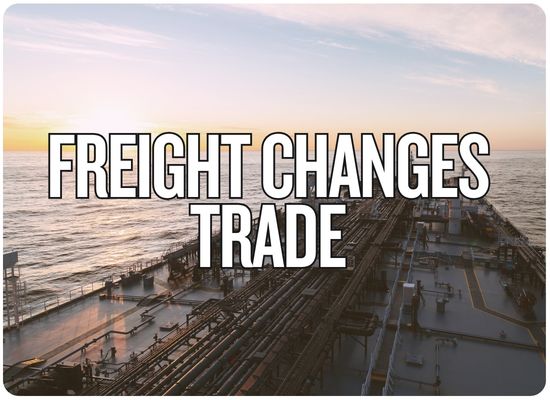
Asian refiners are changing the physical way they buy crude as tanker freight approaches levels that can overwhelm normal oil-price differentials. About 80 VLCCs are tied up in Middle East shuttle operations around the Strait of Hormuz, according to Vitol’s Asia head Kieran Gallagher, helping push U.S.-to-Asia transportation costs to roughly $40 per barrel. Refiners are responding with smaller Aframax tankers, longer-term vessel charters and delivered Middle East purchases that leave producers responsible for arranging freight. Taiwan’s CPC bought six Aframax cargoes in one week instead of its usual two to three VLCC purchases per month, while South Korea’s SK Energy chartered an Aframax for a U.S. crude cargo. The shift does not mean Aframaxes have suddenly become cheaper per barrel. In some fixtures their per-barrel freight is almost as expensive as VLCC freight. Their advantage is that they give refiners access to smaller, more available parcels when the normal 2-million-barrel VLCC system is severely constrained.

Asian Crude Procurement · October 2026

The 2-Million-Barrel Parcel Is Losing Its Cost Advantage

VLCCs normally win on scale. Today the vessel itself has become scarce enough that refiners are willing to split crude purchases into several smaller ships to secure physical supply and avoid competing directly for the tightest tonnage.

U.S. Gulf → Asia $40 freight per barrel
A 2-million-barrel VLCC voyage can therefore carry an approximately $80 million freight bill before the crude itself is paid for.
VLCCs in Shuttle Trades ~80
Vitol estimate for vessels tied up moving Middle East crude through the disrupted Hormuz logistics chain.
Freight Before War ~$8.60/bbl
Reuters' earlier benchmark for U.S. crude to Asia.
Increase ~4.7×
Simple comparison between $8.60 and the present $40-per-barrel level.
Current VLCC Market Near Records
Gulf of Oman-China Worldscale rates eased from their peak but remain extraordinarily elevated.
Why Go Smaller If Aframax Freight Is Not Much Cheaper Per Barrel?
VLCC ~2.0M barrels
Maximum scale efficiency in a normal market, but currently exposed to the most acute vessel shortage and record-high spot freight.
VS
Aframax ~600K barrels
Smaller parcel and normally worse unit economics, but more flexible, easier to source and useful when refiners cannot secure an acceptable VLCC.
Taiwan CPC 6 Aframaxes
Traders say CPC bought six Aframax cargoes in a single week rather than its normal monthly purchase of two to three VLCC cargoes.
6 Aframax Cargoes ~3.6M barrels
Using Reuters' approximate 600,000-barrel Aframax capacity.
2 VLCC Cargoes ~4.0M barrels
Shows that several smaller vessels can approximate the lower end of CPC's usual VLCC volume.
SK Energy $23M Aframax
Samos was reportedly fixed to load U.S. crude in early November.
Implied Unit Freight ~$38/bbl
$23M divided by 600,000 barrels, illustrating that the smaller ship is about availability and flexibility, not cheap freight.
The Aframax shift is not a return to cheap shipping. Reuters says Aframax and VLCC freight per barrel have moved close enough that some refiners are willing to surrender the VLCC's normal scale advantage. The smaller tanker mainly gives the buyer more ways to assemble supply.
The New Refiner Procurement Playbook

Buy a Smaller Ship, Lock the Ship Up Longer, or Make the Producer Deliver It

Refiners are not solving one freight problem with one substitute. They are changing vessel size, charter structure and crude-sale terms simultaneously.

Option 1 Break the Cargo Up
Replace one 2-million-barrel VLCC parcel with several approximately 600,000-barrel Aframax parcels when smaller ships are easier to obtain.
Option 2 Time-Charter the Tonnage
Refiners with vessels already on long-term charter are less exposed to the full spot-rate spike each time they need a cargo moved.
Option 3 Buy Delivered Crude
ADNOC and Saudi Aramco are selling some Asian cargoes on delivered terms, leaving the producer responsible for arranging the expensive transportation.
How the freight shock is changing crude selection← →
Strategy / Market Current Change Freight Logic Who Carries the Risk? Market Effect Key Limitation
Aframax ParcelsSmaller tanker workaround Asian refiners are splitting some purchases into roughly 600,000-barrel parcels. Creates access to a different vessel pool when VLCC tonnage is exceptionally tight. Buyer still normally carries freight unless commercial terms shift. Raises demand for Aframax tonnage and reduces the absolute exposure to any one giant fixture. Per-barrel freight can be nearly as expensive as VLCC freight and multiple ships create more operational complexity.
Long-Term ChartersPre-secured vessel access Asian refiners are leaning more heavily on tanker capacity already leased under term arrangements. Reduces repeated exposure to the extreme spot market. Depends on charter structure, but vessel availability has effectively been pre-booked. Increases strategic value of controlled tonnage rather than relying entirely on voyage-charter fixtures. Existing long-term rates may still be costly and the charterer carries utilization risk when the market eventually falls.
Delivered Middle East CrudeSeller arranges freight ADNOC has offered coming cargoes delivered to China and India; Saudi Aramco has also sold delivered barrels to Asian buyers. Producer uses its own logistics capability or tanker access instead of forcing the refinery into the spot market. Producer assumes the shipping task and prices it into the delivered crude offer. Could strengthen integrated Gulf producers that control oil supply plus transport capacity. The freight expense does not disappear. It moves into the producer's delivered-price calculation.
U.S. CrudeLong-haul arbitrage squeezed Freight near $40/bbl has sharply reduced Asian appetite for U.S. Gulf cargoes. A long voyage magnifies the value of every scarce tanker-day. Depends on sale terms, but FOB buyers are heavily exposed to transport cost. U.S. sellers face pressure to discount crude enough to compensate for shipping. Supply-security needs can still keep some Atlantic crude moving even when the pure arbitrage appears closed.
West African CrudeDiscounts widen Some spot differentials reportedly fell as low as roughly minus $20/bbl. Seller must offset the cost of a long voyage to keep the barrel competitive in Asia. Commercial burden is shared through lower crude pricing and higher freight. Physical shipping costs begin feeding directly back into the commodity's origin differential. Discounts can recover rapidly if tanker availability normalizes.
How the freight shock is changing crude selection← →
The Bigger Structural Shift Freight Risk Is Moving Upstream
When refiners buy delivered barrels, integrated producers with crude supply, tanker access and logistics networks take responsibility for solving the transport problem.
ADNOC Delivered China + India
Traders say cargoes loading over the next two months have been offered on delivered terms.
Saudi Aramco Delivered Asia
Also sold next-month cargoes with shipping arranged by the producer.
Asian Buyer Less Spot-Tanker Exposure
Refinery receives a delivered barrel without separately fixing a vessel at record spot levels.
Producer More Logistics Exposure
Freight risk is internalized by the seller and becomes part of crude pricing and fleet strategy.
Ship Universe Tanker Parcel Tool

VLCC vs Aframax Cargo Breakup Analyzer

Compare one large VLCC shipment with a series of smaller Aframax cargoes. The default freight inputs use recent reported U.S.-Asia examples and are fully editable.

barrels
barrels
$M/voyage
barrels
$M/voyage
Default reflects the reported SK Energy Samos fixture, not a universal Aframax rate.
$/bbl
Optional scenario value for flexibility, timing or supply-security benefit.
VLCC Voyages Needed 1 whole vessels required for entered crude volume
Aframax Voyages Needed 4 whole smaller parcels required for same volume
VLCC Freight per Barrel $40.00 voyage freight divided by ship capacity
Aframax Freight per Barrel $38.33 voyage freight divided by ship capacity
VLCC Total Freight $80M full-vessel freight cost for entered requirement
Aframax Total Freight $92M number of required Aframaxes × entered fixture cost
Operational Tradeoff
VLCC cargo parcels1
Aframax cargo parcels4
Extra Aframax freight$12M
Optional flexibility value$0
Scenario Result VLCC Cheaper, Aframax More Flexible
At the entered rates, the VLCC still produces a lower total freight bill. Refiners may nevertheless choose smaller ships when prompt VLCC capacity is unavailable or when parcel flexibility has greater operational value.
Scenario model only: real fixtures depend on loading dates, ballast position, port restrictions, bunker costs, war-risk premiums, demurrage, cargo compatibility, charter terms and whether the quoted tanker is actually available. Smaller tankers can carry less than their nominal maximum on specific routes. The default $23 million Aframax fixture is a reported individual transaction and should not be treated as a market average.
Feedback Welcome

We welcome your feedback, suggestions, corrections, and ideas for enhancements.

Please click here to get in touch

By the ShipUniverse Editorial Team — About Us | Contact


← Browse more ShipUniverse posts
MARITIME DECISION TOOLS

Practical tools for real vessel and commercial decisions

Browse the latest 24 tools or instantly search every published ShipUniverse maritime tool.

24 latest toolsView all 256 →
TOOL

Port Dredging Production, Sediment Disposal & Project Cost Tool

🔔 Subscribe to ShipUniverse Weekly → Ports / Dredging / Material…

Open →
TOOL

Offshore ROV/AUV Survey Productivity, Weather Window & Spread Cost Tool

🔔 Subscribe to ShipUniverse Weekly → Offshore Survey · ROV/AUV Operations…

Open →
TOOL

Freight Contract, Surcharge & Shipping Invoice Verification Tool

🔔 Subscribe to ShipUniverse Weekly → Freight Procurement • Carrier Contracts…

Open →
TOOL

Marine Cargo Damage, Shortage, Survey & Claims Recovery Tool

🔔 Subscribe to ShipUniverse Weekly → Marine Cargo • Shortage Reconciliation…

Open →
TOOL

Container Terminal Yard Capacity, Dwell Time & Truck Gate Congestion Tool

🔔 Subscribe to ShipUniverse Weekly → Port Logistics • Yard Density…

Open →
TOOL

Fleet Class Survey, Statutory Certificate & Expiry Planning Tool

🔔 Subscribe to ShipUniverse Weekly → Fleet Compliance • Class /…

Open →
TOOL

Drydock Project Critical Path, Work Package & Schedule Overrun Tool

🔔 Subscribe to ShipUniverse Weekly → Drydock • Work Packages •…

Open →
TOOL

Container Demurrage, Detention, Free Time & Storage Cost Tool

🔔 Subscribe to ShipUniverse Weekly → Container Logistics • Free Time…

Open →
TOOL

Naval Fleet Replenishment, Fuel Endurance & Sustainment Planning Tool

🔔 Subscribe to ShipUniverse Weekly → Naval Logistics • Fuel /…

Open →
TOOL

Cruise Tender Operations, Passenger Throughput & Excursion Revenue Tool

🔔 Subscribe to ShipUniverse Weekly → Cruise Port Calls • Tender…

Open →
TOOL

Ship Recycling IHM, Survey & Yard Readiness Tool

🔔 Subscribe to ShipUniverse Weekly → Ship Recycling • IHM Part…

Open →
TOOL

Port Berth Productivity, Crane Deployment & Vessel Turnaround Tool

🔔 Subscribe to ShipUniverse Weekly → Container Terminals • Berth Occupation…

Open →
TOOL

Offshore DP Capability, Thruster Failure & Station-Keeping Margin Tool

🔔 Subscribe to ShipUniverse Weekly → Offshore DP Operations • Directional…

Open →
TOOL

Ship-to-Ship Transfer Fender, Mooring, Hose & Transfer Planning Tool

🔔 Subscribe to ShipUniverse Weekly → Marine Operations • Fender Energy…

Open →
TOOL

Vessel Sanctions, AIS Anomaly & Counterparty Due Diligence Tool

🔔 Subscribe to ShipUniverse Weekly → Sanctions • AIS Integrity •…

Open →
TOOL

Marine Biofuel Compatibility, Fuel Changeover & Engine Readiness Tool

🔔 Subscribe to ShipUniverse Weekly → Biofuel Grades • FAME /…

Open →
TOOL

Charterparty Speed, Consumption, Weather & Performance Claim Tool

🔔 Subscribe to ShipUniverse Weekly → Time Charter • Speed Warranty…

Open →
TOOL

Port State Control Inspection, Deficiency & Detention Risk Tool

🔔 Subscribe to ShipUniverse Weekly → Port State Control • Vessel…

Open →
TOOL

Critical Spares Procurement, Lead Time, Inventory & Stockout Risk Tool

🔔 Subscribe to ShipUniverse Weekly → Criticality • Minimum Spares •…

Open →
TOOL

Ship Cyber Exposure, Remote Access & OT Risk Tool

🔔 Subscribe to ShipUniverse Weekly → Satcom / Starlink • IT…

Open →
TOOL

Newbuild vs Secondhand Vessel Acquisition, Financing & Fleet Renewal Tool

🔔 Subscribe to ShipUniverse Weekly → NEWBUILD INSTALLMENTS • DELIVERY DELAY…

Open →
TOOL

Laytime, Demurrage, Dispatch & Port Delay Cost Tool

🔔 Subscribe to ShipUniverse Weekly → NOR • Laytime Clock •…

Open →
TOOL

EU ETS, FuelEU Maritime, EUA Cost & Charterer Allocation Tool

🔔 Subscribe to ShipUniverse Weekly → EU ETS Maritime • CO₂…

Open →
TOOL

Marine Main Engine Lubricating Oil Pressure, Bearing Temperature & System Capacity Tool

🔔 Subscribe to ShipUniverse Weekly → LO Supply Pressure • Filter…

Open →