
🔔 Subscribe to ShipUniverse Weekly →
Carnival Is Pulling Two Ships Out of Australia
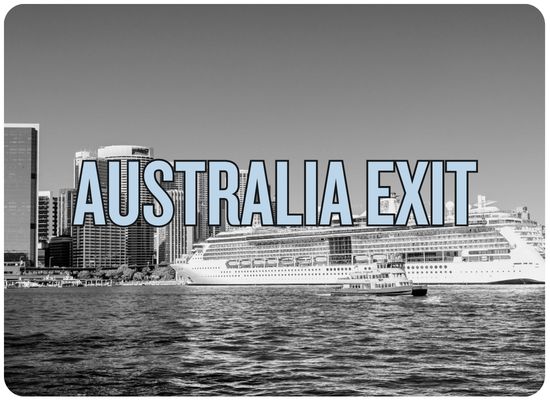
Carnival Adventure and Carnival Luminosa will leave Australia in March 2028. Carnival will go from four locally deployed ships to two.
The company did not blame one regulation or one government decision. It said deployment reflects a range of factors.
But Carnival also made its concern unusually explicit: cruise ships are scheduled years in advance, and markets need long-term regulatory certainty and globally competitive operating conditions if they want those ships to stay.
certain enough?
A two-year policy window can be short for a three-year fleet decision
Australia has extended its cruise exemption under the Coastal Trading Act until the end of 2028 and says a permanent framework is being developed.
Carnival calls that extension welcome but interim.
The economic problem is that the cruise line must sell future itineraries, secure berths, plan drydocks, assign crews, market the season and commit the ship before every detail of the future regulatory regime is known.
The two ships that are leaving
The fleet reduction is almost half by nominal berth count
Carnival's current Australian fleet has 10,508 lower berths across Adventure, Encounter, Splendor and Luminosa.
This is a ship-capacity comparison, not an annual capacity forecast. Carnival Luminosa has operated seasonally, so annual available berth days do not fall by the full 46.6%.
The strategy changed three times in twelve months
Expansion
Carnival announced a 2027-28 program of more than 200 cruises across four ships, more than 500,000 guests, and new homeport seasons in Auckland and Adelaide.
Adventure becomes seasonal
Carnival said Adventure would move to North America for the northern summer from April 2028, citing more favorable market conditions elsewhere and regulatory uncertainty in Australia and New Zealand.
Alaska goes on sale
Carnival opened bookings for 18 seven-night Alaska cruises from Seattle aboard Adventure between May and September 2028, plus longer Alaska and Hawaii voyages.
Government extends exemption
The Federal Government extended the cruise exemption through December 31, 2028, added worker-protection conditions from 2027 and said broader reform would create the future permanent framework.
The withdrawal becomes permanent
Carnival announced Adventure would not return after its North American season and that Luminosa would also leave the market in March 2028.
The chronology does not prove the new worker protections caused the withdrawal
Carnival says the deployment decision reflects a range of factors. Adventure's first reduction had already been announced in February, months before the October exemption extension.
The defensible conclusion is narrower: Carnival has repeatedly identified regulatory uncertainty and relative operating competitiveness as variables in its Australian deployment decisions.
The government and the cruise line are operating on different clocks
The latest temporary exemption runs through December 31, 2028 while the government develops a longer-term coastal-trading regime.
Carnival says deployment decisions are made several years in advance. Its 2028 Alaska program was already opened for sale in September 2026.
What the coastal-trading exemption actually does
The minister can exempt vessels from the Act
Australia's Coastal Trading Act regulates the carriage of passengers and cargo between Australian ports.
Cruise vessels have repeatedly received a ministerial exemption rather than operating permanently outside the regulatory regime.
There are two legitimate policy objectives competing here
The cruise industry wants a durable operating framework that allows it to price, sell and deploy vessels years in advance.
The government and labor representatives argue that foreign seafarers operating extensively in Australian waters should receive effective labor protections and access to collective bargaining.
The deployment problem is not whether either objective exists. It is whether the final rules are known early enough, and remain globally competitive enough, for operators to commit mobile ships to Australia.
Demand is not the obvious problem
Australians are cruising more while ships visit less
That divergence is what makes the current withdrawal economically important.
A strong source market can still become a weak deployment market
Australians do not have to stop cruising for Australia to lose cruise capacity.
They can fly to Singapore, Japan, Alaska, Europe or the Caribbean and board a ship there. That preserves the cruise company's customer while moving port spending, provisioning, hotel stays and tourism activity out of Australia.
The ship sees a cost stack, not one regulation
Legal Framework
Domestic itineraries depend on a regulatory treatment that has historically been renewed through temporary exemptions.
Crew Rules
Seafarer rights, collective bargaining, MLC compliance and future domestic-law treatment affect the operating model.
Berthing Cost
Cruise lines compare berth charges, terminal cost, pilots, towage and passenger handling with competing homeports worldwide.
Remote Geography
Australia sits far from many alternative deployment regions and requires long repositioning voyages and extensive regional sailing.
Supply Chain
Food, hotel supplies, freight, maintenance and technical services have to support large vessels continuously.
Arrival Compliance
Australia applies extensive vessel, passenger and provisioning biosecurity requirements because of its agricultural and environmental risk profile.
Berth Availability
The largest ships need suitable terminal capacity, navigational access and reliable slots at peak-season ports.
Opportunity Cost
Every day a ship operates in Australia is a day it cannot earn in Alaska, the Caribbean, Europe or another market.
Australia already lost more than A$1 billion of cruise economic output in one year
2024-25 cruise economic output
The national cruise economic-impact study estimated output at A$7.32 billion, down A$1.11 billion from the previous record year.
The report attributes the decline to fewer deployments, turnaround visits and cruise capacity rather than weak consumer appetite.
The supply chain reaches well beyond the terminal
The deployment decision can turn on surprisingly small percentage differences
Two-ship revenue scale test
This is an illustration using Carnival Corporation's 2025 companywide economics, not actual Australian revenue for Adventure or Luminosa.
A deployment does not need to become unprofitable before the ship leaves
The relevant comparison is not Australia versus zero.
It is Australia versus the best alternative deployment available to the fleet planner. A ship can remain profitable in Australia and still be moved if Alaska, the Caribbean or another region is expected to earn more after fuel, port, regulatory and repositioning costs.
What actually causes a redeployment?
| Variable | Australia Improves | Australia Deteriorates | How Quickly It Can Affect Deployment | Operator Response |
|---|---|---|---|---|
| Regulatory certainty | Permanent, predictable framework | Short exemptions and unresolved future requirements | Years before sailing | CHANGE FUTURE PROGRAM |
| Net ticket yield | Pricing strengthens faster than other regions | Discounting required to fill capacity | Months to years | ADD OR KEEP CAPACITY |
| Port cost | Competitive terminal and berth pricing | Charges rise faster than rival homeports | Immediate economic impact | REPRICE OR REDEPLOY |
| Labor compliance | Stable known obligations | Material future cost structure remains unresolved | Before crew contracts and deployment are fixed | PRICE RISK INTO MARKET |
| Fuel + supply chain | Efficient routing and reliable provisioning | Higher unit costs than competing regions | Every voyage | SHIFT SEASON LENGTH |
| Alternative-market yield | Other regions weaken | Alaska, Caribbean, Europe or Asia strengthen | As future schedules open | MOVE THE SHIP |
| Infrastructure | More large-ship berths and homeport capacity | Peak-season berth bottlenecks persist | Multi-year | LIMIT SHIP SIZE |
Three regulatory outcomes produce three fleet outcomes
Permanent competitive framework
Cruise lines can price the regulatory cost several seasons ahead. Australia competes primarily on passenger yield, port cost, fuel and itinerary demand. The uncertainty premium largely disappears.
Rules become clearer but more expensive
Ships remain if higher operating cost can be passed into fares or offset by strong demand. Seasonal deployment becomes more attractive than year-round commitment.
Late or unpredictable regime
Even before the rules take effect, planners may place future capacity somewhere else because alternate regions can be sold and costed with greater confidence.
What the next decision looks like
Industry orderbook data estimate Carnival's 230,000-GT 2029 ship at roughly $1.75 billion.
Adventure and Luminosa are the warning shot, not the billion-dollar ships
The two ships leaving Australia are mature vessels with far lower original capital cost than today's newest mega-ships.
But the same deployment logic applies to the new generation. Carnival's future Ace-class ships will carry more than 6,000 lower-berth guests, and the wider industry is ordering vessels with individual estimated costs well above $1 billion.
A market that cannot provide long-duration operating certainty may therefore find it increasingly difficult to attract the industry's newest and most capital-intensive hardware.
The risk is not that Australia stops being a cruise market
Carnival Splendor and Carnival Encounter remain. Seasonal international ships will continue to visit. Australian demand remains exceptionally strong.
The risk is that Australia becomes primarily a source of cruise customers rather than a destination for the industry's highest-value deployment.
In that scenario, Australians still cruise. They simply fly overseas to board the ships.
How much regulatory uncertainty does it take to move the ship?
This model compares a hypothetical Australian deployment with a competing market. It treats regulatory uncertainty as an expected annual cost rather than assuming regulation automatically makes the route unprofitable.
Decision-support model only. It does not reproduce Carnival's internal Australia deployment analysis. The default 4,896 lower berths are Carnival Adventure plus Carnival Luminosa. The default $261.76 revenue per passenger cruise day is derived from Carnival Corporation's FY2025 companywide passenger-ticket plus onboard-and-other revenue divided by passenger cruise days and is not an Australia-specific ship yield. Occupancy, contribution margins, alternative-market premium, transition cost and regulatory-risk assumptions are user-adjustable illustrations. Regulatory uncertainty is modeled as probability multiplied by an entered cost consequence and should not be interpreted as a forecast of Australian law. The model excludes tax, currency, drydock timing, fuel-route differences, working capital, debt service and detailed port charges.
Research basis
- Carnival Cruise Line October 15, 2026 Australia deployment announcement covering the final departures of Carnival Luminosa and Carnival Adventure and Carnival's comments on long-term certainty and globally competitive conditions.
- Carnival Cruise Line February 26, 2026 deployment update identifying more favorable market conditions elsewhere and regulatory uncertainty in Australia and New Zealand.
- Carnival Cruise Line September 30, 2026 West Coast deployment release covering Carnival Adventure's 18 Alaska cruises from Seattle in 2028.
- Australian Government October 2026 announcement extending the cruise exemption under the Coastal Trading Act through December 31, 2028 and introducing additional seafarer protections from January 2027.
- Federal Register of Legislation text for the Coastal Trading (Revitalising Australian Shipping) Act 2012 and the existing Section 11 cruise exemption.
- Australian Maritime Safety Authority material covering Maritime Labour Convention enforcement and the 2026 complaint relating to seafarer collective-bargaining rights.
- Carnival Cruise Line Australia fleet specifications covering lower-berth capacity and gross tonnage for Adventure, Luminosa, Encounter and Splendor.
- Carnival Corporation FY2025 annual report covering $17.419 billion of passenger-ticket revenue, $9.202 billion of onboard-and-other revenue, 101.7 million passenger cruise days and 105% occupancy.
- Carnival Corporation third-quarter 2026 reporting covering record companywide net yields and record 2027 booked occupancy and pricing.
- CLIA Australasia 2025 source-market data covering a record 1.45 million Australian cruise passengers and 9.5% year-over-year growth.
- CLIA Australasia and Australian Cruise Association economic-impact analysis covering A$7.32 billion of economic output, 22,720 jobs, A$1.50 billion of cruise-line spending and the decline in deployment-related activity.
- Cruise Industry News 2026 orderbook estimates for the approximate cost of Carnival's future 230,000-GT mega-ships.
We welcome your feedback, suggestions, corrections, and ideas for enhancements.
Please click here to get in touch