Russian LNG Reaches China After an Extraordinary Six-Month Voyage
🔔 Subscribe to ShipUniverse Weekly →
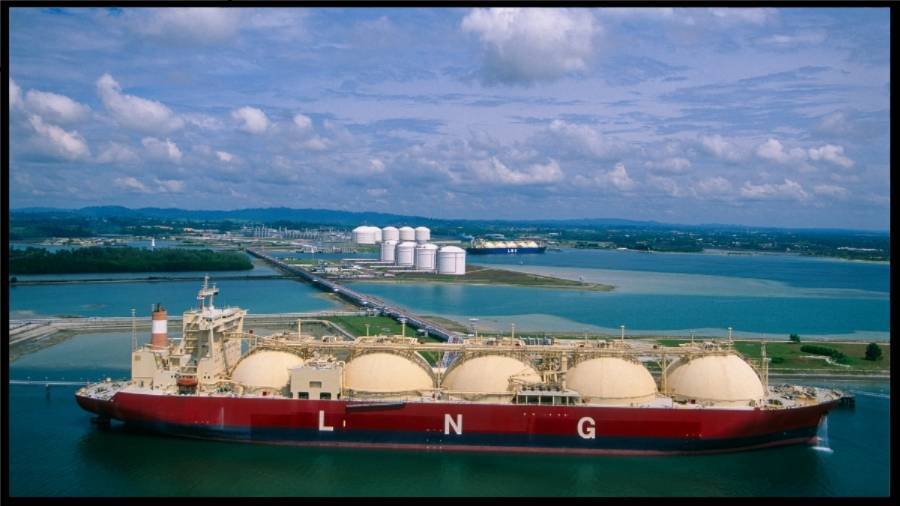
A Russian LNG cargo has reached China after spending nearly six months at sea, a transit time that sharply exceeds the roughly 45 days normally needed for a Baltic-to-Asia voyage and underscores how sanctions, route changes, and market dislocation are reshaping Russia’s gas export logistics. Reuters reported that the LNG carrier Perle arrived at China’s Beihai LNG terminal after leaving Portovaya on December 8, making it the latest example of Russian LNG reaching Asia through a much slower and more complicated path than before. Reuters also said this was the third shipment to China from the Portovaya facility since U.S. sanctions were imposed on Russian LNG exports in early 2025.
| Fast reader take | Latest confirmed signal | Operational meaning | Commercial consequence | Shows up first | Closest stakeholders |
|---|---|---|---|---|---|
| The voyage duration was extraordinary |
Reuters reported the carrier Perle took nearly six months to reach Beihai after departing Portovaya on December 8, versus a more typical 45-day Baltic-to-Asia voyage.
~6 months
normally ~45 days
extreme delay
|
This was not a routine long-haul LNG shipment. It was a sanctions-era voyage shaped by route difficulty and market constraints. | Longer voyages tie up tonnage, raise transport cost, and reduce fleet efficiency. | Lower vessel utilization and weaker netbacks. | Russian exporters, LNG carriers, charterers, Chinese terminal operators. |
| Portovaya remains active despite sanctions pressure |
Reuters said this was the third shipment from the sanctioned Portovaya facility to China since U.S. sanctions hit Russian LNG exports in early 2025.
3rd China shipment
Portovaya
sanctioned cargoes
|
Sanctions have made the trade harder, but not impossible. | Russia is still finding ways to place cargoes, though at slower speed and likely lower profitability. | Greater dependence on specialized routing and willing buyers. | Gazprom-linked projects, Chinese buyers, sanction-watch teams. |
| China is becoming an even more important fallback outlet |
Reuters reported Beihai is also used by Novatek for sanctioned Arctic LNG 2 cargoes, reinforcing China’s role as a destination for difficult Russian LNG volumes.
Beihai terminal
Arctic LNG 2 linkage
China as outlet
|
China is not just buying Russian gas. It is increasingly part of the logistics workaround for constrained Russian LNG supply. | That strengthens China’s importance in Russia’s LNG pivot but also raises exposure to sanctions complexity. | Higher concentration of difficult cargoes into fewer destinations. | Chinese importers, Russian LNG producers, banks, insurers. |
| Route economics have worsened materially |
Reuters reported Europe routes from Yamal had typically taken 17 to 20 days, while Asian routes can stretch to 80 days or more and raise transport costs two- to fivefold.
17-20 days to Europe
up to 80 days to Asia
2x to 5x cost pressure
|
Russia’s eastward LNG pivot is happening under a structurally weaker freight model than its old Europe-focused trade. | Even successful deliveries can generate lower margins because transport eats a larger share of value. | Higher delivered-cost burden and weaker exporter economics. | LNG sellers, traders, shipowners, lenders. |
| The Asia pivot is happening alongside Europe restrictions |
Reuters reported in April that Yamal LNG sent its first cargo to China since November as Europe moved ahead with tighter restrictions on Russian gas.
first cargo since November
Yamal LNG
Europe restrictions
|
Russia is not simply choosing Asia on price. It is being pushed east by the narrowing of its European options. | Cargo flows are becoming more politically determined and less purely market-driven. | More redirection, more transshipment, and less route stability. | Novatek, European buyers, Asian importers, LNG traders. |
| The headline arrival does not mean the trade is efficient |
Reuters said Russia’s shift to Asia is lowering LNG revenue because transport is longer and more expensive, even when cargoes are successfully delivered.
lower revenue
higher logistics cost
profit squeeze
|
The system is still functioning, but with weaker economics and more friction. | Russian LNG can keep moving while still earning less and consuming more fleet time. | More pressure on exporter margins and shipping economics. | Russian LNG producers, vessel owners, commodity buyers. |
Russian LNG Route Stress Tool
This built-in tool measures whether the China arrival should be read as a healthy trade signal or as proof of how strained Russia’s LNG logistics have become. It combines voyage duration, sanctions friction, Asia pivot pressure, and revenue drag into one live score.
Live logistics inputs
Adjust the sliders to estimate how strongly this cargo reflects route dysfunction rather than normal trade recovery.
Live readout
This section converts the latest cargo movement into one score showing whether the story is best read as resilience or as a sign of deep logistics strain.
This shipment looks more like proof of endurance under strain than proof that Russian LNG logistics have normalized.
The voyage looks long-haul but still commercially normal and scalable.
The cargo moves under friction, though the route still appears commercially workable without major distortion.
The delivery succeeds, but the time, cost, and route complexity point to a heavily stressed trading system.
The shipment arrives only through such severe friction that the route looks more like a workaround than a normalized export lane.
The key issue is not whether Russia can get LNG to China at all. It is whether it can do so quickly enough, cheaply enough, and often enough for the Asia pivot to replace lost European efficiency.
We welcome your feedback, suggestions, corrections, and ideas for enhancements. Please click here to get in touch.