Fujairah and Khor Fakkan Are Becoming the Gulf’s Critical Trade Fallback
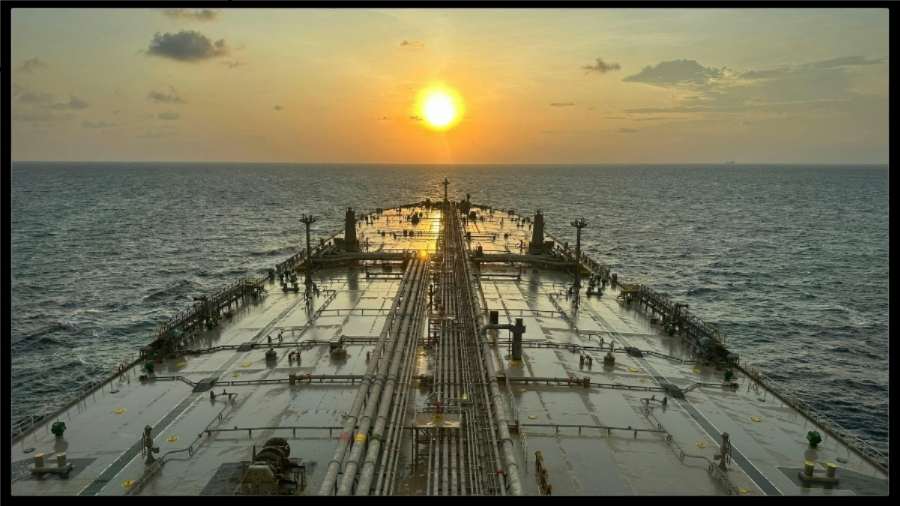
The latest Gulf trade picture shows the UAE’s two eastern ports, Fujairah and Khor Fakkan, carrying far more regional weight than they were designed for as disruption around Hormuz keeps reshaping cargo flows. Since the effective closure of the strait during the Iran war, the UAE has shifted much of its seaborne trade toward these Gulf of Oman gateways, with Fujairah taking on a bigger crude-export role through the Abu Dhabi Crude Oil Pipeline and Khor Fakkan absorbing a surge in containerized imports and transshipment activity. Crude exports through Fujairah rose 38% to about 1.62 million barrels per day by late March, while Gulftainer said weekly import and export container handling at Khor Fakkan jumped to 50,000 from 2,000, with daily truck movements rising from 100 to about 7,000. At the same time, both ports have become more exposed targets, especially after fresh attacks around Fujairah and Iranian messaging that appeared to extend pressure toward the UAE’s eastern coastline.
| Pressure lane | Current marker | Immediate operating read | Importance | Commercial consequence | Next checkpoint |
|---|---|---|---|---|---|
| Fujairah’s oil role | Fujairah is carrying more of the UAE’s export burden because it can load crude outside the strait through the eastbound pipeline system. Oil bypass hub | The port is no longer only a major energy hub. It has become the practical outlet for a bigger share of the UAE’s oil survival strategy. | If Fujairah is disrupted, the UAE loses much of its most direct maritime bypass around Hormuz. | Higher export concentration increases the importance of berth availability, storage continuity, loading discipline, and infrastructure resilience. | Watch whether crude exports stay close to recent elevated levels or begin easing as route risk and diplomacy shift. |
| Khor Fakkan’s cargo transformation | Khor Fakkan is no longer acting only as a transshipment point. It is now handling a much larger share of gateway cargo for the UAE and neighboring markets. Cargo fallback hub | The port has shifted from an efficiency play into an essential intake point for everyday trade flows. | That includes groceries, medical supplies, containers, inland trucking, and broader distribution across the UAE. | Congestion, truck handling, dry-port linkages, and inland logistics now matter as much as quayside productivity. | Watch whether weekly container throughput stays near current surge levels or stabilizes at a lower but still much higher plateau. |
| Regional dependence beyond the UAE | Qatar, Kuwait, and Bahrain are more exposed because their sea links sit behind Hormuz and their alternatives are slower and costlier. Regional spillover | These two UAE ports are not only serving national fallback functions. They are helping carry part of the wider Gulf’s trade stress. | That expands the strategic importance of Fujairah and Khor Fakkan well beyond normal UAE port competition. | Any disruption here creates second-order effects for neighboring states that lack equally efficient maritime workarounds. | Watch whether more regional cargo is redirected through the UAE east coast or pushed onto longer overland routes through Saudi Arabia and Oman. |
| Concentrated vulnerability | Recent attacks around Fujairah and pressure directed toward the eastern UAE coast show that the bypass remains operational, but far from safe. Targetable concentration | The bypass works, but it has become more targetable because so much trade has converged on the same coastline. | Routing more economic survival through fewer nodes creates efficiency on one side and fragility on the other. | Insurance, cargo timing, storage use, berthing sequences, and inland relief corridors all matter more when the fallback path is narrow. | Watch whether the UAE advances more inland logistics capacity, including the planned Al Dhaid hub tied to Khor Fakkan. |
We welcome your feedback, suggestions, corrections, and ideas for enhancements. Please click here to get in touch.