
🔔 Subscribe to ShipUniverse Weekly →
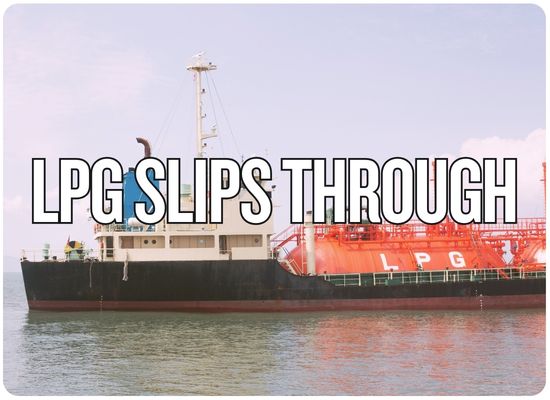
Iran has succeeded in moving at least eight LPG tanker cargoes totaling about 4.1 million barrels out of the Gulf of Oman since the U.S. naval blockade was reimposed on July 14, according to vessel and satellite analysis reviewed by Reuters. A separate tanker carrying Iranian jet fuel reached Myanmar in September. Some LPG cargoes were transferred ship-to-ship near the Omani ports of Shinas and Sohar, while most subsequently sailed toward Malaysia’s Eastern Outer Port Limits for additional transfers and likely onward movement to China. Six of the eight LPG tankers and the jet-fuel tanker are under U.S. sanctions. The leakage remains small compared with Iran’s normal petroleum exports: Kpler recorded zero Iranian crude exports in September, the first zero-shipment month in its data going back to 2013. U.S. officials also caution that a vessel getting through does not by itself prove it successfully evaded an interception, because ships are individually assessed and some are allowed to proceed for humanitarian or operational reasons.
Smaller Product Tankers Are Finding Gaps That Crude Tankers Have Not
Iran's crude export system has effectively stopped, but a limited number of LPG and refined-product cargoes have still moved through the Gulf of Oman using offshore transfers, waiting areas and onward transshipment hubs.
The Blockade Is Crushing Crude Exports While Smaller Product Cargoes Leak Through
The most important distinction is vessel class and cargo type. Large Iranian crude exports have effectively stopped, while a small number of LPG and refined-product tankers have found more flexible routes through offshore transfer networks.
| Evidence | What Happened | Scale | Route / Method | What It Shows | Important Limitation |
|---|---|---|---|---|---|
| Iranian LPG Product leakage | At least eight LPG tankers left the Gulf of Oman after the blockade was reimposed in mid-July. | Approximately 4.1 million barrels in total. | Offshore transfers near Oman, Gulf of Oman waiting areas, then mostly toward Malaysia's Eastern Outer Port Limits. | The physical blockade has not stopped every Iranian petroleum-product cargo. | Reuters and UANI describe this as a handful of successful shipments, not evidence that Iran has restored normal export volumes. |
| Jet Fuel Myanmar delivery | Satellite imagery and SynMax analysis showed another tanker carrying Iranian jet fuel reaching Myanmar in September. | One identified post-blockade cargo in the latest Reuters investigation. | Vessel-tracking and satellite imagery were needed because the trade uses opaque shipping practices and sanctioned vessels. | Higher-value refined products may remain commercially attractive enough to justify substantial sanctions and interception risk. | Reuters did not disclose the cargo volume in its October 16 report, and Myanmar's government did not confirm receiving the Iranian cargo. |
| Iranian Crude Main export system | Kpler recorded no Iranian crude export shipment during September. | Zero for the month. | UANI says it has not tracked a crude-laden tanker successfully departing the Gulf of Oman and avoiding enforcement since July 12. | The blockade appears far more effective against Iran's large crude-export trade. | Dark activity, AIS manipulation and unobserved transfers mean no commercial tracking system can guarantee complete visibility. |
| APOLLO OCEAN LPG example | Received Iranian LPG offshore from TARAWA and later departed the Gulf of Oman. | Approximately 490,000 barrels. | TARAWA loaded at Bandar-e Mahshahr on Aug. 24; STS occurred Sept. 4; APOLLO OCEAN departed Oct. 12. | Cargo can become separated from the vessel that originally called at an Iranian port. | A transfer chain does not automatically prove that every participant knowingly violated a specific blockade instruction. |
| U.S. Enforcement CENTCOM position | U.S. forces say the resumed blockade has turned around 135 ships and disabled four commercial vessels. | Three months of the latest blockade through Oct. 13. | Enforcement is concentrated around Iranian ports and the Gulf of Oman, with vessels assessed individually. | The large number of redirected ships explains why Iran's normal crude export chain has collapsed. | CENTCOM says a vessel appearing beyond the blockade does not necessarily prove it successfully evaded U.S. forces; ships may be allowed through or monitored. |
Product-Cargo Leakage Scale Analyzer
Translate a small number of successful product cargoes into average cargo size, daily flow, annualized volume and gross cargo-value scenarios. The tool does not attempt to calculate a military blockade success rate.
We welcome your feedback, suggestions, corrections, and ideas for enhancements.
Please click here to get in touch