
SHIPUNIVERSE
Maritime Intelligence, Tools & Live Industry Radars

One place for live maritime intelligence, practical decision tools, industry events and focused reporting.

RADARS
TOOLS
All Tools
Latest 20
Open to load latest items…
NEWS
All News
Latest 20
Open to load latest items…
REPORTS
All Reports
Latest 20
Open to load latest items…
TECH
All Tech
Latest 20
Open to load latest items…
CRUISE
All Cruise
Latest 20
Open to load latest items…
NAVAL
All Naval
Latest 20
Open to load latest items…
SHIPUNIVERSE REPORTING

Reports, news and industry coverage

Full analysis in the ShipUniverse intelligence layout.

← Back to latest posts ShipUniverse / NAVAL

SSN(X) and the 10 Technologies that could Transform Nuclear Submarines

🔔 Subscribe to ShipUniverse Weekly →

SHIPUNIVERSE / NAVAL TECHNOLOGY · NOVEMBER 13, 2026

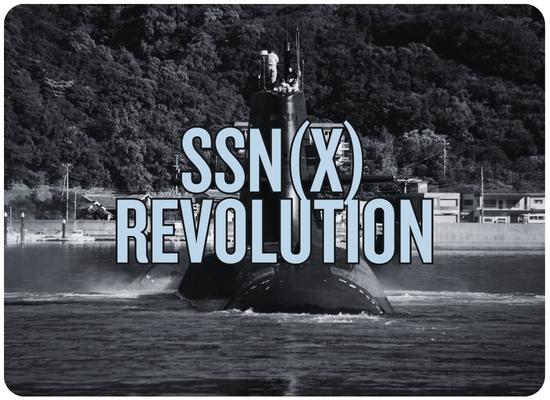
America's Next Nuclear Submarine Will Be a Drone Mothership: 10 Ways SSN(X) Could Rewrite Undersea Warfare

A submarine can carry the finest weapons in the fleet and still lose valuable time alongside a pier. The Navy's next attack boat is being designed with that reality in mind. SSN(X) is supposed to move faster, stay harder to find, carry more payload and send robotic vehicles well beyond its own hull. That changes both how a submarine fights and how it must be built and maintained.

5Requirements priorities outlined Nov. 12
Early 2040sPlanned lead-boat construction window
~10,100 tCBO design assumption, not approved displacement
$7.1–8.7BHistoric unit-cost estimates, constant FY2024 dollars

SSN(X) is still in design and requirements work. No final hull dimensions, UUV complement, torpedo-tube count or operational entry date has been approved publicly.

01 / WHAT THE NAVY IS ASKING FOR

Five Requirements. One New Kind of Attack Boat.

Rear Adm. Andrew Miller described these priorities at the Naval Submarine League's November 12 conference. The Navy is seeking early-development approval, not unveiling a completed design.

01 · Higher speedFaster flank and tactical-control speeds
02 · More availableLess repair time, more time ready for missions
03 · Greater lethalityMore payload capacity and flexible weapons integration
04 · Harder to findImproved stealth and layered survivability
05 · Robot commandHost, launch and coordinate autonomous systems
What has changed: The Navy no longer describes unmanned vehicles as occasional add-ons. Its May 2026 shipbuilding plan says SSN(X) is being engineered from the start to accommodate and use robotic payloads. That is a design intent, not proof that the complete drone-handling system already exists.
02 / THREE GENERATIONS, ONE COMPARISON

Virginia vs. Seawolf vs. SSN(X)

Submerged displacement · published figures and one model

Virginia, original hull~7,800 t
Seawolf, first two boats9,138 t
SSN(X), CBO model~10,100 t
Virginia with payload module~10,200 t
Figures are in U.S. tons as presented in the Navy fact file and CBO analysis. The special-mission USS Jimmy Carter has a longer hull and is excluded from the standard Seawolf comparison.
The key design lesson Size isn't the specification.

CBO's modeled SSN(X) is slightly smaller by displacement than a Virginia with its Payload Module. That does not prove the new boat will be smaller, or larger. Its diameter, internal volume, launch arrangements and final payload mix have not been set publicly.

MeasureVirginia classSeawolf classSSN(X) planned
StatusOperational; additional Blocks under construction3 commissioned; specialized small fleetDesign and early-development work
Submerged displacement~7,800 t original; ~10,200 t with VPM9,138 t first two; 12,158 t special USS Jimmy Carter~10,100 t CBO model; not final
Torpedo tubes48Undisclosed
Payload and missilesMK 48, Tomahawk; VPM adds 28 Tomahawk-sized cells' capacityUp to 50 weapons in torpedo room; no conventional VLSExpanded horizontal payload desired; weapons mix TBD
Public speed figure25+ knots25+ knotsHigher speed sought; no number released
Underwater robotsExisting offboard-payload provisions and emerging UUV integrationSpecial missions, especially USS Jimmy CarterOrganic hosting and command are central design priorities
MaintenanceExisting fleet availability and upgrade cyclesComplex small-class support burdenHigher operational availability explicitly required
Core roleGeneral-purpose attack / strike / intelligenceHeavy attack-submarine and specialized missionsHigh-end attack plus coordinated unmanned operations

VPM refers to the Virginia Payload Module. In August 2026 the Navy announced plans to reclassify VPM-equipped Virginia boats as SSGNs; the underlying hull comparison remains valid. Public speed ratings are deliberately broad and are not a ranking of actual performance.

03 / THE TEN DESIGN SHIFTS

10 Ways the Undersea Mission Could Change

Open each item for what the Navy has stated, how it could affect operations and what remains unresolved. Some are explicit requirements; others are technical implications rather than approved capabilities.

Navy requirement / stated intent Potential application / not confirmed
01Torpedo Tubes Become Drone Launch Ports
A weapon interface doubles as an outlet for uncrewed undersea vehicles.
Details
Navy positionRear Adm. Miller explicitly discussed launching robotic vehicles through submarine torpedo tubes and integrating them into mission plans.
Operational changeSelected UUVs could travel beyond the host boat to collect information or carry mission payloads while the submarine remains elsewhere.
Engineering questionCompatible vehicle dimensions, tube availability, preparation time and safe recovery must be resolved. No final launcher or recovery configuration is published.
Watch:Dedicated launch-and-handling interfaces, not speculative claims about how many drones fit aboard.
02The Submarine Becomes a Robot Command Center
Fleet control replaces one-off drone launches.
Details
Navy positionOrganic robotic hosting and command-and-control form one of the five explicit design priorities.
Operational changeOperators could coordinate several remote sensors or vehicles through common mission planning rather than treating each as a separate experiment.
Engineering questionUnderwater links are slow and intermittent. Autonomy, data handling and human control must function when continuous remote steering is impossible.
Watch:Open mission-system interfaces, fault-tolerant communications and crew workload.
03Search Sensors Spread Beyond the Hull
A distributed acoustic picture instead of one listening position.
Details
BasisThe Navy's FY2026 requirements call for coordination with additional remote systems and sensors.
Potential applicationUUVs carrying acoustic or environmental sensors could extend coverage and provide independent observations to complement the mothership's sonar.
Engineering questionSensor quality, geolocation, synchronization and handling uncertain contacts remain difficult, particularly with limited data links.
Watch:Quality of fused contacts rather than the raw number of remote sensors.
04Reconnaissance Without Moving the Whole Boat
Send a smaller vehicle to inspect an area of interest.
Details
BasisOrganic autonomous-systems capacity is planned, but specific scout missions have not been approved publicly.
Potential applicationRemote vehicles could survey an area, gather environmental information or investigate an observation while the host submarine continues other work.
Engineering questionEndurance, recovery, navigation accuracy and keeping the parent boat's movements discreet are major constraints.
Watch:Useful information returned per mission and reliable vehicle retrieval.
05Seabed Surveillance Becomes a Hosted Mission
Underwater robots add a new way to observe infrastructure and terrain.
Details
BasisUUV hosting opens possible seabed-mapping and infrastructure-inspection roles. These are not confirmed SSN(X) task specifications.
Potential applicationSpecialized robotic payloads could perform targeted surveys without converting the entire attack submarine into a dedicated survey platform.
Engineering questionDetailed sensing requires power, storage, precise positioning and follow-up interpretation. Wide-area persistence is not automatic.
Watch:Interoperability with existing unmanned seabed systems.
06Weapons and Drones Compete for Payload Space
A bigger horizontal payload volume enables more choices, not unlimited capacity.
Details
Navy positionIncreased horizontal payload capacity and decisive lethality are official priorities. CBO expects Seawolf-like weapons capacity in its analysis.
Operational changeThe same boat may need to carry torpedoes, future missiles and selected robotic payloads rather than optimizing for only one loadout.
Engineering questionEvery vehicle needs space, handling support and sometimes servicing. No SSN(X) torpedo count, VLS count or drone inventory is published.
Watch:Payload flexibility under realistic mission configurations, not one maximum weapons headline.
07Higher Tactical Speed With Stealth Still Intact
The speed requirement goes beyond simply reaching maximum knots.
Details
Navy positionHigher flank and tactical-control speeds are explicit requirements, alongside improved acoustic and non-acoustic signatures.
Operational changeMore propulsion and hydrodynamic margin could give commanders greater flexibility in transit and demanding missions.
Engineering questionPower, noise, vibration, machinery space and thermal management compete. The Navy has not released a target speed.
Watch:Verified performance requirements and quieting, not internet estimates of top speed.
08Survivability Extends to the Robot Threat
The submarine must operate amid hostile sensors and uncrewed systems.
Details
Navy positionSuperior stealth and layered survivability are central to the requirements; earlier Navy statements also identify defense against hostile UUVs as a need.
Operational changeSurvivability becomes a combination of hull signature, sensors, situational awareness and the ability to respond to remote threats.
Engineering questionSpecific defensive payloads and methods are not public, and some approaches may introduce new noise, power or complexity costs.
Watch:Demonstrated integration of protection systems rather than invented anti-drone specifications.
09Power and Volume Are Reserved for the Next Upgrade
Electrical and hydrodynamic margin matters as much as today's equipment.
Details
Navy positionMiller said SSN(X) needs greater electrical and hydrodynamic margins and architectural flexibility beyond what can be retrofitted to Virginia.
Operational changeReserved power, cooling and interface capacity can support future sensors, computing and autonomous-system changes over decades.
Engineering questionUnused space and power cost money today. The Navy must balance growth margin with size, weight and initial procurement cost.
Watch:Documented design margin and upgrade interfaces before detailed design is frozen.
10Repair Time Becomes a Design Requirement
A submarine with greater availability can contribute more days at sea.
Details
Navy positionImproved operational availability is one of the five priorities; the earlier concept borrows maintainability and service-life lessons from Columbia.
Operational changeAccessible equipment, better condition monitoring and planned repair pathways could reduce time unavailable for missions.
Engineering questionNovel systems can be harder to support. Yard capacity, spares, qualification and skilled trades determine whether maintainability goals become real availability.
Watch:Planned versus actual maintenance days, not just scheduled service life.
04 / WHAT MUST HAPPEN BEFORE STEEL

The Design Clock Is Already Running

Nov. 2025Navy completed its internal analysis of alternatives, according to November remarks.
2026Requirements review, U.S. shipyard market research and design-industry outreach.
Year-end 2026Target for Milestone A early-development approval; not yet confirmed granted.
Early 2040sLead-boat construction planned; operational entry remains unspecified.
The industrial issue: Electric Boat and Newport News must sustain Virginia and Columbia work while SSN(X) advances. The October 2026 Navy sources-sought notice asked yards about nuclear-submarine fabrication, modular outfitting, workforce, reactor installation and testing capacity. A request for information is not a construction award.
Research documentation and definitions

CBO's modeled displacement and the historical unit-cost estimates are not approved SSN(X) design specifications or current fixed prices.

05 / INTERACTIVE FLEET COST EXPLORER

How Much Does a New Submarine Design Cost at Scale?

Compare the Navy and CBO's historical SSN(X) average-cost estimates. Change the number of hulls or assume additional real cost pressure. These are procurement illustrations, not appropriations or price forecasts.

6 boats Illustrative fleet quantity, not an approved program of record.
0% Assumed uplift to both published baseline estimates.
Navy-based case$42.6BBaseline $7.1B / boat
CBO-based case$52.2BBaseline $8.7B / boat
Difference$9.6BSame hull quantity
Navy-based scenario$42.6B
CBO-based scenario$52.2B

The published CBO estimate is about 22.5% higher per boat.

Model uses $7.1B and $8.7B average unit estimates for the 2025 Navy shipbuilding plan, in constant FY2024 dollars. Extra cost pressure is hypothetical, not inflation conversion. Simple multiplication does not reproduce program learning curves, the different cost of the lead boat, future design changes, operating costs or congressional funding decisions.

Feedback Welcome

We welcome your feedback, suggestions, corrections, and ideas for enhancements.

Please click here to get in touch
By the ShipUniverse Editorial Team — About Us | Contact


← Browse more ShipUniverse posts
MARITIME DECISION TOOLS

Practical tools for real vessel and commercial decisions

Browse the latest 24 tools or instantly search every published ShipUniverse maritime tool.

24 latest toolsView all 309 →
TOOL

Panama Canal Transit Slot Auction, Waiting Time, Draft Restrictions & Route Diversion Economics Tool

🔔 Subscribe to ShipUniverse Weekly → ShipUniverse / Canal Access &…

Open →
TOOL

Offshore Wind O&M Vessel Fleet, CTV/SOV Scheduling, Technician Transfers & Turbine Downtime Cost Tool

🔔 Subscribe to ShipUniverse Weekly → ShipUniverse / offshore wind operations…

Open →
TOOL

Vessel Sale & Purchase Closing, Escrow, Bunker ROB, Delivery Documents & Cash Settlement Tool

🔔 Subscribe to ShipUniverse Weekly → SHIPUNIVERSE / VESSEL TRANSACTION INTELLIGENCE…

Open →
TOOL

Harbor Tug Fleet Contract Tender, Utilization, Standby Fees & Towage Profitability Tool

🔔 Subscribe to ShipUniverse Weekly → SHIPUNIVERSE / PORT & TOWAGE…

Open →
TOOL

Marine General Average, Cargo Contribution, Security Deposits & Claims Settlement Exposure Tool

🔔 Subscribe to ShipUniverse Weekly → SHIPUNIVERSE / MARITIME CLAIMS &…

Open →
TOOL

Chemical Tanker Cargo Parcel Allocation, Tank Compatibility, Cleaning Turnaround & Voyage Margin Tool

🔔 Subscribe to ShipUniverse Weekly → SHIP UNIVERSE / CHEMICAL TANKER…

Open →
TOOL

Marine Insurance Claims Portfolio, Hull & P&I Loss Runs, Reserves & Renewal Negotiation Tool

🔔 Subscribe to ShipUniverse Weekly → SHIPUNIVERSE / FLEET INSURANCE &…

Open →
TOOL

Offshore Platform Decommissioning, Vessel Spread, Weather Windows & Removal Campaign Cost Tool

🔔 Subscribe to ShipUniverse Weekly → SHIPUNIVERSE / OFFSHORE ASSET RETIREMENT…

Open →
TOOL

Tanker & Bulker Commercial Pool, Fleet Earnings Distribution, Off-Hire & Pooling Economics Tool

🔔 Subscribe to ShipUniverse Weekly → SHIPUNIVERSE / COMMERCIAL SHIPPING INTELLIGENCE…

Open →
TOOL

Port Terminal Concession Bid, Throughput Guarantees, Tariff Escalation & Investment NPV Tool

🔔 Subscribe to ShipUniverse Weekly → SHIPUNIVERSE / PORT INFRASTRUCTURE INVESTMENT…

Open →
TOOL

Fleet Debt Covenant Headroom, Vessel Valuation Shock, Interest Rates & Refinancing Liquidity Tool

🔔 Subscribe to ShipUniverse Weekly → SHIPUNIVERSE / FLEET FINANCING INTELLIGENCE…

Open →
TOOL

Maritime Freight FFA Hedging, Bunker Price Risk, Margin Calls & Cash-Flow Protection Tool

🔔 Subscribe to ShipUniverse Weekly → SHIPUNIVERSE / FREIGHT DERIVATIVES &…

Open →
TOOL

Empty Container Repositioning, Depot Inventory, Leasing & Shortage Cost Tool

🔔 Subscribe to ShipUniverse Weekly → SHIPUNIVERSE / CONTAINER EQUIPMENT NETWORK…

Open →
TOOL

Subsea Cable Fault Repair, Vessel Spread, Restoration Timeline & Emergency Repair Cost Tool

🔔 Subscribe to ShipUniverse Weekly → SHIPUNIVERSE / SUBSEA EMERGENCY RECOVERY…

Open →
TOOL

Container Shipping Service Contract, Minimum Volume Commitment, Carrier Allocation & Shortfall Cost Tool

🔔 Subscribe to ShipUniverse Weekly → SHIPUNIVERSE / OCEAN FREIGHT PROCUREMENT…

Open →
TOOL

Fleet Retrofit CAPEX Prioritization, Fuel Savings, Decarbonization & Capital Allocation Tool

🔔 Subscribe to ShipUniverse Weekly → SHIP UNIVERSE / FLEET CAPITAL…

Open →
TOOL

Port Container Crane Fleet Replacement,Availability & Lifecycle CAPEX ROI Tool

🔔 Subscribe to ShipUniverse Weekly → SHIP UNIVERSE / TERMINAL ASSET…

Open →
TOOL

Maritime Counterparty Credit, Charter Hire Default, Payment Security & Recovery Exposure Tool

🔔 Subscribe to ShipUniverse Weekly → Charter Risk · Receivables ·…

Open →
TOOL

Cruise Ship Elevator Capacity, Passenger Flow, Outage Risk & Modernization ROI Tool

🔔 Subscribe to ShipUniverse Weekly → Cruise Operations · Hotel Engineering…

Open →
TOOL

Ship Lay-Up, Preservation, Reactivation & Return-to-Service Economics Tool

🔔 Subscribe to ShipUniverse Weekly → Shipowner Strategy · Vessel Preservation…

Open →
TOOL

Maritime Cyber Incident Recovery, OT Downtime, Business Interruption & Restoration Cost Tool

🔔 Subscribe to ShipUniverse Weekly → Maritime Cyber Resilience · Vessel…

Open →
TOOL

Vessel Technical Management Contract Tender, Fleet OPEX, Fees & SLA Comparison Tool

🔔 Subscribe to ShipUniverse Weekly → Ship Management · Fleet OPEX…

Open →
TOOL

Shipbuilding Refund Guarantee, Yard Credit Risk, Progress Payments & Delivery Default Tool

🔔 Subscribe to ShipUniverse Weekly → Shipbuilding Finance · Newbuilding Security…

Open →
TOOL

Port Waste Reception, MARPOL Delivery Notice, Disposal Logistics & Charge Verification Tool

🔔 Subscribe to ShipUniverse Weekly → Port Operations · MARPOL Waste…

Open →