
SHIPUNIVERSE
Maritime Intelligence, Tools & Live Industry Radars

One place for live maritime intelligence, practical decision tools, industry events and focused reporting.

RADARS
TOOLS
All Tools
Latest 20
Open to load latest items…
NEWS
All News
Latest 20
Open to load latest items…
REPORTS
All Reports
Latest 20
Open to load latest items…
TECH
All Tech
Latest 20
Open to load latest items…
CRUISE
All Cruise
Latest 20
Open to load latest items…
NAVAL
All Naval
Latest 20
Open to load latest items…
SHIPUNIVERSE REPORTING

Reports, news and industry coverage

Full analysis in the ShipUniverse intelligence layout.

← Back to latest posts ShipUniverse / NEWS

Tanker’s Rudder Jammed Two Minutes Before New Orleans Cruise Ship Collision. All 190 Aboard Survived.

🔔 Subscribe to ShipUniverse Weekly →

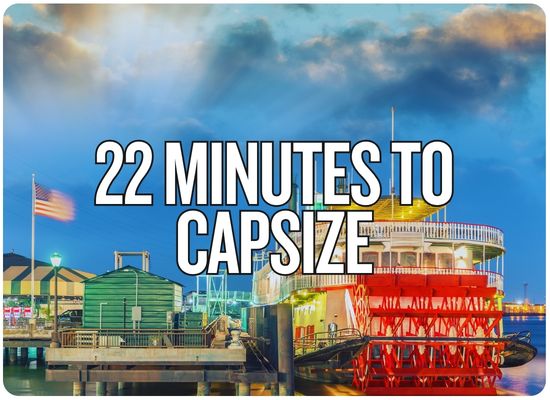
Federal investigators disclosed on November 15, 2026, that the asphalt tanker Atlantic Asphalt experienced a steering casualty approximately two minutes before striking American Cruise Lines' American Heritage at the Port of New Orleans on November 13. Preliminary voyage-data recorder evidence shows the tanker's rudder remained to starboard at approximately 12:26 p.m. as the vessel traveled upriver near the Crescent City Connection Bridge. The tanker struck the docked river cruise ship at approximately 12:28 p.m., and American Heritage capsized about 22 minutes later. All 190 people aboard the cruise vessel survived, including 140 passengers and 50 crew members. Thirty-two people, including two responding police officers, were taken to hospitals. Six remained hospitalized as of November 15. The National Transportation Safety Board has not determined what caused the steering malfunction.

ShipUniverse / NTSB Investigative Update / November 15, 2026

Two Minutes to Impact.
Twenty-Two Minutes to Capsize.

Recovered bridge data puts a sudden steering casualty at the center of the investigation into Friday's New Orleans tanker collision. All 190 people aboard the docked cruise ship survived.

190 / 190
Cruise passengers and crew survived140 passengers and 50 crew; no fatalities
32
People transported to hospitalsIncludes two responding police officers
6
Still hospitalized November 15City of New Orleans official update
The collision sequence / Friday November 13 / New Orleans local time
Steering casualty

Atlantic Asphalt's rudder remains to starboard near Crescent City Connection. The tanker veers toward the east bank.

Vessels collide

The upbound tanker strikes American Heritage, which is docked at Thalia Street Wharf.

Cruise ship capsizes

Approximately 22 minutes after impact, the damaged passenger vessel overturns. Estimated time, not an exact recorder timestamp.

2 MIN
22 MIN
Survivor accounting100% aboard survived
140Passengers on American Heritage
50American Heritage crew members

American Cruise Lines confirmed everyone aboard its vessel was safe and accounted for. The emergency involved harbor police, firefighters, Coast Guard personnel, medical responders and nearby boats. The 32 hospitalized people are not additional cruise passengers: the total includes two police officers who entered the water during the response.

What investigators learned from the voyage-data recorder
Recorder recovered November 14

The NTSB downloaded more than nine hours of information, including bridge audio, rudder angle, propulsion and speed data.

Warnings and emergency orders recorded

Audio contained sounds consistent with whistles, radio warnings, requests for help, anchor-deployment commands and emergency ship-handling orders.

Root cause remains unknown

The evidence does not establish whether hydraulic, electrical, control, mechanical or other systems caused the rudder to remain to starboard.

Anchor effectiveness still under review

Investigators have not completed their assessment of the anchors' deployment, how far they were lowered and their effect on the tanker's movement.

Evidence status: NTSB November 15 on-scene briefing, City of New Orleans November 13 and 15 updates, and American Cruise Lines' November 14 statement. All times are approximate. This timeline describes preliminary evidence, not a final probable-cause finding.
ShipUniverse / Technical & Liability Intelligence

What Failed in the Tanker's Steering System?

The NTSB has not answered that question. Its evidence review will connect rudder position, bridge commands, alarms and machinery behavior with the ship's steering equipment and emergency response.

Critical investigative questions

Each row distinguishes the confirmed observation from engineering questions. Similar failure modes have appeared in older investigations, but none is established aboard Atlantic Asphalt.

Investigation areaCurrent established evidenceWhat remains unresolvedTechnical records that can clarify itPossible operational / liability relevance
Actual rudder position Recorded
Rudder remained to starboard near 12:26 p.m. as tanker veered toward east bank.
Why it remained there, and whether the commanded position differed from actual rudder movement. Rudder-angle trends, bridge commands, steering-gear measurements and post-casualty tests. Distinguishes the observed casualty from a confirmed failure of a specific device.
Hydraulic steering machinery Cause not determined
No hydraulic defect identified publicly for this casualty.
Whether pumps, valves, actuators, control motors or fluid condition contributed. Oil sampling, pressure records, pump testing, maintenance logs and component teardown. Equipment inspection, maintenance adequacy and causation require specific evidence.
Bridge control and changeover Recorder available
Emergency ship-handling orders captured on bridge audio.
Which steering mode and power units were active, and whether changeover restored control. Control-panel logs, alarm histories, steering-changeover procedures and crew interviews. Emergency response and equipment redundancy must be assessed against the vessel's actual configuration.
Emergency anchor orders Audio evidence
Recorded commands included instructions to deploy anchors.
Which anchors entered the water, their deployment depth, timing and braking effect. VDR audio, video, anchor positions, physical inspections and river-current observations. An order recorded on audio is not proof that the intended maneuver took effect.
Pilotage and vessel motion Initial timeline
Upbound tanker passed near Crescent City Connection before veering.
Precise speed, course, traffic constraints and available response time. VDR track, AIS, pilot and bridge-team testimony, river hydrodynamics and simulation. Separates navigational decisions from an equipment malfunction and environmental effects.
Cruise ship flooding and stability Capsize confirmed
American Heritage overturned about 22 minutes after collision.
Detailed damage opening, compartment flooding sequence and capsize dynamics. Hull inspection, stability documentation, compartment drawings and passenger-vessel evidence. Helps determine how damage progressed and whether protection and evacuation procedures worked.
Evacuation and emergency response All 190 survived
Coordinated rescue involved crew, emergency responders and nearby vessels.
Exact evacuation sequence, passenger locations and which actions prevented fatalities. Crew and passenger interviews, CCTV, dispatch records, photographs and response chronology. Identifies effective procedures and opportunities for future passenger-vessel safety improvements.
Terminal and marine liability Claims developing
Port of New Orleans has alleged at least $1 million in terminal damage.
Final repair cost, liability allocation, insurance coverage, lost revenue and salvage expenses. Surveys, invoices, vessel records, contracts, legal pleadings and insurers' adjustments. A lawsuit and a preliminary mechanical finding are not final proof of fault or an awarded damages amount.
CONTINUED TABLE / HORIZONTAL SCROLL

Shipboard redundancy and emergency steering performance cannot be determined from the fact that the rudder remained at a particular angle. An equipment inspection and a completed factual record are necessary.

Current Lower Mississippi navigation controls / Official November 15 update
RM 95.5–96.5Safety zone around casualty

Coast Guard restriction covering approximately one river mile, extending 500 feet outward from the defined area.

One wayDeep-draft vessels

Commercial deep-draft traffic must move one direction at a time through the designated safety zone.

10+Barge towing threshold

Tows carrying ten or more barges are subject to one-way transit. All vessels must coordinate with Lower Mississippi Vessel Traffic Service.

Three comparable NTSB steering investigations / Different ships, different causes
2021 / Lower MississippiJalma Topic

Rudder became stuck at 10 degrees to port before a contact with a stationary office barge near New Orleans. Reported damage was approximately $6 million.

2023 / Houston Ship ChannelBBC Africa

A steering-control component failure caused unintended rudder movement. Investigators also identified delayed implementation of emergency steering procedures as a contributing factor.

2024 / St. Marys RiverAmerican Mariner

Hydraulic-system contamination lodged in a control motor, causing it to seize and leaving the rudder locked at its last commanded position.

These are comparisons, not diagnoses. The older accidents illustrate distinct physical and control-system failure mechanisms already established in completed NTSB investigations. No such mechanism has yet been conclusively identified for Atlantic Asphalt. The Coast Guard safety zone can change; mariners must consult current official traffic instructions.
Technical context draws on the NTSB's completed steering-casualty findings, Coast Guard steering-system inspection guidance and the City of New Orleans' November 15 navigation update. The Atlantic Asphalt investigation remains preliminary.
ShipUniverse Interactive / Marine Casualty Economics

What Could a Major River Collision Cost Across a Port?

Model vessel delays, terminal interruption, salvage work and possible recovery expenses. These are hypothetical systemwide cost scenarios, not verified losses or a legal claim against any one party.

01 / Choose calculation depth
02 / Shipping delays, terminals and salvage
Hypothetical count, not actual delayed traffic
Cash expense or recoverable time cost, defined consistently
Use genuine contribution lost, not gross cargo value
Not an official recovery completion forecast
03 / Advanced recovery and claims assumptions
Do not treat the port's allegation as an established final cost
Any insurance or contractual recovery, not guaranteed
Model limits: Vessel delays, berth lost contribution and salvage expenses are separate economic categories. If a delayed ship's cost is already included in the terminal revenue figure, adjust one input to avoid double counting. Advanced recoveries are subtracted only once from combined gross costs. The model cannot allocate legal responsibility or identify actual insurance coverage.
04 / Combined scenario costs
Gross systemwide hypothetical exposure
$2.51m

Sum of modeled vessel, berth, salvage and optional advanced expenses across different stakeholders. Not a single party's damages award.

$840kAggregate modeled commercial vessel-time expense
$120kPotential lost berth operating contribution
$1.55mSalvage daily expenditure plus one-time mobilization
$0Optional repairs, emergency and other advanced expenses
24 daysCombined vessel-days of delay across affected traffic
$0Assumed insurance or contractual recoveries

Financial Exposure Breakdown

Commercial vessel-time expense$840k
Interrupted terminal contribution$120k
Salvage equipment and deployment$1.55m
Terminal and ship repair allowance$3.00m
Response, passenger support, surveys and legal$750k
Contingency allowance$548k
Gross combined exposure$2.51m
Less assumed recoveries$0
Net unrecovered amount in scenario$2.51m
Net modeled economic exposure $2.51m

Hypothetical combined exposure after any entered recoveries. It is not a loss reserve, final damages assessment or an amount payable by the tanker owner.

Vessel-Delay Sensitivity

The scenarios below vary the average delay per commercial vessel while holding the selected vessel count, day rate, terminal losses and recovery expenses constant. They do not forecast how long the Coast Guard's safety restrictions will remain in effect.

0 days delayed$1.67mCombined gross cost
1 day delayed$2.09mCombined gross cost
2 days delayed$2.51mCombined gross cost
4 days delayed$3.35mCombined gross cost
7 days delayed$4.61mCombined gross cost

How Combined Expense Changes With Vessel Waiting Time

The live chart changes only vessel-delay days. All other entered expenses remain fixed, so the result is an economic sensitivity rather than a probability or navigational-risk estimate.

Calculating...
Cost sensitivity under current inputs.
What the model includes

Scenario-based vessel-time expenses, berth interruption, recovery equipment, mobilization and optional advanced cost categories.

What it does not establish

Actual vessels delayed, the final duration of salvage, cruise-vessel total loss, personal-injury settlements, insurance policy limits or the legal allocation of responsibility.

Feedback Welcome

We welcome your feedback, suggestions, corrections, and ideas for enhancements.

Please click here to get in touch
By the ShipUniverse Editorial Team — About Us | Contact


← Browse more ShipUniverse posts
MARITIME DECISION TOOLS

Practical tools for real vessel and commercial decisions

Browse the latest 24 tools or instantly search every published ShipUniverse maritime tool.

24 latest toolsView all 316 →
TOOL

Offshore CO₂ Shipping Supply Chain, LCO₂ Carrier Fleet Sizing, Terminal Slots & Transport Economics Tool

🔔 Subscribe to ShipUniverse Weekly → SHIPUNIVERSE / OFFSHORE CARBON TRANSPORT…

Open →
TOOL

Shipyard Production Capacity, Critical Supplier Bottlenecks, Workforce Allocation & Newbuild Delay Cost Tool

🔔 Subscribe to ShipUniverse Weekly → SHIPUNIVERSE / SHIPBUILDING OPERATIONS &…

Open →
TOOL

Cruise Shore Excursion Capacity, Tour Operator Revenue Share, Cancellation Risk & Port-Day Profitability Tool

🔔 Subscribe to ShipUniverse Weekly → SHIPUNIVERSE / CRUISE & DESTINATION…

Open →
TOOL

Maritime GNSS Jamming & Spoofing, Backup Navigation Readiness, Voyage Delay & Retrofit ROI Tool

🔔 Subscribe to ShipUniverse Weekly → SHIPUNIVERSE / BRIDGE RESILIENCE &…

Open →
TOOL

Fleet Vessel Deployment, Ballast Positioning, Charter Opportunities & TCE Optimization Tool

🔔 Subscribe to ShipUniverse Weekly → SHIPUNIVERSE / COMMERCIAL FLEET DECISION…

Open →
TOOL

Port Terminal Operating System Upgrade, Automation Tender, Operational Downtime & CAPEX ROI Tool

🔔 Subscribe to ShipUniverse Weekly → SHIPUNIVERSE / PORT SYSTEMS &…

Open →
TOOL

Floating LNG Storage Unit Investment, Bunkering Slots, Open-Access Fees & Charter ROI Tool

🔔 Subscribe to ShipUniverse Weekly → SHIPUNIVERSE / LNG INFRASTRUCTURE &…

Open →
TOOL

Panama Canal Transit Slot Auction, Waiting Time, Draft Restrictions & Route Diversion Economics Tool

🔔 Subscribe to ShipUniverse Weekly → ShipUniverse / Canal Access &…

Open →
TOOL

Offshore Wind O&M Vessel Fleet, CTV/SOV Scheduling, Technician Transfers & Turbine Downtime Cost Tool

🔔 Subscribe to ShipUniverse Weekly → ShipUniverse / offshore wind operations…

Open →
TOOL

Vessel Sale & Purchase Closing, Escrow, Bunker ROB, Delivery Documents & Cash Settlement Tool

🔔 Subscribe to ShipUniverse Weekly → SHIPUNIVERSE / VESSEL TRANSACTION INTELLIGENCE…

Open →
TOOL

Harbor Tug Fleet Contract Tender, Utilization, Standby Fees & Towage Profitability Tool

🔔 Subscribe to ShipUniverse Weekly → SHIPUNIVERSE / PORT & TOWAGE…

Open →
TOOL

Marine General Average, Cargo Contribution, Security Deposits & Claims Settlement Exposure Tool

🔔 Subscribe to ShipUniverse Weekly → SHIPUNIVERSE / MARITIME CLAIMS &…

Open →
TOOL

Chemical Tanker Cargo Parcel Allocation, Tank Compatibility, Cleaning Turnaround & Voyage Margin Tool

🔔 Subscribe to ShipUniverse Weekly → SHIP UNIVERSE / CHEMICAL TANKER…

Open →
TOOL

Marine Insurance Claims Portfolio, Hull & P&I Loss Runs, Reserves & Renewal Negotiation Tool

🔔 Subscribe to ShipUniverse Weekly → SHIPUNIVERSE / FLEET INSURANCE &…

Open →
TOOL

Offshore Platform Decommissioning, Vessel Spread, Weather Windows & Removal Campaign Cost Tool

🔔 Subscribe to ShipUniverse Weekly → SHIPUNIVERSE / OFFSHORE ASSET RETIREMENT…

Open →
TOOL

Tanker & Bulker Commercial Pool, Fleet Earnings Distribution, Off-Hire & Pooling Economics Tool

🔔 Subscribe to ShipUniverse Weekly → SHIPUNIVERSE / COMMERCIAL SHIPPING INTELLIGENCE…

Open →
TOOL

Port Terminal Concession Bid, Throughput Guarantees, Tariff Escalation & Investment NPV Tool

🔔 Subscribe to ShipUniverse Weekly → SHIPUNIVERSE / PORT INFRASTRUCTURE INVESTMENT…

Open →
TOOL

Fleet Debt Covenant Headroom, Vessel Valuation Shock, Interest Rates & Refinancing Liquidity Tool

🔔 Subscribe to ShipUniverse Weekly → SHIPUNIVERSE / FLEET FINANCING INTELLIGENCE…

Open →
TOOL

Maritime Freight FFA Hedging, Bunker Price Risk, Margin Calls & Cash-Flow Protection Tool

🔔 Subscribe to ShipUniverse Weekly → SHIPUNIVERSE / FREIGHT DERIVATIVES &…

Open →
TOOL

Empty Container Repositioning, Depot Inventory, Leasing & Shortage Cost Tool

🔔 Subscribe to ShipUniverse Weekly → SHIPUNIVERSE / CONTAINER EQUIPMENT NETWORK…

Open →
TOOL

Subsea Cable Fault Repair, Vessel Spread, Restoration Timeline & Emergency Repair Cost Tool

🔔 Subscribe to ShipUniverse Weekly → SHIPUNIVERSE / SUBSEA EMERGENCY RECOVERY…

Open →
TOOL

Container Shipping Service Contract, Minimum Volume Commitment, Carrier Allocation & Shortfall Cost Tool

🔔 Subscribe to ShipUniverse Weekly → SHIPUNIVERSE / OCEAN FREIGHT PROCUREMENT…

Open →
TOOL

Fleet Retrofit CAPEX Prioritization, Fuel Savings, Decarbonization & Capital Allocation Tool

🔔 Subscribe to ShipUniverse Weekly → SHIP UNIVERSE / FLEET CAPITAL…

Open →
TOOL

Port Container Crane Fleet Replacement,Availability & Lifecycle CAPEX ROI Tool

🔔 Subscribe to ShipUniverse Weekly → SHIP UNIVERSE / TERMINAL ASSET…

Open →