

🔔 Subscribe to ShipUniverse Weekly →
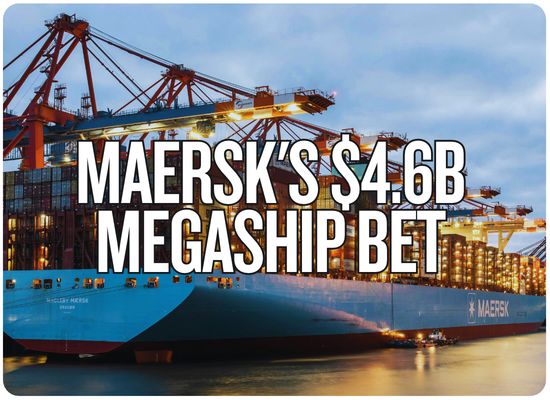
Maersk has reportedly selected China's Hengli Heavy Industries to build at least 20 LNG dual-fuel container ships with a nominal capacity of approximately 24,000 TEU each, according to shipbroking and market sources cited by Riviera Maritime Media on November 23, 2026. The reported price is approximately $229 million per vessel, placing the estimated value of a 20-ship programme at $4.58 billion and its combined carrying capacity at 480,000 TEU. Hengli operates its major shipbuilding complex on Changxing Island in Dalian, northeastern China. The reported agreement follows several weeks of negotiations in which Hudong-Zhonghua Shipbuilding had also been considered. Maersk had not publicly confirmed the new 24,000-TEU order or disclosed its final contractual terms at the time of reporting.
Maersk's Reported $4.6 Billion Megaship Bet Changes the Fleet Equation
Twenty proposed 24,000-TEU ships would bring almost as much capacity as Maersk's entire confirmed September newbuilding programme. The reported deal also puts an enormous delivery obligation on one of China's fastest-growing shipyards while global container capacity commitments approach historic extremes.
20 ships at approximately $229M each
TEU across the reported series
Approximate construction cost per nominal TEU
Against an earlier $240M negotiating estimate
The Price Negotiations Could Represent a $220 Million Difference
Earlier market reports placed a possible 24,000-TEU order at approximately $240 million per vessel. The November 23 report puts the Hengli price near $229 million.
| Pricing Measure | Earlier Negotiating Estimate | Reported Hengli Deal |
|---|---|---|
| Cost Per Vessel | $240 million | Approximately $229 million |
| Twenty-Vessel Value | $4.80 billion | Approximately $4.58 billion |
| Capital Per Nominal TEU | $10,000 | Approximately $9,542 |
| Difference | Reference negotiating estimate | $11M per ship; $220M for 20 |
Twenty New Ships Would Nearly Equal the Capacity of Maersk's Previous 26-Ship Order
The size increase is substantial. Maersk officially confirmed 26 dual-fuel ships of 18,600 TEU in September, scheduled for delivery during 2029–2030. The new 24,000-TEU series remains market-reported.
26 vessels at 18,600 TEU each. The order was formally disclosed by Maersk.
20 vessels at 24,000 TEU each. The programme awaits public company confirmation.
Hengli Could Become One of Maersk's Most Important Shipbuilding Partners
Clarksons data cited in the November 23 report identifies 20 existing 18,600-TEU Maersk newbuildings at Hengli. Adding the newly reported series creates a substantial potential yard-specific programme.
20 existing 18,600-TEU ships: 372,000 TEU, attributed to Hengli in the Clarksons vessel listings cited by Riviera.
20 reported 24,000-TEU ships: A further 480,000 TEU if the new programme is confirmed and allocated as reported.
The combined 852,000 TEU is a calculated yard-specific figure, not a separately confirmed Maersk contract disclosure.
| Shipbuilding Indicator | Reported Scale | Relevant Context |
|---|---|---|
| Hengli Container-Ship Orderbook | 166 vessels | Clarksons count cited by Riviera on November 23. |
| Hengli Capacity Backlog | 2.47M TEU | Separate Alphaliner-based shipyard-group estimate reported November 11. |
| MSC At Hengli | 60 large container ships | Clarksons count cited by Riviera. MSC is a major yard customer. |
| Container Ships Delivered | None as of Nov. 13 reporting | The yard had not yet established a delivered-container-ship track record despite its large orderbook. |
The Biggest Yard Risk Is Now Execution, Not Just Price
Hengli's rapid orderbook expansion has outpaced the delivery history of its new container-building operation. The next stage depends on physical capacity, systems integration and schedule discipline.
Large containership construction requires sufficient dock availability, block fabrication, lifting capacity and outfitting space. Hengli's ongoing expansion makes production sequencing an important consideration.
Dual-fuel engines, cryogenic fuel tanks, gas handling, automation and class testing add complexity. Equipment delivery and commissioning schedules must align with hull completion.
Shipowners generally manage newbuilding exposure through milestone payments, inspection rights, delay provisions and refund security. No specific protection package has been disclosed for this reported order.
The World's Container Orderbook Is Already Near Half the Trading Fleet
The reported Maersk negotiations coincide with one of the largest container-ship ordering cycles in the industry's history.
Linerlytica's October market estimate, representing approximately 46.5% of existing fleet capacity.
Alphaliner's 137-vessel figure cited in the November 23 reporting. It is not a pre-order baseline.
| Market Force | Capacity Effect | Possible Freight-Market Result |
|---|---|---|
| Newbuilding Deliveries | Large scheduled additions increase available nominal slots. | Downward pressure on utilization and rates if cargo growth does not absorb supply. |
| Older Ship Recycling | Removes less-efficient and ageing capacity. | Can offset part of the delivery wave, depending on demolition economics. |
| Slower Vessel Speeds | More hulls are required to maintain a given weekly service. | Can absorb capacity while reducing fuel consumption under suitable conditions. |
| Port Congestion | Extends effective round-voyage duration. | Temporarily reduces available shipping capacity and can support freight rates. |
| Shorter Routing | Reduces ships needed per service when diversions unwind. | Can release substantial capacity back into the market and intensify competition. |
Maersk's LNG Choice Adds Another Layer to Its Fuel Strategy
Maersk's established methanol-fuelled fleet and its expanding liquefied-gas programme are part of a broader multi-fuel renewal strategy. LNG dual-fuel capability does not automatically establish low lifecycle emissions.
| Fuel Pathway | Commercial Advantage | Remaining Exposure |
|---|---|---|
| Conventional Marine Fuel | Established bunkering infrastructure, procurement depth and operating experience. | Carbon intensity, emissions regulation, fuel costs and potential retrofit requirements. |
| Fossil LNG | Lower local air-pollutant emissions and potential operating benefits depending on engine design and fuel prices. | Methane slip, upstream emissions, LNG price spreads and capital cost of gas systems. |
| Bio-LNG / E-Methane | Potential lower lifecycle greenhouse-gas emissions using compatible liquefied-gas propulsion. | Certified fuel availability, cost premiums, lifecycle accounting and supply contracts. |
| Methanol Dual-Fuel | Provides another alternative-fuel pathway already deployed within Maersk's fleet. | Green-methanol cost and availability, bunkering coverage and lifecycle emissions. |
Twenty-Four-Thousand-TEU Ships Face a Narrower Network of Suitable Ports
The larger a vessel becomes, the more its economics depend on suitable terminal infrastructure, consistently high cargo volumes and route compatibility.
Megamax vessels need suitable water depth, berth length, turning room and cranes with sufficient outreach. Nominal capacity alone does not determine which terminals can handle a ship economically.
The largest container ships are generally suited to high-volume deepwater routes. A 24,000-TEU-class ship is too large for the Panama Canal's Neopanamax locks under conventional vessel dimensions.
A nominal 24,000-TEU ship carries 18,000 TEU at 75% slot utilization and 21,600 TEU at 90%. Actual cargo weight, stowage and vessel stability further constrain utilization.
How the Reported Order Developed
Confirmed Maersk order: Maersk announced 26 dual-fuel containerships of 18,600 TEU, to be delivered in 2029 and 2030. Industry sources subsequently attributed 20 to Hengli and the remainder to New Times Shipbuilding.
Larger vessels under discussion: Reports described a potential 24,000-TEU programme, initially involving 12 firm ships and 12 optional units. Chinese shipyards competed for the order while Hengli separately announced extensive orders from multiple liner customers.
Pricing becomes decisive: Riviera reported that Hudong-Zhonghua was reconsidering its participation because the proposed economics appeared unattractive to the builder. Hengli remained a potential alternative.
Hengli reported as winner: Shipbroking and market sources placed at least 20 vessels with Hengli at approximately $229 million each. The award was described as having been firmed up over preceding weeks, rather than necessarily signed on November 23.
Five Contract Details Still Matter More Than the Headline
Market reporting establishes the proposed commercial scale but does not disclose the full contractual package.
| Outstanding Detail | Currently Available | Commercial Significance |
|---|---|---|
| Signed Contract and Options | At least 20 reported; no public award confirmation | Determines binding investment, total vessel count and any additional commitments. |
| Delivery Schedule | No confirmed dates for this 24,000-TEU series | Determines when capacity enters service and the relevant shipbuilding execution window. |
| Detailed Ship Specification | LNG dual-fuel and approximate nominal TEU reported | Engine design, actual intake, fuel storage and dimensions influence vessel economics. |
| Contract Security and Financing | No public payment or guarantee terms | Establishes capital exposure, refund protection and consequences of late delivery. |
| Fleet Replacement and Deployment | No confirmed service allocation or retirement schedule | Determines whether capacity represents genuine net supply growth or fleet modernization. |
The reported $4.58 billion order would place Maersk among the most aggressive buyers of ultra-large container tonnage while strengthening Hengli's position in China's rapidly expanding shipbuilding sector. The $229 million price suggests a potentially meaningful negotiating advantage, but the value of the programme will ultimately depend on delivered vessel quality, schedule reliability, fuel economics and the amount of cargo available when the ships enter service. With the global container orderbook already approaching half the active fleet, the difference between replacing older capacity and expanding supply will be central to how the market absorbs another 480,000 TEU of giant ships.
We welcome your feedback, suggestions, corrections, and ideas for enhancements.
Please click here to get in touch