

🔔 Subscribe to ShipUniverse Weekly →
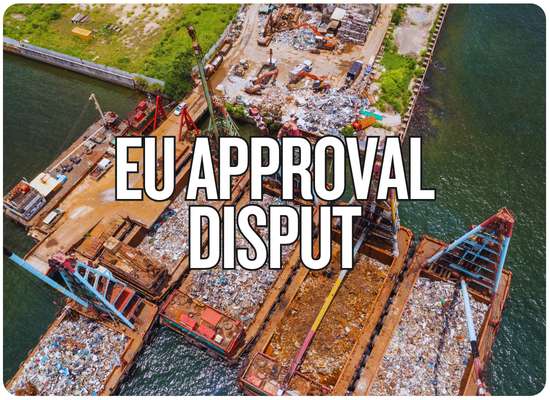
The European Parliament voted on November 25, 2026, to oppose adding two Indian ship recycling facilities to the European Union's approved list, adopting a formal objection by 377 votes to 214, with 24 abstentions. The facilities are Shree Ram Vessel Scrap and YSI Recyclers, both located in the Alang-Sosiya ship recycling cluster in Gujarat. The European Commission had proposed their inclusion following an extended inspection and compliance-assessment process. Parliament's objection cites concerns involving intertidal ship dismantling, pollution containment and downstream waste management. Eight international shipping associations had urged lawmakers to support the Commission's proposal. The objection calls for withdrawal and revision of the draft implementing decision, but final handling of the European List remains with the Commission under the applicable EU procedures.
EU Parliament Opposes Two Indian Recycling Yards as Shipowners Warn of a Capacity Crunch
A 377–214 parliamentary vote challenges the Commission's assessment of two Alang facilities, putting environmental standards, recycling capacity and the economics of retiring large merchant ships at the centre of a regulatory dispute.
214 opposed; 24 abstained
Shree Ram and YSI Recyclers
Signed a joint appeal supporting approval
Commission review and Member State process
Both applicants are located in India's Alang-Sosiya recycling cluster. They would be the first Indian facilities admitted to the European List if ultimately approved.
| Facility | Plots | Reported Maximum Beam | Regulatory Position |
|---|---|---|---|
| Shree Ram Vessel Scrap / Shree Ram Shipping Industries | 78 and 81 | 61 metres | Commission proposed inclusion following its compliance assessment; Parliament objects. |
| YSI Recyclers LLP | 59 | 53 metres | Commission proposed inclusion following its compliance assessment; Parliament objects. |
The reported beam limits indicate that these facilities target the large merchant-vessel segment rather than exclusively smaller coastal ships. Actual acceptance would also depend on vessel draft, light displacement, tides, yard procedures and applicable authorizations.
The same facility-inspection process has produced conflicting institutional assessments.
| Issue | Commission Assessment | Parliament's Objection |
|---|---|---|
| Inspection Evidence | A multi-year assessment included three site inspections and further checks on downstream facilities. | Questions whether all relevant practices were independently verified, including operations at YSI during its latest site visit. |
| Intertidal Cutting | Physical infrastructure and operating controls together were considered adequate under applicable technical guidance. | Raises concerns about cutting on tidal mudflats and whether hazardous substances can be contained effectively. |
| Waste Treatment | Commission services concluded the assessed downstream arrangements satisfied the applicable requirements. | Challenges the equivalence of wastewater treatment, incineration standards and downstream waste controls. |
| Overall Compliance | Commission services concluded both facilities had demonstrated compliance with the regulation. | Resolution considers their inclusion inconsistent with Articles 13 and 15 and requests a revised draft excluding them. |
In an October 9 clarification to Member States, Commission services stated that the assessment was supported by three on-site inspections of the yards, checks of downstream waste-management facilities, and further evidence reviewed in 2025. The Commission maintained that its positive findings were not dependent solely on recent self-reported upgrades.
Parliament's resolution takes a different position. It cites potential failures in pollution prevention, impermeable-floor requirements and the equivalence of downstream waste processing. These are Parliament's regulatory findings and objections, not a final judicial determination of non-compliance.
Share of vessels recycled worldwide in the industry analysis cited by the eight shipping associations.
Share measured by light displacement tonnage, reflecting the much smaller average size of ships recycled in EU facilities.
The shipping associations' November 24 letter states that EU yards handled ships averaging only 30% of the size of vessels recycled globally. Many European facilities specialize in smaller ships, offshore units, fishing vessels and inland craft, rather than large tankers, bulk carriers and containerships.
BIMCO's longer-term industry estimate cited in maritime reporting projects more than 16,000 vessels representing approximately 700 million DWT requiring recycling over the next decade. That is a forecast of future retirement demand, not a firm demolition schedule.
Illustrative sensitivity for a 30,000-LDT vessel. No current regional recycling bids or verified price differential are implied.
| Illustrative Price Difference | Gross Value Difference | Commercial Interpretation |
|---|---|---|
| $25 per LDT | $750,000 | Difference before delivery, compliance and transaction expenses. |
| $50 per LDT | $1,500,000 | Shows the potential sensitivity of residual vessel proceeds to regional price spreads. |
| $100 per LDT | $3,000,000 | A larger hypothetical spread, not a measured European-versus-Indian price premium. |
A vessel's end-of-life sale price typically depends on light displacement tonnage, recoverable materials, condition, equipment, hazardous-material inventory, delivery location and scrap-market conditions. Regulatory restrictions may reduce the number of eligible buyers and affect the achievable net sale price.
However, neither the parliamentary vote nor the industry letters establish actual price differences attributable to the two Indian yards. No quantified owner loss can presently be calculated from the decision.
The Commission's October 9 technical answers distinguish where a vessel becomes waste from the flag it flies.
| Scenario | Applicable Framework | India Recycling Option |
|---|---|---|
| Ship becomes waste within EU jurisdiction | EU waste-export restrictions apply, including the prohibition on exporting such waste to non-OECD countries. | Prohibited under that export restriction, even if an Indian yard joins the European List. |
| EU-flagged ship becomes waste outside the EU | EU Ship Recycling Regulation applies, including the obligation to use an approved facility. | Potentially permitted at an EU-listed Indian facility, subject to other applicable requirements. |
| Non-EU-flagged ship | Flag-state, recycling-state and other applicable international or domestic requirements govern. | The EU-approved list is not automatically the governing facility list solely because the owner is European. |
Parliament's environment committee supported opposition to the proposal by 48 votes to 26, with five abstentions.
Parliament adopted the formal objection by 377 votes to 214, with 24 abstentions.
The Commission must consider Parliament's position, with Member States also participating in the applicable implementing procedure.
Under Article 11 of Regulation (EU) No 182/2011, the Commission must review a draft implementing act when Parliament considers it to exceed the powers provided under the underlying legislation. The Commission must then inform Parliament and the Council whether it intends to maintain, amend or withdraw the draft.
The IMO's Hong Kong Convention has been in force since June 26, 2025, but compliance with that international framework does not by itself place a recycling yard on the European List. The two approval systems remain legally distinct.
The November 25 vote leaves two Indian ship recycling facilities outside the EU-approved network while the Commission considers Parliament's objections. The dispute combines unresolved questions about the interpretation of environmental requirements with limited large-vessel recycling options for EU-flagged ships. The next Commission decision will determine whether these two Alang facilities enter the European List or remain excluded from this update.
We welcome your feedback, suggestions, corrections, and ideas for enhancements.
Please click here to get in touch