
🔔 Subscribe to ShipUniverse Weekly →
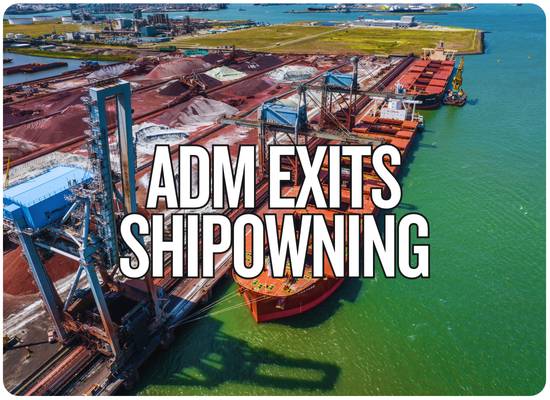
Archer Daniels Midland has entered into agreements to sell its three remaining owned oceangoing dry bulk carriers in a fleet transaction reported at approximately $88 million. The buyer has been identified in shipping-market reports as London-based Hayfin Capital Management, although Hayfin has not publicly confirmed the acquisition. The vessels are Harvest Frost, Harvest Rain and Harvest Time, three 95,263-deadweight-tonne Post-Panamax bulk carriers constructed by Japan's Oshima Shipbuilding in 2014 and 2015. ADM confirmed the sale agreements to maritime industry publication Riviera, while Splash247 reported the transaction on November 27. Broker information indicates charter-free deliveries are scheduled between December 2026 and the second quarter of 2027. Shipping databases also show the vessels being renamed GH Solano, GH Autan and GH Vendavel.
ADM Sells Its Last Three Bulkers for $88 Million — But Keeps Its Freight Exposure
The agricultural commodities giant is preparing to leave direct oceangoing shipownership while maintaining its international transportation operations. The transaction reveals how cargo owners and maritime investment funds can pursue different strategies around the same vessels.
Combined sale consideration
Post-Panamax bulk carriers
Metric tonnes of DWT capacity
Arithmetic average per vessel
The ships were ordered by ADM in 2011 and delivered from Oshima Shipbuilding in 2014–2015. Their reported technical specifications are closely matched.
| Original Vessel | Reported New Name | Built | Deadweight | Next Drydock |
|---|---|---|---|---|
| Harvest Frost | GH Solano | 2014 | 95,263 dwt | Sep. 2027 |
| Harvest Rain | GH Autan | 2015 | 95,263 dwt | May 2028 |
| Harvest Time | GH Vendavel | 2015 | 95,263 dwt | Dec. 2027 |
Shipbroker data identifies all three as fitted with fuel-efficient main engines and exhaust-gas scrubbers. Their common shipyard, dimensions and broadly similar age create a relatively uniform fleet package for the reported buyer.
The published portfolio price allows several useful calculations, although the individual vessel prices remain undisclosed.
| Transaction Measure | Calculation | Result |
|---|---|---|
| Reported en-bloc price | Three vessels | $88 million |
| Arithmetic average price | $88M / 3 | $29.33M per vessel |
| Combined carrying capacity | 95,263 × 3 | 285,789 dwt |
| Price per unit of deadweight | $88M / 285,789 | Approximately $308/dwt |
| Combined fleet age | 2014–2015 builds | Approximately 11–12 years old |
The reported average of $29.33 million compares with a VesselsValue estimate of $26.92 million for Harvest Frost. This provides a valuation reference, but not proof of a premium on that vessel: the en-bloc consideration has not been allocated among the three ships.
A comparison with ADM's SEC filings shows that the shift away from owned oceangoing tonnage follows an established reliance on leased shipping capacity.
In its 2024 annual filing, ADM reported three owned oceangoing vessels alongside twenty vessels under operating leases. Its subsequent 2025 Form 10-K continued to describe a transportation network combining owned and leased equipment, without reproducing the same vessel-count breakdown.
The reported transaction covers ADM's three remaining directly owned oceangoing ships, according to Clarksons fleet records.
ADM confirms it will continue using transportation arrangements to support its global agricultural commodity business.
| Decision Factor | Owning the Vessels | Chartering Capacity |
|---|---|---|
| Capital requirement | Capital remains committed to vessel assets. | Less direct capital committed to ship purchases, although charter liabilities may remain. |
| Market exposure | Participates in vessel appreciation and depreciation. | More exposure to charter rates and contract renewal costs. |
| Maintenance and surveys | Typically carries owner responsibility for maintenance, class and major repairs. | Responsibility is allocated under the charter or lease structure. |
| Fleet flexibility | Owned capacity remains available but can be costly to redeploy or dispose of. | Contracts can be selected by vessel size, trade and duration. |
| Capacity assurance | Direct control of the asset, subject to maintenance and operational availability. | Requires suitable charter terms to secure reliable access. |
ADM's confirmed explanation is that the sale forms part of its ongoing review of its asset portfolio and logistics network. The company has not disclosed the specific financial return calculations behind the decision.
For an agricultural trader, chartering can provide flexibility when crop origins, grain export demand and trading routes change. Direct ownership may remain attractive when dependable long-term cargo flows justify asset investment. The optimal structure depends on financing costs, charter markets, utilisation and residual vessel values.
The reported acquirer has an established maritime investment platform focused on owning ships and generating charter income.
Hayfin operates an in-house shipmanagement platform supporting its shipping investments.
Two Post-Panamax newbuildings contracted with long-term employment arranged for an energy trader.
Previously announced capacity to acquire shipping assets using equity and debt financing.
Hayfin previously announced two 100,000-dwt Post-Panamax newbuildings at Oshima, scheduled for completion in 2026, with long-term charter commitments to an international energy trader. The company has also invested in tanker, LNG and other shipping segments.
The new GH-prefixed vessel names align with the naming pattern associated with Greenheart-managed ships. However, the reported ADM acquisition has not been accompanied by a publicly disclosed Hayfin charter contract, financing structure or expected investment return.
The first vessel is expected to transfer during December, subject to the agreed delivery arrangements.
Remaining deliveries may extend into the second quarter of next year.
A charter-free sale means that the vessels are expected to transfer without existing charter employment attached. That gives the incoming owner freedom to negotiate new employment, but it also creates exposure to the charter market when delivery occurs.
No long-term charter-back to ADM has been announced. Nor has Hayfin disclosed whether the acquired ships will be placed on spot employment, period charters or another arrangement after transfer.
Allied QuantumSea's late-November market report provides useful context for the size of the package.
| Market Indicator | Reported Figure | Context |
|---|---|---|
| 2026 dry bulk vessel sales | 693 | Reported transactions through November 20. |
| Total vessel sales, all sectors | 1,575 | Dry bulk accounted for approximately 44%. |
| Post-Panamax sales YTD | 53 | Including five recorded for the latest reporting week. |
| ADM package | $88M | Largest dry bulk portfolio deal highlighted in the week's broker commentary. |
The three vessels' common 95,263-dwt specification, Japanese construction, scrubber installations and forthcoming survey schedules provide identifiable characteristics for buyers assessing operating costs and future resale potential.
The sale also illustrates how financial investors can acquire existing ships without waiting for newbuildings. The attraction depends on the purchase price, condition, charter employment and future asset values, rather than vessel age alone.
| Question | What Is Known | What Remains Undisclosed |
|---|---|---|
| ADM's realised gain | $88M reported portfolio price. | Book values, expenses and final accounting profit or loss. |
| Hayfin's investment return | Three vessels with combined 285,789 dwt. | Purchase allocation, debt terms, operating expenses and target return. |
| Future freight employment | Charter-free delivery scheduled. | Fixture rates, charterers, contract lengths and trading regions. |
| ADM's replacement capacity | Company will continue using global transportation arrangements. | Whether ADM will charter replacement vessels or alter fleet requirements. |
| Fleet disposal completion | Sale agreements confirmed. | Actual delivery dates and final transfer of each vessel. |
The deal is a meaningful example of cargo ownership and shipownership moving into separate hands, but one transaction is not enough to establish an industry-wide withdrawal by agricultural companies from vessel ownership. Further fleet disclosures and charter commitments would be needed to measure that broader trend.
ADM's reported $88 million disposal of its last three owned oceangoing bulk carriers transfers a significant block of Post-Panamax capacity toward a financial maritime investor while leaving ADM's freight transportation business intact. The transaction highlights a familiar division in modern shipping: industrial cargo owners need reliable vessel access, while specialist shipowners provide capital and assume asset-market exposure. The final delivery schedule and subsequent charter employment will determine how this fleet changes hands commercially.
We welcome your feedback, suggestions, corrections, and ideas for enhancements.
Please click here to get in touch