SHIPUNIVERSE / NAVAL TECHNOLOGY · NOVEMBER 19, 2026
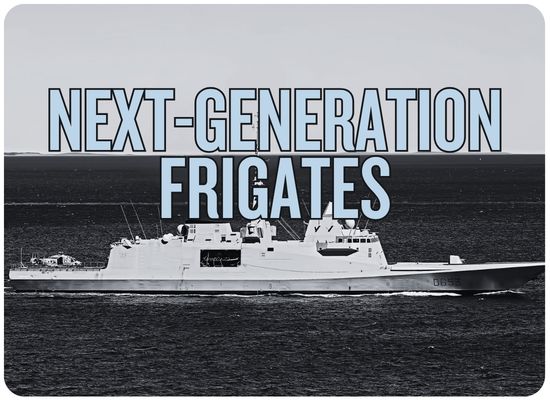
A frigate looks impressive at the launch ceremony. The harder work comes afterward, when the radar, weapons, sonar and propulsion have to operate as one ship. South Korea put its fifth Chungnam-class frigate, Pyeongtaek, in the water on November 18. What stands out is not one new missile or a bigger gun. It's the amount of Korean-made technology packed into a repeatable design, with the latest hull adding electronic-warfare and cyber-monitoring upgrades.
5 of 6
Batch-III hulls launched as of November 18
3,600 t
Frigate class designation, not full-load displacement
4 faces
Fixed multifunction radar arrays providing 360° surveillance
Dec. 2027
Scheduled handover of Pyeongtaek after sea trials
ROKS Pyeongtaek (FFG-833) launched at Hanwha Ocean's Okpo yard in Geoje. Launch does not mean commissioning. Sea trials, acceptance and fleet work-up remain ahead.
01 / THE FLEET'S ACTUAL STATUS
Five Launched. Two Delivered. One Still Building.
THE SIX-SHIP FFX BATCH-III PROGRAM
STATUS · NOV. 19, 2026
2 deliveredChungnam, Gyeongbuk
3 post-launchJeonnam, Jeju, Pyeongtaek
1 buildingSixth hull, keel laid July 2026
The distinction worth keeping: Pyeongtaek is the fifth hull launched, not the fifth frigate already in service. The first two were delivered in December 2024 and June 2026. Pyeongtaek's December 2027 handover remains a target, with operational deployment following additional work-up.
02 / HOW ITS SYSTEMS FIT TOGETHER
Four Layers of a Modern Frigate
01 · Detect
Fixed AESA panels, IRST, hull sonar and towed array gather separate tracks.
02 · Fuse
Korean combat-management software combines sensor and tactical data.
03 · Respond
K-VLS, surface missiles, gun and torpedoes provide mission-specific weapons.
04 · Sustain
Hybrid machinery, electronic protection and onboard cyber monitoring support operations.
03 / CLASS EVOLUTION
What Batch III Adds to the Earlier Frigates
| Feature | Batch II · Daegu class | Batch III · Chungnam class |
|---|
| Primary surveillance |
Rotating principal radar arrangement |
Four fixed-face multifunction phased-array radar; 360° watch |
| Sensor integration |
Separate topside sensors and earlier combat system |
Integrated stealth-shaped mast with radar and infrared search/track |
| Submarine search |
Hull and towed sonar with quiet hybrid propulsion |
Retains that ASW approach with upgraded domestic sensors and combat integration |
| Missile capacity |
16 Korean VLS cells reported for the class |
16 cells reported for Batch III; air-defense and other payload choices compete for capacity |
| Build strategy |
Earlier evolutionary frigate series |
Six repeat hulls split among HD Hyundai, SK Oceanplant and Hanwha Ocean |
This is an equipment-level comparison, not a ranking of combat effectiveness. Fixed radar faces improve surveillance continuity, but published sources do not establish actual combat detection ranges or engagement success rates.
04 / EIGHT TECHNOLOGIES TO WATCH
The New Frigate, System by System
Expand a section for what is installed, its operational value and the engineering or performance limitation.
01Four-Face AESA Radar
Continuous 360-degree tracking without a rotating main antenna.
Details
Installed systemSouth Korea's domestically developed multifunction phased-array radar uses four fixed faces to observe air and surface contacts in all directions.
Operational valueSupports tracking of multiple threats and provides the combat system with more continuous target updates than a conventional rotating search arrangement.
LimitCoverage does not imply unlimited simultaneous engagements. Detection range, clutter handling and performance against specific targets are not publicly established.
Signal to watch: Acceptance of the complete radar and combat-system integration during Pyeongtaek's sea trials.
02Stealth-Shaped Sensor Mast and Infrared Search
Radar, infrared tracking and lower-signature topside design in one structure.
Details
Installed systemHanwha Systems' integrated mast combines the fixed radar with an infrared search-and-track system (IRST) in a low-observable structure.
Operational valueInfrared sensing provides another source of information, including when radar emissions are being controlled. Integrated equipment also reduces some exposed topside complexity.
LimitWeather, atmospheric conditions, sensor calibration and interference affect performance. A stealth-shaped mast does not make a frigate invisible.
Signal to watch: Sensor calibration and maintainability, especially access to equipment within the integrated mast.
03Korean Combat-Management System
The software layer connecting sensors, weapons and decision-making.
Details
Installed systemHanwha Systems describes a domestically developed network-based combat system, using virtualized computing and real-time middleware to share and process sensor data.
Operational valueOne coherent track picture supports air, surface and undersea operations and allows future Korean equipment to be integrated without replacing the entire ship.
LimitSoftware integration adds testing, cybersecurity and configuration-management obligations. The company has not published Pyeongtaek's processing capacity or upgrade cost.
Signal to watch: Successful weapon/sensor interface testing and stable software baselines across multiple hulls.
04K-VLS and Local Air Defense
A compact frigate carries a vertical-launch air-defense capability.
Details
Installed architectureThe Batch-III class is commonly reported with 16 Korean vertical-launch cells. K-SAAM (Haegung) provides the class's indigenous short-range air-defense missile capability.
Operational valueThe frigate can defend itself and support nearby naval operations, with fixed radar faces providing tracks for the combat system.
LimitA 16-cell arrangement is not equivalent to an Aegis destroyer's much larger missile inventory. Exact Pyeongtaek loadouts and tested engagement performance were not published at launch.
Signal to watch: Missile-system acceptance and magazine flexibility, not unsupported claims about area-defense range.
05Multi-Role Missiles and Five-Inch Gun
Surface defense, land-attack options and antisubmarine weapons share the ship's space.
Details
Confirmed fitDAPA identifies a five-inch gun, K-VLS, anti-ship missile-defense weapons, ship-to-ship missiles, tactical ship-to-land missiles and long-range antisubmarine torpedoes.
Operational valueOne frigate can contribute to several mission types rather than being a single-purpose coastal patrol ship.
LimitPublished armament lists are not a confirmed embarked loadout for every sailing. Launchers, stores, guidance data and missile inventory all constrain real capacity.
Signal to watch: Trials of the actual installed weapons and clear reporting on what is integrated versus merely planned for the wider class.
06Hull Sonar Plus Towed Array
Two complementary ways to listen for submarines.
Details
Installed systemDAPA confirms Korean-developed hull-mounted sonar (HMS) and a towed-array sonar system (TASS).
Operational valueThe fixed hull sensor and towed array give the combat system different listening geometries and help support antisubmarine search in changing water conditions.
LimitDetection depends on ocean conditions, ship noise, sonar processing and operator expertise. Having two systems does not guarantee contact identification.
Signal to watch: Integrated sonar performance with the frigate's quiet propulsion and helicopter-supported ASW procedures.
07Quiet Hybrid Propulsion
Electric drive for quieter operations, gas-turbine power when needed.
Details
Installed architectureThe Batch-III class employs a combined diesel-electric or gas (CODLOG) arrangement developed from the earlier Daegu-class approach.
Operational valueElectric low-speed operation can reduce underwater radiated machinery noise, valuable when the hull and towed sonar are listening.
LimitElectric operation is not silent, and machinery changes add maintenance, vibration-control and reliability demands. No public acoustic signature or fuel-burn comparison for Pyeongtaek is available.
Signal to watch: Trial results for propulsion reliability, acoustic performance and maintenance hours.
08Upgraded EW and Onboard Cyber Monitoring
The most notable reported changes from the lead frigate.
Details
New on fifth hullA Hanwha Ocean executive said Pyeongtaek adds upgraded electronic-warfare equipment and a shipboard cyber-threat monitoring system relative to the lead ship Chungnam.
Operational valueElectronic surveillance/protection and digital-network monitoring address two increasingly important pressures on ships carrying tightly integrated sensors and weapons.
LimitThe EW configuration, cyber-monitoring architecture and real-world effectiveness are not public. Monitoring for intrusions is not proof of immunity to attack.
Signal to watch: Whether the new EW/cyber fit becomes a standard upgrade across the class and how it affects maintenance and software support.
05 / THE SHIPBUILDING STORY
Korean Systems. Three Domestic Yards. One Repeat Design.
₩790 billion
Two-hull Hanwha construction contract
The 2023 award covers Pyeongtaek and the sixth Batch-III frigate. It is not a verified price for one equipped or fully supported ship.
90%+
Domestic content, company-reported
Hanwha Ocean described Korean parts and suppliers exceeding 90% for frigates of this type; the method used to calculate that share was not independently disclosed.
| Hull | Builder | Verified milestone |
|---|
| 1 · Chungnam (FFG-828) | HD Hyundai Heavy Industries | Delivered December 2024 |
| 2 · Gyeongbuk (FFG-829) | SK Oceanplant | Delivered June 2026 |
| 3 · Jeonnam (FFG-831) | SK Oceanplant | Launched November 2025; delivery targeted December 2026 |
| 4 · Jeju (FFG-832) | SK Oceanplant | Launched April 2026; fitting-out and trials ahead |
| 5 · Pyeongtaek (FFG-833) | Hanwha Ocean | Launched November 18, 2026; delivery targeted December 2027 |
| 6 · Final Batch-III hull | Hanwha Ocean | Keel laid July 2026; delivery targeted June 2028 |
What the yards can repeat: sensors and combat-system interfaces, production drawings, suppliers and established hull blocks. Hanwha says larger “mega-blocks” shortened its construction process by several months. That is a company claim, not an independently verified fleetwide saving. The bigger hurdle comes after launch: proving the installed systems work together.
Research sources · Korean Navy, DAPA and shipbuilding reporting
Research current to November 19, 2026. Class-level weapon-cell counts and propulsion descriptions are distinguished from publicly verified ship-specific acceptance. No unreported radar ranges, sonar detection performance, missile loadouts, ship acquisition unit prices or operational readiness rates are assumed.