
🔔 Subscribe to ShipUniverse Weekly →
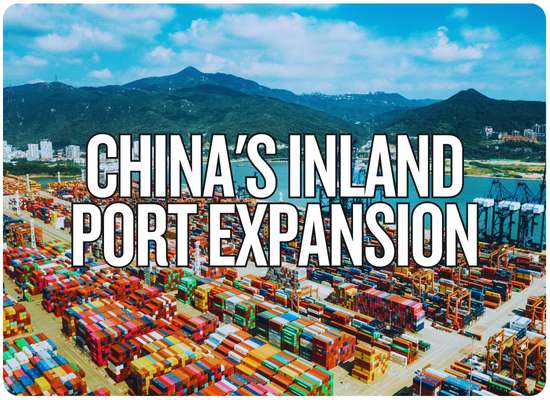
China is advancing a significant expansion of its inland shipping infrastructure after a November 25 construction tender detailed four new berths at Wuzhou Port in Guangxi. The Tangyuan development is designed to handle 9.93 million tonnes of cargo annually, including 110,000 TEU of containers, across 408 meters of waterfront. Construction requirements include approximately 84,700 cubic meters of underwater rock removal, extensive cargo-handling infrastructure and digital port-management systems. The project strengthens an established inland shipping gateway connecting southwestern China's industrial economy with the Pearl River Delta and international maritime markets.
Four New Berths With an Industrial Cargo Focus
The development covers Berths 5–8 within Wuzhou Port's Tangyuan operating area, on the right bank of the Xi River in Wanxiu District. The facilities will adjoin the existing Zijincun terminal and are being developed by Wuzhou Port Construction Investment Co.
An earlier procurement plan published on October 13 provides additional detail about the intended cargo mix, identifying approximately 9.05 million tonnes of annual bulk and general cargo handling capacity alongside the container component.
| Project Specification | Tender Details |
|---|---|
| Total New Berths | 4 |
| Container Berths | 1 × 3,000-tonne class |
| Multipurpose Berths | 3 × 3,000-tonne class |
| Total Waterfront | 408 meters |
| Annual Design Throughput | 9.93 million tonnes |
| Bulk and General Cargo | 9.05 million tonnes |
| Container Capacity | 110,000 TEU annually |
| Principal Cargo Types | Containers, coal, general cargo, construction minerals and metallurgical byproducts |
| Construction Funding | 100% self-raised project funding, according to the tender |
| Construction Contract Value | Not disclosed in the public notice |
Bulk and general cargo account for approximately 91% of the project's total design tonnage. The development is therefore principally an expansion of industrial logistics capacity rather than a container-focused terminal.
A Major Addition to an Already Large Inland Port
Although Wuzhou receives relatively little attention internationally compared with China's coastal container gateways, it has developed into a substantial inland maritime logistics center.
The port handled approximately 132 million tonnes of cargo in 2025, representing growth of 20.1% compared with 2024. Container throughput reached approximately 1.11 million TEU, placing Wuzhou first among Guangxi's inland ports in both cargo and container volumes.
The expansion is significant even against Wuzhou's existing scale. However, new terminal capacity should not automatically be interpreted as equivalent cargo growth, particularly if cargo is redistributed from existing facilities.
84,700 Cubic Meters of Underwater Rock Removal
One of the more technically demanding elements disclosed in the construction tender is the removal of approximately 84,700 cubic meters of submerged rock. The work forms part of a wider marine civil engineering program that includes dredging, waterfront structures and ground preparation.
Equivalent in volume to approximately 34 Olympic-size swimming pools, assuming a 2,500-cubic-meter reference pool.
Underwater rock excavation can introduce higher equipment requirements, mobilization costs and construction risks than conventional soft-sediment dredging. Actual engineering methods will depend on rock properties, site access, environmental restrictions and detailed construction drawings.
| Tender Work Package | Engineering Requirements |
|---|---|
| Marine Excavation | Dredging, submerged rock removal and underwater surveys. |
| Marine Structures | Berthing infrastructure, quay construction and associated civil works. |
| Ground Engineering | Land formation, foundation treatment and settlement control. |
| Cargo Infrastructure | Handling equipment, storage yards and internal transport routes. |
| Electrical Systems | Power distribution, terminal lighting and equipment controls. |
| Digital Infrastructure | Communications, production management and information systems. |
| Environmental Systems | Drainage, environmental protection and construction-phase safeguards. |
The main construction tender packages these disciplines into a single contract, making coordination between civil engineering, equipment installation and terminal systems a central project requirement.
The Navigation Bottleneck Just 15 Kilometers Upstream
The new berths will sit approximately 15.2 kilometers downstream of the Changzhou water-control and navigation complex. The location is commercially important because the Changzhou locks serve one of the busiest inland shipping corridors in China.
Cargo passing through the locks exceeded 200 million tonnes annually in both 2024 and 2025. During the first ten months of 2026, the complex handled approximately 184.5 million tonnes and more than 94,000 vessel passages.
The Ministry of Transport's November 9 waterway report identified significant navigation constraints during September. Flood conditions disrupted operations early in the month, while insufficient upstream water later restricted lock operation.
One lock line was suspended for 163 hours between September 24 and 30. Monthly vessel passages declined 21.4% year over year, while cargo volume through the complex fell 7.6%.
Tangyuan's position downstream means cargo originating locally can move east toward the Pearl River Delta without first passing through Changzhou. Cargo arriving from upstream industrial regions, however, remains exposed to lock delays and river navigation conditions.
The New $10 Billion Canal Changes the Regional Shipping Equation
The Wuzhou tender follows the opening of China's Pinglu Canal on September 16, 2026. Built at a cost of approximately ¥72.7 billion, the 134.2-kilometer canal creates an additional maritime outlet from inland Guangxi to the Beibu Gulf.
The canal could divert selected upstream cargoes that previously moved east through Wuzhou toward Guangdong. Conversely, the broader expansion of Guangxi's waterborne logistics network could generate new industrial cargo demand and intermodal opportunities.
The Tangyuan investment therefore suggests that development of the traditional Xi River shipping corridor is continuing despite the emergence of a competing route to the sea.
The Economics of Moving Industrial Cargo by Water
Recent government freight data provide an indication of the commercial scale of inland shipping services across the region. In September 2026, benchmark bulk freight rates from Guigang to Guangzhou and Shenzhen increased substantially as river conditions tightened vessel availability and operating efficiency.
| Representative Bulk Route | Aug. 2026 | Sept. 2026 | Change |
|---|---|---|---|
| Guigang–Guangzhou | ¥15/t | ¥23/t | +53.3% |
| Guigang–Shenzhen | ¥17/t | ¥25/t | +47.1% |
The figures illustrate both the economic scale and operational sensitivity of inland shipping. While waterways can provide cost advantages for large-volume industrial cargo, seasonal water levels, vessel turnaround times and navigation restrictions can materially affect freight rates.
If cargo moving through the new facilities achieved an average logistics saving of ¥5 per tonne across the full 9.93-million-tonne design throughput, the theoretical annual savings would reach ¥49.65 million. This is a sensitivity calculation, not a project forecast or a confirmed transport-cost reduction.
Wuzhou's Existing Connection to International Shipping
Wuzhou's inland location does not prevent it from participating in international commodity supply chains. In September, imported copper from Tanzania arrived at Wuzhou's Lijiazhuang terminal after entering China through Guangzhou's Nansha Port and transferring to an inland feeder vessel.
The shipment illustrates how inland ports can extend the commercial reach of major coastal terminals while reducing the need to transport imported industrial materials entirely by road.
Additional capacity at Tangyuan could support similar supply chains involving manufacturing inputs, construction materials, steel industry cargoes and containerized exports.
Commercial Opportunities Across the Maritime Supply Chain
| Industry Segment | Potential Commercial Opportunity |
|---|---|
| Dredging Contractors | Specialized underwater excavation, surveys and rock removal. |
| Marine Civil Engineering | Quays, foundations, waterfront structures and ground stabilization. |
| Bulk Handling Equipment | Cranes, grabs, material handling systems and dust-control equipment. |
| Inland Vessel Operators | Potential additional employment for bulk carriers, barges and container feeders. |
| Port Technology Providers | Production management software, communications and equipment control systems. |
| Environmental Engineering | Runoff management, industrial dust mitigation and environmental monitoring. |
| Marine Testing & Inspection | Construction quality assurance, technical surveys and engineering supervision. |
Procurement Is Moving Into the Construction Phase
The November notice confirms that the project previously received approval from Guangxi's Development and Reform Commission under approval reference 2025 No. 19.
The construction tender requires contractors with high-level port and waterway engineering qualifications. Eligible bidders must also demonstrate previous construction experience involving either a berth of at least 3,000-tonne class or a qualifying terminal construction contract valued at ¥300 million or more.
The Tangyuan expansion demonstrates the scale of investment continuing across China's inland maritime network, beyond the major coastal ports that dominate international shipping headlines. Its commercial significance will ultimately depend on cargo utilization, industrial demand, seasonal navigation reliability and the redistribution of freight following the opening of the Pinglu Canal.
For maritime contractors and inland vessel operators, the November tender establishes a concrete procurement milestone. The next major developments will be the construction contract award, confirmed mobilization and disclosure of the project's final construction value.
We welcome your feedback, suggestions, corrections, and ideas for enhancements.
Please click here to get in touch