
🔔 Subscribe to ShipUniverse Weekly →
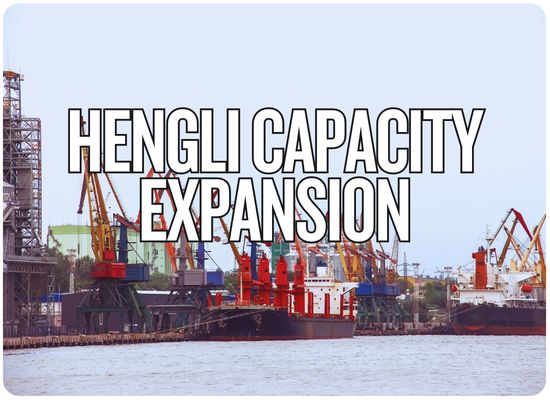
Chinese shipbuilder Hengli Heavy Industries is proposing a ¥17 billion expansion of its shipbuilding and offshore equipment manufacturing facilities at Dalian's Changxing Island port area. In stock exchange disclosure No. 2026-113, dated November 28, 2026, listed parent Guangdong Songfa Ceramics said subsidiary Hengli Shipbuilding (Dalian) plans to develop a green, intelligent and digitally integrated manufacturing base covering approximately 1,053.48 hectares of planned land. The project includes steel storage yards, hull fabrication workshops, coating facilities, outfitting workshops and associated infrastructure. The board approved the investment proposal on November 27, with construction tentatively scheduled to begin in December 2026 and take 24 months. Shareholder authorization and relevant planning, environmental and construction approvals remain outstanding.
Hengli's ¥17 Billion Expansion Signals a New Phase in China's Shipbuilding Capacity Race
The proposed 1,053-hectare Dalian manufacturing base targets production bottlenecks and higher-value vessels. A crowded orderbook explains the timing, but the financial commitments, eventual capacity and regulatory approvals remain unresolved.
Cash investment estimate, subject to final project costs
Approximately 97% of the investment estimate
Equivalent to 1,053.48 hectares
Hengli's reported order schedule extends into the decade
The November 28 exchange filing outlines a manufacturing complex covering the core stages of modern commercial ship construction.
| Planned Facilities | Manufacturing Function | Potential Capacity Benefit |
|---|---|---|
| Steel Storage and Pretreatment | Material receiving, preparation and initial processing. | More reliable steel flow into fabrication. |
| Integrated Hull and Section Workshops | Flat and curved hull-block fabrication and assembly. | Greater parallel production and improved block availability. |
| Coating Workshops | Controlled painting and surface-protection processes. | Reduced dependence on exposed work areas and weather. |
| Pre-Outfitting and Superstructure | Installation of equipment and construction of upper structures. | Potentially less finishing work after hull assembly. |
| Supporting Utilities | Power, supporting infrastructure and industrial services. | Infrastructure for higher-volume manufacturing operations. |
Most of the proposed expenditure is assigned to construction investment, which will create substantial fixed assets and construction-in-progress balances.
The difference between total investment and the disclosed construction component. The announcement does not provide a detailed allocation of the balance.
Financing is expected to come from internal resources, bank borrowing and other self-raised funds. The company explicitly acknowledges near-term cash-flow pressure, higher capital expenditure and increased depreciation and amortization once the facilities enter service.
Spread evenly over 24 months, ¥17 billion would represent approximately ¥708 million per month. This is an illustrative arithmetic average, not the company's actual construction-payment schedule or monthly funding requirement.
The economic test will be whether higher throughput and a stronger vessel mix ultimately offset financing costs, depreciation and the risk of underutilized capacity after the current ordering cycle.
Hengli has already undertaken several large investment programs at Changxing Island. Their boundaries must be reconciled before calculating the group's aggregate expansion commitment.
| Disclosed Program | Investment Figure | Reporting Distinction |
|---|---|---|
| Earlier Equipment Manufacturing and Supporting Facilities | ¥16.7B | Referenced in earlier company financial and fundraising disclosures, with construction already underway. |
| January 2026 Capacity Expansion Package | ¥13.51B | Three projects covering integrated ship manufacturing, curved-section fabrication and outfitting berths. |
| November 2026 Proposed Manufacturing Base | ¥17.0B | New board-approved proposal covering green, high-end shipbuilding and offshore equipment facilities. |
The earlier ¥16.7 billion program is particularly relevant because its name and industrial functions resemble elements of the latest proposal. The November announcement does not establish a full project-by-project reconciliation or clarify any overlapping facilities and expenditures.
Hengli has expanded rapidly since acquiring the former STX Dalian facilities in 2022. Its first production complex returned to operation in 2023, followed by its Future Factory in January 2025.
Hengli's exchange-hosted investor briefing reported 207 vessel orders in six months, compared with 115 new orders in full-year 2025.
Management described an orderbook exceeding 600 ships at the company's green ship development conference.
Company reporting indicates long-dated commitments covering tankers, bulk carriers, container vessels and specialized gas carriers.
The order mix has moved toward higher-value ships, including VLCCs, large containerships and ammonia carriers. This increases the importance of specialized fabrication, engineering and equipment integration, not merely steel-processing volume.
The company-reported orderbook should be distinguished from independent yard-by-yard order databases, which can differ by reporting date and by whether options and contract categories are included.
| Market Exposure | Potential Effect | Critical Uncertainty |
|---|---|---|
| Newbuilding Prices | Additional deliverable capacity could strengthen buyers' negotiating position if orders moderate. | Actual incremental output and industry demand when the facilities enter service. |
| South Korean and Japanese Yards | Greater Chinese competition in technically demanding vessels and higher-value contracts. | Technology, delivery reliability, financing and cost differences. |
| Shipowners | Potentially more builder choices and future delivery slots. | When new capacity becomes commercially available. |
| Equipment Suppliers | Potential demand for cranes, welding lines, coating systems, automation and machinery. | Procurement packages, local-content decisions and contract awards. |
The proposed development would not immediately increase global ship supply. Its direct effect is on industrial production capacity; any eventual effect on vessel availability depends on subsequent orders, construction, certification and delivery.
For shipowners, the most relevant longer-term indicators will be actual berth availability, contracted delivery dates and the quality of competing bids—not the investment announcement by itself.
The proposal remains subject to formal investment and regulatory steps.
| Milestone | Current Position | What It Establishes |
|---|---|---|
| Board Approval | Completed November 27, 2026. | Board authorization to submit and advance the proposal. |
| Shareholder Approval | Required; not confirmed in the filing. | Authorizes the proposed investment at shareholder level. |
| Project Permits | Applicable filing, environmental, planning and construction procedures remain relevant. | Determines whether construction may proceed as designed. |
| Construction Start | December 2026 target. | Subject to approvals and execution readiness. |
| Construction Completion | 24 months planned. | Indicative late-2028 completion if the stated schedule is achieved; commercial ramp-up may follow. |
Hengli's proposed ¥17 billion Changxing Island development would extend its industrial capacity well beyond the former STX facilities it revived in 2022. The plan is backed by strong reported orders and a clear focus on higher-value ship construction, but its ultimate significance depends on approvals, financing and measurable new production capacity. For the wider shipbuilding market, the critical question is how much additional Chinese yard capacity will be available when today's orderbook begins to turn over.
We welcome your feedback, suggestions, corrections, and ideas for enhancements.
Please click here to get in touch