
🔔 Subscribe to ShipUniverse Weekly →
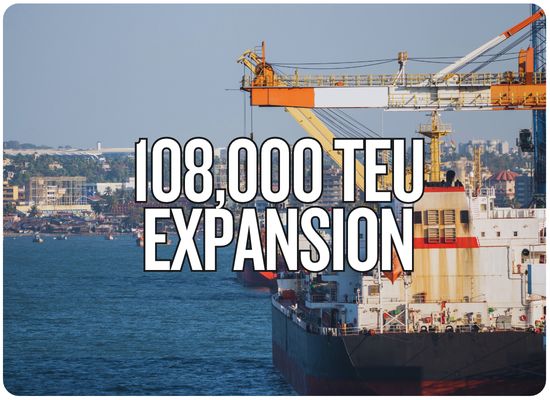
Shipping Corporation of India is seeking six newbuilding containerships of 18,000 TEU each under a tender issued November 12, 2026, representing a combined nominal capacity of 108,000 TEU. Two vessels are designated for SCI and four for the proposed Bharat Container Shipping Line, a national shipping venture involving Indian port and logistics organizations. The procurement structure calls for four vessels to be constructed in India and two at an overseas shipyard. The tender currently closes December 22, with bid opening scheduled for December 23. SCI is separately pursuing additional newbuilding containerships and secondhand feeder vessels, including a November 18 tender for two firm and two optional ships of 1,500–2,500 TEU. No shipbuilding contract, winning shipyard, vessel delivery schedule or final acquisition price has been announced for the six 18,000-TEU carriers.
India's 108,000-TEU Megaship Plan: Six Vessels, Two Operators and a Major Shipbuilding Test
Shipping Corporation of India's six-ship tender could establish a substantial Indian-controlled deep-sea container fleet. But the procurement also exposes important questions about domestic shipyard readiness, the proposed Bharat Container Shipping Line, financing and whether the ships can support commercially viable liner services.
18,000-TEU container carriers
TEU across six vessels
Four of the six vessels planned for domestic construction
TEU across four designated ships
SCI's November 12 tender identifies the proposed allocation of all six vessels, each with nominal capacity of 18,000 TEU.
| Intended Operator | Vessels | Nominal TEU | Share of Tender |
|---|---|---|---|
| Shipping Corporation of India | 2 | 36,000 TEU | 33.3% |
| Bharat Container Shipping Line | 4 | 72,000 TEU | 66.7% |
| Total | 6 | 108,000 TEU | 100% |
The construction programme is also expected to include four India-built ships and two built overseas. The domestic construction requirement therefore represents 72,000 TEU, or two-thirds of the proposed fleet capacity.
The latest CONCOR earnings transcript provides a more precise picture of BCSL's status than the procurement headline alone.
CONCOR management confirmed its intended stake in the proposed national container shipping venture.
As of CONCOR's November 3 earnings call, the venture was awaiting government approval despite receiving various ministry clearances.
A memorandum of understanding to establish BCSL was signed in February 2026. The proposed participants include Shipping Corporation of India, Container Corporation of India, Jawaharlal Nehru Port Authority, V.O. Chidambaranar Port Authority, Chennai Port Authority and Sagarmala Finance Corporation.
The structure would connect shipownership, ports, inland freight operations and financing within a coordinated Indian logistics venture. However, the legal establishment, capital arrangements and operating structure remain dependent on the required approvals and final agreements.
SCI's own fleet register, updated in November, reports 58 vessels across the group but only two in its liner category.
| Existing Liner Vessel | Built | Gross Tonnage | Deadweight |
|---|---|---|---|
| SCI Chennai | 2008 | 43,679 GT | 57,813 dwt |
| SCI Mumbai | 2008 | 43,679 GT | 57,785 dwt |
Both listed liner vessels were built in 2008. By contrast, the proposed 18,000-TEU vessels would enter the large deep-sea container sector, requiring substantial port infrastructure, cargo commitments, network planning and operating capital.
SCI's fleet register does not provide the two existing liners' TEU capacities in the same listing. Their gross tonnage and deadweight should not be converted directly into TEU for an unsupported numerical comparison.
The procurement seeks more than additional shipping capacity. It would require construction capability for some of the largest commercial containerships.
Suitable building docks, heavy lifting, steel fabrication and outfitting capacity.
Propulsion, electrical systems, stability, structural engineering and class compliance.
Cell guides, hatch covers, lashing systems, reefers and shipboard machinery.
Coordinated supply chains, commissioning, trials and delivery commitments.
The proposed split between two international constructions and four India-built ships creates an opportunity for overseas technology partnerships and domestic industrial investment. Foreign builders may be able to provide engineering, production expertise or equipment to qualifying Indian facilities.
However, the public tender summary does not establish a winning Indian yard, foreign technology partner, confirmed delivery schedule or the extent of technology transfer. Those details must emerge from the bidding process and subsequent contracts.
SCI is pursuing multiple vessel sizes through separate procurement processes. The newest smaller-vessel notice was issued on November 26.
| Vessel Category | Procurement Scope | Potential Capacity | Current Position |
|---|---|---|---|
| 18,000-TEU newbuilding | 6 vessels | 108,000 TEU | Bid deadline Dec. 22 |
| 8,000-TEU newbuilding | 2 firm + 4 optional | 16,000–48,000 TEU | Bid deadline Dec. 7 |
| 1,700-TEU newbuilding | 2 firm + 4 optional | 3,400–10,200 TEU | Earlier tender; bid deadline passed in July |
| 1,500–2,500-TEU secondhand | 2 firm + 2 optional | 3,000–10,000 TEU | Bid deadline Dec. 17 |
| 700–1,500-TEU secondhand | 2 vessels | 1,400–3,000 TEU | New tender Nov. 26; deadline Dec. 21 |
The two larger container newbuilding tenders alone cover up to 156,000 TEU, assuming all four 8,000-TEU options are exercised. The smaller feeder procurements address different vessel sizes and potentially different trade requirements.
The 1,700-TEU newbuilding tender was previously issued with two firm vessels and four options, but its published submission deadline passed in July. No completed award under that earlier tender was established in this review, so it should not be treated as newly contracted capacity.
The commercial challenge is the number of ships needed to maintain reliable departures along a particular route, not simply aggregate TEU capacity.
| Round-Voyage Cycle | Ships for Weekly Service | Illustrative Requirement |
|---|---|---|
| 28 days | 4 vessels | Four ships can theoretically support weekly departures, with no spare vessel assumed. |
| 42 days | 6 vessels | The entire proposed six-ship fleet would be needed. |
| 56 days | 8 vessels | Two more vessels than the full six-ship procurement. |
| 70 days | 10 vessels | Six additional vessels beyond BCSL's four-ship allocation. |
These calculations assume one departure every seven days and divide the full round-voyage duration by seven. They do not include spare ships or additional schedule-recovery allowances. A four-vessel BCSL allocation therefore supports a 28-day weekly cycle in a simplified model, but longer rotations would require additional vessels, chartered tonnage, partnerships or less frequent sailings.
Government announcements link the proposed national carrier with a broader domestic logistics and manufacturing programme.
Cabinet-approved national programme for expanding domestic container manufacturing capability.
Planned domestic manufacturing capacity, compared with approximately 70,000 TEU currently.
Government projection for Indian container traffic by 2047, compared with around 24M TEU in 2024.
The container manufacturing scheme, approved in October, supports production facilities, operating costs and testing infrastructure. It is intended to reduce reliance on imported containers and support international shipping services.
The broader Bharat Container Shipping Line initiative also envisages approximately ₹99,149 crore in investment related to a proposed fleet of 51 vessels of different sizes and domestic container procurement. That is a long-term development programme, not the contract value of SCI's six 18,000-TEU vessels.
The latest shipbuilding initiative goes beyond container shipping and involves several major vessel categories.
| Newbuilding Category | Vessels Sought | Procurement Position |
|---|---|---|
| 18,000-TEU containerships | 6 | Two for SCI and four for BCSL. |
| 8,000-TEU containerships | Up to 6 | Two firm and four optional. |
| Very large gas carriers | 8 | Separate newbuilding procurement. |
| Suezmax tankers | 2 | Separate tender issued in November. |
| Total maximum scope | 22 | Includes four optional 8,000-TEU ships; does not include the earlier 1,700-TEU programme. |
Industry estimates place the potential wider newbuilding investment at approximately $3.2 billion, although no final contract package supporting that aggregate value has been awarded. The underlying tender scopes cover very different vessel types, ownership requirements and shipbuilding specifications.
| Commercial Requirement | What Success Requires | Outstanding Exposure |
|---|---|---|
| Shipbuilding economics | Competitive construction prices, financing and reliable delivery. | No final yard quotes, contract prices or delivery schedules published. |
| Domestic construction | Suitable facilities, experienced technical partners and equipment supply chains. | Indian building yards and foreign partners not yet selected. |
| Carrier formation | Government approvals, equity commitments and operating governance. | BCSL approval remained pending at the latest disclosed update. |
| Cargo utilisation | Regular cargo commitments and commercially viable load factors. | No published forward bookings, service contracts or projected load factors. |
| Global network access | Berth windows, terminal agreements, inland connectivity and reliable vessel rotations. | No confirmed international routes, alliances or slot-sharing arrangements. |
An 18,000-TEU vessel can offer substantial unit-cost advantages when adequately utilised. But larger ships also concentrate financial risk in each voyage. Inadequate cargo volumes, congested terminals or insufficient supporting vessels can undermine the economic benefits of scale.
| Date | Scheduled Milestone | Implication |
|---|---|---|
| December 7, 2026 | 8,000-TEU newbuilding bid deadline | Tests bidder interest in the medium-size fleet programme. |
| December 14, 2026 | 18,000-TEU pre-bid meeting | Opportunity to clarify procurement and technical requirements. |
| December 17, 2026 | 1,500–2,500-TEU secondhand bid deadline | Progress toward additional feeder capacity. |
| December 21, 2026 | 700–1,500-TEU secondhand bid deadline | Further development of smaller-vessel procurement. |
| December 22, 2026 | 18,000-TEU newbuilding submission deadline | Key milestone for the six-megaship programme. |
| December 23, 2026 | Scheduled 18,000-TEU bid opening | Opening of bids; not equivalent to contract award. |
The December deadlines will provide the first clearer evidence of shipbuilder interest, procurement competitiveness and whether the programme can progress toward actual contracts. Final prices, domestic shipyard assignments, construction schedules and the formal establishment of BCSL remain the decisive next developments.
India's six-ship, 108,000-TEU procurement is a significant statement of national shipping ambition, particularly because four large containerships are intended for domestic construction. Its success will depend on more than ordering capacity. The proposed Bharat Container Shipping Line must establish a commercially viable operating network, while Indian yards must demonstrate that they can deliver advanced large-scale vessels competitively. The December tender process will begin to show whether the country's integrated shipbuilding and container-shipping strategy can move from announced plans to contracted ships.
We welcome your feedback, suggestions, corrections, and ideas for enhancements.
Please click here to get in touch