

🔔 Subscribe to ShipUniverse Weekly →
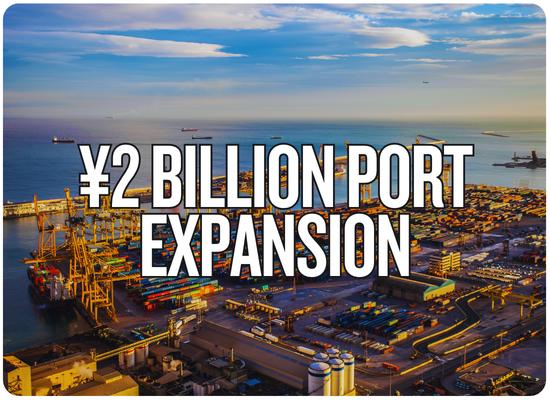
A procurement notice published November 25, 2026, outlines additional engineering and smart-port design services for a proposed public dangerous-goods terminal at Yangpu Port's Lianhuashan operating area in Hainan, China. The project carries estimated total investment of approximately ¥2 billion, including ¥1.565 billion in construction and installation costs. Its proposed facilities include a 50,000-DWT multipurpose hazardous-cargo berth, provision for LNG tank-container vessels, 360 meters of waterfront and annual design throughput of approximately 570,000 TEU. The initial storage development is provisionally allocated 132 mu, or approximately 8.8 hectares, including dedicated LNG tank-container and dangerous-goods areas. The new design tender specifies an 80-calendar-day service period, with bids closing December 15. The notice does not establish that the facilities are operational.
Yangpu's ¥2 Billion Hazardous-Cargo Terminal Reveals New LNG Vessel Design and 570,000-TEU Plan
China's latest engineering solicitation details specialized containerized-gas infrastructure at Hainan's Shentou harbor district, while earlier contract awards and an existing LNG tank-container trade establish the project's wider commercial context.
Proposed complete project investment
Estimated works component
TEU per year; not forecast actual traffic
Approximately 132 Chinese mu
The ¥2 Billion Project Is Primarily a Construction Investment
The November 25 notice identifies a dedicated waterfront and storage development, rather than a conventional LNG receiving terminal based on large fixed cryogenic storage tanks.
Estimated capital requirement for the proposed development, encompassing marine and supporting land-side infrastructure.
Approximately 78.3% of the total estimated project investment.
| Project Element | Published Design Basis | Commercial Interpretation |
|---|---|---|
| Multipurpose Berth | One 50,000-DWT rated berth | Marine access for qualifying dangerous-goods and container vessels |
| LNG Tank-Container Vessels | Provision for two 10,000-DWT vessels | Specialized vessel-handling configuration included in the latest design description |
| Waterfront | 360 meters | Planned quay frontage |
| Annual Throughput | Approximately 570,000 TEU | Design capacity rather than cargo volume already secured |
| Initial Storage Area | 132 mu, approximately 8.8 hectares | Provisional first-stage land allocation |
A Material Difference in the Published Vessel Configuration
The November design description differs from earlier 2026 EPC and supervision procurement documents.
| Marine Specification | Earlier 2026 Documents | November 25 Design Notice |
|---|---|---|
| Primary Berth | One 50,000-DWT berth | One 50,000-DWT berth |
| Alternative LNG Vessel Arrangement | One 20,000-DWT plus one 5,000-DWT LNG tank-container/container vessel | Two 10,000-DWT LNG tank-container/container vessels |
| Waterfront Length | 360 meters | 360 meters |
| Annual Capacity | Not stated in the compared procurement summary | Approximately 570,000 TEU |
The Storage Area Is Being Designed Around LNG Tank Containers
The new solicitation distinguishes marine facilities from supporting storage works, with the latter divided into two stages.
Provisionally identified land area, equivalent to approximately 88,000 square meters.
Planned facilities for handling and storing LNG transport tank containers.
Specified separation of emergency-response functions from other operational areas.
| Facility Component | Published Scope and Design Implications |
|---|---|
| LNG Tank-Container Storage | Dedicated space for LNG transport containers. Final stacking, monitoring, transfer and handling arrangements require detailed engineering. |
| Other Dangerous-Goods Containers | Separate designated storage functions for hazardous cargoes, subject to approved compatibility and segregation provisions. |
| Emergency-Response Area | Designated emergency facilities. The tender summary does not provide a final equipment schedule or certified emergency-response capability. |
| Production and Auxiliary Facilities | Supporting operating buildings, utilities and associated terminal infrastructure. |
| Smart-Port Systems | A dedicated design assignment, with individual technologies and procurement packages still to be determined. |
Earlier project documents described approximately 200 mu of dangerous-goods storage land overall. The latest notice provisionally identifies 132 mu for the initial stage, rather than presenting that amount as the final footprint of both stages.
The Project Already Has a Procurement History
The November solicitation follows earlier construction and professional-services competitions for the same terminal development.
| Date | Development | Status |
|---|---|---|
| February 2025 | Hainan port-planning presentation identifies a 50,000-DWT dangerous-goods berth at Lianhuashan. | Official planning framework |
| June 2026 | China Railway 20th Bureau and China Railway Fifth Survey and Design Institute consortium reported as preferred EPC bidder. | Preferred-bidder reporting; not evidence of completed terminal |
| October 26, 2026 | Construction-supervision award to Guangdong Nangang Engineering Supervision Consulting and Chengzhi Project Management. | Reported award: ¥11.35 million |
| October 26, 2026 | Cost-consulting and settlement-review award to Zhongxin International Project Management. | Reported award: ¥4.169 million |
| November 25, 2026 | Additional feasibility, engineering and smart-port design services advertised by the Fifth Survey and Design Institute. | New competitive solicitation |
| December 15, 2026 | Deadline for the latest design-services bids. | Scheduled, not yet completed |
Yangpu Has Already Moved LNG Tank Containers to Vietnam
This is the clearest evidence that the proposed facility could support an emerging logistics activity rather than a completely untested cargo segment.
Bonded LNG tank containers departed Yangpu International Container Terminal for Vietnam in a reported international transshipment operation.
The Shentou development would provide purpose-designed space for LNG tank containers and other dangerous goods, subject to completion and operating approval.
Containerized LNG transportation can serve relatively small, distributed or intermittent demand that may not support a conventional LNG receiving terminal. The actual economics depend on container utilization, handling costs, voyage frequency, storage dwell time and onward delivery arrangements.
The Port's Wider Energy Strategy Goes Beyond LNG Containers
Yangpu's 2024–2035 port-planning framework identifies Shentou as an industrial and energy-logistics district.
| Planned Development | Previously Published Scope | Relationship to New Tender |
|---|---|---|
| Lianhuashan Dangerous-Goods Berth | One 50,000-DWT berth; earlier planning referenced 300,000 standard tank containers annually | Same specialized port development; latest notice states 570,000 TEU capacity |
| Petrochemical Berths | Six 50,000–100,000-DWT berths in the wider development plan | Separate planned facilities, not included as six berths in the current design tender |
| LNG Loading Berths | Two 50,000-DWT LNG berths, with planned capacity of 1.6 million tonnes annually | Separate bulk LNG infrastructure concept |
| Marine Fuel Services | Potential LNG, methanol and other vessel-energy services | Wider port-development ambition, not a bunkering approval for this terminal |
Where Specialized Maritime Suppliers Could Benefit
The published scope identifies categories of potential equipment and service demand, but does not constitute purchase orders for the systems below.
| Supply Category | Potential Requirement | What Is Not Yet Established |
|---|---|---|
| LNG Tank Containers | Transport units, inspection and maintenance services | Fleet size, ownership and supplier selection |
| Marine Cargo Equipment | Compatible quay handling, specialized lifting gear and landside transport | Crane type, number and procurement value |
| Safety and Fire Protection | Gas detection, firewater systems, emergency containment and response equipment | Approved safety design and equipment specifications |
| Smart-Port Technology | Cargo tracking, operational monitoring and terminal-management integration | Software architecture, contract packages and vendors |
| Specialized Vessel Services | LNG tank-container shipping and multimodal cargo connections | Shipowners, schedules, contracts and guaranteed volumes |
Four Questions Still Determine the Terminal's Commercial Value
Whether customers will commit enough LNG tank-container and other dangerous-goods traffic to support the planned throughput.
Whether land availability, permits, marine engineering and safety approvals support the latest configuration.
Terminal tariffs, container handling costs, cargo mix, financing and achievable utilization have not been disclosed.
Yangpu's ¥2 billion proposal is more advanced in procurement than the latest notice alone suggests, and its commercial rationale is strengthened by actual LNG tank-container movements already recorded through the port. The November design package adds important capacity and vessel-handling details, but the decisive tests remain engineering approval, construction delivery and enough contracted hazardous cargo to support a dedicated 570,000-TEU facility.
We welcome your feedback, suggestions, corrections, and ideas for enhancements.
Please click here to get in touch