
🔔 Subscribe to ShipUniverse Weekly →
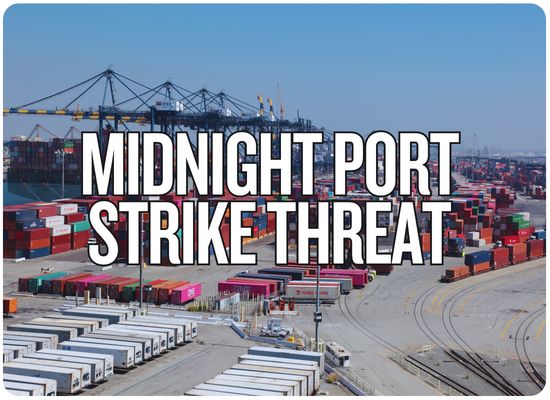
The Pacific Maritime Association (PMA) and International Longshore and Warehouse Union (ILWU) Local 26 are scheduled to resume contract negotiations on Friday, November 20, 2026, ahead of a 12:01 a.m. Pacific time deadline on Saturday, November 21. The dispute involves approximately 250 maritime watchmen who perform security duties at container terminals in the ports of Los Angeles and Long Beach. The PMA said negotiations on November 17 ended without an agreement and warned that a strike could begin when the current contract extension expires. According to the employers' association, terminals staffed by Local 26 members handle approximately 85% of Long Beach container cargo and 33% of Los Angeles container cargo. Other ILWU dockworkers could honor any picket lines. No new settlement, extension or work stoppage had been independently confirmed in the reports reviewed for this article.
250 Workers. Six Terminals. A Strike That Could Reach Across America.
A dispute involving just 2% of the local ILWU workforce threatens container-handling operations at America's busiest port complex. The deciding factor may be whether thousands of other dockworkers honor the watchmen's picket lines.
One More Meeting Before the Contract Expires
The Pacific Maritime Association and ILWU Local 26 enter Friday's negotiating session with less than a day remaining before their latest contract extension expires. Talks on November 17 ended without agreement, and the employers warned on November 18 that the union had indicated it would not accept another extension.
The watchmen's previous agreement expired in July 2025. Bargaining has continued for more than a year, including sessions supported by the Federal Mediation and Conciliation Service. Members have already authorized a strike, but authorization is not the same as an active walkout.
The Watchmen Control a Critical Part of the Terminal Handoff
Local 26's unarmed watchmen check identification and credentials at terminal access points, conduct security patrols and report safety concerns. They are not the workforce normally operating ship-to-shore cranes. The wider threat arises because longshore workers, marine clerks and foremen may decline to cross their picket lines.
The separate coastwide ILWU longshore agreement runs through July 2028. Those dockworkers are not themselves bargaining in this dispute. Their potential participation through picket-line solidarity creates the risk of a much larger operational stoppage than the number of watchmen suggests.
Six container terminals, eight listed locations
The PMA describes six container terminals employing Local 26 watchmen. The union's strike notice, as reported by freight forwarders, identifies eight terminal locations. Those figures are not necessarily contradictory: one container-terminal operation may have multiple listed sites.
Locations identified in the union strike notice as reported by Flexport. Listing does not establish that any location has shut down or that every listed facility would be independently affected.
Nearly Two Million TEUs Moved Through the Complex in October
The threatened strike comes during exceptionally heavy cargo activity. Los Angeles recorded its second-busiest month ever in October, and Long Beach reported its second-busiest October. The neighboring ports together handled approximately 1.96 million TEUs during the month.
Bars compare the two ports' October throughput, not strike exposure. Growth rates are against October 2025. Published port data.
Share of port cargo handled at terminals staffed by Local 26, according to PMA.
Equivalent employer-estimated exposure for the Los Angeles port.
The percentages indicate where labor disruption could occur, not how much cargo will actually be delayed. Operations at unaffected terminals may continue, while gate restrictions or congestion could create secondary delays elsewhere.
An analysis by Martin Associates cited by PMA associates those six terminals with approximately 50,000 direct jobs, nearly 4.2 million jobs supported nationwide and $885 billion in annual national economic activity.
These figures describe existing economic activity, not an estimate of losses from a strike. The 6.2 million figure counts physical containers in 2025 and should not be equated with TEUs reported for October 2026.
Employers and Union Dispute the Economics
The negotiations concern compensation and other contract terms, but the public descriptions of the proposals are contested.
PMA says its offer raises average annual earnings from more than $170,000 and provides a $3,200 one-time bonus per member. It also cites fully employer-paid healthcare and enhanced pension benefits.
Local 26 president Luisa Gratz told Seatrade Maritime News that the union submitted a counterproposal which employers had not answered. She also challenged the accuracy of PMA's public compensation figures.
The PMA separately values annual healthcare coverage at more than $62,000 and cites pension benefits of up to $93,200 annually for workers with the longest tenure. Those figures are the employers' representations; the pension maximum does not describe the benefit received by every worker. Publicly available reporting does not independently reconcile the competing wage claims.
Where a Strike Would Reach Beyond the Waterfront
Vessels could remain alongside or await berth access if gangs are unavailable. Delayed sailings can affect subsequent port rotations.
Interrupted gate appointments could leave drivers without loads and reduce available equipment turns.
On-dock rail loading and container transfers could be delayed, interrupting inland schedules and equipment repositioning.
Distribution centers could experience uneven arrivals, inventory delays and additional handling or storage expense.
Farm products and manufactured exports may miss vessel cutoffs, while refrigerated cargo faces additional timing constraints.
Even a short interruption can leave ships, containers, rail equipment and trucks out of sequence. Recovery depends on labor availability, vessel schedules, terminal capacity and how quickly import containers can be cleared. Demurrage, detention and storage charges would depend on actual circumstances, contracts and applicable billing rules; no general waiver has been established.
Three Outcomes Remain Possible
Agreement or Extension
The parties reach a tentative settlement or extend the contract again. A Saturday strike could be averted while negotiations or ratification proceed.
Limited Work Stoppage
Watchmen establish picket lines, but actual disruption varies by terminal and by the participation of other workers.
Broader Terminal Shutdowns
Longshore workers and clerks honor picket lines, interrupting vessel operations, gates and container movements across affected facilities.
What Will Confirm the Actual Outcome?
The approaching deadline involves a relatively small bargaining unit, but the potential disruption is concentrated at terminals handling a major share of Southern California container traffic. Whether the dispute remains a security-worker stoppage or spreads into a wider port shutdown will depend on the negotiating outcome and how other dockworkers respond. Until those decisions are known, the threatened disruption remains a risk rather than an established interruption to cargo flows.
We welcome your feedback, suggestions, corrections, and ideas for enhancements.
Please click here to get in touch