
🔔 Subscribe to ShipUniverse Weekly →
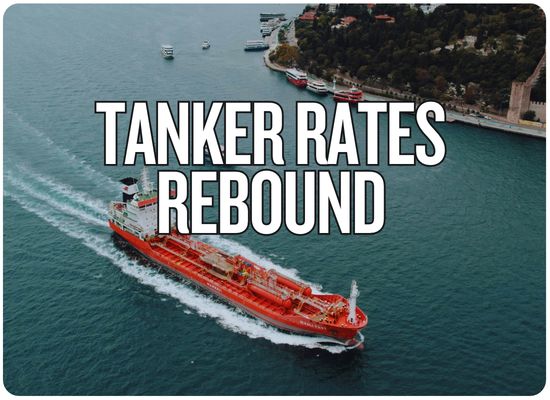
The Baltic Dirty Tanker Index climbed 5.43% to 4,812 points on November 19, 2026, reversing part of its recent decline following a series of tanker attacks in the Strait of Hormuz. The index gained 248 points from November 18 but remained 16.2% below its November 5 reading. UK Maritime Trade Operations reported that another outbound tanker was struck in its engine room on November 18, approximately six nautical miles north of Khasab, Oman, with all crew accounted for. Meanwhile, new U.S. Energy Information Administration data showed stronger regional oil transportation flows during the third quarter, and oil prices continued declining on November 20 amid expectations of ample global supply.
Freight Rates Rebound While Oil Prices Keep Falling
Hormuz security fears are lifting tanker freight assessments even as recovering crude supplies hold down the underlying commodity price.
A Sharp Rebound, Not a New High
The Baltic index recovered 248 points in one session but remains well below its early-November level.
Dirty Tanker Freight Index
BDTI index points. November 19 is the latest confirmed reading shown.
Two Markets Are Pricing Different Risks
Freight rates respond to vessel availability, routing constraints, war-risk costs and charterer demand.
Reuters price at 11:45 GMT. Brent was heading for a roughly 5% weekly decline as Middle Eastern exports stayed strong.
Oil Transportation Is Recovering Despite the Attacks
| Market Indicator | Latest Reported Figure | Interpretation |
|---|---|---|
| Middle East Oil Chokepoint Flows | +19% in Q3 | EIA's combined total across Hormuz, Bab el-Mandeb and Suez/SUMED, versus Q2. Not a Hormuz-only increase. |
| Hormuz Commercial Transits | 550 in October | Up from 504 in September for non-Iranian-linked vessels tracked by Lloyd's List Intelligence. |
| Tanker + Gas Carrier Transits | 442 in October | Up from 419 in September in the same Lloyd's List tracking category. |
| Middle East Crude Production | 23.1M b/d | EIA's October estimate, its highest monthly reading since the conflict began. |
The figures cover different time periods and populations. Transit counts do not measure cargo barrels, and third-quarter EIA flows cannot be used as November shipping totals.
The Underreported Pressure Is Inbound Tanker Availability
TankerTrackers estimates capacity declined from 130 million barrels at the end of August to 71 million barrels by November 16.
This measures the carrying capacity of ballast tankers heading toward the region, not actual oil shipped. Reduced inbound capacity can tighten prompt vessel supply even when export volumes remain elevated.
The Route Premium Was Already Extraordinary
Baltic Exchange assessments dated November 13, before the latest daily rebound. These are modeled round-trip time-charter equivalents, not reported charter fixtures.
270,000-tonne VLCC benchmark. Worldscale 1014.38 in the November 13 Baltic report.
Separate VLCC benchmark. Worldscale 310.71 on November 13.
Three Signals That Will Determine the Next Move
The November 19 rate rebound shows that tanker freight remains highly sensitive to Hormuz security conditions. Oil exports are recovering, but fewer inbound vessels and increasingly complex cargo transfers can keep shipping costs elevated even as crude prices decline. The next test is whether additional available tankers can restore freight competition without another interruption to Gulf shipping.
We welcome your feedback, suggestions, corrections, and ideas for enhancements.
Please click here to get in touch