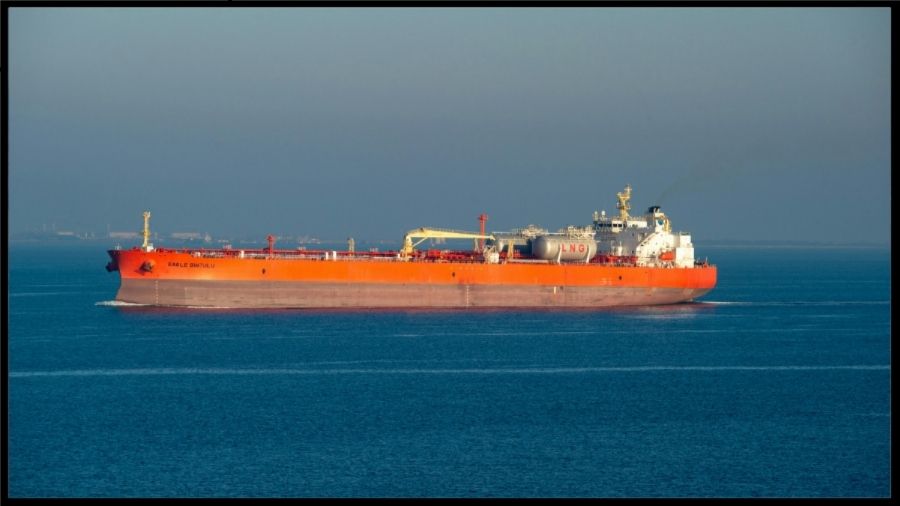
The latest development in the Strait of Hormuz is a U.S. decision to begin guiding stranded commercial ships out of the Gulf, with President Donald Trump saying the operation will start Monday morning as a humanitarian mission for neutral shipping caught in the crisis. The announcement comes after weeks of severe disruption that left large numbers of merchant vessels trapped inside the Gulf, while shipowners, charterers, and insurers struggled with uncertain transit conditions, direct ship attacks, and conflicting signals from Washington and Tehran. Iran has warned the U.S. to stay out of the strait, while the industry is still waiting for practical details on routing, naval involvement, and how ships will be selected and moved. The immediate picture is not one of full reopening. It is one of an emergency extraction effort aimed at easing a commercial backlog inside one of the world’s most important maritime chokepoints.
Click here for 30 second summary
The U.S. is moving from caution and signaling into a ship-exit mission
The latest turn in the Hormuz crisis is an announced U.S. operation to guide stranded commercial ships out of the Gulf starting Monday morning. The stated purpose is humanitarian and focused on neutral shipping that has been unable to move safely through the strait. The plan arrives after months of attacks, halted voyages, and severe uncertainty that left shipowners with vessels trapped inside the Gulf and little confidence in ordinary commercial passage. The move does not signal restored normality. It signals that conditions have deteriorated enough for Washington to present guided extraction as necessary.
Operation timing
Monday
The U.S. said the ship-guidance effort would begin Monday morning.
Mission framing
Humanitarian
The operation was described as assistance for neutral commercial shipping trapped by the crisis.
Seafarers stranded
20,000
Around 20,000 civilian seafarers remain aboard vessels under heightened strain in the Gulf region.
Confirmed attacks
21+
The wider crisis has already produced more than 21 confirmed attacks on commercial ships.
Route Signal
The latest step is not a market-led reopening. It is a government-led effort to move ships out of a corridor that has stayed commercially impaired for too long.
The rescue logic is clearer than the operating playbook
A rebuilt narrow-layout section that replaces the wide table with stacked operating lanes better suited to your page width.
Industry preparation
Ad Hoc
Industry reporting indicates there was no visible full pre-planning cycle with owners before the public announcement.
Security focus area
Oman Side
Maritime security coordination has highlighted enhanced-risk areas on the Omani side of the strait.
Iranian response
Warning
Iran has warned foreign forces against intervention near the strait as the mission talk intensifies.
Immediate objective
Exit
The present goal is guiding stranded ships out, not restoring ordinary two-way trade at normal commercial scale.
U.S. guidance plan
Washington says it will begin guiding stranded ships out of the strait starting Monday morning.
Immediate operating read
The focus is on relieving trapped commercial shipping, not declaring the corridor restored.
Why this matters now
The crisis has shifted from passive backlog and waiting into a state-backed ship-movement effort.
Commercial consequence
Owners with vessels inside the Gulf may get a visible route out, but not yet a return to routine scheduling or normal risk assumptions.
Next checkpoint
Watch whether the first guided movements happen on schedule and whether the process expands beyond one initial wave.
Plan clarity
Public details remain limited on ship selection, routing protocols, naval participation, and communications structure.
Immediate operating read
The announcement is politically clear but operationally incomplete.
Why this matters now
Shipping executives still need usable instructions on staging, deconfliction, insurance comfort, and legal treatment.
Commercial consequence
A shortage of detail can slow execution even when government intent is firm.
Next checkpoint
Watch for convoy rules, advisories, and owner-facing guidance from naval or industry security channels.
Iranian warning
Tehran has warned against foreign military intervention while vessel movements remain tightly contested.
Immediate operating read
Any ship-exit mission will unfold under open political friction, not quiet consent.
Why this matters now
The extraction effort only works commercially if it avoids turning into a new confrontation at the chokepoint.
Commercial consequence
Owners may gain a path out while still facing elevated escalation risk during execution.
Next checkpoint
Watch whether Iran tolerates limited guided exits, challenges them, or tries to impose its own conditions around passage.
Human and operating strain
Large numbers of seafarers remain under extended pressure aboard vessels affected by the crisis.
Immediate operating read
This is no longer only a freight and routing story. It is also a sustained crew-welfare and vessel-backlog problem.
Why this matters now
The longer the ships remain trapped, the harder it becomes to manage safety, maintenance, morale, and scheduling integrity.
Commercial consequence
Crew pressure increases the urgency of extraction even before cargo economics are considered.
Next checkpoint
Watch whether stranded-crew and trapped-vessel counts begin to fall once the first movements start.
Operating Read
The latest move matters because it changes the crisis from passive entrapment into active ship extraction. But execution detail will matter just as much as political intent.
Hormuz Exit Readiness Monitor
Rebuilt as a cleaner single-column interactive block that fits tighter content widths and keeps the readouts stacked instead of squeezed side by side.
A ship-guidance plan only works if security, coordination, and operator confidence are aligned enough to let trapped vessels move without triggering a fresh breakdown. This tool scores current exit readiness using the latest mix of military intent, industry clarity, security risk, and political resistance.
Build the exit profile
Exit Readiness Score
58
Fragile readiness. The political will to move ships is visible, but execution conditions still look incomplete and highly sensitive.
Corridor posture
Fragile
Conditions support a possible first move, but not yet a clean and fully trusted operating regime.
Best read
Guided Exit
This looks more like a controlled ship-release effort than a normal commercial restart.
Main constraint
Detail
The biggest problem is still the gap between political announcement and operational execution detail.
Closest live comparison
Current Plan
Your settings match the current situation where an exit mission has been announced, but the shipping system is still waiting for working instructions.
Exit Read
Current settings point to a fragile but real effort to guide trapped shipping out of Hormuz. The concept is now live, but the mission still depends on whether security control, shipowner coordination, and deconfliction procedures catch up quickly enough.
Score bands
0 to 35
Low readiness. The plan would still look too vague or too risky to move ships effectively.
36 to 60
Fragile readiness. A first movement is possible, but execution risk remains high.
61 to 80
Usable readiness. The system would look capable of moving ships in an organized but still cautious way.
81 to 100
Strong readiness. The extraction effort would look organized enough to materially ease the stranded fleet problem.
Current market read
The current setup sits in the fragile-readiness band because the mission has been announced clearly, but operating details, industry preparation, and political resistance still leave the first phase highly sensitive.
Directional commercial tool only. It is designed to translate the current Hormuz extraction picture into an exit-readiness score, not to predict exact convoy timing or final ship counts moved.