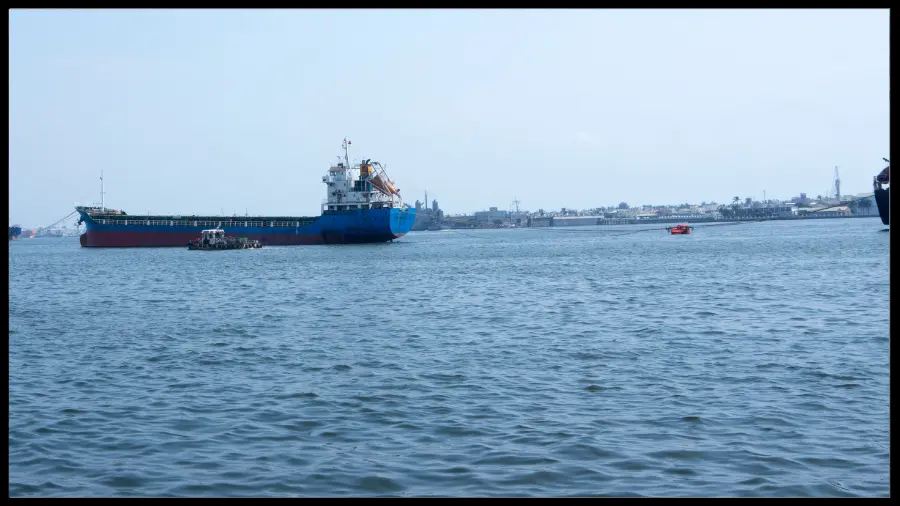
The EU Council added 41 more vessels to its Russia “shadow fleet” sanctions list on December 18, 2025, pushing the total number of designated ships to almost 600. The newly listed vessels are subject to an EU port access ban and a ban on the provision of a broad range of maritime transport related services. The EU said the measure targets non-EU tankers used to bypass the oil price cap or support Russia’s energy revenues, and also vessels linked to moving military equipment or transporting stolen Ukrainian grain and cultural goods.
Click here for 30 second summary
EU tightens the net around “shadow fleet” shipping
On 18 December 2025, the EU Council added 41 more vessels to its Russia-related “shadow fleet” list, taking the EU total to nearly 600 designated ships. The listed vessels are barred from EU port access and are also cut off from a broad range of maritime transport related services, which can make routine voyage support harder to secure.
Fast facts
41 additional vessels listed; EU total now close to 600.
Pressure points
Port access is removed and service availability tightens, pushing more fixtures into deeper screening and longer documentation cycles.
Scope signals
The EU says the listings target non-EU tankers linked to bypassing the oil price cap or supporting Russia’s energy revenues, and it also references vessels linked to military equipment movements and the transport of stolen Ukrainian goods.
Bottom line
The added vessels raise the compliance bar and increase market segmentation: “clean” tonnage and transparent counterparties tend to move faster, while high-risk employment faces more delays, fewer service options, and higher execution uncertainty.
EU adds 41 vessels to Russia “shadow fleet” sanctions list
Item
Summary
Business mechanics
Bottom-line effect
Action and timing
EU Council decision announced on 18 December 2025 adds 41 vessels to the sanctions list.
The list expansion increases the population of ships that counterparties must screen out of EU-linked trades and services.
📌 More “no-go” hulls in the market increases compliance friction for fixtures that touch EU ports or EU service providers.
Scale of the list
With this addition, the EU says the total of designated vessels is almost 600.
The broader the list, the more likely that screening flags a vessel, a manager, or a related service chain connection.
📈 Compliance workload rises across chartering, operations, and documentation. 📉 Some voyages lose flexibility as options shrink.
Core restrictions
Listed ships face an EU port access ban and a ban on the provision of a broad range of services related to maritime transport.
A designated vessel becomes operationally constrained by access limits plus loss of EU-linked services that normally support voyages.
📉 For designated ships, route and service constraints can translate into delays, higher execution risk, and tougher commercial terms.
Who is being targeted
The EU frames the action as targeting non-EU tankers linked to Russia’s “shadow fleet.”
The stated focus is on vessels used to circumvent the oil price cap mechanism or otherwise support Russia’s energy sector.
📌 The net effect is to raise the cost of evasion by limiting where these ships can call and who can support them.
Broader allegation set
The EU also references vessels involved in transporting military equipment for Russia or moving stolen Ukrainian grain and cultural goods.
This expands the narrative beyond oil flows and ties the list to wider security and illicit trade concerns.
📉 Adds reputational and legal sensitivity for counterparties, which can tighten internal risk filters even beyond formal EU touchpoints.
Value chain pressure
The Council linked the vessel move to earlier decisions to list nine “shadow fleet” enablers.
The approach pressures both the ships and parts of the ecosystem that keep high-risk trades functioning.
📈 More “whole chain” pressure can reduce workarounds over time. 📉 In the near term, it can raise delays and dispute risk.
Where friction shows first
The immediate shipping impact usually appears in screening outcomes, documentation depth, and port call certainty.
When a hull is newly listed, counterparties often pause to re-check ownership, management, recent trades, and voyage instructions.
📉 Time risk increases before freight reprices. More “dead time” can show up as slower fixing and longer voyage execution cycles.
Market segmentation effect
Broader designations can widen the gap between “clean” employment and high-friction employment.
A larger restricted pool tends to concentrate risk and operational complexity into a narrower set of trades and counterparties.
📈 “Clean” tonnage can gain relative value where compliance certainty matters. 📉 High-risk trades can carry bigger timing and cost premiums.
Law of the sea angle
The Council referenced a declaration on using the international law of the sea framework related to “shadow fleet” threats and protection of critical undersea infrastructure.
This signals a wider maritime security framing alongside the sanctions toolset.
📌 Stakeholders should expect continued scrutiny of opaque trading patterns, especially where infrastructure and security concerns intersect.
Notes: Summary is based on the EU Council press release (12/18) describing the addition of 41 vessels, the port access ban, and the ban on a broad range of maritime transport related services, and reporting that the total designated ships is almost 600.
How this week’s EU moves fit together, and where the pressure shows up first
The 41-vessel listing did not land in isolation. The Council paired vessel designations with value chain listings and a legal framing that leans on the law of the sea and undersea infrastructure protection.
15 Dec9 enablers listed
The EU listed five individuals and four entities it described as supporting the shadow fleet and its value chain, applying asset freezes and restrictions on making funds available, plus travel bans for individuals.
15 DecLaw of the sea declaration
The EU and Member States approved a declaration on using the international law of the sea framework to address shadow fleet threats and protect critical undersea infrastructure, including cables and pipelines.
18 Dec41 vessels added
The Council added 41 vessels to the designated list, taking the total to nearly 600, and applied an EU port access ban and a ban on a broad range of maritime transport related services for listed ships.
Scale snapshot
Newly designated vessels41
Shown against the “nearly 600” total to visualize how big this increment is.
Total designated ships (EU)nearly 600
EU and Reuters reporting describe the post-update total as close to 600.
What the EU says the listings are aimed at
The Council described the vessel measure as intended to target non-EU tankers used to bypass the oil price cap mechanism or support Russia’s energy sector, as well as vessels linked to military equipment shipments, or to the transport of stolen Ukrainian grain and cultural goods.
Oil price cap circumventionEnergy sector supportMilitary equipment transportStolen grain and cultural goods
Why undersea infrastructure is now in the same paragraph as “shadow fleet”
In its 15 December declaration, the EU framed shadow fleet risks as extending beyond sanctions evasion into maritime safety, environmental exposure, integrity of seaborne trade, and threats to critical undersea infrastructure. The text highlights vessels “without nationality” as a particular risk category under UNCLOS and notes that coastal states may request insurance information and examine it for port calls, with related reporting and certificate measures referenced in EU rules for ship reporting systems.
Where the commercial friction shows up first
The EU measures are designed to make listed vessels harder to employ in any voyage chain that touches EU ports or EU-linked services. In practice, the immediate knock-on tends to appear as sharper segmentation between low-friction and high-friction employment and more detailed counterparty screening around ownership, management, and recent trading patterns.
Shipowners and managers Constraint
For listed ships, the port access ban and the loss of EU-linked maritime transport related services narrow operating options and increase execution risk on port calls and voyage support.
Charterers and cargo interests More screening
A longer list increases the odds that a fixture or a service chain touches a designated hull, pushing more deals into heightened due diligence and documentation cycles.
Ports and coastal authorities Clearer line
Port access bans create a more explicit operational boundary for listed vessels, while the parallel legal framing highlights enforcement and safety considerations tied to navigation and infrastructure protection.
Market structure Bigger spread
As designation counts rise toward the “nearly 600” level, the market tends to split further between compliance-clean employment and higher-friction routes where restrictions bite harder.
By adding 41 vessels and pushing the EU’s designated ship count close to 600, Brussels is widening the practical no-go perimeter around Russia’s shadow fleet while also tightening pressure on the ecosystem that supports it. The vessel listings, the earlier enabler designations, and the EU’s law-of-the-sea declaration land as a coordinated message: sanctions enforcement is being paired with maritime security framing that includes documentation, insurance scrutiny, and undersea infrastructure protection. For maritime stakeholders, the near-term story is more segmentation and more friction in high-risk trades, and the longer-term story is that the EU is trying to make opaque shipping patterns progressively harder to operate at scale.