Laytime & Demurrage: 7 Traps That Turn Profit Negative
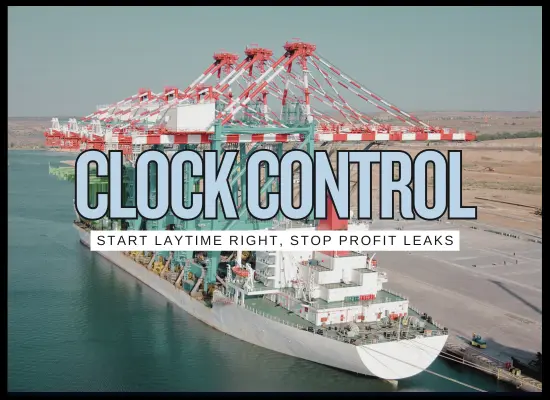
Laytime and demurrage is where a voyage can look profitable on paper, then quietly bleed margin once the port timeline hits reality. The problem is rarely one big mistake. It is usually a small clause detail, a timing step (like NOR), or a documentation gap that gives the other side a clean way to deduct time or time-bar the claim. This table is built to help a chartering or ops desk spot the traps early and build a file that holds up when the emails start flying later.
Laytime & Demurrage: 7 Traps That Turn Profit Negative
Built for the desk: clause signals, proof packs, and quick moves that keep claims from getting cut down or time barred.
| # | Trap | Profit Leak Level | Clause and Signal | Proof Pack | Desk Fix |
|---|---|---|---|---|---|
| 1 |
NOR that does not start the clock
If NOR is factually wrong when tendered, or tendered in the wrong place or condition, laytime may not commence. The claim then becomes a fight about timing instead of delay.
|
High
This can wipe an entire demurrage position.
|
Common tripwire: readiness is assumed rather than evidenced, or NOR is tendered before the vessel is truly ready and compliant with the charter requirements.
If the other side can say "NOR was invalid," they often try to reset the whole timeline.
|
|
Use a one-page NOR checklist per fixture and require a desk sign-off before the NOR is issued or accepted as valid. |
| 2 |
Congestion risk quietly shifted by berth access wording
Small phrases can decide who eats waiting time. Teams often price the voyage assuming port congestion is neutral, then discover the clause allocates it.
|
High
Common source of surprise demurrage or lost recovery.
|
Common tripwire: "reachable on arrival" or "always accessible" type warranties, plus variations that define when the ship is treated as arrived.
If berth access is treated as the charterer's risk, the waiting time can end up payable at demurrage rate.
|
|
Put a congestion allocation sentence in the recap summary so the desk knows who is wearing the risk before the vessel arrives. |
| 3 |
Interruptions vs exceptions miscounted
A lot of deductions happen because a team treats an "interruption" concept like an "exception" concept. The maths can look right while the contract logic is wrong.
|
Medium to high
Typically becomes expensive on long delays.
|
Common tripwire: Weather Working Day style definitions, plus separate exceptions language. Interruptions extend the laytime definition. Exceptions carve out time that would otherwise count.
If you apply the wrong bucket, the laytime end point shifts and the demurrage number changes materially.
|
|
Force the desk to label every deduction as either interruption or exception in the worksheet, then review the clause basis before sending a claim. |
| 4 |
Laytime exceptions mistakenly applied after laytime is used up
Many teams keep excluding weekends, holidays, or weather after the allowed laytime is exhausted. Unless the contract clearly says otherwise, demurrage often runs "clean" once it starts.
|
High
A classic "paper profit" to "real loss" flip.
|
Common tripwire: Demurrage defined as not subject to laytime exceptions unless specifically stated in the charter.
If the worksheet keeps applying exceptions, you may underclaim or get challenged hard.
|
|
Split the worksheet into two phases with a hard divider at laytime expiry and lock the exception logic so it cannot continue by habit. |
| 5 |
Time bar clauses and missing-document requirements
Even a strong claim can die if it arrives late or without the exact documents the clause demands. This is a harsh profit killer because the delay can be real and still unrecoverable.
|
High
This is a full-claim extinction risk.
|
Common tripwire: "fully documented within X days" plus an explicit list of supporting documents. Missing one item can be used to argue the claim is extinguished.
Time bars also create leverage for quick settlements at a discount.
|
|
Create a demurrage "submission pack" template tied to that charterparty, with a date trigger and a document completeness gate. |
| 6 |
Weak SOF and time log integrity
If the SOF, agent emails, pumping logs, and port records do not align, the claim becomes easy to cut down. Small timestamp conflicts can be used to attack larger blocks of time.
|
Medium to high
Often not fatal, but it bleeds value.
|
Common tripwire: SOF entries are vague, unsigned, or do not capture stoppage reasons. Riders may require specific logs, not just the SOF.
The other side does not need to win every point. They just need to create doubt around the time blocks.
|
|
Require one owner-side timeline that reconciles SOF plus logs before the claim goes out. Treat it like an audit file. |
| 7 |
Shifting, anchorage moves, and port instruction time counted the wrong way
Shifting looks simple but it is often ambiguous. The contract may say shifting time counts, or does not count, or depends on why the shift happened.
|
Medium
Can become large in busy ports or multi-shift operations.
|
Common tripwire: Separate shifting clauses or riders that allocate shifting time and costs, including wording that shifting time used shall not count in some scenarios.
If shifting start and end points are not defined, both sides will argue the stopwatch boundaries.
|
|
Pre-agree in recap notes the shifting time boundaries you will use, and record them consistently in the SOF and logs. |
Voyage Risk Checklist
Tick the essentials that keep laytime and demurrage money alive.
Time-Bar Deadline Calculator
Notice deadline
Full claim deadline
Always confirm the exact trigger event and required recipients in your charterparty rider.
Demurrage Hours Estimator
Total elapsed hours
Counted hours before expiry
Estimated demurrage hours
This is a quick sense check. Apply the exact clause logic in the final laytime statement.
Claim Pack Builder
Collect in one PDF binder. Rename files with dates and UTC times for fast review.