Wind Redemption
A modern vessel. A rising storm. And a crew about to relearn what it means to sail.
Ship Universe Note
- This post is part of our Wednesday ShipLog Stories series at Ship Universe
- We spotlight the human side of the maritime industry through fiction that is based on real-world scenarios.
- For questions, feedback, or to share your own story, please get in touch with us
The MV Ardency cut through the Atlantic with the quiet confidence of modern engineering. Her hull, streaked with salt and spray, carried just under 800 TEU, half-capacity for testing her new rig. Mounted forward were two towering telescopic wind-assist sails, sleek and silvery against the dull blue horizon. They hadn't been deployed once this voyage.
In the bridge, Chief Officer Reyes sipped cold coffee from a chipped ceramic mug that read MARACAIBO SHIPPING LINES. The autopilot hummed faintly behind a soft wall of beeping instruments. Outside, the sea was steady, but the clouds on the satellite overlay looked less forgiving.
He tapped the console, frowning.
ALERT: Engine control subsystem reporting intermittent signal loss. Source: AFT ECU Node – ID #47 Status: Degraded
“Not again,” Reyes muttered.
He tapped through two menus, checked system voltage. Stable. The engine management system had been acting temperamental ever since they left Le Havre. Once, he’d mentioned it to Engineering. They told him not to worry. Digital teething pains. Everything was too new.
He glanced at the horizon. Long, low cloud bands were stretching from the southeast, colored with that faint yellow-gray that didn't belong to ordinary weather. He flipped the radar overlay to storm track mode.
A swirl had formed off Cape Verde. Tropical Depression 17. Not a threat, yet.
Reyes rubbed his thumb across the edge of the mug. On a ship like this, he often felt more like an observer than an officer. The sails were controlled from a touchscreen. The engines adjusted themselves. The helm was just a formality unless they lost GPS. His hands hadn’t gripped a real wheel in years.
In the chair next to him, 3rd Officer Kim swiveled lazily, reviewing course data. “Forecast says the system might curl north,” she said.
Reyes nodded. “Or it might not.”
The radio crackled, then fell silent.
The MV Ardency was quiet at 0200. The kind of quiet that only came with open water, far from shore and human noise. Most of the crew were asleep. Bridge lights were dimmed. Even the wind had settled into a whisper against the hull.
Then, everything died.
The hum of the ship’s systems vanished in a single blink. The deck lights went dark. Monitors went black. Autopilot disengaged. Even the slight vibration from the diesel-electric hybrid drive was gone.
For two seconds, there was only silence and the slap of water against steel.
Then came the klaxon.
Main Bus A: OFFLINE
Main Bus B: OFFLINE
Engine Control: LOST
Rudder Interface: UNRESPONSIVE
Comm Link: INACTIVE
In the dim glow of emergency lights, Reyes snapped upright in his bunk. He was in the bridge less than thirty seconds later, boots unlaced, shirt half-buttoned, heart pounding harder than the alarm.
3rd Officer Kim was already at the panel, smacking useless keys. “No helm response. We’ve lost propulsion.”
He grabbed the overhead handset, nothing. “VHF’s dead too.”
Within two minutes, backup generators kicked in. Interior lights flickered to life. Some monitors rebooted. But the key systems, the ones that actually kept the ship moving, remained frozen.
Reyes accessed the local diagnostics.
[X] Main Engine Interface – ERROR
[X] Rudder Control – TIMEOUT
[X] Satellite Comms – NO SIGNAL
[✓] Environmental Monitoring – OK
[✓] General Lighting – OK
“What the hell is this?” Captain Morgan had arrived, face half-shadowed, eyes sharp despite the hour. He scanned the screens. “How do we lose both engines and helm? That’s not a hardware issue.”
Reyes spoke without looking away from the console. “Unless every relay died at once, someone got into our system. Or something.”
Morgan’s jaw tightened. “We’re floating blind. I want Engineering on this now.”
Below deck, the engine room was already a hive of motion. The chief engineer barked into a dead headset, scanning his board like it might blink back to life if he glared hard enough.
A faint tension spread among the crew. Not panic. Not yet. But something was wrong. And everyone felt it.
By dawn, the Ardency was adrift.
The ocean stretched flat in every direction, the kind of calm that didn't feel peaceful. There was no wake, no rumble beneath the deck, no sign the ship was anything more than a floating steel island. Above, the sails sat retracted and useless, glossy towers that looked more like marketing than machinery.
Reyes leaned over the chart table in the bridge, flipping switches that didn’t respond.
NAV LINK: PARTIAL
GPS: OK
COMM: INTERMITTENT
WIND RIG SYSTEM: LOCKED – NO SIGNAL
Below deck, Engineering reported the same story. No propulsion. No access to the main bus. Every fix was digital, and every digital tool was down.
In the bridge, Captain Morgan paced slowly, arms folded. Tall, broad-shouldered, his uniform looked freshly pressed even in crisis. His eyes scanned the horizon like it might offer him answers the ship couldn't.
“Still no contact with shore?” he asked.
“Sat phone’s flickering,” Reyes replied. “Signal cuts in and out. Not enough to transmit position.”
“Jesus,” Morgan muttered. “Okay. Everyone stays calm. Engineering’s working it. No one improvises. We wait for systems to recover.”
Reyes said nothing. His fingers tapped the helm console idly, the way a sailor might tap wood to see if it’s still alive. “There’s another option.”
Morgan raised a brow. “What’s that?”
“The wind rigs. They’ve got manual override junctions. It’s buried in the documentation, but I remember it from install. If we can feed backup power directly to the actuators.”
Morgan didn’t let him finish. “Those systems are automated for a reason. You want to deploy two twenty-meter sails manually, without telemetry, on open ocean?”
Reyes gave a half-shrug. “Better than drifting.”
Morgan shook his head. “This is not a tall ship. We wait. Let the engineers do their jobs.”
Down in the galley, junior deckhand Finn sat alone at a mess table, eating instant noodles and scrolling through the ship’s maintenance records on a cracked tablet. He’d joined the Ardency for the green tech. For the innovation. For a chance to be part of what shipping could become. He hadn’t expected to end up in a digital ghost ship.
But something Reyes had said nagged at him. Backup power. Manual override.
Finn tapped into the sail system documentation. Nothing helpful. Then he accessed the archive logs, old scan PDFs from the original retrofit binder. Page after page of dry technical language. Until:
Finn looked up, heart thumping. He didn’t know if anyone else had read this far. But someone had buried a backup plan in the fine print.
And right now, backup plans were all they had.
In the officers’ lounge, Reyes stood alone at the porthole, watching the sails that refused to rise. The light outside was a dull silver, the kind of color the ocean took on before weather changed. He hadn’t shaved, hadn’t slept much, and hadn’t stopped thinking about a different ship entirely.
One that didn’t have automation.
One that hadn’t come home.
He reached into his locker and pulled out an old, salt-worn photo wrapped in a folded paper towel. Two younger men, both shirtless and grinning, stood at the helm of a brigantine in the Caribbean. One of them was Reyes. The other, Peter, was gone.
A rogue swell. A tangled line. No time to react.
They never found the body.
He stared at the photo, thumb brushing the corner, then tucked it away just as Finn knocked softly and entered.
“Hey,” Finn said. “You got a minute?”
Reyes nodded, motioning him in. “What do you have?”
Finn dropped the tablet on the table, open to the override page. “This… I think we can do it. It’s a physical circuit. Manual hydraulic release. We just need access to the mast base panels.”
Reyes studied it, then glanced at the kid. He saw the eagerness, the restless energy of someone who still believed they were there to make a difference.
“You know what you’re looking at?” Reyes asked.
Finn hesitated. “Honestly? Not entirely. But I think it’s real. I think it could work.”
Reyes cracked a rare smile. “You’ve never been in a storm, have you?”
Finn shook his head.
“Well,” Reyes said, “it’s not like the simulations.”
Elsewhere, Captain Morgan stood in the bridge, hands behind his back, staring at the dead helm. The backup panels blinked at him like unhelpful eyes. He was used to command. To procedures. To systems that answered when called upon.
This, this drift, was a void.
He’d been trained to trust in protocols. But protocol didn’t cover power loss and partial systems failure in international waters, with a Category 2 forming off the stern quarter. It especially didn’t cover half his crew whispering about “manual sails” like they were in some goddamn Netflix reenactment of the Cutty Sark.
He didn’t hate Reyes. But he hated what Reyes represented. A reminder that men, not machines, still had to make decisions. And those decisions could cost lives.
Morgan turned toward the window and whispered to no one, “Don’t make me choose wrong.”
By noon the next day, the ocean had changed. The long, rolling calm was breaking into tighter, more aggressive chop. The breeze had shifted, and the barometric pressure had begun to slip.
Reyes stood at the bridge console, pulling up the weather feed that had finally come back online in short bursts through the sat link.
SYSTEM: TROPICAL STORM 17
STATUS: Category 2 Hurricane
MAX WINDS: 95 kt
PROJECTED PATH: 120 NM NNE in 48 HRS
PROBABILITY OF SHIFT WEST: HIGH
He exhaled slowly. “It’s coming our way.”
Morgan leaned over his shoulder, expression unreadable. “We still have time.”
“Not much,” Reyes said. “We either start moving, or we hope she misses us.”
Morgan stared at the track. “What are you proposing?”
Reyes didn’t hesitate. “We get those sails up. We feed power to the hydraulic pumps manually. We steer her the old-fashioned way, with what rudder control we can get back through the hydraulic backup line. There’s a shallow band of westerlies forming. It’s weak, but it’s enough.”
Morgan studied him. “That’s not a plan. That’s a gamble.”
“We’re already gambling,” Reyes said. “Drifting isn’t a strategy.”
Down in the machinery space below Deck 3, Chief Engineer Lindholm wiped grease from his fingers and looked at Finn like he’d just asked to fly the ship with duct tape.
“You want to bypass the entire smart control system?” Lindholm asked. His voice was gravel and Northern grit. “That sail rig pulls 400 PSI at lift and rotation. You throw the wrong switch and you’ll fold a panel or rip it clean off.”
Finn didn’t flinch. “The override protocol shows a safe ramp-up sequence. We engage it slowly, feed the pressure one mast at a time.”
Lindholm glanced over at Reyes. “You believe in this?”
Reyes nodded once. “Enough to try.”
The engineer muttered something in Swedish, then turned toward the auxiliary junction panel.
“All right,” he said. “We’ll need to bypass Junction Box 4A, rig a manual trigger across the local bus, and isolate the pressure safety interlock. I hope you’ve got someone who remembers what a voltmeter is.”
“I’m standing right here,” Reyes said.
Finn was already pulling the old control schematics onto his tablet.
STEP 1: Disconnect control bus from CPU loop
STEP 2: Route backup power to mast base relays
STEP 3: Open hydraulic gate valve manually
STEP 4: Engage mast rotation via direct motor feed
STATUS: IN PROGRESS
Above them, the ship rocked slightly. A long gust swept the deck. The wind was rising.
So was the clock.
The first sail went up with a groan that echoed across the deck like a ship waking from a long coma.
Reyes stood on the windward catwalk, harness clipped, wind biting through his sleeves. Below, Finn coordinated with Lindholm via handheld radio, guiding pressure through the bypass rig they’d hacked together. The manual pump wheezed as hydraulic fluid surged to the telescopic mast.
“Hold pressure at 60 percent,” Reyes called out. “Let it breathe.”
The silver membrane of the first sail unfolded, trembled, and caught the breeze.
A low cheer rippled from the deck crew, but Reyes didn’t smile. Not yet.
The second sail was slower. The actuator stuttered mid-deploy, then jerked with a loud metallic clack. Lindholm cursed below, throttled the pressure back, then reapplied. Slowly, the second rig extended, rising into the sky like a blade unsheathed.
STATUS:
- Mast A: 100% Extension – Stable
- Mast B: 100% Extension – Slight Drift
WIND SPEED: 18 kt WSW
SAIL TRIM: MANUAL MODE
Reyes gripped the edge of the rail. The sails were up. And for the first time in two days, Ardency was moving.
Barely, but moving.
On the bridge, Reyes and Finn worked side-by-side at the helm console, which had been rewired to bypass the failed digital interface. A rusted auxiliary panel had been pulled open, its analog gauges flickering to life.
“Let’s try the rudder,” Reyes said.
Finn eased the manual hydraulic lever. Nothing.
“Try again,” Reyes said.
Finn increased the pressure. The panel buzzed. A needle on the gauge snapped hard right, then dropped back.
“Stuck,” Reyes muttered. “We’re jammed.”
Morgan entered, glanced between them. “Can we break it loose?”
“No,” Reyes said. “And we don’t need to.”
He turned to the crew assembled behind him.
“We can steer by trim.”
There was a pause.
“Old school?” one of them asked.
Reyes nodded. “Very old school.”
Over the next two hours, the deck team learned how to adjust sail angles, tweak mast rotation, and use crosswind to gently arc the bow. It was slow, clumsy at first, Ardency wasn’t built for grace, but with each correction, the ship began to respond.
She wasn’t drifting anymore. She was sailing.
Reyes stood at the forward rail, wind in his face, and felt something he hadn’t in years, control. Not through a screen or a system, but through instinct, judgment, and feel.
Behind him, Finn adjusted the trim and grinned. “You think we can beat the storm?”
Reyes didn’t answer right away.
But inside, he knew one thing for certain.
They had a fighting chance.
The wind shifted at dusk.
Not gradually. Not politely. It came in like it had been waiting to strike, howling over the water, kicking up the sea into short, steep waves that slapped the hull like open palms.
Reyes stood at the port-side mast station, soaked to the knees. Rain hadn’t started yet, but the air was thick and fast-moving. Tropical air. Heavy with promise. The ship’s bow was angled just east of northeast, their escape route. If they could hold it.
The ship groaned with each roll. She wasn’t built to heel. Containers rattled in their stacks. The deck tilted, stabilized, then swayed again.
PROXIMITY: 190 NM
WIND GUSTS: 40–55 kt
COURSE: 078° E by NE
SAIL PRESSURE: HIGH – MANUAL ADJUSTMENT REQUIRED
Inside the bridge, Captain Morgan gripped the edge of the console. His jaw worked side to side as he watched the bow camera. The ship was still moving. Not fast, not gracefully, but moving. And it wasn’t the engineers or the systems or the manuals making it happen.
It was Reyes.
“Fine,” Morgan muttered. He turned. “Bridge is yours.”
Reyes nodded. “We’ll get her out.”
Morgan stepped back, weight off his shoulders but something in his eyes that looked like surrender. Not to the sea, to reality.
Two decks below, tension finally cracked.
“Enough,” said Bosun Kalani, soaked and wild-eyed. “This is suicide. We're gonna ride straight into it.”
A handful of deckhands stood nearby, arms crossed. “We’ve got functioning lifeboats,” one said. “We can launch, make a beacon ping once we're clear.”
Finn stepped in. “We’re not abandoning the ship.”
Kalani sneered. “Easy to say from the bridge.”
Reyes appeared in the doorway like he’d been summoned by instinct. He looked like hell, soaked, bruised, with a bandage on one hand and fire in his eyes.
“You want to leave?” he asked.
No one spoke.
Reyes stepped forward, voice steady. “You think the ship’s done because the engine quit? You think because the screens went black, the ocean changed? It didn’t. It’s the same sea men have sailed for a thousand years.”
He pointed toward the stairwell leading to the deck.
“Out there, the wind is blowing. We’ve got sails up. And we’ve got hands. You want to launch a lifeboat into a hurricane? Or do you want to remember how to sail?”
Silence. The kind that rearranges people.
Kalani looked down. Another crewman nodded slowly.
Reyes turned. “Get to your stations. Trim for easterly gusts.”
And just like that, mutiny dissolved into motion.
Rain hit them within the hour.
Blinding sheets that turned the deck into a drum. But Ardency held her heading, wind-fueled and grit-steered, riding the edge of the storm with sails full and crew awake.
Not passengers of a machine.
Sailors.
The storm didn’t hit them.
Not directly.
It veered twenty miles north during the early morning hours, sparing Ardency from the worst of it. Still, the fringes lashed them hard, four-meter swells, driving rain, and gusts that bent the sails to their limits.
But the ship held.
The sails, once dismissed as PR gimmicks, carried her. The makeshift steering rig responded, crude but loyal. Reyes hadn’t slept. Neither had Finn. Lindholm’s hands were raw from valve cranks. Morgan stood watch without saying much, but he didn’t need to. Command had already shifted.
By noon the sky cracked open, not with thunder, with light. The pressure lifted. The wind eased. The radar link returned fully, blinking with the beautiful dullness of function.
They had crossed out of the cone.
Hours later, Reyes sat on a crate outside the galley, watching a line of seabirds tail the ship. The sails had been partially retracted. The crew moved with quiet energy now, calmer, more sure of themselves.
Finn sat beside him, sunburned and smiling. “We actually sailed her.”
Reyes nodded. “We did.”
“You think we’ll keep the sails active for future voyages?”
“We’d be fools not to.”
PROPULSION: INACTIVE (UNDER REPAIR)
WIND ASSIST SYSTEM: MANUAL CONTROL – FUNCTIONAL
GPS: ONLINE
COURSE: 081° – 6.2 KT
COMM: SIGNAL LOCKED – RESCUE PING RECEIVED
The coast guard had picked up their ping. A support vessel was en route. They’d be towed the final leg in. But no one talked about that.
They talked about the wind.
Reyes later stood alone at the bridge, watching the seas ahead. In the reflection of the glass, he saw himself, older, maybe slower, but standing again at the edge of what mattered.
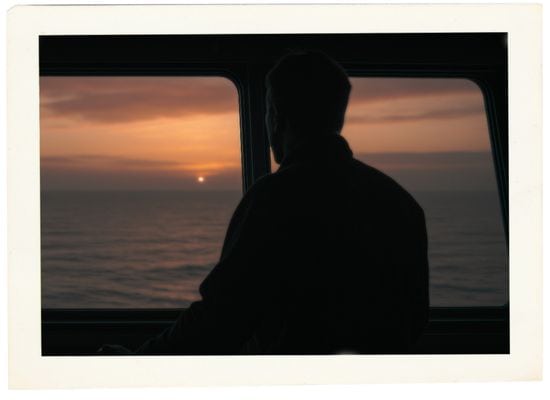
He reached into his pocket and unfolded the old photo. Peter’s face grinned back at him from a sunnier time.
Reyes stared for a moment, then quietly folded the photo and set it down beneath the helm.
“Still here,” he whispered.
Then he turned to the sea, one hand resting on the trim lever.
The ship moved forward, sails whispering in the wind.
Wind Redemption isn’t just a tale of survival at sea, it’s a reminder that the ocean doesn’t care how smart our ships are. When the MV Ardency lost power mid-Atlantic, her fate didn’t depend on software patches or backup servers, it came down to something older, deeper: the wind.
What this story reinforced was simple, yet often overlooked:
- Modern vessels are vulnerable when systems fail.
- Wind-assist technologies aren’t just about decarbonization, they’re lifelines in a worst-case scenario.
- Sailor knowledge, even in a digital age, is still critical to maritime resilience.
As wind propulsion systems make their way back onto commercial vessels, from Flettner rotors to retractable wingsails, they offer more than just efficiency gains. They provide redundancy, tactical maneuvering, and in some cases, like this one, a path home.