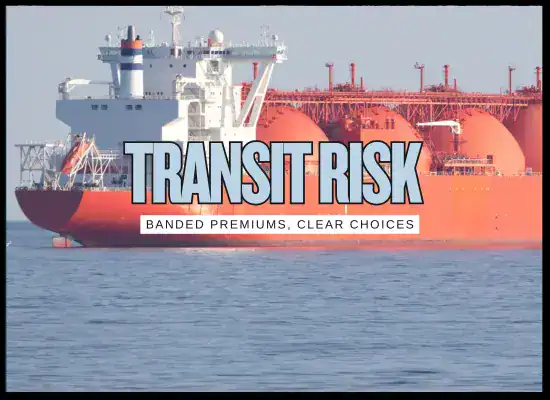
War-risk pricing moves quickly, but the underlying drivers are consistent. This report gives shipowners a snapshot of current “hot” and “cooling” corridors using simple color cues and banded premium ranges so the guidance stays useful even as numbers shift. Treat every quote as a range, link it to time spent inside any listed area, and always verify the latest Joint War Committee list, IMB and ReCAAP incident updates, and broker circulars before you fix routing or cover. Use the “detour vs pay” mindset: price schedule impact, bunker plan, and charterparty terms against the premium band and any security conditions on your slip. Keep evidence tight in the call file so your reasoning is clear if a claim arises.
Insurance and War-Risk Guide
Use bands and triggers, not fixed rates
This report uses simple color cues for current risk posture. Treat premium figures as bands. Always verify the latest Joint War Committee Listed Areas, IMB and ReCAAP incident updates, and broker advisories before you fix routing or cover.
🟥
Hot
Elevated AWRP band and active incidents. Consider detour vs pay.
🟧
Elevated
Banded quotes with conditions. Check weekly advisories and tempo.
🟨
Watch
Operational vigilance. Usually outside war lists. Treat as sea robbery risk.
🟩
Cooling
Lower threat posture. Keep routine reporting and watchkeeping.
Confirm JWC polygonLog hours in zoneTwo quotes minimumBMP5 evidence on fileDetour vs pay priced
Note: Update bands and incident summaries within 48 hours of entry or approach. Keep source names and dates in the call file so your reasoning is clear if a claim arises.
🟥 Red Sea, Bab el-Mandeb, Gulf of Aden
Elevated AWRP bands and active advisories
Quotes are banded as a percent of hull and move with incident tempo and market capacity. Validate time inside any JWC polygon and note security conditions on your slip.
➕ Expand: decisions and documents
Decision focus
Detour when the quote sits at the top of the recent band and delay risk is high.
Transit when the quote is mid band, incident tempo is low, and conditions are clear.
Record hours inside the polygon if pricing is pro-rata by time in zone.
Owner checklist
Check current JWC Listed Areas and recent UKMTO or JMIC notes for the week of transit.
Obtain two quotes and confirm any guard, routing, or convoy conditions.
Price a Cape detour versus the band using your speed and bunker plan.
Binder essentials
Voyage plan with waypoints and time in zone.
Security summary aligned with BMP5 and reporting plan.
Hull value basis used for AWRP and who pays in charterparty.
Refresh the band and incident brief within 48 hours of entry. File your sources and dates with the call.
🟧 Strait of Hormuz & Middle East Gulf
Elevated AWRP with active advisories
Treat quotes as bands linked to time inside any listed area. Validate routing, dates in zone, and any security conditions attached to cover. Check JWC list and UKMTO notices before fixing.
➕ Expand: decisions and documents
Decision focus
Detour when quotes sit at the top of the recent band and interference or delay risk is high.
Transit when quotes are mid band, incident tempo is low, and conditions are clear from your broker.
Record hours inside the polygon if pricing is pro rata by time in zone.
Owner checklist
Check current JWC Listed Areas and MARAD or UKMTO notices for the week of transit.
Obtain two quotes and confirm any guard, routing, or reporting conditions.
Price detour options versus the band using your speed and bunker plan.
Binder essentials
Voyage plan with waypoints and time in listed waters.
Security summary aligned with BMP5 and UKMTO reporting plan.
Hull value basis used for AWRP and charterparty payment terms.
Refresh the band and incident brief within 48 hours of entry. File sources and dates with the call.
🟥 Eastern Mediterranean — Israel approaches
Listed Area exposure and local notices
Treat quotes as bands linked to time in Listed Areas. Validate port approach restrictions and any navy notices that set prohibited or danger areas during your ETA.
➕ Expand: decisions and documents
Decision focus
Price the band for calls to Haifa, Ashdod, or Eilat versus deferral or diversion.
Confirm any danger or prohibited areas that affect approach routes or pilotage.
Record hours inside the polygon if pricing is pro rata by time in zone.
Owner checklist
Check current JWC Listed Areas and any Israeli Navy notices to mariners for your dates.
Get two quotes and confirm security conditions and exclusions on the slip.
Ensure charterparty wording assigns AWRP and security costs clearly.
Binder essentials
Voyage plan with port call, approaches, and time in Listed Areas.
Security summary and reporting plan per company procedures.
Hull value basis and evidence for how the band was applied.
Refresh the band and approach notices within 48 hours of arrival. File sources and dates with the call.
🟥 Black Sea corridor — Ukraine approaches
Listed Area exposure and active advisories
Treat quotes as bands linked to time in the polygon. Validate port approach restrictions and any local danger areas for your ETA.
➕ Expand: decisions and documents
Decision focus
Price the band for calls to Odesa region ports versus diversion or deferral.
Confirm any danger or prohibited areas affecting approaches or pilotage.
Capture hours inside the polygon when pricing is pro rata by time in zone.
Owner checklist
Check current JWC Listed Areas and MARAD 2025-011 before PDA.
Get two quotes and confirm security conditions and exclusions.
Align charterparty wording on who pays AWRP and related costs.
Binder essentials
Voyage plan with approaches and time in Listed Areas.
Security summary and reporting plan per company procedures.
Hull value basis and how the band is applied to the voyage.
Refresh the band and approach notices within 48 hours of arrival. Keep source links and dates in the call file.
🟧 Somalia & Western Indian Ocean
Piracy resurgence and mothership tactics
Treat quotes as bands tied to time inside Listed Areas. Validate current JWC polygons and UKMTO reporting. Watch for advisories that extend risk well offshore due to hijacked dhows or merchant vessels used as motherships.
➕ Expand: decisions and documents
Decision focus
Price pay versus detour when mothership activity is reported on your route and week.
Record hours in polygon if pricing is pro rata by time in zone.
Confirm guard, convoy, or routing conditions required by your slip.
Owner checklist
Check JWC Listed Areas and UKMTO recent incidents for your ETA.
Get two quotes and confirm security conditions and reporting plan.
Verify BMP5 measures, citadel readiness, and crew drills are logged.
Binder essentials
Voyage plan with waypoints and time in Listed Areas.
Security summary and UKMTO reporting schedule.
Hull value basis and how the band is applied.
Refresh bands and incident brief within 48 hours of entry. Keep source links and dates in the call file.
🟧 Singapore Strait
Sea robbery hotspot with active patrols
Expect low-level boardings and theft attempts at choke points. Insurers may not rate hull war like a declared zone, but they can require extra watchkeeping and reporting. Validate latest ReCAAP notes before ETA.
➕ Expand: decisions and documents
Decision focus
Use enhanced watchkeeping and restrict access to stores at night transits.
Plan speed and helm to minimize time near known boarding clusters.
Report to coastal authorities promptly if approached or boarded.
Owner checklist
Check latest ReCAAP weekly or monthly updates for SOMS.
Brief crew on bridge wings and deck patrols during high-risk legs.
Confirm insurer expectations for reporting and onboard measures.
Binder essentials
Voyage plan showing transit windows through choke points.
Security brief and checklist aligned with company procedures.
Incident reporting contacts and call signs for local authorities.
Keep logs of night rounds and any suspicious approaches. File source links and dates with the call.
🟧 Gulf of Guinea
Lower incident count, high kidnap risk
Treat quotes as bands tied to time in Listed Areas. Validate the current JWC polygons and MARAD advisory before fixing cover or routing.
➕ Expand: decisions and documents
Decision focus
Price pay versus detour when kidnap clusters are active along Nigeria, Benin, or Togo approaches.
Record hours in polygon if pricing is pro rata by time in zone.
Align guard and reporting conditions with binder wording.
Owner checklist
Check JWC Listed Areas and the active MARAD advisory for your ETA.
Get two quotes and confirm guard, routing, and reporting conditions.
Brief crew on kidnap response procedures and shore escort rules.
Binder essentials
Voyage plan with approaches and time in Listed Areas.
Security summary and reporting plan per company procedures.
Hull value basis and how the band applies to the voyage.
Refresh bands and incident brief within 48 hours of entry. Keep source links and dates in the call file.
🟩 Sulu-Celebes Seas
Abduction threat low since 2020
Treat risk as sea robbery and localized security rather than a declared war zone. Check ReCAAP weekly notes and coordinate with PCG and ESSCOM. Keep standard watch and report suspicious approaches.
➕ Expand: decisions and documents
Decision focus
Use enhanced bridge watch and deck patrols during night transits.
Maintain contact numbers for PCG and ESSCOM and report promptly.
Confirm insurer expectations for reporting and onboard measures.
Owner checklist
Review the latest ReCAAP weekly or monthly update before ETA.
Brief crew on restricted access to stores and quick musters.
Log night rounds and any suspicious contacts in the bell book.
Binder essentials
Transit plan with choke points and comms contacts for PCG and ESSCOM.
Security brief aligned with company procedures.
Statement that area is not typically a JWC Listed Area and how cover applies.
Keep copies of ReCAAP updates and call dates in the file. If threat posture shifts, refresh guidance within 48 hours.
Refresh your view before every transit. Confirm polygons and dates, pull two quotes, log expected hours in zone, and align crew measures with BMP5 and local reporting. If the band pushes to the top of the recent range or incident tempo rises, model a detour and document the trade. If the band sits mid range with clear conditions and low incident tempo, proceed with controls and keep your records clean. Revisit charterparty wording so responsibility for additional premiums and security costs is unambiguous. Update bands and incident notes within 48 hours of entry or approach, then archive the sources and timestamps. Repeat this cycle and the traffic-light cards will stay actionable without constant rewrites.