The Crackdown on the “shadow fleet” is getting real: Top 8 Developments in 2025
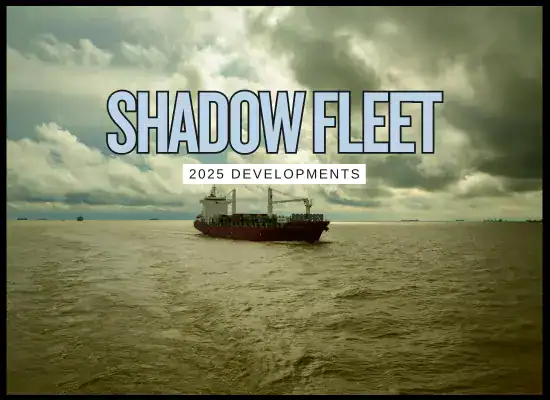
Shadow-fleet loopholes are closing fast. Through 2025, registries, sanctions authorities, and port states moved from watchlists to real-world checks. Panama yanked flags, OFAC widened exposure in the Red Sea and on Iran networks, the EU and UK expanded vessel lists, French authorities boarded and detained, and China’s Huangdao set a hard gate for older or opaque tankers. If you own, charter, finance, insure, or service tankers, the takeaway is simple: bring same-day proof or plan for delays.
1️⃣ Panama cancels 68 ship registrations (Jan 14,2025)
What happened
- Panama cancelled the flags of 68 tankers linked to opaque trades and sanctions exposure.
- Cases cited included irregular documentation and deceptive-practices concerns.
Importance
- Tighter registry standards make “flag-hopping” harder for high-risk hulls.
- Operators with weak documentation face higher detention and insurance friction.
Who’s affected
- Owners, managers, and charterers tied to reflagged or aging tankers.
- Financiers, P&I, and terminals that must verify active, compliant registry.
Immediate actions
- Run a registry/insurer verification pack with each fixture: CSR, DOC, CLC/BL certs.
- Check counterparties against sanctions lists and recent registry notices before nomination.
- Plan extra lead time for KYC/KYV at ports known for stricter checks.
2️⃣ OFAC sanctions vessels delivering refined products to Houthi-controlled ports (Apr 28, 2025)
What happened
- OFAC designated vessels and networks tied to refined-product deliveries into Houthi-controlled ports after a general license framework lapsed.
- Follow-on communications clarified that facilitation, port calls, or misdeclared consignees associated with these deliveries can trigger sanctions exposure.
Importance
- Extends the “shadow fleet” lens beyond Russia-linked trades to Red Sea activity.
- Raises documentary standards for voyage plans, consignee/end-use verification, and routing declarations.
Impacted
- Owners/charterers routing refined products in the Red Sea/Gulf of Aden.
- Traders, agents, and terminals handling documentation/transshipment to controlled ports.
- Banks, insurers, and P&I reviewing counterparties and voyage exposure.
Immediate actions
- Screen at fixing, NOR, and before sailing against current OFAC advisories/SDN updates.
- Require explicit end-user/consignee proofs; avoid ambiguous “to order” without backup.
- Keep a same-day evidence pack (AIS tracks, bills, LOIs, counsel notes).
3️⃣ EU 18th sanctions package adds 105 vessels (Jul 18, 2025)
What happened
- The EU’s 18th sanctions package expanded its vessel list by 105 hulls, targeting facilitators of restricted trades and deceptive maritime practices.
- Listing effects include bans on EU port entry and access to EU-based services (insurance, classification, finance, bunkering, etc.) for the named vessels/entities.
Importance
- Materially increases detention/denial risk for fixtures touching the EU or relying on EU-linked services.
- Raises due-diligence workload for owners, charterers, and brokers—list checks must be same-day, not weekly.
Impacted
- Owners/managers operating or transiting near EU ports or using EU insurers, banks, class, or surveyors.
- Charterers and traders nominating vessels for EU-bound or EU-serviced voyages.
- Agents and terminals responsible for vetting berth calls and service provisioning.
Immediate actions
- Run live EU list screening at fixing, pre-arrival, and prior to service engagement (class, P&I, bunkers).
- Add “substitution on sanctions hit” clauses to C/Ps and keep alternates pre-cleared.
- Maintain evidence packs (screening logs, registry/insurance proofs) dated the same day options are lifted.
Note
4️⃣ OFAC issues the largest Iran sanctions package since 2018 (Jul 30, 2025)
What happened
- OFAC announced a broad Iran sanctions action that included maritime actors and associated networks.
- Guidance highlighted patterns such as false flagging, suspicious registry changes, and misdeclared cargoes.
Importance
- Raises the likelihood that counterparties with even indirect Iran links trigger banking or insurance refusals.
- Requires more frequent, same-day screening and documentation checks across fixtures and service engagements.
Impacted
- Owners, managers, and charterers with exposure to Middle East liftings or transshipment points.
- Traders, brokers, and agents arranging shipments where origin or end-use is ambiguous.
- Banks, insurers, P&I, and class societies providing services to potentially linked vessels or entities.
Immediate actions
- Run consolidated screening on vessels, owners, managers, and cargo counterparties at fixing and pre-arrival.
- Collect and file registry, insurance, and ownership proofs; verify any recent flag or ownership changes.
- Document AIS continuity and voyage rationale when transiting high-risk waypoints; keep an evidence pack per fixture.
Note
5️⃣ UK sanctions ~70 additional “shadow” tankers (Sep 12, 2025)
What happened
- The UK added approximately 70 tankers associated with opaque or high-risk trades to its sanctions list.
- Listings increase the chance of refusals by UK-linked banks, insurers, class societies, and terminal operators.
Importance
- Closes gaps where vessels avoided EU restrictions but still relied on UK services or finance.
- For fixtures touching UK supply chains, same-day list checks become mandatory at multiple points in the voyage.
Impacted
- Owners/managers seeking UK services or transiting UK-controlled terminals.
- Charterers and brokers nominating vessels for voyages with UK banking or insurance dependencies.
- Agents and terminals that must vet berth calls against the UK consolidated list.
Immediate actions
- Screen vessels, owners, and managers against the UK list at fixing, pre-arrival, and before service engagement.
- Build substitution language into C/Ps and keep pre-cleared alternates ready.
- Archive evidence packs showing the screening timestamp that matches option-lifting and NOR.
Note
6️⃣ Europe shifts from lists to physical enforcement (Sep 26, 2025)
What happened
- Several EU port authorities began requiring immediate proof of valid registry and insurance for suspect hulls at arrival rather than relying only on lists.
- Physical inspections and document checks increased for tankers with recent flag changes or opaque ownership.
Importance
- Real time checks reduce the value of paperwork games and rapid reflagging.
- Delays and detentions now hinge on the quality and freshness of evidence provided by the operator.
Impacted
- Owners and managers with vessels that recently changed flags or ownership structures.
- Charterers whose schedules depend on tight EU port turns.
- Agents and terminals responsible for vetting before granting services.
Immediate actions
- Prepare a same day verification pack per vessel: CSR, DOC, class, insurance, and ownership attestation.
- Record AIS continuity and provide voyage rationale when routing around risk zones.
- Hold pre cleared alternates and include substitution language in charter parties.
Note
7️⃣ France investigates/detains BORACAY off Saint-Nazaire (Sep 30 to Oct 1, 2025)
What happened
- French authorities investigated and reportedly detained the tanker BORACAY near Saint-Nazaire during a shadow-fleet enforcement sweep.
- The case centered on documentation and compliance verification, with the matter referred to the Brest prosecutor.
Importance
- Signals that EU coastal states are moving from list checks to on-water enforcement.
- Demonstrates that incomplete or stale proof of insurance/registry can trigger immediate operational delays.
Impacted
- Owners and managers of vessels with recent flag or ownership changes calling in the NE Atlantic.
- Charterers planning tight turnarounds at French and neighboring EU ports.
- Agents and terminals that must verify compliance before services are rendered.
Immediate actions
- Carry a same-day verification pack: CSR, DOC, class, P&I confirmation, registry extracts, and ownership attestations.
- Ensure AIS continuity and voyage rationale are documented and ready to share.
- Pre-clear alternates and include substitution clauses in charter parties to manage detention risk.
Note
8️⃣ China’s Huangdao port bans “shadow” and aging tankers (effective Nov 1, 2025)
What happened
- Huangdao issued rules that shut out aging or high-risk tankers. Criteria include strict age limits, vessel identity integrity, and current class and insurance.
- Terminals will apply these checks at nomination and again prior to berth, with authority to deny service on failure.
Importance
- Closes a key East Asia gateway to shadow-fleet hulls and raises the bar for documentation quality.
- Pushes more pre-fixture vetting and may redirect older tonnage to longer routes or lower-grade terminals.
Impacted
- Owners and managers of tankers older than 31 years or with incomplete documentation.
- Charterers nominating for Qingdao area loadings or discharges who rely on older tonnage.
- Agents and terminals responsible for pre-arrival vetting and berth scheduling.
Immediate actions
- Pre-screen age, class, insurance, and IMO integrity at enquiry; swap flagged hulls early.
- Maintain a same-day verification pack and third-party risk score printouts with timestamps.
- Line up alternates that meet age and documentation criteria before lifting options.
Note
As enforcement shifts from lists to on-the-water checks, fixtures are increasingly judged on same-day documentation, counterpart screening, and route transparency. Europe’s ports are emphasizing proof at berth, Red Sea trades draw closer scrutiny on consignees and end-use, and Qingdao’s age and certification rules narrow eligible tonnage. Clear records, pre-vetted alternates, and synchronized timing across banks, P&I, class, and terminals tend to correlate with smoother port calls while this crackdown continues to evolve.
We welcome your feedback, suggestions, corrections, and ideas for enhancements. Please click here to get in touch.