Maritime Business Models That Look Smarter in 2026 Than They Did in 2023
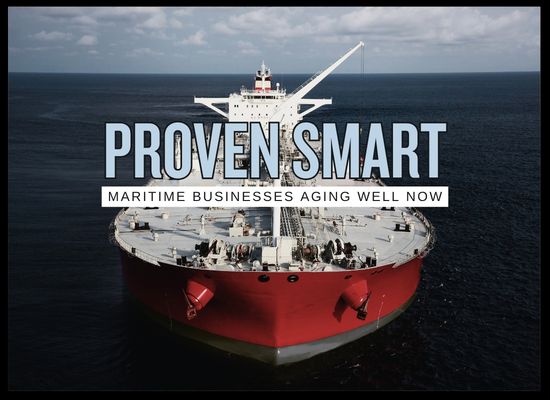
In 2023, some maritime business models still looked early, niche, or too dependent on policy tailwinds to feel commercially durable. In 2026, several of them look much more rational. The difference is not hype. It is the way regulation, fuel economics, chokepoint risk, and customer pressure have converged. EU ETS and FuelEU Maritime are now operating realities, the 2023 IMO GHG Strategy has hardened the long-run direction of travel, freight-rate volatility has stayed elevated, and major industry and classification sources are treating efficiency, fuel flexibility, and execution certainty as core commercial issues rather than side projects. That has made a number of models look stronger now than they did just a few years ago, especially those built around lower fuel burn, better emissions positioning, and more resilient voyage economics.
The maritime models aging better than expected
The smartest maritime business models in 2026 are not necessarily the flashiest ones. They are the ones that turned new regulation, fuel cost pressure, and route volatility into a clearer commercial edge. What looked optional in 2023 often looks much more rational now.
The true list in 2026
These are the maritime business models that genuinely look smarter in 2026 than they did in 2023, based on current regulation, operational realities, and commercial adoption signals.
| # | Business model | Looking smarter in 2026 | What changed since 2023 | Who benefits most | Commercial watchpoints |
|---|---|---|---|---|---|
| 1️⃣ |
Wind-assisted propulsion providers and retrofit-focused owners
This is one of the clearest examples of a model that matured commercially.
Wind propulsion
Efficiency
Retrofits
|
Wind-assisted propulsion now sits in a much stronger commercial position because owners have more reason to pay for fuel-burn reduction that also improves emissions performance. IMO explicitly lists wind-assisted propulsion among the energy-efficiency technologies encouraged by goal-based regulation, UNCTAD’s 2025 review includes wind and solar among relevant clean energy options, and DNV says 2025 looked like a potential breakthrough year with broader commercial adoption and claims of 5% to 20% fuel-use reduction on some ships. | In 2023, the model still looked more experimental to many buyers. By 2026, FuelEU and EU ETS have made the value of lower fuel consumption and lower emissions exposure easier to explain in money terms. | Bulkers, tankers, and other segments with good deck geometry, meaningful fuel consumption, and owners willing to retrofit instead of waiting for a full newbuild cycle. | Real savings vary by vessel type, route, and wind profile. Buyers still need disciplined voyage and technical analysis rather than broad marketing assumptions. |
| 2️⃣ |
Efficiency retrofit businesses built around measurable fuel and emissions savings
Hull, propulsion, lubrication, waste-heat, and similar performance upgrades look more investable now.
Retrofits
Fuel savings
Compliance support
|
This model looks stronger because efficiency now solves more than one problem. It can cut bunker spend, reduce EU ETS exposure, help FuelEU performance, and improve readiness for future IMO tightening. | In 2023, the payback case could still feel too dependent on future rules. In 2026, several of those rules are already active or much closer, so the commercial story is clearer. | Owners of existing fleets that want to improve economics before large-scale fuel transitions are mature enough to justify a broader fleet renewal. | The best offerings are the ones with ship-specific savings logic and a strong measurement story, not generic retrofit promises. |
| 3️⃣ |
Fuel-flexibility and transition-readiness businesses
The value of optionality has improved.
Fuel flexibility
Transition risk
Readiness
|
DNV says fleet readiness is now moving ahead of fuel supply, which makes businesses built around fuel flexibility, transition planning, and staged decarbonization choices look smarter than they did in 2023. Owners increasingly need help choosing when to commit, when to retrofit, and how to avoid locking into the wrong pathway too early. | In 2023, many operators could still delay the question. In 2026, the question is live because EU rules are already operating and the IMO path continues tightening. | Owners with medium-age fleets, charter exposure in regulated markets, or customers asking harder decarbonization questions without offering perfect fuel certainty in return. | Flexibility is valuable, but vague “future-proofing” is not enough. The model works best when it is tied to concrete regulatory and commercial scenarios. |
| 4️⃣ |
Operational-efficiency platforms built around port-call and voyage optimization
The old “sail fast then wait” pattern looks more expensive now.
Port-call optimization
JIT arrival
Voyage decisions
|
This model looks stronger because it attacks fuel waste, waiting time, schedule friction, and emissions exposure at once. The commercial case is better now that waiting outside port and poor synchronization are more clearly being treated as avoidable cost rather than background shipping reality. | In 2023, port-call optimization could still be treated as a nice-to-have digitalization project. In 2026, it is easier to frame it as margin protection. Official and industry work has kept reinforcing the value of operational efficiency and better timing. | Container lines, tramp operators, and owners with recurring port patterns where waiting and timing drift quietly destroy fuel and schedule performance. | The model only works if data quality, berth-readiness discipline, and commercial incentives are aligned well enough to change actual voyage behavior. |
| 5️⃣ |
Shore power and port-side clean energy service models
Port energy infrastructure looks more commercially relevant now than it did a few years ago.
Shore power
Port energy
Compliance
|
UNCTAD’s 2025 review explicitly includes electricity delivered from shore power among relevant energy pathways, and FuelEU Maritime also promotes clean-energy technologies. That makes port-side electricity and related service models look more connected to real compliance and customer needs in 2026. | In 2023, shore-power economics still looked uneven across ports and vessel segments. In 2026, the strategic case is stronger because port emissions, customer expectations, and regulatory direction are moving closer together. | Ports, terminal-linked service providers, and owners trading repeatedly through places where shore-side energy access can improve both emissions and port-side customer positioning. | The model still depends heavily on local infrastructure, utilization, and vessel compatibility, so not every port opportunity is equally attractive. |
| 6️⃣ |
Short sea and modal-shift linked services in Europe
The case for efficient regional maritime transport looks stronger in the current policy environment.
Short sea
Europe
Modal shift
|
EU transport policy has long treated maritime transport, and especially short sea shipping, as an important part of greener freight movement. In 2026 that business case looks stronger because regulatory and decarbonization pressure is making efficient regional maritime services more strategically relevant, not less. | In 2023, some of this still looked like a policy story looking for commercial scale. In 2026, it looks more like a business model with clearer structural support. | Operators serving European regional trade, ports positioned around short-sea corridors, and logistics businesses that can turn policy support into recurring cargo flow. {index=23} | The model still depends on cargo density, schedule reliability, and land-side integration. It is stronger than it was, but not automatically easy. |
| 7️⃣ |
Specialist carbon, emissions, and maritime compliance service providers
What once looked like admin overhead now looks like a real operating function.
ETS
FuelEU
MRV
|
This business model looks smarter because the compliance stack is much more operational in 2026. The EU’s industrial maritime strategy is already discussing how to simplify and streamline MRV for EU ETS Maritime and FuelEU Maritime, which tells you the market is deep enough to justify real specialist support rather than occasional consulting. | In 2023, many owners could still hope internal teams would “figure it out.” In 2026, there is more reason to treat emissions accounting, compliance strategy, and rule interpretation as recurring specialist work. | Mid-sized owners, managers, and charter-linked businesses that need credible reporting and commercial interpretation without building oversized in-house teams. | The smarter providers are the ones that connect compliance to commercial decisions, not just to reporting output. |
| 8️⃣ |
Onboard carbon capture solution providers
Still earlier-stage, but more credible than it looked in 2023.
Onboard capture
Emerging
Hard-to-abate
|
This model has not become mainstream, but it does look smarter in 2026 than it did in 2023 because serious technical work is being published by EMSA and others. That moves it from fringe discussion toward a more structured commercial and technical evaluation space. | In 2023, it looked easier to dismiss. In 2026, it looks more like a plausible option for some hard-to-abate niches, even if it is not the front-runner across the fleet. | Technology providers, specialist owners, and segments where other decarbonization pathways remain commercially difficult in the near term. | The model still has major questions around energy penalty, handling, and system economics, so “smarter than 2023” does not mean “ready for everyone.” |
Wind is no longer a novelty case
Wind-assisted propulsion stands out because it now fits both fuel-economics logic and regulatory logic at the same time. That is a much better place than it was in 2023.
Operational models got stronger
Port-call optimization, voyage efficiency, and timing discipline look more monetizable now because waiting and weak execution have become more expensive.
Readiness has become a business
Fuel flexibility, compliance management, and transition planning look smarter now because uncertainty itself has become commercially costly.
Business model fit screener
This quick tool helps compare whether a maritime business model looks stronger mainly because of fuel savings, compliance exposure, customer demand, or transition uncertainty.
The sharper commercial reading
The smartest maritime models in 2026 are not simply “green.” They are the ones where efficiency, compliance, and resilience are starting to reinforce the same revenue story.
The business models aging best in 2026 are the ones that reduce fuel burn, improve emissions positioning, or help owners navigate transition uncertainty without waiting for perfect fuel supply or perfect policy clarity. That is why wind-assisted propulsion, efficiency retrofits, fuel-flexibility services, port-call optimization, and compliance-linked support all look stronger now than they did in 2023.