Great Ideas, Tough Waters: 17 Maritime Technologies Facing Headwinds in 2025
April 21, 2025
In the maritime world, bold visions often collide with stubborn realities. Cutting-edge technologies promise cleaner fuels, smarter ships, and seamless logistics—but moving from visionary concepts to widespread adoption is rarely smooth sailing. From ambitious hydrogen-powered vessels to fully autonomous cargo ships, why are these maritime breakthroughs encountering such challenging waters? In this report, we'll explore what's holding back some of the most exciting maritime innovations today, uncovering the barriers, breakthroughs, and what it will take to overcome these waves.
The global maritime industry is under increasing pressure to reduce its carbon footprint. As regulatory frameworks tighten and public scrutiny intensifies, alternative propulsion methods and low-emission fuels have moved to the forefront of innovation. Solutions like hydrogen fuel, wind-assisted propulsion, electric vessels, biofuels, air lubrication systems, and even nuclear propulsion have all emerged as potential pathways toward decarbonizing shipping. Yet, despite the promise, the transition has been slower and more complex than many anticipated.
🏦 Investment Landscape
Investment in alternative propulsion has been significant in recent years, driven largely by:
IMO’s decarbonization goals targeting net-zero emissions by or around 2050
EU regulations and emissions trading schemes
National initiatives in countries like Norway, Japan, and South Korea
Private sector activity from major shipping companies and energy players
Numerous pilot projects have launched, including hydrogen-powered ferries, battery-electric harbor vessels, and retrofitted ships with wind rotor sails. Venture capital and public funds have also flowed into startups developing novel propulsion systems or cleaner marine fuels. However, much of this funding has gone toward exploratory or small-scale efforts, not yet translating into mass adoption across global fleets.
💡 Innovation Drivers
The maritime sector is inherently risk-averse, but several factors are pushing innovation forward:
Fuel cost volatility is prompting shipowners to consider alternatives that could offer long-term savings.
Port state regulations are making it costly to rely on fossil-fueled auxiliary engines while docked.
Cargo owners and charterers are increasingly factoring in carbon intensity when choosing carriers.
Public perception and ESG reporting are incentivizing large operators to visibly move toward cleaner technologies.
In this context, alternative fuels and propulsion systems are viewed as a strategic necessity — not just a compliance checkbox, but a way to future-proof fleets and reduce exposure to carbon pricing and reputational risk.
🌬️ Persistent Headwinds
Despite strong momentum and growing interest, several persistent challenges continue to limit widespread implementation:
High Capital Costs: New propulsion systems and retrofitting existing vessels require major capital expenditure. For many operators—especially smaller or independent owners—the economics don’t yet work without significant subsidies or policy support.
Infrastructure Gaps: Hydrogen bunkering, battery charging, biofuel distribution, and even specialized maintenance facilities are often unavailable or inconsistent across ports, making route planning and operational reliability difficult.
Unproven Scalability: While many technologies show promise at a small scale (e.g., electric ferries or wind-assisted coastal vessels), they have not yet been proven effective for large container ships or bulk carriers operating on global, long-haul routes.
Regulatory Uncertainty: Global regulations are still evolving, and many shipowners are hesitant to invest in a technology that might not be fully compliant—or could be superseded by another standard.
Technical Complexity: Integrating alternative systems with existing shipboard power and propulsion architecture adds operational complexity and often requires specialized crew training and long-term support partnerships.
Headwinds: Alternative Propulsion & Fuels
Technology & Context
Key Headwinds
Outlook & Potential Solutions
1️⃣ Hydrogen as Maritime Fuel
Touted as a zero-emission option, hydrogen is a frontrunner in long-term decarbonization strategies.
Hydrogen faces significant cost and infrastructure barriers. Producing, storing, and transporting hydrogen—especially in liquefied or compressed forms—requires new portside infrastructure and heavy capital investment. Handling safety and low energy density per volume are also ongoing concerns.
The establishment of green hydrogen hubs in select ports is gaining traction, supported by government subsidies and pilot programs. Early adoption will likely come through short-sea routes or hybrid vessels, with broader adoption dependent on scalability and safety confidence.
2️⃣ Wind-Assisted Propulsion
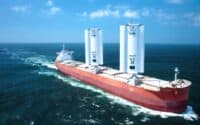
Rotor sails, kites, and rigid wings are being tested to harness wind as a secondary propulsion force.
While the idea of harnessing wind is centuries old, modern implementations face practical limits. Wind-assisted systems require significant deck space, can be route-dependent in effectiveness, and often face engineering challenges when retrofitting older vessels.
These technologies work best on specific long-haul routes with stable wind conditions. When paired with digital voyage optimization or used on newbuilds, they can yield meaningful fuel savings. Broader uptake depends on regulatory incentives and operational predictability.
3️⃣ Fully Electric Cargo Vessels
Powered entirely by onboard batteries, these vessels are being positioned as zero-emission solutions for short-range trade.
Battery weight and energy density severely limit range and cargo capacity. Most ports lack high-capacity charging infrastructure, and turnaround times are extended due to current charging speeds. Battery lifecycle and disposal also raise environmental and financial questions.
Currently viable for ferries, inland barges, and coastal routes. Research into solid-state batteries and fast-charging ports is accelerating. Broader adoption hinges on technology breakthroughs and infrastructure alignment at key logistics hubs.
4️⃣ Biofuels for Marine Engines
Derived from organic sources, biofuels can be used with existing engines, offering a lower-emission drop-in alternative.
Biofuels are often more expensive than conventional fuels and suffer from inconsistent quality and global availability. Their sustainability depends heavily on the source material, and lifecycle emissions can vary significantly, which complicates carbon accounting.
Seen as a bridge solution for the 2020s. Regulatory support, such as emissions credits or blending mandates, may spur uptake. R&D into second-generation biofuels from algae or waste feedstock offers a more sustainable pathway.
5️⃣ Nuclear Propulsion
Adapted from military and icebreaking vessels, nuclear could theoretically offer long-range zero-emission propulsion.
Significant barriers include public concern over safety, lack of global maritime nuclear regulations, and political sensitivity in port access. Technical requirements for onboard shielding, emergency protocols, and training are also substantial.
While technically viable, nuclear remains a long-term proposition. Research into Small Modular Reactors (SMRs) and stricter oversight frameworks may improve feasibility, but deployment is likely to be restricted to specialized or government-owned fleets.
6️⃣ Air Lubrication Systems
These systems reduce drag by creating a layer of microbubbles beneath the hull.
Performance depends heavily on sea state and hull design. In rough conditions or poorly maintained systems, the drag-reduction benefits can be minimal. Running the compressors also consumes energy, which can offset fuel savings.
Continued refinement and integration into newbuild designs could improve consistency. Most effective when combined with optimized hull shapes and operational strategies tailored to routes with calmer seas.
🔵 Digitalization & Connectivity
Digital transformation in the maritime sector has promised to unlock efficiency, reduce risk, and revolutionize the way fleets are managed. From real-time cargo tracking and smart routing to blockchain-secured documentation and digital twins for entire fleets, the sector has seen a wave of innovation driven by data.
Yet despite widespread enthusiasm, implementation has been patchy. Legacy infrastructure, fragmented standards, and resistance to changing workflows continue to slow adoption. While the potential remains massive, digitalization in maritime is still navigating choppy waters.
🏦 Investment Landscape
The past five years have seen substantial investment in maritime digital tech, including:
Major carriers and port operators forming data-sharing consortiums (e.g., GSBN, Port Community Systems)
Venture capital backing maritime IoT, AI startups, and SaaS platforms
Strategic acquisitions by logistics and freight tech giants
Public-private initiatives supporting digitized documentation and customs integration
Still, many projects remain pilot-phase or confined to Tier 1 operators. Smaller shipping companies and regional ports often lack the technical capacity to participate, weakening the network effects required for success.
💡 Innovation Drivers
Several trends are continuing to push digitalization forward:
Customers are demanding real-time tracking, transparency, and predictive ETAs.
ESG pressures and carbon reporting requirements are fueling digital emissions measurement tools.
Cost volatility is motivating more precise route optimization and fuel management.
Crew shortages and safety concerns are driving remote diagnostics, digital training, and autonomous maintenance systems.
In short, digital solutions promise better visibility, compliance, and cost control — exactly what operators need to stay competitive in a complex and regulated global environment.
🌬️ Persistent Headwinds
While digital platforms continue to evolve, four major challenges are holding back widescale implementation:
Data Fragmentation: Shipping still operates in silos. Carriers, terminals, freight forwarders, and authorities use incompatible systems, making end-to-end data exchange difficult or manual.
Adoption Gaps: Small-to-mid-size companies often lack the budget, staff, or technical integration capabilities to adopt advanced digital platforms. This limits ecosystem-wide momentum.
Trust and Transparency Concerns: Platforms like blockchain or shared digital records raise questions around data security, access rights, and whether one party (often a big player) has too much control.
Regulatory Lag: In many jurisdictions, paper is still the official standard. Bills of lading, crew documents, and port inspections often require physical signatures or approvals, slowing digital rollout.
Headwinds: Digitalization & Connectivity
Technology & Context
Key Headwinds
Outlook & Potential Solutions
7️⃣ Blockchain Logistics Platforms
These platforms aim to secure trade documentation, automate processes, and create shared visibility across stakeholders.
Adoption has stalled due to lack of interoperability and buy-in from smaller players. Trust issues emerge when platforms are controlled by dominant carriers. Most critically, the anticipated network effects have failed to materialize. Paper-based systems still dominate many customs and legal frameworks.
The concept remains strong, but successful adoption may come through neutral, industry-wide consortia. Governments may also mandate digital documentation, which could force migration. Simplified user interfaces and legal recognition of blockchain-based bills of lading will be crucial.
8️⃣ Satellite IoT for Container Tracking
Enables real-time visibility of individual containers using satellite-connected sensors, especially in remote ocean zones.
Cost per unit remains too high for mass adoption, especially across low-value shipments. Battery life, signal reliability in harsh marine environments, and limited standardization across devices make global scaling difficult. Many shipping lines prefer tracking only select high-value containers.
Prices are gradually dropping, and container lessors and third-party logistics firms may drive broader adoption. Integration with shipboard telemetry and AI-driven route systems could boost value. Battery efficiency and multi-sensor capabilities are key R&D focus areas.
9️⃣ AI for Route Optimization
Artificial intelligence systems analyze variables like weather, currents, and port congestion to reduce fuel use and transit times.
Despite clear potential, uptake is slow due to skepticism among captains, limited integration with legacy navigation systems, and the "black box" nature of AI recommendations. Without high-quality real-time data, the models can produce inaccurate or overly conservative suggestions.
Hybrid models that blend AI recommendations with human oversight are gaining traction. As data quality and connectivity improve, trust will follow. Demonstrating measurable fuel savings across pilot routes is key to scaling adoption.
🔟 Digital Twins for Fleet Management
Virtual replicas of ships and systems that simulate real-time performance, enabling predictive maintenance and optimization.
Digital twins require a high degree of sensor coverage and constant data input, which many ships lack. On older vessels, retrofitting is costly. The ROI can be unclear for operators without robust IT teams or a culture of proactive fleet monitoring.
Most effective for newer vessels and LNG carriers with complex machinery and systems. Shipbuilders are beginning to offer digital twin-ready platforms at launch. Value will grow as tools integrate with fuel efficiency, safety, and emissions tracking systems.
🔵 Autonomy & Robotics
The maritime industry has long been on the frontier of machine-assisted operations, but the recent leap toward autonomy has introduced a new era of possibilities. Autonomous cargo ships, drone-based inspections, underwater hull robots, and automated container terminals each offer the potential to reduce costs, improve safety, and increase operational efficiency. While some technologies are already in use in controlled environments, full-scale deployment across the global industry remains uneven and riddled with operational and regulatory challenges.
🏦 Investment Landscape
Autonomy and robotics have attracted widespread attention and funding from both the private and public sectors. Investment trends include:
Government-backed autonomous navigation programs in Europe and East Asia
Port authorities investing in smart infrastructure and automated terminals
Class societies funding testbeds and approval frameworks for autonomous systems
Tech companies partnering with shipbuilders on autonomous navigation and remote monitoring
The majority of working applications today are confined to controlled environments — short-distance ferries, tugs, and port operations — where regulatory risk is minimal and redundancy is high.
💡 Innovation Drivers
Several pressures are accelerating the push toward autonomy and robotics:
Labor shortages: The shortage of skilled seafarers and port workers makes automated systems more appealing.
Safety improvements: Removing or reducing human exposure in hazardous situations is a strong motivator.
Cost optimization: Reducing crew requirements and automating time-intensive tasks can cut long-term operating costs.
Regulatory compliance: Automated systems can help ensure consistent documentation, inspections, and environmental compliance.
Remote operations: In post-COVID environments and conflict zones, remote inspection and operations offer both continuity and safety.
🌬️ Persistent Headwinds
Despite real progress, there are critical barriers preventing widespread rollout:
Regulatory Uncertainty: There is no globally harmonized legal framework for fully autonomous vessels. Issues of liability, flag state compliance, and insurance coverage remain murky.
Technology Maturity: Autonomous systems, particularly AI-driven decision engines for navigation, remain in early-stage development. Sensor fusion, redundancy systems, and real-time decision-making under duress still need refinement.
High Capital Costs: The initial investment to automate terminals or retrofit vessels for remote or autonomous operations is substantial. Many operators find it hard to justify without immediate ROI.
Interoperability and Standards: Lack of standardization across ship systems, ports, and inspection tools limits integration. Drones and underwater robots may not be universally compatible with older vessels or port platforms.
Human Trust & Oversight: Even when systems are technically ready, ship operators and port authorities often require substantial human oversight, slowing the shift from semi-automated to fully autonomous operations.
Headwinds: Autonomy & Robotics
Technology & Context
Key Headwinds
Outlook & Potential Solutions
1️⃣1️⃣ Autonomous Cargo Ships
Fully unmanned or remotely operated ships aim to reduce crew costs and human error on long-haul routes.
Regulatory bodies have yet to agree on a unified framework governing autonomous vessels. Liability in case of accidents remains unclear, and many port authorities are unprepared to interface with unmanned ships. Additionally, cybersecurity concerns and technical redundancy requirements remain unresolved.
Progress continues in specific lanes such as short-sea shipping, tugs, and inland waterways. Regulatory sandboxes and gradual integration of semi-autonomous systems may pave the way for broader acceptance. Insurance partnerships and real-world performance metrics will be key enablers.
1️⃣2️⃣ Drone-Based Ship Inspections
Drones provide visual inspections of hard-to-reach areas like masts, tanks, and cargo holds—enhancing safety and speed.
Regulatory acceptance varies by port and flag state. Navigation in enclosed spaces or under poor weather conditions remains difficult, and there are questions about the validity of drone-collected data for official classification purposes. Battery life also limits continuous inspection time.
Class societies are beginning to certify drone-based inspections in specific contexts. Advances in autonomous flight, AI-assisted diagnostics, and collision avoidance are expanding potential use cases. Integration with digital twins could offer full inspection ecosystems.
1️⃣3️⃣ Underwater Autonomous Vehicles (UAVs/AUVs) for Hull Maintenance
Autonomous submersibles perform hull inspections and cleaning without dry docking or divers.
These systems face operational limits in murky water, high current areas, and on heavily fouled hulls. Many require launch and recovery systems, and integrating data into ship maintenance logs is still a manual process. Certification for class survey use is still limited.
Increasingly viable in calm water and port environments. As sensors improve and AI models adapt to complex surfaces, accuracy will increase. Class societies are testing protocols to accept AUV inspection reports, and insurance firms may begin accepting this data for risk scoring.
1️⃣4️⃣ Automated Container Terminals
Fully or partially automated terminals use robotics and software to handle cargo operations more efficiently and safely.
High setup and retrofitting costs limit feasibility for smaller or older ports. Labor resistance has also been strong in some regions. Software interoperability with legacy port systems, and real-time decision-making under variable conditions, remain key limitations.
New greenfield terminals and high-volume ports are leading adoption. Hybrid automation systems allow gradual integration with human oversight. Success will depend on unions, safety data, and long-term ROI models that factor in rising labor and fuel costs.
🔵 Infrastructure & Operations
While propulsion and digital innovation often get the spotlight, much of the maritime industry’s modernization hinges on the physical and operational backbone that keeps ships and ports running. From shore power to emissions equipment and data infrastructure, the systems behind the scenes determine how efficiently vessels turn around in port, comply with regulations, and adapt to global environmental mandates.
These technologies promise cleaner ports, smarter terminals, and more consistent global standards. However, despite significant public investment and regulatory push, infrastructure-focused innovations often face the most entrenched headwinds—especially due to cost, fragmented oversight, and regional disparity.
🏦 Investment Landscape
Global port infrastructure spending has grown, with particular emphasis on:
Electrification of ports and cold ironing systems (shore power)
Upgrades to accommodate larger ships and automated terminals
Retrofitting vessels with exhaust gas cleaning systems (scrubbers)
Data infrastructure and sensors to support real-time logistics and compliance
Multilateral funding institutions, regional governments, and private port operators have all played roles, but progress has been uneven. Wealthier ports in Europe and Asia have made the most strides, while smaller ports struggle to justify large-scale upgrades without clear ROI.
💡 Innovation Drivers
Several trends are fueling infrastructure upgrades and operational innovation:
Tighter emissions regulations are forcing ports and fleets to invest in cleaner systems.
Port congestion and vessel delays are motivating upgrades that reduce dwell time.
Stakeholder pressure from cargo owners is forcing operators to demonstrate environmental compliance and portside transparency.
The push for standardization in customs, inspections, and data sharing continues to reward digitally prepared facilities and operators.
🌬️ Persistent Headwinds
Infrastructure improvements face several stubborn and interlinked challenges:
Capital Intensity: Infrastructure projects—especially those involving port-wide electrification, retrofits, or automation—require enormous capital outlays with uncertain ROI over long timelines.
Regulatory Patchwork: Lack of harmonized international standards around emissions, equipment compatibility, and reporting creates confusion and discourages investment. Shore power systems, for example, still lack global plug-and-play standardization.
Inequality in Port Readiness: Top-tier ports move ahead while mid-tier and developing ports lag behind. This creates supply chain fragmentation where some routes or ships benefit from modern operations while others remain outdated.
Operational Disruption: Retrofitting shore power, scrubbers, or digital systems can take ships offline or disrupt terminal operations—something many operators are reluctant to accept amid tight schedules and market pressures.
Human Systems Lagging Behind: Advanced infrastructure often depends on crew and port personnel with the right training and operational knowledge. In many cases, the tech is ready—but the workforce is not.
Headwinds: Infrastructure & Operations
Technology & Context
Key Headwinds
Outlook & Potential Solutions
1️⃣5️⃣ Shore Power (Cold Ironing)
Allows ships to shut down diesel engines at port by plugging into land-based electric power, reducing emissions at berth.
Infrastructure is expensive to install and standardization across ports is still lacking. Many older vessels are not equipped to plug in, and power grids in some regions can’t handle the additional demand. Implementation also slows port turnaround times without fast connection systems.
Regulatory mandates in California, the EU, and China are accelerating adoption. Retrofitting incentives and international standardization efforts (e.g., IEC/ISO plug specs) could improve interoperability. Long-term, this may become a requirement at all major global ports.
1️⃣6️⃣ Exhaust Gas Cleaning Systems (Scrubbers)
Installed on vessels to remove sulfur and other emissions from exhaust, enabling compliance with IMO 2020 sulfur limits.
Scrubbers are expensive to install and maintain, especially for smaller vessels. Open-loop scrubbers, which discharge waste into the sea, are banned in many ports. Additionally, they do not reduce CO₂, leading to criticism that they are only a partial solution.
Hybrid or closed-loop systems are gaining traction, especially on large vessels where ROI is more attainable. Long-term success will depend on whether carbon pricing or greenhouse gas regulations expand to favor broader emissions control.
1️⃣7️⃣ Port Data Integration Platforms
Digital systems that connect ports, ships, customs, and logistics stakeholders to improve visibility and coordination.
Data integration is slowed by fragmented software ecosystems and incompatible platforms between port authorities, ship operators, and freight handlers. Smaller ports may lack the digital maturity or budget to adopt these platforms. Security and data governance also remain concerns.
Standardized APIs and cloud-based solutions are emerging to reduce integration friction. Success depends on adoption by terminal operators and national customs agencies. Projects like the EU’s Maritime Single Window and GSBN may lead the way in setting global norms.
The maritime industry is no stranger to innovation—but turning bold ideas into operational reality takes more than technology. From alternative fuels and AI-driven route planning to underwater hull robots and port electrification, each solution faces its own mix of economic, regulatory, and cultural resistance.
Still, these headwinds are not signs of failure. They’re signals of complexity in a global, interdependent system that must balance safety, cost, sustainability, and scale. The technologies outlined in this report may not be widely adopted yet, but they represent the direction in which the industry is undeniably headed.
As pressure mounts to decarbonize, digitize, and de-risk maritime operations, the real question isn’t whether these innovations will succeed—it’s which players will figure out how to deploy them in a way that truly works. For shipowners, port operators, suppliers, and policymakers alike, now is the time to shift from passive observation to active experimentation.
Because in the maritime world, staying still is rarely an option—and the tide of transformation is already rising.
📝 Table Summary
ShipUniverse: 17 Maritime Technologies Facing Headwinds in 2025
Alternative Propulsion & Fuels
Technologies designed to reduce emissions and transition maritime shipping away from fossil fuels. This includes experimental and emerging propulsion systems such as hydrogen, wind, electric, biofuel, air lubrication, and nuclear-powered vessels. While innovation is strong, high capital costs, infrastructure gaps, and regulatory fragmentation continue to slow widespread adoption.
Technology & Context
Key Headwinds
Outlook & Potential Solutions
1️⃣ Hydrogen as Maritime Fuel
Zero-emission propulsion using compressed or liquefied hydrogen.
High production and storage costs, limited bunkering infrastructure, and safety concerns. Hydrogen handling requires new equipment and training at both ship and port levels.
Growing interest in green hydrogen clusters and dedicated short-sea routes. Long-term adoption will depend on global subsidies and infrastructure standardization.
2️⃣ Wind-Assisted Propulsion
Supplementary propulsion via sails, rotors, or kites to reduce fuel consumption.
Route-dependent performance, large upfront installation costs, and engineering complexity when added to existing vessels.
Effective on consistent long-haul routes. May gain traction as part of hybrid strategies, especially if carbon pricing expands globally.
3️⃣ Fully Electric Cargo Vessels
Battery-powered vessels offering zero-emission transit.
Limited range, heavy batteries, and lack of charging infrastructure at ports. Recharge time can extend port calls.
Ideal for ferries, inland shipping, and short-sea trades. Expansion depends on port electrification and fast-charging technologies.
4️⃣ Biofuels for Marine Engines
Renewable fuel substitute compatible with conventional engines.
Supply chain inconsistency, high cost, and uncertain sustainability due to feedstock variation.
Acts as a transition fuel for fleets. Future depends on certification, international mandates, and improved biofuel production methods.
5️⃣ Nuclear Propulsion
Long-range, zero-emission propulsion using nuclear reactors.
Safety concerns, lack of global regulation, political resistance, and high capital cost for deployment.
Remains a distant but strategic option. Small Modular Reactor (SMR) technology could revive interest with proper oversight and military-to-civilian tech transfer.
6️⃣ Air Lubrication Systems
Injects air beneath the hull to reduce drag and fuel consumption.
Variable performance in rough seas, additional energy use for compressors, and high retrofitting costs.
Useful in calm-sea routes and on newbuilds with optimized hull designs. Integration with smart hull monitoring may increase future ROI.
Digitalization & Connectivity
Technologies aimed at increasing transparency, efficiency, and data-driven decision-making across the shipping supply chain. These tools include blockchain-based documentation, satellite-connected sensors, AI route planning, and digital twins for predictive operations. While interest is high, adoption lags due to fragmented standards, high integration costs, and trust issues around shared data environments.
Technology & Context
Key Headwinds
Outlook & Potential Solutions
7️⃣ Blockchain Logistics Platforms
Secures trade documents, automates cargo handoffs, and offers shared visibility among shipping stakeholders.
Adoption has been slow due to limited interoperability, lack of industry-wide buy-in, and fear of centralization by dominant players. Legal and customs requirements for paper documentation remain widespread, reducing blockchain’s utility.
Broader uptake may come via neutral consortia and public sector mandates. Legal recognition of smart contracts and digital bills of lading is essential for scale.
8️⃣ Satellite IoT for Container Tracking
Enables real-time container visibility using satellite-connected sensors, even in remote maritime zones.
Devices are still too costly for universal deployment. Battery life, ruggedization, and signal reliability under marine conditions remain technical hurdles. Smaller operators often lack the systems to process large data streams.
Costs are declining, and adoption is likely to expand through container leasing firms and high-value cargo handlers. Integration with digital twin and fleet systems will increase value.
9️⃣ AI for Route Optimization
Uses machine learning to optimize fuel efficiency, arrival times, and routing decisions based on real-time variables.
Many captains remain wary of AI-generated suggestions, especially without transparency. Poor data quality and patchy connectivity weaken real-time modeling. Integration with onboard systems is still limited.
Growing trust in AI-human hybrid models may boost adoption. Demonstrated fuel savings and port slot optimization are building commercial interest.
🔟 Digital Twins for Fleet Management
Creates a virtual replica of ship systems for diagnostics, forecasting, and performance monitoring.
High data demands, costly sensors, and complex IT integration limit current deployment to newer vessels. Retrofits are expensive, and ROI isn’t always clear for older fleets.
Newbuilds increasingly come digital twin–ready. Integration with maintenance schedules and emissions monitoring could drive broader use if paired with ESG reporting incentives.
Autonomy & Robotics
From unmanned ships and drone inspections to robotic hull cleaners and automated container terminals, autonomy in maritime operations is evolving rapidly. These technologies offer major benefits in safety, cost, and consistency, but full adoption remains limited by regulatory gaps, high implementation costs, and interoperability issues across vessels and ports.
Technology & Context
Key Headwinds
Outlook & Potential Solutions
1️⃣1️⃣ Autonomous Cargo Ships
Fully unmanned or remotely operated vessels designed to reduce crew costs and improve navigational safety.
Lack of international regulation, unresolved liability in accidents, cybersecurity risks, and port unpreparedness limit expansion. High redundancy and oversight systems increase cost.
Short-sea applications are growing. Gradual hybrid autonomy models paired with regulatory testbeds may pave the way for commercial viability in the 2030s.
1️⃣2️⃣ Drone-Based Ship Inspections
Aerial drones used to inspect cargo holds, tanks, superstructures, and hard-to-access vessel areas.
Limitations in battery life, navigation in confined or metallic spaces, and legal acceptance of drone data for compliance purposes slow adoption.
Certification is expanding for use in certain contexts. Combined with AI damage recognition and digital twins, drones could become core to next-gen maintenance.
1️⃣3️⃣ Underwater Autonomous Vehicles (UAVs/AUVs)
Submersible robots used to inspect and clean hulls below the waterline without divers or drydocking.
Challenged by murky water, currents, and hull complexity. Still lacks widespread classification approval for official inspection purposes.
Gaining traction in ports with calm water. Improving sensors and machine learning may unlock full inspection and biofouling management roles.
1️⃣4️⃣ Automated Container Terminals
Use of robotics and control systems to automate cargo handling, stacking, and gate operations in container terminals.
High capital investment, labor resistance, and software integration issues hinder rollout. Smaller ports lack volume to justify automation.
Newbuild terminals and high-throughput ports are leading adoption. Hybrid systems may allow phased automation in more locations over time.
Infrastructure & Operations
These technologies form the backbone of maritime logistics and environmental compliance. From shore power systems to scrubbers and digital port platforms, these tools offer cleaner, more efficient operations—but they often face the steepest hurdles. High capital costs, slow regulatory harmonization, and gaps between large and small ports continue to limit full-scale adoption.
Technology & Context
Key Headwinds
Outlook & Potential Solutions
1️⃣5️⃣ Shore Power (Cold Ironing)
Allows ships to plug into land-based power while docked, cutting emissions from auxiliary engines.
High infrastructure costs, power grid limitations, and lack of global standardization for ship-to-shore connections. Many older ships are not shore-power ready.
Regulations in California, China, and the EU are driving implementation. Broader rollout depends on funding, retrofitting support, and standardized connection specs.
1️⃣6️⃣ Exhaust Gas Cleaning Systems (Scrubbers)
Onboard systems that remove sulfur and particulate matter from ship emissions to meet IMO 2020 rules.
Installation is costly and space-consuming. Open-loop systems are banned in some waters, and scrubbers don’t reduce CO₂, limiting their long-term viability.
Hybrid and closed-loop systems are gaining interest. Long-term role depends on future environmental rules, carbon pricing, and retrofitting economics.
1️⃣7️⃣ Port Data Integration Platforms
Digital platforms that connect ports, terminals, ships, customs, and freight stakeholders for real-time coordination.
Incompatible legacy systems, data silos, and cybersecurity concerns limit deployment. Many smaller ports lack the digital infrastructure to participate fully.
Standardized APIs, cloud-based tools, and mandates like the EU Maritime Single Window are setting the stage for gradual global adoption.