ShipLog Story: Blindside in the Storm
Caught between a monsoon, malfunctioning radar, and an unlit vessel with no identity, Blindside in the Storm is a maritime collision story where legality and survival drift apart, and the line between criminal and crewman begins to blur.
Ship Universe Note
- This post is part of our Wednesday ShipLog Stories series at Ship Universe
- We spotlight the human side of the maritime industry through fiction that is based on real-world scenarios.
- For questions, feedback, or to share your own story, please get in touch with us
The first sign of trouble wasn’t the radar.
It was the rain.
It came fast and hard, slamming across the bridge windows of the MV Gallant Star and wiping out the view like someone had dropped a curtain. Lights from the deck reflected back in the glass. Beyond that, just black.
It was 2:14 in the morning. The ship rocked as another wave hit from the southeast. Somewhere behind them, lightning flashed low and fast across the horizon. No thunder, just light and pressure.
Inside the bridge, the air felt heavy. The kind of quiet that settles in when everyone’s too tired to talk but too on edge to relax.
Second Officer Ravi sat at the console, blinking slowly. He adjusted the radar settings, turning down the sea clutter. Still too much noise. The screen was crowded with static and half-formed returns.
Captain Elena Varga stood behind him, hands behind her back, watching the radar over his shoulder. She didn’t say anything. She rarely did unless she had to. She’d seen plenty of storms, but something about this one had her on edge.
Miguel, the Bosun, stepped onto the bridge dripping wet. He shook off his jacket and gave a quick report.
“Sea’s picking up. Everything down below is holding. But that front’s wrapping back around us.”
Ravi gave a slow nod. He checked the AIS screen. Cargo vessels nearby, same as usual. No one acting strange. No one heading their way.
Everything looked fine.
“Monsoon’s back. Can barely see. Wish me luck. 4 more days.”
Captain Varga glanced out the rain-soaked window.
“Let’s stay sharp,” she said. “This feels like one of those nights.”
The rain kept hammering the bridge.
And out there in the dark, something was getting closer.
Outside, the storm rumbled low, like something pacing just beyond sight.
Ravi shifted in his seat and glanced at the radar again. A few small returns blinked in and out near the edge of the range, nothing steady. He adjusted the gain again, squinting. Still just noise.
Gain: 68% | Range: 6 NM
Weather Interference: Moderate
Target Returns:
• 003° / 4.2 NM – Faint
• 092° / 5.8 NM – Faint
• 118° / 3.9 NM – Unstable return
• 220° / 1.6 NM – Blinking / not confirmed
• 301° / 5.1 NM – Lost signal
Note: No AIS signal associated with 220° contact.
Captain Varga leaned slightly over his shoulder.
“Anything look off?”
Ravi hesitated. “Maybe some clutter to the east. Could just be weather reflections.”
She gave a small nod but kept watching the screen.
Miguel sipped a lukewarm coffee from a dented steel mug.
“Used to be storms meant fewer ships out here,” he muttered. “Now it just means they all stop paying attention.”
Ravi forced a smile. His heart was still thumping a little faster than normal. First night crossing the Strait in weather like this. First contract outside Indian coastal routes. First time with a captain who barely said ten words an hour.
He checked AIS again. The same nearby vessels all lit up, all reporting. A cargo ship ahead. A few tankers spaced far off to the south.
Everything looked fine. But something still felt wrong.
“Radar’s jumpy. Captain’s calm as always. Weird night. Something feels off.”
Miguel tapped the window with a knuckle.
“See that flash out there?”
Lightning cracked again. For a split second, the horizon lit up; wild, white, full of lines. Ravi thought he saw something just beyond the starboard quarter. A shape, maybe. But it was gone as fast as it came.
He adjusted the radar again. Still nothing clear.
Captain Varga turned back toward the console.
“Keep eyes out. If something’s out there, I want to know before it’s close enough to matter.”
Ravi shifted again and rubbed his eyes. He had stared at radar screens before, but tonight felt different. The sea clutter was worse than usual, and some of the returns just didn’t make sense.
One faint contact blinked in at 1.6 nautical miles off the starboard bow. Then it vanished. He adjusted the range and rechecked the gain, thinking it might be a false echo. It returned again, just a flicker, then gone.
He leaned forward, focused.
“Captain, there’s something at two o’clock. Keeps appearing for a second, then disappearing.”
Captain Varga walked over calmly and looked at the screen. “Perhaps a fishing boat. Probably noise. Any AIS?”
Ravi shook his head. “Nothing showing up. No call sign. No light either.”
The captain didn’t react much. She just kept watching.
Outside, the rain came harder now, hammering the deck and bridge windows like a thousand wet hands. Visibility was down to almost nothing. Ravi looked back at the screen. The contact returned again, just barely. It wasn’t stable, but it wasn’t random either. There was rhythm to it. A ghost with purpose.
A few miles away, the Tayyar rolled heavily in the same storm, her rust-stained hull barely holding trim in the swells. She was an old freighter, long ago retired from the books. Now she ran quiet, hauling unregistered fuel from one port to another.
The radar on the bridge barely worked. The sweep line blinked and stuttered across a scratched CRT screen, showing little but noise. The AIS system had been turned off before they even left the anchorage near Batam. Orders from the owner.
Captain Farouk leaned against the console, jaw tight, eyes half-closed. He had done better jobs in better years, but this was what paid. He had mouths to feed back home. So did most of his crew.
Down in the engine room, a leak was spreading near the bulkhead. The bilge alarm chirped every ten minutes. Power had dipped twice already. The nav lights were off, not just by choice, but because the auxiliary breaker had blown during the last power cycle.
He lit a cigarette with shaking fingers and stared into the dark beyond the rain-covered windows.
• AIS: Offline (intentional)
• Navigation lights: Out (breaker fault)
• Radar: Limited return at 1.5–2.0 NM, bearing 041°
• Action: Hold course. Do not broadcast signal. No deviation.
Below deck, Ismael, the youngest crewman, sat on a storage crate with a notebook in his lap. In it, he was sketching a small house with trees. His son had drawn the same picture in a letter two weeks ago.

He could feel the vibrations through the floor and smell fuel in the air. He didn’t like storms, and he didn’t trust silence.
“We passed someone,” he said quietly to no one.
But no one was listening.
Up on the Tayyar’s bridge, Farouk leaned forward.
Out of the darkness, a set of faint lights appeared through the storm, too close for comfort.
“God help us,” he whispered. “That’s a big one. And we’re blind.”
The Gallant Star creaked again as it pushed into another swell. Rain hammered the deck. Lightning flared in the distance, outlining nothing but water and sky.
Ravi leaned closer to the radar. That same return was back. It held just long enough this time for him to mark the bearing. It was closer. Much closer.
“Captain. That contact is back. One-point-five miles. No lights. Still no AIS.”
Captain Varga stepped forward fast, eyes fixed on the screen.
“Heading?”
“Crossing from our starboard. Looks like it’s drifting across our path.”
Miguel pressed his face to the window, trying to peer through the rain. Nothing but dark water.
Then it happened.
A sharp burst of lightning lit the sea like a strobe. For half a second, a shadow appeared in the downpour. Steel, rusted red, no lights. A hull.
“Contact, starboard! About a mile out!” Ravi called out. “It’s there. Definitely there.”
Varga didn’t hesitate.
“Hard to port. One degree. Sound five short blasts. Now.”
Miguel grabbed the ship’s whistle.
Unlit vessel confirmed crossing path at ~0.9 NM
Bearing 119°, angle on bow increasing
AIS: Not detected
Evasive action initiated: Helm port 1°
Collision horn: 5 short blasts
Manual watch required. Rainfall obscuring visuals.
The Gallant Star groaned as it shifted slightly. The helm adjusted course, just enough to angle away. Ravi could feel the tightness in the captain’s voice now, even if her face stayed calm.
“If they’re not moving,” she said, “we’re going to come within a few cables of them.”
Another flash of lightning.
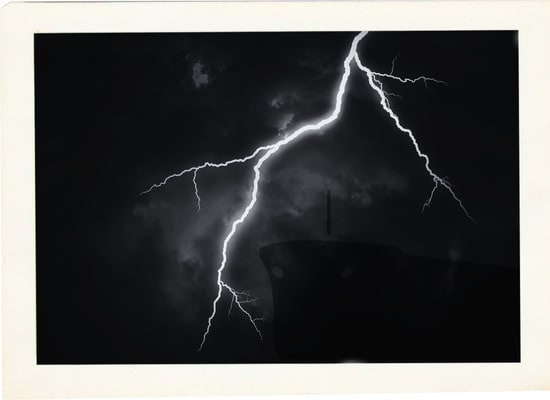
This time they all saw it. A vessel, no markings, no lights, no sound, moving at just the wrong angle.
Ravi’s heart pounded in his throat. He gripped the console so tightly his knuckles turned white.
“They don’t see us,” he whispered.
There was no time for another warning.
The ghost ship was already too close.
For a brief second, it felt like time folded in on itself, rain freezing midair, lightning suspended in the sky. The unknown vessel emerged fully into view, just yards off the starboard side. Bigger than expected. Rusted. Scarred. Moving slowly, but not stopped.
And then it scraped.
A long, low metallic screech ripped through the Gallant Star’s hull. Not deep. Not tearing. But unmistakable.
Steel on steel.
Ravi jolted back from the console. Miguel swore loudly and ran toward the door. Captain Varga gripped the railing, her voice firm.
“Damage control teams to starboard. Helm — maintain turn. Do not accelerate. Hold your heading.”
Sparks flashed as one of the Gallant Star’s guardrails sheared off and clattered into the sea.
The bridge lights flickered. The vessel groaned again, adjusting to the new water resistance.
The mystery ship didn’t respond. No radio. No lights. It simply kept sliding by, inches away, like a drifting shadow.
• Minor contact on starboard side
• No hull breach confirmed (visual inspection pending)
• Unlit vessel passed at ~0.3 cables distance
• No response to collision horn
• No AIS signature detected
Status: Unknown vessel has continued course. No pursuit initiated.
Ravi stood frozen. His palms were slick. He hadn’t even realized he was holding his breath.
Captain Varga walked to the window, silent for a moment.
“They didn’t just miss us,” she said. “They never saw us.”
Below deck, crew scrambled to inspect for damage. The radio remained quiet.
And outside, the shadow ship vanished again into the curtain of rain, like it had never been there at all.
The collision rattled the Tayyar from keel to deck. It wasn’t a hard hit, but it was enough to be felt in the bones. Enough to leave a mark.
Down in the engine room, Ismael crouched beside a leaking pipe. The pressure was dropping, slow but steady. He placed a rag under the joint and felt for vibration.
“We’ve got a dent midship, starboard side. Line’s holding for now.”
He climbed the ladder to the bridge two rungs at a time, dripping sweat and diesel. Captain Farouk stood at the window, his hand resting on the edge of the radar console. The screen was still flickering with rain noise. No usable returns. No way to track what had just happened.
The lights from the other ship were already gone. Lost behind the downpour.
• Contact: Glancing collision, unknown vessel
• Damage: Hull dent at starboard midsection
• System: Low-pressure fuel return line compromised
• Radio: No signal
• Action: Maintain heading. No report filed
Orders remain: Do not stop. Do not identify.
Farouk looked out the rain-streaked glass. The other ship was already gone.
“That was on us,” he said quietly, more to himself than anyone. “Well. All is well that ends well.”
He lit another cigarette with shaking hands and sat down heavily in the bridge chair. He knew what came next. There would be no insurance claim. No repair port. No report filed. They would keep moving. If the leak held, they’d make it to their drop point. If it didn’t, they’d be on their own. No flag. No support. No right to call for help.
Rain still battered the Gallant Star, but the storm had shifted, no longer angry, just persistent. The ship held course, engine humming steady beneath their feet. Down below, a small team had already checked the starboard side. A scraped guardrail. Bent steel on the catwalk. No punctures. No breach.
On the bridge, Ravi wiped fog from the window and looked out over the water.
“We should’ve seen them sooner,” he said, still staring.
Captain Varga leaned over the chart table, jotting notes into the ship's incident log.
“They weren’t broadcasting,” she said. “No AIS. No lights. Radar noise. We saw them as soon as humanly possible. And we still almost hit them.”
Miguel stepped onto the bridge holding a torn piece of metal railing.
“This is all they left behind,” he muttered, setting it down with a metallic thud.
Varga looked up briefly, then went back to writing.
Incident: Near-collision
• Unidentified vessel crossed path at 0.3–0.5 NM
• No AIS, no navigation lights, radar noise, no radio contact
• Minor contact: superficial damage to starboard railing
• Evasive action initiated and successful
Flag State notified. Awaiting guidance.
Ravi sat down slowly, still watching the rain.
“That ship wasn’t just dark. It was invisible until it wasn’t.”
Miguel nodded. “Shadow fleet. Smugglers, maybe. Maybe worse.”
Varga finally looked up, eyes steady.
“Doesn’t matter. The only thing that matters to us is they didn’t want to be seen.”
The rain began to lighten. The faint glow of early morning was starting to break over the far edge of the horizon.
No apology was coming. No name. No contact.
Just a dented guardrail and a quiet, sobering reminder that not every ship on the sea wants to be found.
Recap
In the dead of night during a monsoon storm, the MV Gallant Star narrowly avoided a collision with a vessel that had no AIS signal, no navigation lights, and no radio contact. That vessel, the Tayyar, was operating outside legal frameworks, likely part of a shadow fleet involved in unregistered fuel transport. Both crews faced danger, but only one had the tools to avoid catastrophe — barely.
The encounter exposed the vulnerability of even well-equipped ships when facing silent, untraceable traffic in crowded waters. It also reminded us of the human cost of desperation at sea.