10 Ship Financing Trends Quietly Changing
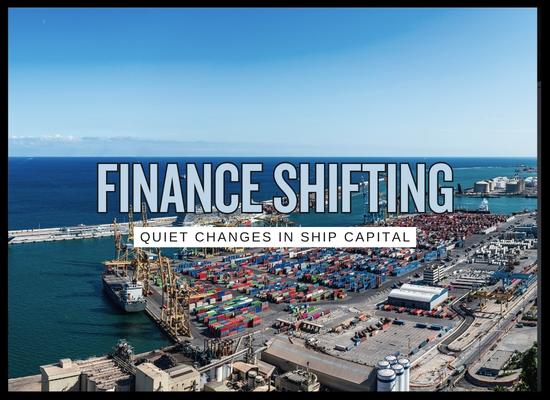
Ship finance is not changing through one dramatic break with the past. It is shifting through a series of quieter adjustments that matter a lot to owners, lenders, and lessors: banks are lending again but more selectively, non-bank money is still gaining ground, Chinese leasing no longer looks as straightforward for many Western owners, climate-linked structures are becoming more normal, and financing terms are increasingly tied to fuel, emissions, and transition-readiness instead of vessel age and charter profile alone. Petrofin’s 2025 research says top-40 bank lending to shipping rose 2% in 2024 to about $289.65 billion, marking a second consecutive year of moderate growth, while total global bank lending is estimated around $400 billion and about 60% of total ship finance, implying non-bank sources remain large and influential. Petrofin also says non-bank lending continued to grow faster than bank lending, sustainability considerations have become more prevalent in bank lending, and some owners are refinancing Chinese leases into conventional bank loans as margins fall and maturities improve.
The capital stack is changing in small but important ways
Ship finance in 2026 looks less like a single bank-loan market and more like a layered capital system. Banks are still central, but leasing, alternative lenders, transition-linked structures, refinancing flows, and regulation-shaped credit decisions are changing how deals get done.
| # | Trend | Actually changing | Owners feel it now | What it is doing to deal structure | Disciplined owners watch | Impact tags |
|---|---|---|---|---|---|---|
| 1 |
Bank lending is expanding again, but only in a controlled way
This is not a broad reopening. It is a selective return of appetite.
|
Petrofin says top-40 bank lending to shipping rose 2% in 2024 to about $289.65 billion, marking a second consecutive year of moderate growth. That matters because the market has clearly moved beyond pure retreat, but the tone is still lender-disciplined rather than cycle-hot. Banks are coming back where they like the owner, the sector, the charter visibility, and the asset profile. They are not reopening credit on the old pre-crisis logic of scale alone. | Owners feel it because pricing and availability are better than they were when many lenders were still shrinking exposure, but the spread between a financeable story and a weak story is still wide. Two owners shopping the same vessel type can now get very different outcomes depending on leverage ask, relationship depth, and whether the deal looks refinanceable in a tougher market later. | More deals are being structured with cleaner sponsor support, lower leverage, stronger covenant packages, and more attention to residual-value defensibility at maturity. The market looks healthier, but not looser. | Margin movement, lender hold size, amortization pace, covenant package strength, and whether the deal still works if charter assumptions soften before maturity. | Banks Moderate growth Selectivity |
| 2 |
The capital stack is broader because non-bank money keeps growing faster
Owners now finance through a menu, not a single lane.
|
Petrofin estimates total global bank lending around $400 billion and about 60% of total ship finance, which means non-bank sources are still carrying a very large share of the market. Leasing, private credit, export finance, funds, and public-market channels are no longer just gap-fillers. They are part of normal capital planning. That changes negotiating leverage and it changes how owners think about optionality. | Owners feel it because a deal that cannot be done on straight bank terms may still be financeable, but often with different documentation, different flexibility, and a different risk-sharing logic. More choice is useful, but it also creates more chances to lock into a structure that looks smart upfront and feels restrictive later. | Transactions are increasingly being blended across instruments. Owners are comparing lease-versus-loan, refinance-versus-hold, and bank-versus-fund capital more explicitly than before. The market is more modular. | All-in cost, prepayment flexibility, documentation rigidity, refinancing freedom, and whether the “alternative” structure creates hidden exit friction later. | Non-bank capital Alternatives Capital mix |
| 3 |
Chinese leasing is still important, but no longer looks politically neutral
A structure that once looked purely commercial now carries more strategic baggage for some borrowers.
|
Petrofin says some owners are refinancing Chinese leases into bank loans as margins fall and maturities improve, while also warning that the long-term outlook for Chinese leasing is clouded by tariff disputes and the possibility of penalties or commercial complications tied to Chinese vessels or ownership optics. That does not make Chinese leasing irrelevant. It does make it less universally comfortable. | Owners feel it because lease economics are no longer the only question. Counterparty optics, jurisdictional comfort, refinancing path, and future charter-party perception now matter more than they did when many owners treated leasing as an efficient and politically quiet funding source. | More borrowers are evaluating lease exit options earlier, negotiating with refinancing in mind, and asking whether short-term cost efficiency is worth the longer-term structural tradeoffs. | Break-cost economics, refinance permissions, jurisdictional exposure, charterer comfort, and whether the structure could narrow future buyer or lender appetite. | Chinese leasing Geopolitics Refi risk |
| 4 |
Refinancing is back as a real profit center, not just admin cleanup
A better deal on old capital can matter almost as much as fresh finance for a new asset.
|
Petrofin highlights refinancing as a stronger line of business again, especially where owners are replacing older loans or lease structures with cheaper bank debt and longer maturities. That changes the market because the focus is not only on new acquisitions. It is also on improving the quality of existing capital already sitting on fleets. | Owners feel it because legacy financing done under different rate assumptions, tighter margins, or more rigid lease logic can now be actively reworked. In some cases the value comes less from buying the next vessel and more from lowering cost of capital on the current one. | More deals are being structured around maturity extension, covenant reset, margin improvement, and replacing inflexible structures with cleaner bilateral or club-style bank debt. | Refinance break-even point, margin compression, revised amortization, covenant relaxation, and whether the new structure materially improves strategic flexibility. | Refinancing Lower margins Maturity reset |
| 5 |
Sustainability-linked loans are becoming normal enough to affect pricing behavior
This is no longer just branding for lenders or borrowers.
|
Petrofin says sustainability-linked lending in shipping is usually tied to vessel emissions and carbon-intensity KPIs, with pricing improvements available when targets are met. The significance is not that every deal has suddenly become green finance. The significance is that environmental performance is now more often entering the margin conversation itself. | Owners feel it because financing is more likely to reward measurable performance than broad climate language. The borrower that can document fuel-burn reduction, better carbon intensity, or transition-linked improvement now has another angle in pricing discussions. | Deal structures increasingly include KPI frameworks, reporting requirements, margin ratchets, and data expectations that connect loan economics to operational performance. | Whether KPIs are material or cosmetic, the size of pricing step-ups or step-downs, reporting burden, and how hard it will be to maintain compliance if trading patterns change. | SLL KPI pricing Emissions |
| 6 |
Poseidon-style climate alignment is moving deeper into real credit judgment
Portfolio alignment is increasingly shaping the tone of live lending discussions.
|
The 2025 Poseidon Principles Annual Disclosure Report says the framework’s data and insights play an increasingly influential role in credit assessments, risk analyses, and financing decisions. That matters because it shifts climate alignment from a disclosure exercise toward something that can influence how lenders think about portfolio composition, borrower attractiveness, and credit direction. | Owners feel it because climate alignment now has a better chance of influencing lender behavior indirectly even where it is not written into a margin grid. It can affect appetite, internal discussion, and the willingness to support one borrower or asset over another. | More lenders are pushing for better emissions data, stronger data rights, and clearer transition narratives. Climate alignment becomes another dimension of financeability rather than a separate ESG file. | Data quality, portfolio alignment optics, transparency rights in loan documentation, and whether the lender is using climate alignment merely for disclosure or as part of real credit screening. | Poseidon Climate alignment Credit influence |
| 7 |
Owners are often financing with more equity because leverage is not as generous as the headlines imply
A funded deal is not always a highly leveraged deal.
|
Petrofin says owners often dealt with challenging 2024 lending conditions by accepting lower loan-to-value ratios and using more of their own liquidity, especially while vessel prices stayed high and borrowing conditions remained selective. That is a quiet but important shift because it changes the return profile of acquisitions and refinancing alike. | Owners feel it because capital access may exist, but the owner’s own balance sheet still has to do more work. High asset values combined with disciplined lender behavior make equity contribution a bigger strategic variable. | Deal structures are leaning more on sponsor liquidity, lower leverage, and cleaner security positions. Owners with balance-sheet strength can move faster and negotiate better. | Effective LTV, return on equity, post-deal liquidity, refinancing cushion, and whether the structure still works if vessel values pull back before maturity. | LTV Equity Asset values |
| 8 |
Regional and relationship-driven banks are becoming more important in specific owner tiers
Not every winner in ship finance is a giant international lender.
|
Petrofin says Greek banks expanded their ship-finance activity strongly in 2024 and competed effectively, including for smaller and mid-sized owners, with some growth into newbuilding finance as well. The point is bigger than Greece alone. Relationship lenders and regional players are becoming more important for borrower segments that do not always sit at the center of global syndication activity. | Owners feel it because financing access is becoming more segmented by size, geography, and relationship credibility. A borrower that may not be a top priority for a global lender can still be strategically important to a regional one. | More transactions are being shaped by bilateral relationships, domestic-bank confidence, and mid-market competition rather than only by large international banking clubs. | Concentration risk, domestic-bank capacity, refinancing depth beyond the first deal, and whether relationship benefits outweigh the limits of a smaller lender pool. | Regional banks Mid-market Relationship lending |
| 9 |
Structured export-credit and lease-backed newbuild finance still matters a great deal
The market is not moving entirely toward simple loan templates.
|
OECD continues to frame export credits as an important and disciplined tool in shipbuilding finance, and current market activity still shows ECA-supported and structured lease transactions being used for large or specialized newbuilds. That means ship finance is not simplifying. It is segmenting. Straight bank debt works for some borrowers and assets. Structured capital remains important for others. | Owners feel it because large or technically complex newbuild programs still often need more than a standard mortgage-loan solution. Yard location, export-support availability, and structure sophistication still materially affect financing outcomes. | Transactions for larger programs are still using structure as a strategic tool, whether through export support, tax-linked leasing, or other forms of enhanced capital stacking. | Eligibility rules, tenor economics, breakage complexity, documentation burden, and whether the structured solution remains flexible enough if the commercial picture changes after delivery. | ECA Structured finance Newbuilds |
| 10 |
Transition-readiness is becoming part of financeability even while fuel certainty remains weak
Lenders are reacting to uncertainty itself, not waiting for perfect clarity.
|
DNV says fleet readiness is moving ahead of fuel supply, which is a quietly powerful finance signal. It means lenders, lessors, and owners increasingly have to think about whether an asset looks stranded, adaptable, or resilient under several possible transition paths. Financeability is not only about today’s charter and steel. It is also about how the asset ages into a less certain fuel and regulation landscape. | Owners feel it because lenders are more likely to ask whether the vessel stays employable and refinanceable under tighter emissions rules, fuel uncertainty, and changing charterer preferences. The question is not only “can this ship trade today?” but also “will this ship still attract capital later?” | More transactions are likely to lean on flexibility narratives, retrofit potential, fuel-readiness analysis, and stronger scrutiny of vessels that risk becoming less attractive as regulation tightens. | Retrofit realism, fuel flexibility, charterer appetite, residual-value defensibility, and whether the asset still has a credible financing story at the next maturity point. | Transition risk Fuel readiness Future financeability |
The finance market is more layered now
Bank debt still matters deeply, but the practical ship-finance market now includes alternative lenders, leasing, export support, and increasingly transition-linked pricing.
Refinancing is back in focus
One of the quieter shifts is that banks can now win business by replacing older or less flexible structures, not only by funding new acquisitions.
Climate is moving inside credit
For many lenders, emissions and transition exposure are no longer side conversations. They are becoming part of portfolio and borrower assessment.
| Lane | Current fit | Typical strength | Common weak spot |
|---|---|---|---|
| Conventional bank debt | Reviewing | Cleaner structure and refinance path | Selective leverage and tighter scrutiny |
This tool is a directional decision aid, not lending advice. It is designed to show which financing lane looks strongest under the current assumptions and where the structure starts to weaken. The useful question is not only “can this deal be funded?” It is also “which capital route leaves the owner in the strongest position later?”
We welcome your feedback, suggestions, corrections, and ideas for enhancements. Please click here to get in touch.