10 Maritime Giants and How They Got to the Top
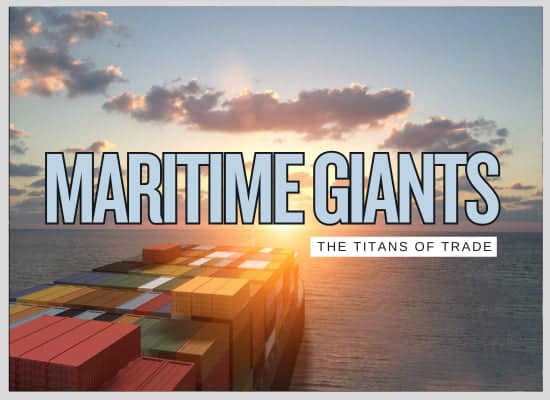
They dominate global trade routes, move millions of containers a year, and set the pace for innovation and sustainability across the shipping world. These maritime giants didn’t just appear overnight — they built reputations over decades, navigated turbulent markets, and adapted to shifting geopolitical tides. In this report, we explore 10 of the most powerful and reputable maritime companies, uncovering how they got their start, the bold moves that shaped their legacy, and what keeps them on top today.

We welcome your feedback, suggestions, corrections, and ideas for enhancements. Please click here to get in touch.
Founded in 1904 by Captain Peter Mærsk Møller and his son Arnold in Svendborg, Denmark, Maersk began as a small steamship company with a strong family ethos and ambition to expand into global trade. Over the decades, Maersk grew into a dominant force in shipping by reinvesting profits, adopting new vessel technologies early, and expanding into oil, ports, and logistics.
🧭 What They Do Today- World’s second-largest container shipping company by fleet capacity (after MSC)
- Operates over 700 vessels under Maersk Line and affiliated brands
- Global logistics network including terminals (APM Terminals), warehousing, inland transport, and customs services
- Digital supply chain solutions and integrated end-to-end logistics
- Headquartered in Copenhagen, Denmark
- Operates in 130+ countries
- Owns and manages dozens of ports and terminals via APM Terminals
Maersk exited the energy sector in 2017 to focus fully on becoming a global integrator of container logistics. This pivot included selling off Maersk Oil and Maersk Drilling, and strengthening its digital and inland logistics capabilities.
📈 Current Market Position- Fleet capacity: 4.1+ million TEU
- Ships include mega-vessels like the Triple-E class
- Digital leadership: Maersk Spot, Maersk Flow, Twill (SMB-focused freight tool)
- Target: Net-zero emissions by 2040
- Pioneering green methanol-fueled vessels — launched world’s first in 2023
- Investing in biofuels, green corridors, and carbon-neutral logistics options
- Expanding inland logistics and customs services to become a one-stop solution
- Continued shift toward low-emission fuel vessels and digital transformation
- Focus on stable revenue from end-to-end logistics rather than volatile freight rates
Maersk rose to global prominence by combining conservative financial strategy with bold operational moves. Their focus on vertical integration, relentless cost efficiency, early adoption of mega-vessels, and an ability to pivot — such as their exit from oil — positioned them as a model of modern shipping leadership.
Founded in 1970 by Captain Gianluigi Aponte in Naples, Italy, MSC began with a single vessel, the MV Patricia, operating cargo services between the Mediterranean and Somalia. By 1978, the company relocated its headquarters to Geneva, Switzerland, where it remains today. Over the decades, MSC has evolved into the world's largest container shipping company, maintaining its status as a privately owned, family-run enterprise under the leadership of the Aponte family.
🧭 What They Do Today- Operates approximately 900 cargo vessels, making it the largest container shipping line globally by fleet size and capacity.
- Provides services on over 215 trade routes, calling at more than 500 ports across 155 countries.
- Diversified operations include MSC Cruises (the world's third-largest cruise line), rail freight services under Medway, and air cargo services through MSC Air Cargo.
- Headquartered in Geneva, Switzerland.
- Employs over 200,000 people worldwide.
- Operates 524 offices in 155 countries.
In 2015, MSC entered into the 2M Alliance with Maersk, a vessel-sharing agreement aimed at enhancing operational efficiency on major trade lanes. However, this alliance concluded in January 2025, leading MSC to pursue independent strategies to maintain its market leadership.
📈 Current Market Position- Fleet capacity exceeds 6.47 million TEU, positioning MSC as the global leader in container shipping capacity.
- Operates some of the world's largest container ships, including the MSC Gülsün-class vessels with capacities over 23,000 TEU.
- Aims to achieve net-zero greenhouse gas emissions by 2050.
- Investing in energy-efficient newbuildings and retrofitting existing vessels to improve fuel efficiency.
- Implementing route optimization and vessel performance monitoring to reduce carbon intensity.
- Continued expansion of fleet and services, with plans to surpass 1,000 vessels.
- Enhancement of digital platforms and customer service capabilities.
- Further investments in sustainable technologies and alternative fuels.
MSC's ascent to the pinnacle of the shipping industry is attributed to its strategic investments in fleet expansion, diversification into complementary logistics sectors, and a steadfast commitment to customer service. Its private ownership structure has allowed for agile decision-making and long-term planning, enabling MSC to navigate industry challenges and capitalize on growth opportunities effectively.
CMA CGM was founded in 1978 by Jacques Saadé in Marseille, France, beginning as Compagnie Maritime d'Affrètement. The company grew through strategic mergers, notably with Compagnie Générale Maritime in 1996, forming the modern CMA CGM Group. It remains a family-led enterprise, now under the leadership of Rodolphe Saadé, and is recognized as one of the world’s most dynamic shipping and logistics providers.
🧭 What They Do Today- Operates a fleet of over 650 vessels serving more than 420 ports worldwide
- Offers integrated logistics services through CEVA Logistics
- Operates air freight division (CMA CGM Air Cargo)
- Provides end-to-end supply chain services, including intermodal transport
- Headquartered in Marseille, France
- Present in over 160 countries with 400+ offices and 750 warehouses
- Employs more than 150,000 people globally
CMA CGM has expanded rapidly via acquisitions, including Neptune Orient Lines and APL in 2016. More recently, it acquired Bolloré Logistics, significantly boosting its presence in high-value logistics markets and strengthening its non-ocean shipping capabilities.
📈 Current Market Position- Ranks as the third-largest container shipping company in the world
- Operates over 250 shipping lines across all major global routes
- Fleet capacity exceeds 3.5 million TEU
- Targeting net-zero carbon emissions by 2050
- Investing heavily in LNG- and methanol-powered dual-fuel vessels
- Actively engaged in developing green shipping corridors
- Further expansion of logistics and air freight operations
- Launch of new eco-friendly vessels with alternative fuels
- Continued investment in digitalization and automation
CMA CGM climbed the global ranks through bold acquisitions, a strong focus on full-spectrum logistics, and a firm commitment to innovation. Its ability to remain family-owned while expanding into a multimodal logistics powerhouse has set it apart in an increasingly consolidated industry.
COSCO Shipping was established in January 2016 through the merger of China Ocean Shipping Company (COSCO), founded in 1961, and China Shipping Group. This merger created one of the world's largest state-owned shipping conglomerates, headquartered in Shanghai, China.
🧭 What They Do Today- Operates a fleet of over 1,300 vessels, including container ships, bulk carriers, tankers, and specialized cargo ships.
- Provides comprehensive logistics services, including terminal operations, shipbuilding, and marine insurance.
- Engages in global port investments and operations, enhancing its integrated supply chain capabilities.
- Headquartered in Shanghai, China.
- Operates in over 160 countries with a vast network of subsidiaries and joint ventures.
- Significant investments in ports worldwide, including the Port of Piraeus in Greece and the Port of Chancay in Peru.
The 2016 merger of COSCO and China Shipping Group was a strategic move to consolidate China's shipping industry and enhance global competitiveness. COSCO Shipping has since acquired a majority stake in Orient Overseas International Limited (OOIL), further expanding its global reach.
📈 Current Market Position- Ranks among the top container shipping companies globally, with a fleet capacity exceeding 3 million TEUs.
- Operates over 500 container vessels, serving major trade routes worldwide.
- Active member of the Ocean Alliance, collaborating with other major carriers to optimize services.
- Aims to achieve carbon neutrality by 2060, aligning with China's national goals.
- Investing in green technologies, including LNG-powered vessels and shore power systems.
- Collaborating with partners to develop green shipping corridors and promote sustainable practices.
- Continued expansion of global port investments to strengthen integrated logistics services.
- Further development of digital platforms to enhance operational efficiency and customer experience.
- Ongoing fleet modernization to meet environmental regulations and market demands.
COSCO Shipping's ascent to a leading position in the maritime industry is attributed to strategic mergers, global port investments, and a commitment to integrated logistics solutions. Its state-backed support and focus on sustainability have solidified its status as a key player in global trade.
Hapag-Lloyd's roots trace back to 1847 with the founding of Hamburg-Amerikanische Packetfahrt-Actien-Gesellschaft (HAPAG) in Hamburg. In 1970, HAPAG merged with North German Lloyd (NDL), established in 1857 in Bremen, forming Hapag-Lloyd AG. This merger combined two of Germany's most prominent shipping lines, creating a global leader in container shipping.
🧭 What They Do Today- Operates a fleet of over 300 container vessels, serving more than 600 ports worldwide.
- Provides comprehensive logistics services, including inland transportation and terminal operations.
- Offers specialized services for various cargo types, including refrigerated and hazardous goods.
- Headquartered in Hamburg, Germany.
- Presence in over 130 countries with a network of offices and agents.
- Stakeholder in 21 terminals across Europe, Latin America, the United States, India, and North Africa.
Hapag-Lloyd has expanded through strategic mergers and acquisitions, including the integration of CP Ships in 2005, CSAV in 2014, UASC in 2017, NileDutch in 2021, and the container liner business of DAL in 2022. These moves have strengthened its global presence and service offerings.
📈 Current Market Position- Ranks as the fifth-largest container shipping company globally, with a fleet capacity of approximately 2.34 million TEUs.
- Operates 113 liner services, ensuring reliable connections between major global trade routes.
- Member of THE Alliance, collaborating with other major carriers to optimize services and coverage.
- Aims to achieve net-zero greenhouse gas emissions by 2045.
- Targets a 50% reduction in carbon emissions intensity by 2030 compared to 2019 levels.
- Investing in dual-fuel vessels powered by LNG and exploring alternative fuels like biomethane.
- Participates in initiatives like the Zero Emission Maritime Buyers Alliance to promote sustainable shipping practices.
- Continued investment in fleet modernization and expansion, with 37 ships on order totaling 468,000 TEUs.
- Focus on digitalization and automation to enhance operational efficiency and customer experience.
- Expansion of terminal and inland logistics operations to provide end-to-end supply chain solutions.
Hapag-Lloyd's ascent to a leading position in the maritime industry is attributed to its strategic mergers, global expansion, and commitment to innovation and sustainability. By continuously adapting to market demands and investing in modern technologies, Hapag-Lloyd has solidified its status as a key player in global trade.
Nippon Yusen Kaisha (NYK Line) was established in 1885 through the merger of Mitsubishi Mail Steamship Company and Kyodo Unyu Kaisha. With a history spanning over a century, NYK has played a pivotal role in Japan's maritime development and global trade expansion.
🧭 What They Do Today- Operates a diverse fleet exceeding 800 vessels, including container ships, bulk carriers, tankers, LNG carriers, car carriers, and cruise ships.
- Provides comprehensive logistics services through subsidiaries like Yusen Logistics and Nippon Cargo Airlines.
- Engages in terminal operations, air cargo transport, and integrated supply chain solutions.
- Headquartered in Tokyo, Japan.
- Operates in over 40 countries and regions worldwide.
- Employs approximately 35,000 people globally.
In 2018, NYK merged its container shipping operations with those of Mitsui O.S.K. Lines and Kawasaki Kisen Kaisha to form Ocean Network Express (ONE), aiming to enhance service efficiency and competitiveness in the global market.
📈 Current Market Position- Recognized as one of the world's leading marine transport companies.
- Maintains a strong presence in various shipping segments, including container, bulk, and energy transportation.
- Continues to invest in fleet modernization and technological advancements.
- Targets net-zero greenhouse gas emissions by 2050.
- Developing alternative fuel technologies, including LNG and ammonia-fueled vessels.
- Participates in initiatives promoting sustainable ship recycling and environmental stewardship.
- Continued focus on decarbonization and adoption of green technologies.
- Expansion of integrated logistics services to meet evolving customer needs.
- Investment in digital transformation to enhance operational efficiency.
NYK's ascent to industry leadership is attributed to its long-standing commitment to innovation, strategic partnerships, and diversification across shipping and logistics sectors. Its proactive approach to sustainability and technological advancement positions NYK as a forward-thinking leader in global maritime transport.
MOL traces its roots back to 1878 with the launch of the iron-hulled steamer Hideyoshi Maru, transporting coal from Japan to Shanghai. The company was officially established in 1964 through the merger of Osaka Shosen Kaisha (OSK) and Mitsui Steamship Co., Ltd., forming Mitsui O.S.K. Lines. This merger created one of Japan's largest shipping companies, playing a significant role in the country's maritime industry development.
🧭 What They Do Today- Operates a diverse fleet of over 800 vessels, including dry bulk carriers, tankers, LNG carriers, car carriers, and container ships.
- Provides comprehensive logistics services, including terminal operations, ferry services, and cruise ships.
- Engages in offshore businesses, such as floating storage and regasification units (FSRUs) and floating production storage and offloading systems (FPSOs).
- Headquartered in Tokyo, Japan.
- Operates in over 40 countries with a network of subsidiaries and affiliates.
- Employs approximately 9,800 people worldwide.
In 2018, MOL merged its container shipping operations with those of NYK Line and K Line to form Ocean Network Express (ONE), aiming to enhance service efficiency and competitiveness. MOL holds a 31% stake in this joint venture, focusing its resources on other shipping segments and logistics services.
📈 Current Market Position- Recognized as one of the world's leading marine transport companies.
- Maintains a strong presence in various shipping segments, including bulk, energy, and car transportation.
- Continues to invest in fleet modernization and technological advancements.
- Targets net-zero greenhouse gas emissions by 2050.
- Developing alternative fuel technologies, including LNG, ammonia, and hydrogen-fueled vessels.
- Participates in initiatives promoting sustainable ship recycling and environmental stewardship.
- Continued focus on decarbonization and adoption of green technologies.
- Expansion of integrated logistics services to meet evolving customer needs.
- Investment in digital transformation to enhance operational efficiency.
MOL's ascent to industry leadership is attributed to its long-standing commitment to innovation, strategic partnerships, and diversification across shipping and logistics sectors. Its proactive approach to sustainability and technological advancement positions MOL as a forward-thinking leader in global maritime transport.
Kawasaki Kisen Kaisha, Ltd. (“K” Line) was established on April 5, 1919, by Kojiro Matsukata, then-president of Kawasaki Dockyard Co., Ltd. The company was formed by consolidating three shipping entities: Kawasaki Kisen, Kawasaki Zosen, and Kokusai Kisen. The name “K” Line, adopted in 1921, reflects the initial “K” from each of the three companies. Over the years, “K” Line expanded its services beyond Asia, introducing routes between Asia and North America, and between Asia and Europe, becoming the first Japanese shipping company to independently assign ships to Asia-North America routes.
🧭 What They Do Today- Operates a diverse fleet of approximately 500 vessels, including bulk carriers, car carriers, LNG carriers, tankers, and offshore support vessels.
- Provides comprehensive logistics services through subsidiaries like “K” Line Logistics and K Line European Sea Highway Services (KESS).
- Engages in terminal operations, ship management, and integrated supply chain solutions.
- Headquartered in Chiyoda, Tokyo, Japan.
- Operates in over 40 countries with a network of subsidiaries and affiliates.
- Employs approximately 5,158 people worldwide.
In 2018, “K” Line merged its container shipping operations with those of NYK Line and MOL to form Ocean Network Express (ONE), aiming to enhance service efficiency and competitiveness. “K” Line holds a 31% stake in this joint venture, allowing it to focus its resources on other shipping segments and logistics services.
📈 Current Market Position- Recognized as one of Japan's leading marine transport companies.
- Maintains a strong presence in various shipping segments, including bulk, energy, and car transportation.
- Continues to invest in fleet modernization and technological advancements.
- Targets net-zero greenhouse gas emissions by 2050, as outlined in the “K” LINE Environmental Vision 2050.
- Developing alternative fuel technologies, including LNG, ammonia, and hydrogen-fueled vessels.
- Participates in initiatives promoting sustainable ship recycling and environmental stewardship.
- Continued focus on decarbonization and adoption of green technologies.
- Expansion of integrated logistics services to meet evolving customer needs.
- Investment in digital transformation to enhance operational efficiency.
“K” Line's ascent to industry leadership is attributed to its long-standing commitment to innovation, strategic partnerships, and diversification across shipping and logistics sectors. Its proactive approach to sustainability and technological advancement positions “K” Line as a forward-thinking leader in global maritime transport.
Evergreen Marine Corporation was founded on September 1, 1968, by Dr. Yung-Fa Chang in Taiwan. Starting with a single second-hand general cargo ship, the company rapidly expanded its operations, introducing its first full container shipping service in 1975. By 1985, Evergreen had become the world's largest container ship operator, marking a significant milestone in its history.
🧭 What They Do Today- Operates a fleet of over 200 full-container vessels, serving a global network of ports.
- Provides comprehensive marine transportation services, including shipping, container terminal operations, and ship repair.
- Engages in logistics services through subsidiaries, offering integrated supply chain solutions.
- Headquartered in Luzhu District, Taoyuan City, Taiwan.
- Calls on 240 ports worldwide across approximately 80 countries.
- Operates major transshipment hubs, including terminals in Taiwan and Panama.
Evergreen has expanded its global presence through strategic mergers and acquisitions, including the integration of Uniglory Marine Corp., Hatsu Marine Ltd., and Italia Marittima S.p.A. into the Evergreen Line. These moves have strengthened its service offerings and operational efficiency in the competitive shipping industry.
📈 Current Market Position- Ranks as the sixth-largest container shipping company globally.
- Operates a diverse fleet, including some of the world's largest container ships, such as the Ever Ace with a capacity of 23,992 TEU.
- Continues to invest in fleet expansion and modernization to meet growing global trade demands.
- Targets a 50% reduction in emissions intensity by 2030 and 70% by 2050, compared to 2008 levels.
- Investing in green technologies, including LNG-powered vessels and energy-efficient ship designs.
- Aligns its operations with the United Nations Sustainable Development Goals to promote environmental stewardship.
- Continued focus on fleet expansion with the introduction of new, environmentally friendly vessels.
- Enhancement of digital platforms to improve operational efficiency and customer service.
- Strengthening of global logistics services to offer integrated supply chain solutions.
Evergreen Marine's rise to prominence is attributed to its strategic investments in fleet expansion, commitment to innovation, and focus on sustainability. By continuously adapting to market changes and embracing technological advancements, Evergreen has solidified its position as a leader in the global maritime industry.
Ocean Network Express (ONE) was established on July 7, 2017, as a joint venture integrating the container shipping businesses of three major Japanese shipping companies: Nippon Yusen Kaisha (NYK), Mitsui O.S.K. Lines (MOL), and Kawasaki Kisen Kaisha ("K" Line). The company commenced operations on April 1, 2018, combining the strengths and heritage of its parent companies to create a unified global container shipping enterprise.
🧭 What They Do Today- Operates a fleet of over 230 container vessels, offering services across more than 120 countries.
- Provides comprehensive container shipping services, including refrigerated cargo and specialized containers.
- Engages in terminal operations and logistics services to support end-to-end supply chain solutions.
- Dual headquarters in Tokyo, Japan, and Singapore.
- Regional headquarters in the United Kingdom, the United States, Hong Kong, and Brazil.
- Operates in over 90 countries with a network of offices and agents.
The formation of ONE was a strategic response to industry challenges, including overcapacity and the need for operational efficiency. By consolidating the container operations of NYK, MOL, and "K" Line, ONE aimed to enhance competitiveness and service quality in the global shipping market.
📈 Current Market Position- Ranks as the sixth-largest container shipping company globally, with a fleet capacity of approximately 1.8 million TEUs.
- Operates over 170 weekly services, covering major trade lanes worldwide.
- Member of THE Alliance, collaborating with other major carriers to optimize services and coverage.
- Committed to achieving net-zero greenhouse gas emissions by 2050.
- Investing in alternative fuel technologies, including methanol dual-fuel vessels.
- Established a Green Strategy Department to drive environmental initiatives and innovation.
- Continued investment in fleet modernization and expansion, with a focus on eco-friendly vessels.
- Enhancement of digital platforms to improve operational efficiency and customer experience.
- Strengthening of global logistics services to offer integrated supply chain solutions.
ONE's ascent to industry leadership is attributed to its strategic consolidation of three major Japanese shipping lines, commitment to innovation, and focus on sustainability. By leveraging the combined expertise and resources of its parent companies, ONE has established itself as a formidable player in the global maritime industry.
These ten maritime giants didn’t reach the top by accident. Each has carved out its position through decades of strategic vision, investment in fleet and infrastructure, and the ability to adapt to shifting tides in global trade. From century-old legacies to bold modern consolidations, they reflect what it takes to lead in one of the world’s most complex and essential industries.
Here’s what stands out across the board:
- Longevity matters: Many of these companies have histories stretching back over 100 years — proof that reputation, resilience, and reinvention go hand-in-hand.
- Diversification is key: The strongest players aren’t just container carriers — they’re integrated logistics providers, terminal operators, and even leaders in air and land transport.
- Sustainability is non-negotiable: Every company on this list has made firm commitments to emissions reductions, alternative fuels, and decarbonization technologies.
- Technology is transforming operations: From AI-enhanced routing to digital freight platforms, the giants are investing in tools that make them faster, more transparent, and more efficient.
- Global reach is critical: Offices in 100+ countries, thousands of port calls, and strategic port investments give these companies a footprint that’s hard to match.
Together, they shape the global supply chain. And for any shipowner, fleet operator, or maritime professional, understanding their trajectory offers valuable insight into where the industry is headed next.
📝 Table Summary
Note: The content above provides significantly more detail.