Top 20 KPIs Every Fleet Manager Should Track
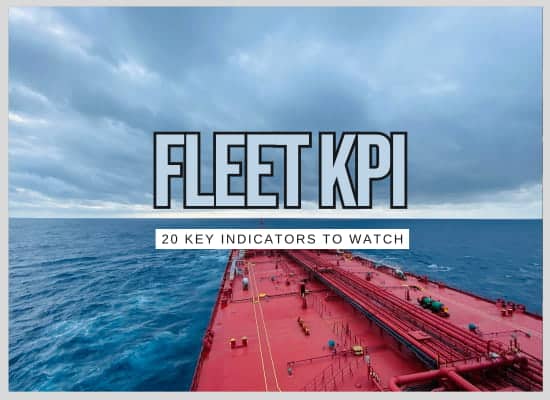
Smart data. Sharp sailing. Running a commercial fleet without tracking KPIs is like navigating without instruments. These metrics help fleet managers make smarter decisions, from fuel and maintenance to safety and profitability. This report breaks down the most important KPIs in maritime shipping, one by one, starting with one of the most overlooked levers for profitability: how full your ships actually are.

We welcome your feedback, suggestions, corrections, and ideas for enhancements. Please click here to get in touch.
Capacity Utilization Rate shows what percentage of a ship’s cargo space is actually being used on a voyage. It’s calculated by dividing the loaded cargo by the vessel’s full capacity, either in TEUs, cubic meters, or deadweight tons.
📊 What It Reveals:- How efficiently you’re using space and turning it into revenue.
- Whether you’re overdeploying vessels or missing consolidation opportunities.
- If certain trade lanes are chronically underutilized.
- Target headhaul routes: 85–95% utilization is strong.
- Backhaul routes: often lower but worth improving through smart repositioning.
- Warning zone: anything consistently below 70% on major lanes signals trouble.
- Reroute or combine services when underutilization is persistent.
- Decide whether to upsell larger ships or downsize a route.
- Align marketing and sales to boost bookings where space is being wasted.
- One major carrier increased annual profit by 11% after tightening down scheduling to improve utilization by just 6% across 5 lanes.
Bottom line: You can’t control freight rates, but you can control how full your ships are. High utilization turns fixed costs into profit. Low utilization? That’s leakage.
This KPI tracks how much fuel a ship consumes per voyage or per day, often normalized by distance or cargo carried. It's a vital measure of both cost control and carbon output.
📊 What It Reveals:- The real-world efficiency of engines, hulls, and voyage planning.
- Impact of maintenance on performance (e.g., fouled hulls burning more fuel).
- Whether slow steaming or alternative routing is paying off.
- Large container ships at 20–24 knots: 150–250 tonnes/day.
- Fuel economy tracked as grams per ton-mile or grams per kWh (SFOC).
- Modern optimized ships can reduce fuel use by 10–20% annually with proper maintenance.
- Compare similar vessels to spot outliers with higher consumption.
- Trigger hull cleaning or engine tuning if a ship exceeds expected burn rates.
- Model different voyage speeds to find the best cost-to-speed ratio.
- Maersk saved over $90 million in three years by fine-tuning propulsion and voyage profiles—proving that even small efficiency gains scale up quickly across a fleet.
Bottom line: Fuel isn't just a line item—it's the lever. Every extra tonne burned is money and emissions wasted. Monitor it like your margin depends on it—because it does.
EEOI measures how efficiently a ship moves cargo in terms of carbon output. It's expressed as grams of CO2 emitted per ton of cargo per nautical mile. Lower numbers mean more cargo moved with less fuel and fewer emissions.
📊 What It Reveals:- Carbon performance tied directly to actual voyages—not theoretical models.
- The real impact of sailing half-empty or inefficient routing.
- Operational gaps in fuel usage, cargo planning, or speed decisions.
- Bulk carriers: ~5–15 g CO2/ton-nm depending on age and efficiency.
- Container ships on Asia–Europe routes: ~10.8 g CO2/ton-nm typical.
- IMO 2030 goal: 40% reduction in carbon intensity from 2008 levels.
- Compare EEOI across voyages to find outliers in efficiency.
- Consolidate cargo on low-load routes to cut empty miles.
- Use EEOI scores to guide slow steaming, hull cleanings, and routing tweaks.
- Some digital platforms now publish route-specific EEOI data, allowing shippers to select "greenest" carriers. Lines using EEOI to optimize planning are not just saving fuel—they're gaining a market edge.
Bottom line: EEOI connects emissions with economic output. It rewards smarter routes, fuller loads, and tighter operations. Track it, act on it, and use it to stay ahead of tightening global standards.
The CII Rating evaluates how much CO2 a ship emits per unit of cargo-distance over the year and assigns it a letter grade from A (best) to E (worst). It's now a regulatory requirement under IMO MARPOL Annex VI.
📊 What It Reveals:- Whether a vessel is operating within global emissions limits.
- The ship’s relative carbon efficiency across voyages and routes.
- Compliance risk—ships with poor ratings may face restrictions or penalties.
- A–C = acceptable; D or E triggers mandatory improvement plan.
- Starting in 2024, ships must maintain at least a C rating or risk operational limits.
- Ratings get stricter each year—what’s a C now may be a D next year.
- Monitor mid-year projections to avoid year-end surprises.
- Adjust speed, loading, or routes to influence the final CII score.
- Coordinate with charterers to ensure voyage plans align with CII goals.
- Some ports and charterers now prefer or even require A/B-rated ships. One operator rerouted lower-rated ships to short regional runs to avoid failing the global benchmark.
Bottom line: The CII isn’t optional—it’s regulation. The grade on your emissions report now shapes vessel reputation, regulatory exposure, and even market access.
This KPI tracks the percentage of voyages that arrive at port on or within a defined window of their scheduled time. It's critical for container lines and operators with time-sensitive cargo.
📊 What It Reveals:- How consistently your fleet hits arrival targets.
- The ripple effects of port delays, weather, or poor planning.
- Reliability gaps across routes, ships, or time periods.
- Industry average (2024): ~55% global on-time rate.
- Top performers like Maersk: ~60% or higher.
- Target: ≥75% for high-service loops or contracts with tight delivery windows.
- Identify lanes or vessels that frequently run behind schedule.
- Adjust ETAs, add buffer time, or reroute around chokepoints.
- Use data to negotiate better port slots or terminal handling terms.
- One carrier reduced missed connection penalties by 30% after analyzing delay clusters and shifting call windows by just six hours at key transshipment ports.
Bottom line: Reliability sells. When customers know you hit your marks, they stick around—and you spend less fixing things after the fact.
Port Turnaround Time measures how long a vessel spends at port from arrival to departure. It includes anchorage waiting, berthing, cargo ops, and formalities. Faster turnarounds mean more sailing days, tighter schedules, and lower port costs.
📊 What It Reveals:- How efficient a port is at processing your ships.
- Bottlenecks in cargo ops, paperwork, or berth availability.
- Impact of port selection and crew readiness on voyage time.
- Efficient ports (e.g., Singapore, Rotterdam): < 24 hours average.
- Average ports: 2–3 days depending on cargo and region.
- Bulk/tanker ops may be longer—but should be closely monitored.
- Compare port performance across different regions or terminals.
- Coordinate pre-arrival readiness to minimize idle time.
- Work with agents and terminals to streamline port call procedures.
- One fleet reduced annual port fees by over $2M after identifying 3 chronically delayed ports and rerouting to nearby terminals with better handling speed.
Bottom line: Port time is dead time. Every hour saved at berth gives your ship another hour at sea—or lets it rest sooner at anchor. Track it. Squeeze it.
This KPI tracks the percentage of time a vessel is operational and available for service. It accounts for both planned maintenance and unexpected breakdowns. Every day offline equals lost revenue or delayed schedules.
📊 What It Reveals:- How reliable a vessel is over time.
- Impact of maintenance planning and spare part availability.
- Early warning signs of declining technical performance.
- Target: 97–99% annual availability per vessel.
- Watch out if availability falls below 95%—it usually signals recurring issues.
- Top-performing fleets keep unplanned downtime under 5 days per vessel/year.
- Spot vessels with frequent or prolonged off-hire periods.
- Adjust drydock intervals and invest in preventive maintenance.
- Set thresholds for automated alerts on cumulative downtime trends.
- One bulk operator raised fleetwide availability from 95% to 98.6% after implementing a predictive maintenance system and reducing spare part delivery delays through regional stock hubs.
Bottom line: Downtime is the silent killer of profitability. Tracking availability helps managers make smarter calls about maintenance timing, chartering risk, and asset rotation.
This KPI measures how consistently scheduled maintenance tasks are completed on time. It helps ensure reliability, reduce breakdowns, and maintain compliance with class and flag requirements.
📊 What It Reveals:- Whether the vessel is being maintained proactively or reactively.
- Areas where maintenance is slipping—engines, generators, critical safety systems.
- Correlation between overdue jobs and future downtime or compliance issues.
- Goal: ≥90% of tasks completed on time.
- 80:20 ratio of preventive to corrective maintenance is industry standard.
- Red flag: >10% of tasks overdue, especially for critical systems.
- Audit overdue jobs across the fleet to identify trouble spots.
- Align crew training and spares planning with upcoming scheduled jobs.
- Flag high-deviation vessels for technical review or route reassignment.
- One operator cut emergency repair costs by 40% after tracking compliance weekly and linking it to a performance bonus structure for vessel superintendents.
Bottom line: Planned jobs prevent expensive surprises. High compliance keeps ships safe, efficient, and on the right side of regulation.
LTIF measures the number of crew injuries that result in missed work, standardized per million hours worked. It's a core safety metric that reflects how well a fleet protects its people.
📊 What It Reveals:- How frequently serious injuries occur across the fleet.
- Trends in specific vessel types, ranks, or job categories.
- Effectiveness of safety culture, training, and protective procedures.
- Target: < 1.0 LTIF is standard in commercial shipping.
- Best-in-class operators often maintain LTIF below 0.5.
- Sudden spikes should trigger immediate safety reviews and corrective actions.
- Track incident types and root causes by vessel and crew role.
- Target interventions—training, PPE upgrades, rest-hour adjustments.
- Report performance in ESG and client vetting programs.
- After implementing a mandatory “Stop Work Authority” policy and near-miss reporting app, one fleet reduced LTIF by 42% within 12 months.
Bottom line: Every injury is a signal. Monitoring LTIF helps protect lives—and protects your operation from costly crew turnover, inspections, and lost confidence.
This KPI tracks serious navigation related incidents, collisions, allisions, and groundings per number of voyages or nautical miles sailed. It's a leading indicator of bridge team effectiveness and route risk exposure.
📊 What It Reveals:- How well navigation risks are being managed across the fleet.
- Performance gaps in voyage planning, watchkeeping, or ECDIS use.
- Potential exposure to detention, insurance hikes, or vessel downtime.
- Target: Zero incidents annually—many top fleets achieve this.
- Industry average (2024): Collisions and groundings remain the second most common category of major incidents.
- Each event triggers mandatory reporting and often costly investigations or claims.
- Conduct root cause reviews for each event and track near-misses separately.
- Deploy additional training or simulation sessions for higher-risk vessel types or regions.
- Use findings to improve pre-departure checklists and bridge team protocols.
- After three minor groundings in 18 months, a midsize fleet mandated full route simulations for high-risk port entries and cut navigational incidents to zero the following year.
Bottom line: One grounding can undo years of safe sailing. Track this KPI aggressively—and treat near-misses as loud warnings, not close calls.
This KPI tracks your fleet’s record during Port State Control (PSC) inspections—specifically the number of deficiencies found and detentions received. It's a direct reflection of regulatory readiness and onboard compliance.
📊 What It Reveals:- Which vessels are most likely to be flagged during inspection.
- Common problem areas—fire safety, ISM code, documentation, or pollution prevention.
- Whether your fleet risks falling into high-risk categories with PSC regimes.
- Global detention rate: ~2.2% of all inspections.
- Goal: Zero detentions; ≤1 deficiency per inspection is considered strong performance.
- White-list status in Paris MoU and Tokyo MoU depends on consistent compliance.
- Review deficiency trends across ships to adjust maintenance or training focus.
- Schedule internal pre-PSC audits for vessels calling high-enforcement ports.
- Maintain detailed deficiency logs and track corrective action close-out times.
- A fleet with 11 detentions over two years implemented a quarterly PSC compliance drill program and cut total deficiencies by 63% within 12 months.
Bottom line: A single detention can cost more than a year of internal audits. Staying clean isn’t just about safety—it’s about access, reputation, and keeping schedules intact.
This KPI measures the daily fixed cost of running a vessel, excluding voyage-specific expenses. It includes crew wages, maintenance, insurance, lubricants, and management overhead, essential for budgeting and profitability analysis.
📊 What It Reveals:- Baseline cost required to keep each ship operational.
- How vessel age, size, and management decisions affect financial efficiency.
- Where cost overruns are creeping in—crew, spares, repairs, or admin.
- Bulk carriers (2025): ~$6,500–$7,500 per day.
- Container ships: ~$9,000–$11,000/day depending on size and flag.
- Target: Keep within ±5% of budgeted OPEX for each vessel type.
- Compare actual vs. budget to manage cost control across categories.
- Benchmark sister ships or similar fleets to find inefficiencies.
- Identify cost-reduction opportunities—vendor consolidation, automation, or contract renegotiation.
- One operator shaved $400/day per vessel off average OPEX after switching to a predictive inventory system that reduced unnecessary spare part deliveries and urgent freight costs.
Bottom line: OPEX is the cost you carry whether you’re making money or not. Keep it in check and you give your fleet more breathing room—even in lean markets.
This KPI calculates how much it costs to move one unit of cargo, typically per TEU for containers or per metric ton for bulk and tanker shipments. It’s a core measure of operational efficiency and margin control.
📊 What It Reveals:- Cost efficiency of each voyage, normalized by load size.
- Whether large vessels are achieving intended economies of scale.
- Hidden losses from underutilization, backhaul imbalances, or inefficient routing.
- Container lines: ~$50–$100 per TEU long-haul (excluding fuel).
- Dry bulk: $8–$12 per ton on major routes like Brazil–China.
- Goal: Improve unit cost via better load planning and route optimization.
- Benchmark cost per TEU/ton across ships and services to spot inefficiencies.
- Evaluate deployment decisions—larger vessels vs. more frequent smaller calls.
- Support pricing models and ROI forecasts for newbuilds or retrofits.
- A carrier reduced cost per TEU by 13% after reconfiguring service loops to minimize empty repositioning and raise average load factor by 9%.
Bottom line: It’s not what it costs to run the ship—it’s what it costs to move the cargo. Lower unit costs unlock more competitive rates and stronger margins.
Time Charter Equivalent (TCE) normalizes voyage revenue into a daily earnings figure by subtracting voyage expenses (fuel, port fees, canal tolls) from revenue, then dividing by the number of voyage days. It allows apples-to-apples comparisons across different trips and ship types.
📊 What It Reveals:- How much profit a ship generates per day, regardless of contract type.
- Whether routes are covering both operating and opportunity costs.
- Comparative financial performance between spot and time-chartered trips.
- Tanker example (2025): VLCC TCE ≈ $30,000/day; Aframax ≈ $20,000/day.
- Break-even: TCE must exceed daily OPEX + debt service to be profitable.
- Negative TCE = red flag unless it's part of strategic repositioning.
- Compare voyage performance across timeframes, vessels, and regions.
- Decide when to ballast or reposition based on expected earnings potential.
- Guide chartering strategy—stay on spot market or fix long-term contracts.
- One operator exited an underperforming route after TCE returns dropped 18% below fleet average for three straight quarters—redirecting assets to more profitable short-haul coastal runs.
Bottom line: TCE is your true daily income, stripped down to essentials. It's the go-to metric for comparing routes, ships, and whether today’s voyage is actually worth sailing.
This KPI tracks the difference between actual operating expenses and the budgeted figures by vessel, fleet, or category. It helps spot overspending, under-forecasting, or opportunities to trim fat without sacrificing performance.
📊 What It Reveals:- Whether vessels are operating within financial expectations.
- Areas of consistent cost overruns—repairs, crew, insurance, or consumables.
- Effectiveness of cost forecasting and procurement controls.
- Target: ±5% variance across major cost categories.
- Red zone: >10% variance, especially recurring across multiple vessels.
- Some operators aim for ≤2% deviation as a best-practice goal.
- Drill down by cost type—e.g., “Why did engine spares go 18% over target last quarter?”
- Reallocate funds from under-budgeted areas to cover strategic needs.
- Refine next year’s budget planning based on actual spend patterns.
- One operator used variance tracking to uncover chronic overbudgeting in consumables—reduced safety stock levels and saved $1.2M annually without impacting vessel readiness.
Bottom line: A blown budget signals more than money—it points to planning gaps, inefficiencies, or overlooked risk. Tight variance control strengthens decision-making across the board.
This KPI tracks whether a vessel is operating within the sulfur limits set by the IMO (0.50% globally, 0.10% in Emission Control Areas). It measures compliance via bunker fuel test results, onboard documentation, and Port State Control findings.
📊 What It Reveals:- Whether low-sulfur fuel is being used as required.
- Potential weaknesses in fuel sourcing, tank segregation, or scrubber operation.
- Risk exposure to fines, detentions, or reputational damage.
- Target: 100% compliance—zero tolerance from regulators and insurers.
- Industry average: >99.9% compliance globally since 2020.
- Non-compliance incidents must be documented and reported (FONAR if applicable).
- Audit bunker delivery notes (BDNs) and fuel samples after every bunkering.
- Review sulfur compliance by zone (e.g., ECAs vs. open ocean) and voyage leg.
- Train crew on switching procedures, scrubber ops, and MARPOL documentation.
- A fleet with mixed scrubber and non-scrubber vessels implemented a zone-specific fuel switching checklist and reduced sulfur non-compliance risks to zero across 3,000 voyages.
Bottom line: With sulfur rules, there’s no wiggle room. Even one slip-up can trigger costly enforcement action. This KPI is about proving—and maintaining—perfect compliance.
This KPI tracks the number of pollution-related incidents caused by the fleet—such as oil spills, chemical leaks, or illegal discharges per year or per number of voyages. It includes both MARPOL violations and accidental releases.
📊 What It Reveals:- Operational control over hazardous materials and waste systems.
- Effectiveness of crew training, containment equipment, and emergency response.
- Exposure to fines, reputational damage, and environmental claims.
- Target: Zero spills or illegal discharges annually.
- Large spills (>700t) are rare but extremely damaging.
- Minor discharges (e.g., oily bilge water) are still reportable and penalized.
- Investigate root causes and implement corrective actions for each incident.
- Schedule frequent equipment checks—sludge tanks, separators, valves, and hoses.
- Use simulator-based training for bunkering and spill containment scenarios.
- A tanker company achieved five consecutive years without a reportable spill after investing in enhanced bunkering protocols, real-time monitoring, and emergency drills every 90 days.
Bottom line: It only takes one spill to trigger massive costs and scrutiny. This KPI should stay at zero—and the systems behind it should stay sharp.
This KPI tracks the percentage of cargo shipments that result in damage or loss claims. It includes physical damage, contamination, or loss overboard—and directly impacts customer trust, insurance costs, and operational quality.
📊 What It Reveals:- How safely cargo is being handled and secured during loading, transit, and discharge.
- Weaknesses in lashing, ventilation, or route planning under rough conditions.
- Exposure to repeat claims, insurance hikes, or loss of customer confidence.
- Target: ≤0.5% of shipments resulting in claims.
- Top container lines operate at or below 0.1% claim rates.
- Reefer and breakbulk shipments are at higher risk—tight monitoring needed.
- Track damage trends by cargo type, vessel, and weather conditions.
- Implement best practices in stowage, lashing, and deck inspections.
- Improve claim documentation and follow-up to reduce future incidents.
- After three months of elevated claims on North Atlantic routes, a RoRo carrier updated its lashing manual and retrained deck teams—cutting damage reports by 75% in two quarters.
Bottom line: Cargo damage doesn’t just cost money—it costs contracts. Keep this KPI low by treating every shipment like it’s under inspection.
This KPI tracks the percentage of crew, especially officers who stay with the company over a set period, usually a year. High retention reflects strong morale, continuity, and a lower risk of safety incidents tied to inexperience or crew turnover.
📊 What It Reveals:- Stability and satisfaction levels among officers and ratings.
- Effectiveness of crewing policies, onboard conditions, and career pathways.
- Risk of operational disruption due to constant retraining and handovers.
- Target: ≥85% officer retention annually; top fleets exceed 90%.
- TMSA minimum: 70% officer retention—falling below flags concern.
- Higher turnover in junior ranks is common but should still be tracked.
- Identify vessels or ranks with high turnover and assess causes.
- Offer incentives, career paths, and mental health support to retain talent.
- Reduce recruitment and training costs through improved retention planning.
- After introducing onboard Wi-Fi, extending contracts by crew preference, and streamlining repatriation logistics, one tanker company improved officer retention from 78% to 91% in 14 months.
Bottom line: Retention keeps ships safer, more efficient, and easier to manage. Crews that know the systems—and each other—are your strongest asset at sea.
This KPI tracks compliance with the Ballast Water Management Convention, which requires ships to treat or properly exchange ballast water to prevent the spread of invasive species. It’s based on treatment system logs, sensor data, and inspection outcomes.
📊 What It Reveals:- Whether treatment systems are being used and maintained correctly.
- Risk of fines, detentions, or denial of entry due to non-compliance.
- Crew proficiency in operating ballast water systems and recording procedures.
- Target: 100% compliance—zero violations reported or flagged.
- All vessels >400 GT must comply and have systems fully operational.
- High-risk zones and port states conduct random sampling and audits.
- Verify system performance through sensor data, logs, and flow reports.
- Ensure maintenance is scheduled per maker guidance—especially for UV or filter-based systems.
- Monitor compliance history by ship and crew to identify training gaps.
- After a single discharge violation and $40,000 fine, a carrier introduced a remote monitoring dashboard for ballast water treatment units and eliminated compliance failures fleetwide within one quarter.
Bottom line: One untreated tank is all it takes to fail an inspection. Treat ballast water compliance as a hard-line KPI—it’s regulatory, technical, and environmental all in one.
KPIs aren’t just checkboxes for reports—they’re tools for sharper decision-making, faster course correction, and long-term profitability. Whether you're optimizing fuel use, maintaining compliance, or keeping crews loyal and safe, each metric tells a part of the story. Together, they form the full picture of fleet performance.
The key is consistency: track the right indicators, review them often, and take action before small issues become expensive ones. With these 20 KPIs in place, fleet managers can lead with clarity, confidence, and control—no matter the conditions at sea.