Top 10 Bunkering Ports for Q3 2025
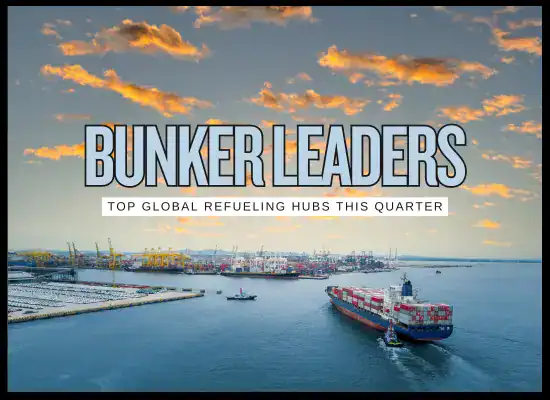
The global bunkering landscape is constantly shifting, but certain ports continue to dominate through a combination of competitive pricing, reliable supply chains, and strategic positioning along key trade routes. In Q3, these locations stand out as the most attractive choices for shipowners and operators looking to refuel efficiently and keep voyages on schedule.
This ranking combines reported bunker volumes, current price indexes, fuel diversity, and supply reliability. While some ports release detailed monthly figures, others do not; for those, rankings are based on publicly available industry reports, reputable trade news, and observed market activity. All data reflects the latest available information as of mid-Q3 2025.
- Global reputation for operational efficiency and minimal waiting times.
- Extensive network of bunker barges and onshore storage facilities.
- High compliance standards, ensuring fuel quality and regulatory alignment.
- VLSFO is typically hovering around $500/mt.
- HSFO usually trades at a noticeable discount to VLSFO, with the spread often under $100/mt.
- MGO remains priced at a premium over VLSFO, reflecting low-sulphur distillate demand.
- Located at the heart of Southeast Asia’s busiest maritime corridor.
- Key stop for vessels transiting between Europe, the Middle East, and Asia-Pacific.
- Multiple suppliers competing, keeping pricing competitive.
- Ongoing adoption of alternative fuels aligns with decarbonization trends.
- Volume dominance means steady supply even during regional disruptions.
- One of the fastest-growing bunkering hubs in the world, with volumes increasing year-on-year.
- Dedicated bonded fuel facilities streamlining supply for international transits.
- Government-backed initiatives to promote alternative fuels and improve port efficiency.
- Well-positioned for vessels on North Asia–Southeast Asia and intra-Asia routes.
- Can serve as a cost-effective refueling stop compared to more congested hubs.
- Close proximity to major Chinese manufacturing and export hubs.
- VLSFO generally hovers in the high-$400s to low-$500s/mt range.
- HSFO typically trades well below VLSFO, with the spread often similar to other major Asian ports.
- MGO remains at a premium, reflecting regional distillate demand.
- Expansion projects and new supplier entrants could further strengthen its position in the coming years.
- Weather in certain months can affect bunkering schedules, though port facilities are generally resilient.
- Europe’s largest seaport with exceptional supply chain efficiency.
- Diverse fuel offerings, from conventional grades to alternative fuels.
- Highly transparent regulatory environment ensuring consistent quality.
- Critical refueling point for North Sea, Baltic, and trans-Atlantic traffic.
- Strong integration with Europe’s inland waterways network.
- Well-developed bunkering infrastructure reduces delays and congestion.
- VLSFO commonly sits in the low-to-mid $500s/mt range.
- HSFO is typically well below VLSFO, with spreads similar to other major European hubs.
- MGO remains at a premium, reflecting distillate market conditions in the region.
- Increasing focus on alternative fuels as part of EU decarbonization strategy.
- Seasonal weather in the North Sea can occasionally impact schedules, though infrastructure is resilient.
- Key strategic position for ships bypassing the Suez Canal or heading to Asian markets.
- Large-scale bunkering infrastructure with significant storage capacity.
- Ability to handle a wide variety of fuel grades, including low-sulphur and HSFO for scrubber-fitted vessels.
- Serves as a hub for tankers, container ships, and bulk carriers alike.
- Lower congestion compared to some Asian or European counterparts.
- Offers blending services and flexible delivery options via barge or pipeline.
- VLSFO typically ranges in the low-$500s per metric ton.
- HSFO is usually around $90–$110/mt below VLSFO.
- MGO is priced at a premium, often $140–$160/mt higher than VLSFO.
Indicative ranges only. Prices vary daily and by supplier.
🚩 Notes:- Regional geopolitical developments can influence pricing and availability.
- Strong compliance culture with ISO-standard testing and fuel quality verification.
- Serves as a critical link for vessels using the Panama Canal.
- Multiple suppliers and delivery methods keep competition strong and turnaround times short.
- Well-developed infrastructure for both conventional and low-sulphur fuels.
- Two-sided bunkering access maximizes flexibility for transiting ships.
- Central location for routes connecting Asia, the Americas, and Europe.
- Steady demand driven by high canal transit volumes.
- VLSFO typically sits in the mid-$500s per metric ton.
- HSFO generally trades $90–$110/mt lower than VLSFO.
- MGO is often $150–$170/mt higher than VLSFO.
Indicative ranges only. Prices vary daily and by supplier.
🚩 Notes:- Weather disruptions and canal restrictions can occasionally impact supply timing.
- Active efforts to improve fuel quality monitoring and environmental compliance.
- Prime refueling spot for vessels entering or leaving the Mediterranean.
- High throughput supported by multiple suppliers and barge operations.
- Efficient anchorage points and short turnaround times.
- Ideal for ships routing via Suez or transiting between Europe, the Americas, and Africa.
- Access to both onshore storage and at-anchor bunkering.
- Competitive pricing due to supplier competition.
- VLSFO typically in the low-to-mid $500s per metric ton.
- HSFO usually around $80–$100/mt less than VLSFO.
- MGO generally $140–$160/mt above VLSFO.
Indicative ranges only. Prices vary daily and by supplier.
🚩 Notes:- Weather and sea state can occasionally delay deliveries at anchorage.
- Strategic role likely to strengthen as Mediterranean trade flows remain robust.
- Proximity to one of the largest refining complexes in the world ensures strong supply availability.
- Strategic location for both import/export cargo and offshore energy sectors.
- Efficient delivery infrastructure with pipeline and barge options.
- Ideal for vessels repositioning between the Americas, Europe, and West Africa.
- Consistent fuel quality and adherence to USCG and EPA regulations.
- Large supplier base creates competitive pricing environment.
- VLSFO generally in the mid-$500s per metric ton.
- HSFO typically about $90–$110/mt lower than VLSFO.
- MGO often $150–$170/mt above VLSFO.
Indicative ranges only. Prices vary daily and by supplier.
🚩 Notes:- Hurricane season can temporarily affect supply and delivery schedules.
- Well-positioned to expand alternative fuel offerings as demand grows.
- Highly flexible offshore bunkering operations with minimal port congestion.
- Competitive pricing environment supported by multiple suppliers.
- Strong safety and quality standards in line with EU maritime regulations.
- Midway position between major East–West maritime corridors.
- Efficient transfer operations via bunker barges directly at anchorage.
- Convenient option for ships avoiding detours to busier European hubs.
- VLSFO typically in the low-to-mid $500s per metric ton.
- HSFO generally $80–$100/mt lower than VLSFO.
- MGO often $140–$160/mt above VLSFO.
Indicative ranges only. Prices vary daily and by supplier.
🚩 Notes:- Weather in winter months can occasionally disrupt offshore deliveries.
- Positioning makes it an attractive alternative for ships timing their Suez or Gibraltar transits.
- Well-positioned for both northbound and southbound Atlantic shipping lanes.
- High bunkering throughput supported by multiple suppliers and barge services.
- Strong logistical links to Spanish and European energy supply networks.
- Efficient offshore delivery operations reduce time in port.
- Acts as a convenient alternative for vessels avoiding congestion at Gibraltar.
- Proximity to African and South American trade routes.
- VLSFO generally in the low-to-mid $500s per metric ton.
- HSFO typically $80–$100/mt below VLSFO.
- MGO usually $140–$160/mt above VLSFO.
Indicative ranges only. Prices vary daily and by supplier.
🚩 Notes:- Weather and Atlantic swells can occasionally affect offshore operations.
- Serves as a refueling point for both liner and tramp trades.
- Strategic location for vessels bypassing the Suez Canal.
- Multiple delivery points and suppliers across both coasts.
- Strong role in regional and transoceanic shipping lanes.
- Key stop for long-haul voyages between Asia, Europe, and the Americas.
- Supports both offshore and alongside bunkering operations.
- Positioned to capture increased traffic during geopolitical disruptions elsewhere.
- VLSFO typically in the low-to-mid $500s per metric ton.
- HSFO generally $80–$100/mt lower than VLSFO.
- MGO often $140–$160/mt above VLSFO.
Indicative ranges only. Prices vary daily and by supplier.
🚩 Notes:- Weather systems around the Cape can disrupt delivery schedules.
- Durban often serves regional coastal traffic, while Cape Town caters more to long-haul transits.
🌏 Key Factors That Influence Bunker Port Rankings
While price is a major driver, the most competitive bunkering hubs excel in a combination of operational, geographic, and strategic factors. Here’s what often determines who makes the top tier:
- Location & Trade Routes: Proximity to major shipping lanes and choke points can make or break a hub’s competitiveness.
- Infrastructure & Capacity: Storage facilities, barge fleets, and blending capabilities impact reliability and throughput.
- Fuel Diversity: Offering multiple grades, from HSFO and VLSFO to LNG, methanol, and biofuels, attracts a wider vessel base.
- Supplier Competition: A healthy mix of active suppliers usually leads to better pricing and service speed.
- Operational Efficiency: Low congestion, fast turnaround times, and flexible delivery options keep ships on schedule.
- Regulatory Environment: Compliance with international and regional emission standards affects both quality and availability.
Keeping these factors in mind helps shipowners and operators make informed choices beyond simply chasing the lowest price.
We welcome your feedback, suggestions, corrections, and ideas for enhancements. Please click here to get in touch.