

AI Phishing Fraud in Shipping and What Buyers Should Lock Down First
AI is making shipping fraud more believable, faster to launch, and harder to dismiss as obvious spam. The immediate risk is not…
Read More →Maritime technology, engineering, autonomy and digital infrastructure.
AI is making shipping fraud more believable, faster to launch, and harder to dismiss as obvious spam. The immediate risk is not…
Read More →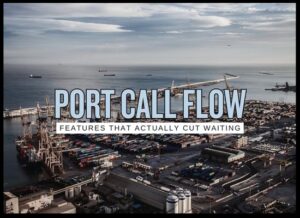
Port-call optimization is becoming more concrete because the industry now has a more detailed shared framework for how ships, ports, terminals, and…
Read More →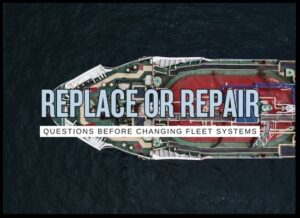
Replacing a legacy fleet management system is rarely just a software purchase. In maritime operations it is usually a data migration project,…
Read More →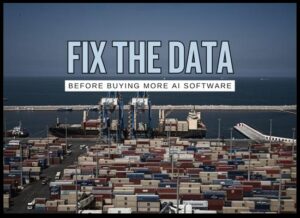
Shipping companies do not usually have an AI shortage first. They have a data-quality, data-governance, and interoperability shortage first. Lloyd’s Register and…
Read More →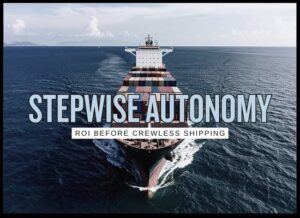
Fully uncrewed deep-sea ships still sit behind a longer regulatory and assurance curve than a lot of maritime autonomy marketing suggests. IMO’s…
Read More →
IMO’s March 2026 digitalization move matters because it pushes the conversation beyond general “smart shipping” language and toward interoperability, standardization, data-sharing, data…
Read More →
Remote technical support at sea starts saving real money when connectivity stops being just a communications utility and starts acting like a…
Read More →
Carbon accounting software in shipping is starting to matter less as a reporting accessory and more as an operating and commercial control…
Read More →
A lot of digital twin talk in shipping still sounds impressive before it sounds useful. The stronger real-world cases are the ones…
Read More →
Parts delays in shipping rarely come from one dramatic failure. More often, they build through slow identification, fragmented approval chains, incomplete technical…
Read More →
The cyber risk picture on ships is getting harder, not easier, because more vessel functions now depend on digitalization, integration, automation, and…
Read More →
Ship automation is basically the vessel’s nervous system for monitoring, control, alarms, and fast operational response. In modern commercial ships, that usually…
Read More →
Shipping companies are not short on AI ideas. What they are short on is confidence about which ones deserve real money. Recent…
Read More →
Predictive maintenance in shipping is no longer just a concept pitch. Major maritime players now market it around real-time vessel data, anomaly…
Read More →
The strongest maritime tech savings often come from connecting systems that already sit close to the money, rather than adding one more…
Read More →
Better emissions data is no longer just a reporting chore. In 2026 it is increasingly tied to freight negotiations, carbon-cost allocation, FuelEU…
Read More →
Ship operators are buying more software, sensors, dashboards, and AI layers, but a lot of ROI still breaks before the technology itself…
Read More →
The maritime AI projects attracting real budget are usually not the broadest or most futuristic ones. They are the ones tied to…
Read More →
Digital twins tend to create the most owner value when they stop being treated as futuristic visual models and start functioning as…
Read More →
A vessel connectivity upgrade tends to pay back faster than owners first assume when the ship is already losing money or time…
Read More →