11 Signs Your Fleet Is More Digitized Than Resilient
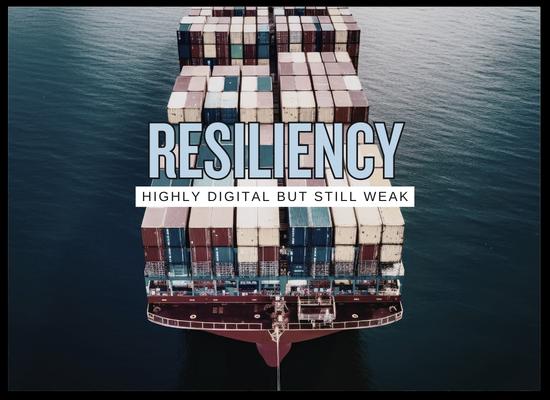
A fleet can look highly digital on paper and still be weak when something actually goes wrong. That gap usually appears when ships have more software, more data feeds, more remote access, and more integrated systems, but not enough fallback discipline, segmentation, recovery planning, crew familiarity, or tested degraded-mode procedures to keep operating cleanly through a disruption. Current IMO cyber-risk guidance says cyber risk management should support safe and secure shipping that is operationally resilient to cyber threats, while IACS frames cyber resilience across identification, protection, detection, response, and recovery for the ship as a whole. U.S. minimum cybersecurity rules now explicitly tie resilience to backups, tested plans, segmentation, monitoring, and recovery, and class guidance keeps pointing owners back to the same practical foundation: people, processes, and technology need to mature together, not separately.
11 Signs Your Fleet Is More Digitized Than Resilient
Digital maturity and resilience are not the same thing. A fleet can stream more data, connect more systems, and automate more routines while still being fragile when it loses connectivity, suffers a cyber incident, hits a bad software change, or has to navigate and operate through a degraded-state event.
The warning signs are usually operational before they are technical
These signs do not mean a fleet is failing. They mean the organization may be adding digital capability faster than it is building resilience around that capability.
The ship can do more on screen than it can do in degraded mode
If a vessel operates smoothly when every feed, integration, and remote link is available but becomes clumsy as soon as one system drops out, that is a resilience warning. Digitization should not eliminate the ability to continue safely and predictably when the digital picture becomes partial, delayed, or suspect.
Your IT environment looks organized but your OT environment still feels ad hoc
Many fleets have made real progress on office systems, identity controls, collaboration tools, and remote administration while onboard operational technology remains patchy, older, poorly inventoried, or unevenly protected. That imbalance matters because OT failure hits propulsion, steering, power, cargo, navigation, and safety-critical functions directly.
Remote access expanded faster than its controls did
Remote diagnostics, vendor access, software support, and shore connectivity can be useful, but every added path into ship systems deserves stronger control, logging, and review. When the fleet increases convenience faster than it strengthens gatekeeping, it becomes more digital without becoming more resilient.
Backups exist but recovery has not been tested under pressure
A fleet is not resilient because it says it has backups. It is resilient when those backups are protected, current, accessible, and actually tested against the kind of failure that matters. Untested recovery plans often look complete in documentation and much weaker in real operating time.
Crews know the interface better than the failure path
Training often concentrates on normal operation, not abnormal continuity. That leaves crews comfortable with menus, displays, and common workflows while still underprepared for manual workarounds, isolation steps, fallback navigation, safe local control, or incident escalation. A digitized fleet that has not trained the human response side is still fragile.
Too many systems depend on the same data stream or network path
Integration can improve speed and visibility, but it can also create hidden single points of failure. When navigation, monitoring, reporting, alerts, or support tools all lean on the same upstream source, one bad feed can spread uncertainty across multiple screens and decisions at once.
Network segmentation looks good on paper but daily operations blur the boundary
Some fleets technically segment IT and OT but then erode that boundary through habits, exceptions, workarounds, shared devices, or poorly governed maintenance routines. When the real operating culture routinely crosses the intended separation, the fleet is less resilient than its architecture diagram suggests.
Your inventories and topology maps are always being “updated later”
It is difficult to protect, isolate, patch, or recover systems you do not fully map. Fleets that keep adding equipment, software versions, remote services, and network changes without maintaining an accurate hardware, software, and topology view are usually building complexity faster than resilience.
Suppliers and sub-suppliers are more connected than your procurement standards are strict
Vessel resilience is influenced by equipment makers, software providers, maintenance firms, and remote service vendors. If procurement does not require clear cyber expectations, notification obligations, support discipline, and product hardening, the fleet inherits outside fragility through its own supply chain.
Senior management tracks adoption faster than it tracks resilience performance
If executive reporting celebrates connected ships, new platforms, live data, and digitized workflows but rarely asks about drills, recovery time, segmentation effectiveness, inventory accuracy, or continuity performance, the fleet may be optimizing for modernization optics instead of operational resilience.
An incident plan exists, but drills do not feel close to reality
A fleet becomes more resilient when crews, shore teams, vendors, and decision-makers rehearse realistic loss-of-function events, not just neat tabletop scenarios. If drills avoid messy handoffs, partial data loss, communications friction, role confusion, or time pressure, the fleet may be documenting resilience more than building it.
Where the gap usually shows up first
The table below turns the warning signs into a quicker management view of where digitization often outruns resilience.
Fast resilience gap map
A practical check on what the fleet is doing well visibly versus what it may still struggle to do under disruption.
| Area | Looks digitized when | Looks resilient when | Common weak spot |
|---|---|---|---|
| Bridge systems | Integrated displays and strong data availability | Teams can still navigate safely through suspect or missing inputs | Overreliance on one picture |
| Engine and OT systems | More sensors and remote support | Clear local control, isolation, and recovery confidence | OT maturity trails IT maturity |
| Remote access | Faster diagnostics and vendor convenience | Tight authorization, logging, removal, and review | Convenience beats control |
| Cyber planning | Documents and policies exist | Plans are drilled, updated, and usable under pressure | Paper readiness only |
| Backup and recovery | Backups are listed in controls | Recovery is tested and time-bounded | Restore confidence is assumed |
| Segmentation | Network diagram looks separated | Daily practice actually preserves the boundary | Exception culture |
| Vendor ecosystem | Many connected services and upgrades | Procurement, notification, and supply-chain expectations are strict | Third-party fragility |
| Management oversight | Adoption milestones are visible | Recovery, drills, and continuity metrics are visible too | Rollout gets more attention than resilience |
Fleet Resilience Reality Check
This tool helps readers gauge whether their current setup looks more like controlled resilience or fast-moving digitization that still carries hidden fragility.