Sails on Ships and the Top Firms Powering the Wind Revival
July 17, 2025
As the shipping industry pushes toward net-zero emissions, a growing group of innovators is bringing wind power back to the forefront. But these aren’t your grandfather’s canvas sails. Today’s commercial vessels are being equipped with towering rigid wings, smart kites, inflatable foils, and suction-enhanced airfoils, all designed to slash fuel use while navigating the same global trade routes. In this report, we profile the seven most prominent companies leading the modern wind propulsion movement for commercial cargo and tanker ships. Each one has either certified technology in the water or contracts in motion for real-world deployment. Here's who they are and how they’re changing shipping, one sail at a time.
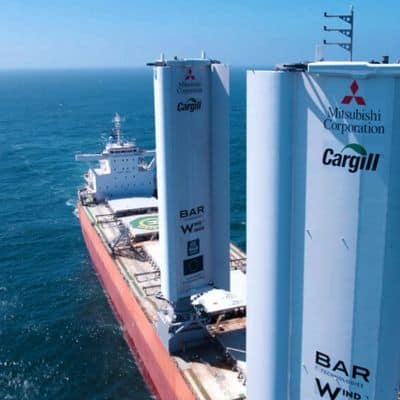
BAR Technologies began as a spin-off from Britain’s America's Cup sailing team, bringing cutting-edge yacht and Formula One-style engineering into the commercial maritime world. Headquartered in Portsmouth, UK, the company is now one of the most advanced players in wind-assisted propulsion, best known for its WindWings, towering rigid sails designed to slash fuel use on bulk carriers and tankers. With successful deployments already at sea and more in the pipeline, BAR is showing that advanced aerodynamics, automation, and carbon-reduction goals can come together at scale.
Company Snapshot
Company: BAR Technologies
Headquarters: Portsmouth, United Kingdom
Founded: 2016 (spinoff from Ben Ainslie Racing America’s Cup team)
Focus: Telescoping rigid wing sails for bulk carriers and tankers
BAR Technologies WindWings Overview
Technology Type
Telescoping rigid wing sail with automated control
Design Highlights
- 37.5 m tall triple-element composite wing
- Folds flat for port clearance or extreme weather
- Rotates 360° for optimal wind angle
- Made from wind turbine-grade composite materials
Deployments
- Pyxis Ocean (80,000 DWT bulker, 2 wings, chartered by Cargill)
- Berge Olympus (210,000 DWT Newcastlemax, 4 wings)
- Additional orders underway for bulkers and tankers
Fuel & Emissions Savings
- Saves ~1.5 tons of fuel per wing per day
- 20–25% reduction on retrofitted vessels
- Up to 30% projected savings on optimized newbuilds
Certification
- DNV Approval in Principle (2023)
- Designed in compliance with WAPS guidelines (ST-0511)
Future Outlook
- Plans to manufacture hundreds of WindWings by 2026
- Global scaling underway through shipyard partnerships
- Increasing adoption driven by EEXI and CII compliance targets
Note: Information reflects publicly available data at the time of publication. Performance figures and deployment status may change. For the most current details, please consult BAR Technologies or relevant project partners directly.
Oceanbird
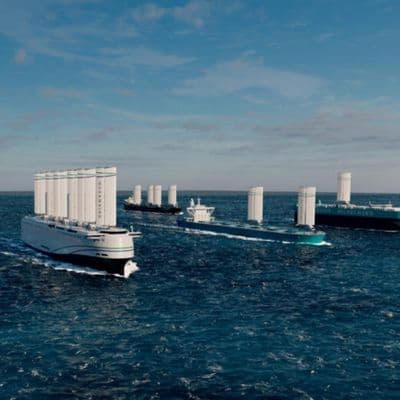
Oceanbird is one of the most ambitious wind propulsion projects in commercial shipping. Born from a collaboration between Swedish shipowner Wallenius Marine and marine technology leader Alfa Laval, Oceanbird aims to reintroduce wind as a primary power source, not just for efficiency, but as a core strategy to meet net-zero targets. With its massive telescoping wing sails and a goal of 90% emission reduction on newbuilds, Oceanbird represents a bold fusion of shipbuilding tradition and future-forward engineering. From retrofitting existing car carriers to designing fully wind-powered vessels like the Orcelle Wind, Oceanbird is helping reshape what modern shipping can look like.
Company Snapshot
Company: Oceanbird (Joint venture between Wallenius Marine and Alfa Laval)
Focus: Telescoping rigid wing sails for newbuilds and retrofits on large Ro-Ro, bulk, and cruise ships
Oceanbird Wind Propulsion Overview
Technology Type
Telescoping rigid wing sail with active control
Design Highlights
- Up to 40 m high telescoping composite wing
- Tilts down fully for stability or port clearance
- Optimized for Ro-Ro, car carriers, and cruise ships
- Designed for modular integration on newbuilds and retrofits
Deployments
- Orcelle Wind (planned 2027 launch, 7 wings, 220 m Ro-Ro car carrier)
- System to be trialed on existing Wallenius ships
- Testing ongoing on smaller demonstration vessels
Fuel & Emissions Savings
- Up to 90% emissions reduction projected on wind-optimized newbuilds
- 30–40% savings projected on retrofits under normal trade routes
- Integrated hybrid propulsion model with wind as primary driver
Certification
- Early engagement with classification societies
- Designs under review for AiP and integration standards
- Orcelle Wind developed under EU Horizon 2020 R&D backing
Future Outlook
- Orcelle Wind to become world’s first large-scale wind-powered Ro-Ro
- Oceanbird JV expanding integration services beyond Wallenius fleet
- Continued innovation expected in automation and sensor-based sail management
Note: Information reflects publicly available data at the time of publication. Performance and deployment details may change. For the latest, contact Oceanbird or its partners directly.
AYRO / Oceanwings
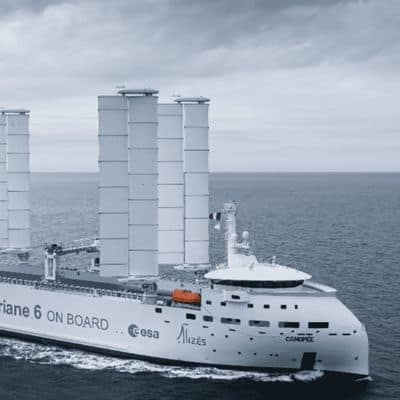
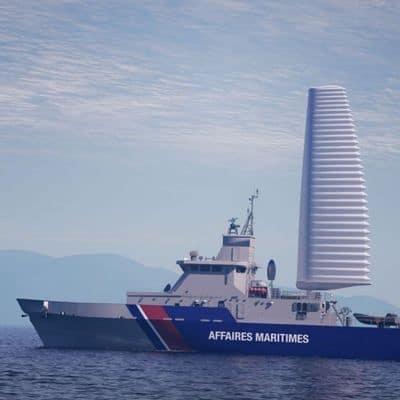
AYRO (now branded “Oceanwings”) is a French maritime technology company spun off from VPLP Design, a leader in racing multihull naval architecture. With its patent-protected Oceanwings system, AYRO has adapted America's Cup-style wing sail technology for commercial shipping, providing fully automated, tiltable rigid sails that rotate 360°, deliver high aerodynamic efficiency, and fold down quickly for port or storm conditions. The company made headlines in 2023 with the full-scale installation of Oceanwings on the Canopée, a Ro‑Ro cargo vessel, demonstrating real-world capability and substantial emissions reductions.
Focus: Fully automated rigid wing sail systems for Ro-Ro, cargo, and passenger vessels
AYRO Oceanwings Wind Propulsion Overview
Technology Type
Fully automated twin-element rigid wing sails
Design Highlights
- Twin-element wing profile inspired by America’s Cup racing tech
- Full automation: adjusts angle of attack, rotation, and tilt
- Tiltable up to 60° for storm or port clearance
- Suitable for Ro-Ro, cruise, cargo, and passenger vessels
Deployments
- Canopée (121 m Ro-Ro, 4 Oceanwings installed, operational since 2023)
- Charter: transports Ariane 6 rocket parts from Europe to French Guiana
- Additional vessels under contract in European yards (2024–2026)
Fuel & Emissions Savings
- ~30% fuel reduction projected in transatlantic operations
- Verified real-world performance on Canopée during multiple voyages
- Actual savings vary by routing, wind conditions, and ship type
Certification
- BV (Bureau Veritas) class approved for Canopée
- CE marking and mechanical safety certification complete
- Compliant with EU and IMO wind-assist innovation standards
Future Outlook
- Active scaling across mid-size cargo and cruise vessels
- Strong demand from ESA suppliers, green logistics operators
- Ongoing R&D on autonomous wind optimization and multi-vessel control
Note: Information reflects publicly available data at the time of publication. Performance and deployment details may evolve. Please consult Oceanwings/AYRO directly for the most current information.
Bound4blue
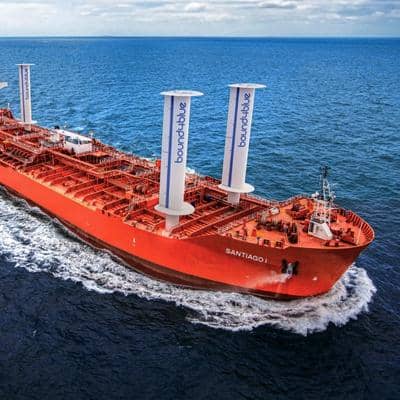
Bound4blue is a forward-thinking Spanish maritime technology company pioneering eSAIL®, an innovative rigid wing sail system enhanced with boundary-layer suction. Founded in 2014 by aeronautical engineers, the company’s platform is designed for ease of retrofit, automation, and strong fuel savings. Its sails, used on coasters, Ro-Ros, and bulkers, demonstrate real-world effectiveness and class certification, offering a practical, scalable solution for decarbonizing commercial vessels.
Focus: Automated rigid sails using airflow suction for cargo vessels, coasters, bulk carriers, and Ro-Ros
Bound4blue Wind Propulsion Overview
Technology Type
eSAIL: Automated rigid sail with suction-enhanced lift
Design Highlights
- Uses active boundary-layer suction to increase lift
- Rigid, self-rotating wing design with minimal crew intervention
- Compact and modular: available in multiple sizes
- Focused on retrofit potential for existing cargo fleets
Deployments
- Installed on vessels like the EMSOL's La Naumon and MV City of Bordeaux
- Integrated with Sea-Cargo’s Ro-Ro vessel SC Connector
- More installations planned for bulkers, tankers, and container feeders
Fuel & Emissions Savings
- 15–30% fuel savings depending on vessel and routing
- Boundary-layer suction provides greater lift at lower wind speeds
- Proven in live deployments with performance monitoring
Certification
- Class approvals from DNV and other societies
- EU Horizon 2020 backed
- IMO-compliant retrofit methodology and design packages
Future Outlook
- Expanding across multiple vessel classes with retrofit-first approach
- Modular scaling to suit vessel size and route
- Actively forming commercial partnerships with shipowners across Europe and Asia
Note: Information reflects publicly available data at the time of publication. Technology capabilities and deployment status may evolve. Please consult Bound4blue directly for the most current information.
Airseas
Airseas is a French tech company revolutionizing maritime wind propulsion by bringing aviation-grade flight automation to the sea. A spin-off from Airbus, Airseas was founded in 2016 by aerospace engineers aiming to apply their flight control expertise to global shipping emissions. Their flagship technology, Seawing, is a fully automated kite-based towing system designed to deploy at high altitudes and deliver wind-assisted propulsion without the need for large deck-mounted sails.
The Seawing system deploys from a compact housing on the ship’s bow and can operate several hundred feet above the water. It is controlled by onboard software that automatically adjusts to wind conditions, optimizing thrust while minimizing crew involvement. The company’s first trials are currently underway with K Line, a major Japanese shipping line.
- Launches from bow-mounted housing via automated mast
- Operates up to 300 m altitude using real-time wind analytics
- Based on Airbus flight automation for kite maneuvering
- Compact and retractable with no deck interference
Deployments
- Pilot installation on *Sea Eagle* (K Line bulk carrier)
- Deployed on trans-Pacific routes for operational testing
- Additional installations expected post-validation phase
Fuel & Emissions Savings
- Projected 10–20% fuel reduction depending on wind zone
- Kite power replaces auxiliary engine load in favorable conditions
- Feedback from trials is refining launch/recovery automation
Certification
- Developed to meet SOLAS and class compliance
- Backed by Airbus quality control systems
- Engaging with classification societies for broader approvals
Future Outlook
- Scaling production for large-fleet applications
- Exploring integration with voyage routing software
- Strategic focus on container ships and bulk carriers
Note: Information reflects public disclosures and test deployment updates as of mid-2025. For current performance data or installation inquiries, contact Airseas directly.
Michelin WISAMO
Michelin, renowned for tire innovation, has leveraged decades of material science and engineering to enter maritime sustainability with WISAMO (Wing Sail Mobility). Launched internally in 2021, WISAMO is the world's first inflatable, automated wing sail, designed to inflate into a rigid airfoil at sea and deflate for easy storage during port calls or rough weather. By blending lightweight design with automation, WISAMO offers shipping operators a practical retrofit solution to reduce fuel consumption, emissions, and carbon footprint, without major structural modifications.
Focus: Lightweight, retractable inflatable wing sails for cargo, Ro-Ro, and mid-size vessels—designed for ease of retrofit and fully automated usage
Michelin WISAMO Wind Propulsion Overview
Technology Type
Inflatable telescopic wing sail with automated deployment
Design Highlights
- Inflatable airfoil that becomes rigid under pressure
- Telescoping mast allows full retraction into housing
- Fully automated inflation, deflation, and rotation
- Lightweight and low structural impact for retrofits
Deployments
- Installed on MN Pelican (155 m Ro-Ro ferry) since 2023
- Trials on Biscay route (UK–Spain) show solid operational viability
- Data collection underway for additional deployments
Fuel & Emissions Savings
- Projected 10–20% reduction in fuel consumption
- Lightweight construction maximizes benefit in mid-wind conditions
- Operational feedback from MN Pelican trials ongoing
Certification
- DNV awarded Approval in Principle (2023)
- Under consideration for further class type approvals
- Designed for IMO GHG strategy compliance support
Future Outlook
- Focus on mass-production and commercial rollout
- Exploring multi-sail setups for tankers and feeders
- Michelin evaluating third-party manufacturing partnerships
Note: Information reflects publicly available data at the time of publication. For the most accurate and updated details, please contact Michelin or WISAMO project leads directly.
Neoline
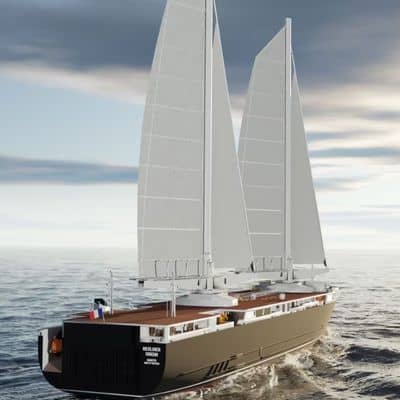
Neoline is a French startup that is challenging conventional maritime propulsion by bringing back large-scale wooden-style sailing cargo ships into the modern era. Founded by eco-conscious sailors and engineers in 2015, the company is building Neoliner Origin, a hybrid Ro-Ro vessel featuring 3,000 m² of automated folding sails mounted on two carbon‑fiber masts. Designed for transatlantic routes, the ship aims to reduce greenhouse gas emissions by 80–90% compared to traditional motorized vessels, while still meeting commercial delivery schedules.
Focus: Full-scale modern sailing cargo vessels utilizing automated folding sail rigs for sustainable transoceanic transport
Neoline Neoliner Origin Overview
Technology Type
Hybrid sailing Ro‑Ro cargo vessel with automated folding sails
Design Highlights
- 3,000 m² sail area via two 76 m carbon-fiber folding masts
- Automated furling and trim systems with sail control software
- Transport capacity ~265 TEU + vehicles/heavy equipment
- Masts fold to 42 m for port access; utilize ballast and stabilizers for sailing stability
Deployments
- Keel laid in Nov 2023 at RMK Marine, Turkey; launch expected mid‑2025
- Planned service route: France–Baltimore–Halifax–Saint-Pierre
- Anchor customers include Renault, BMW, Beneteau (green cargo commitments)
Fuel & Emissions Savings
- Estimated 80–90% GHG reduction over diesel‑only operation
- Carbon savings achieved through sail as primary power
- BP-equivalent savings of ~2,000–3,000 tons fuel per year per vessel
Certification
- AiP granted by Bureau Veritas for sailing rig system
- Keel design approved; SOLAS stability and safety compliance in development
- Supported by EU and French government funding/infrastructure grants
Future Outlook
- Launch and maiden voyage expected in late 2025
- Second ship planned if green shipping demand continues
- Potential for route expansion and sail-powered fleet scaling
Note: Information reflects publicly available data at time of publication. For updated details, please contact Neoline or project stakeholders directly.
WindWings – Large rigid wing sails (38 m x 20 m), folding for port clearance
Installed on Pyxis Ocean (Cargill), launched August 2023
In active service; expanding through partnerships
DNV-class certified; system operates autonomously and integrates with ship routing software to optimize wind capture; designed for tankers and bulk carriers
Oceanbird (AlfaWall)
Wing 560 – Tall, articulated rigid sails up to 80 m high with adaptive control
To be deployed on the Orcelle Wind, a wind-powered car carrier by Wallenius (launch planned 2025)
Advanced prototype testing phase; vessel under construction in Europe
Supported by Swedish innovation agencies; sail structure adapts dynamically to sea conditions and integrates with hybrid propulsion
AYRO
Oceanwings – Dual-element tilting wingsails with hydraulic rotation
Operational on Canopée, a Ro-Ro vessel transporting Ariane rocket components
Fully operational; commercialized in France and expanding in Europe
Designed for precision control and stability in varying wind zones; modular and retractable; ideal for mixed propulsion cargo ships
Bound4blue
eSAIL – Suction-based rigid sail with boundary-layer control
Installed on several bulk carriers and Ro-Ro ships; scalable retrofit model
Commercial phase; deployed on charter fleets and short-sea vessels
Innovative use of active airflow manipulation to enhance lift; low-maintenance and scalable system; EU-backed R&D
Airseas
Seawing – Autonomous towing kite system using aviation-grade flight controls
Pilot deployment on K Line’s Sea Eagle bulk carrier (testing in Pacific routes)
Pilot stage with real-time performance monitoring underway
Kite deploys from foredeck and operates at altitudes over 150 m; backed by Airbus innovation and automation technologies
Operational on MN Pelican (Ro-Ro on UK–Spain route)
In operational testing phase; DNV approval-in-principle secured
Compact footprint and ease of retrofitting make it ideal for coastal cargo and ferries; co-developed by Michelin engineers and ocean racers
Neoline
Automated folding sail rig on full sail-powered Ro-Ro vessel
Neoliner Origin under construction (launch late 2025)
Keel laid at RMK Marine (Turkey); voyage trials expected in 2026
Dual 76 m carbon masts with ~3,000 m² sail area; clients include Renault, Beneteau, BMW; funded by French government and EU green transport initiatives
Note: Data reflects publicly available specifications and deployment updates as of mid-2025. Please verify directly with each company for current project status and technical documentation.