RoRo Gold Rush: Why These Ships Are Quietly Printing Money
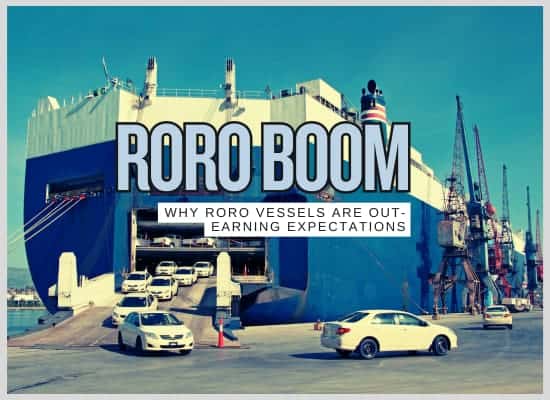
While container rates dominate headlines, a quieter revolution is happening in the Roll-on/Roll-off (RoRo) segment. Surging global vehicle exports, aging fleets, and a sharp shortage of available tonnage have pushed RoRo charter rates and resale values to historic highs. What was once considered a niche segment is now a profit engine, with some operators locking in six-figure daily rates and securing contracts months in advance. Below is a report on the hard economics fueling the RoRo boom.
We welcome your feedback, suggestions, corrections, and ideas for enhancements. Please click here to get in touch.
Roll-on/Roll-off (RoRo) vessels are purpose-built for cargo that can be driven on and off the ship using ramps, making them fundamentally different from container vessels. This method allows for highly efficient loading and unloading, minimal handling, and reduced risk of damage—especially for vehicles, machinery, and wheeled equipment.
🚗 Key Advantages:- Rapid turnaround times due to drive-on/drive-off efficiency
- Minimal need for cranes or external lifting equipment at ports
- Lower cargo damage rates compared to containerized transport for vehicles
- Ability to carry mixed cargo: cars, trucks, trailers, buses, and construction equipment
- RoRo ships require dedicated ramps but are welcomed at most modern vehicle-handling ports
- Well-suited for ports with limited crane capacity or high container congestion
- Frequent users of mid-size ports that can’t accommodate ULCCs or large container vessels
- Exporting electric vehicles from China to Europe
- Shipping military or disaster relief vehicles into remote regions
- Intra-regional vehicle trade (e.g., Europe to North Africa, Japan to Southeast Asia)
- Some RoRos can carry over 8,000 cars in a single voyage
- RoRo vessels use lane meters, not TEUs, to measure capacity
- Port dwell times for RoRos are often under 24 hours
The surge in RoRo charter rates and vehicle exports has created a windfall for a select group of operators that dominate the market. These companies benefit from long-term contracts, modern fleets, and preferred relationships with automotive giants. While many shipping segments are just recovering, RoRo leaders are enjoying strong profits and full booking calendars well into 2025.
🚢 Major RoRo Operators in 2024–2025:- Höegh Autoliners (Norway): Publicly traded with a strong focus on high-capacity, fuel-efficient Aurora-class PCTCs. Secured multi-year charters with major EV exporters and reported solid EBITDA in 2024.
- NYK Line (Japan): One of the largest RoRo operators globally, transporting Japanese and Chinese vehicles. Benefiting from fleet scale and global port access.
- Wallenius Wilhelmsen (Norway/Sweden): Specializes in vehicles and high/wide/heavy cargo. Strong bookings through 2025, with rising margins due to tight capacity.
- Grimaldi Group (Italy): Dominant in Mediterranean and West African routes. Runs a mix of RoRo and ConRo services with modern ships in high demand.
- K Line & MOL (Japan): Both members of Japan’s "big three" with extensive car carrier operations serving Asia, Europe, and North America.
- Charter rates exceeding $100,000/day for large RoRos on key lanes.
- Limited fleet availability = pricing power in long-term contracts.
- High demand from EV makers seeking dedicated space to avoid container delays or damage.
- Operators with younger, fuel-efficient vessels commanding premium rates.
- Höegh's Aurora-class newbuilds have already been booked out years in advance.
- NYK and MOL reported RoRo divisions outperforming container segments in Q1–Q2 2025.
- Wallenius Wilhelmsen invested in dual-fuel and ammonia-ready ships to extend long-term edge.
- Many of these companies are using the current profit wave to renew fleets, increase ESG scores, and strengthen ties with OEMs like BYD, Hyundai, and VW.
- Some have shifted capacity away from lower-margin routes to focus on high-yield EV corridors.
The RoRo shipping market is experiencing a significant supply crunch due to a combination of factors: an aging fleet, limited newbuild orders, and constrained shipyard capacity. These elements collectively contribute to the current tightness in RoRo vessel availability.
🛳️ Aging Fleet Dynamics:- The average age of the global RoRo fleet is approximately 17 years, with many vessels approaching or exceeding 30 years of service.
- Older ships face increased maintenance costs and may not meet current environmental regulations, prompting considerations for retirement.
- As of 2024, only 27 RoRo vessels are on order, representing a small fraction of the existing fleet.
- Shipowners have been hesitant to invest in newbuilds due to high construction costs and uncertainty about future fuel regulations.
- Global shipbuilding capacity has declined by approximately 40% since its peak in 2009, limiting the industry's ability to produce new vessels quickly.
- Many shipyards are operating at full capacity with existing orders, leading to extended delivery timelines for new RoRo ships.
- The shortage of available RoRo vessels has led to increased charter rates, with some reaching unprecedented levels.
- Shipping companies are experiencing higher utilization rates, but the lack of fleet renewal options poses long-term operational challenges.
- Without significant investment in newbuilds and expansion of shipyard capacity, the RoRo market may continue to face supply constraints.
- Stakeholders must navigate these challenges by optimizing existing assets and exploring alternative solutions to meet demand.
Profit Math Showdown: Can RoRo Out-Earn Containers?
Not all cargo is created equal—and neither is the revenue it generates. While container ships dominate headlines, RoRo vessels are proving they can quietly deliver higher profits per voyage, especially in today’s tight vehicle logistics market. By comparing lane meter revenue with per-TEU returns, this section reveals how a well-utilized RoRo can compete with, or even outperform, a container ship on the same route. Use the interactive calculator below to test different configurations based on your fleet or charter metrics.
Ship Universe: RoRo vs Container Profit Calculator
| RoRo Lane Meters Used: | |
| Revenue per Lane Meter (USD): | |
| Container Ship TEUs: | |
| Revenue per TEU (USD): | |
| 📊 Comparison results will appear here | |
| Note: This calculator reflects revenue only. To analyze profit, consider voyage duration, crew cost, fuel usage, and port fees. | |
Future Outlook: Still Room to Run?
The RoRo (Roll-on/Roll-off) shipping sector has experienced significant growth in recent years, driven by factors such as increased global trade, rising vehicle production, and the demand for efficient transportation of wheeled cargo. As we look ahead, several indicators suggest that the RoRo market still has room to grow, albeit with some challenges on the horizon.
Market Growth and Demand Drivers
The global RoRo shipping market was valued at approximately $20.18 billion in 2023 and is projected to reach $31.6 billion by 2032, growing at a compound annual growth rate (CAGR) of 5.1% from 2024 to 2032. This growth is fueled by several key factors:
- Automotive Industry Expansion: The increasing production of vehicles, particularly electric and hybrid models, has led to higher shipments, boosting the RoRo shipping industry.
- Global Trade Expansion: Trade agreements and globalization have enhanced cross-border transportation needs, favoring RoRo shipping solutions.
- Infrastructure Investments: Ongoing investments in port infrastructure and new port developments, especially in emerging markets, are facilitating the growth of RoRo shipping.
Challenges and Considerations
Despite the positive outlook, the RoRo sector faces several challenges that could impact its growth trajectory:
- Fleet Expansion and Overcapacity: A significant orderbook, with a 39% orderbook-to-live fleet ratio, is expected to inject an 11% net supply uptick in 2025. This could lead to overcapacity, affecting charter rates and asset values.
- Alternative Shipping Methods: Some vehicle manufacturers are considering container shipping as a viable alternative to RoRo, especially with the expected overcapacity in container shipping volumes in 2025, which could drive down freight costs.
- Regulatory and Environmental Concerns: Stricter environmental regulations and concerns about carbon emissions may result in increased operational costs and the need for investment in greener technologies.
Risks & Market Saturation Signals
While the RoRo market is riding high in 2025, sharp profits and surging demand come with hidden risks. From overordering newbuilds to regulatory shifts and changing global trade patterns, smart operators are watching for signals that today’s gold rush could level off—or reverse. Below is a breakdown of the key warning signs and pressure points that could shape the next phase of the RoRo market.
The RoRo sector is experiencing a rare convergence of profitability, demand, and global relevance. Surging EV exports, aging fleets, and a limited number of newbuilds have created a seller’s market where top operators are locking in premium rates and enjoying unmatched utilization levels. But beneath the surface, early signals of market saturation, overordering, and regulatory pressure are beginning to appear.
For shipowners, charterers, and investors, this is a window of opportunity—but not without risk. The most successful players will be those who strike a balance between capturing today’s gains and preparing for tomorrow’s shifts: investing in flexible, fuel-efficient tonnage, monitoring port infrastructure trends, and hedging against rate volatility with diversified service models.