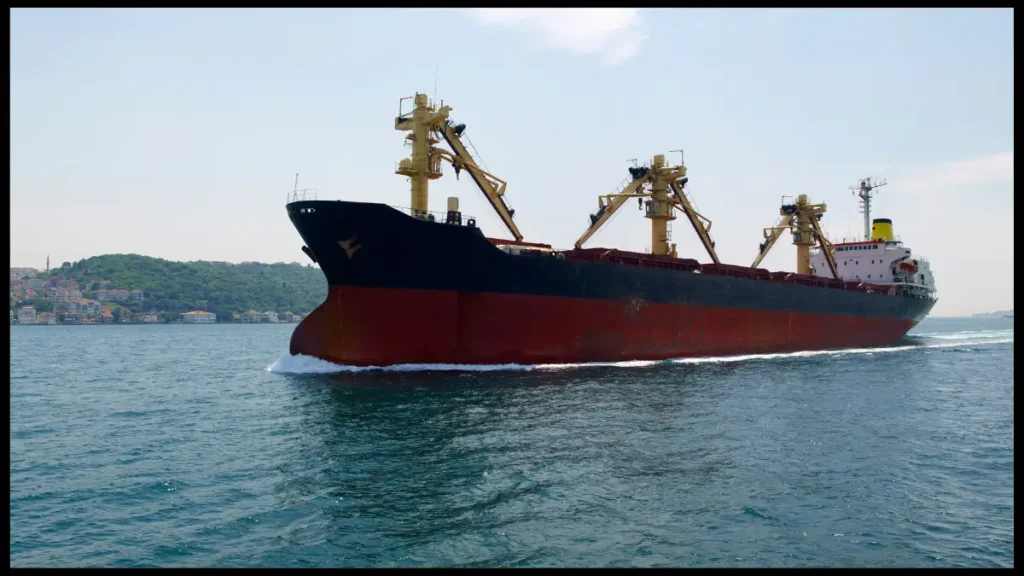
Chinese buyers have been the main force in the 2025 secondhand capesize market, and Winning Shipping has emerged as the most aggressive name in the pack. In late December, brokers identified another elderly Newcastlemax joining Winning’s fleet, reinforcing a pattern: older Japanese built capes being pulled into a Guinea to China bauxite shuttle where volume, reliability, and draft-friendly ports matter as much as fuel efficiency.
Click here for 30 second summary
China’s capesize buying spree has a clear leader
China has dominated 2025’s secondhand capesize market, and Winning Shipping has been the most active buyer, reportedly closing in on double-digit capesize purchases. The latest named addition is the 18-year-old Universal-built Newcastlemax London Spirit, bought for an undisclosed price and tied to a wider run of “vintage” Newcastlemax deals over the past six months.
The deal tape in one line
A concentrated China-led buyer group is soaking up older capes and Newcastlemaxes, keeping liquidity high and values supported for ships that can be put straight to work.
Why Winning keeps buying older ships
Secondhand tonnage is immediate capacity. The trade-off is higher maintenance planning and tighter reliability management, but it avoids newbuild lead times and gets ships earning now.
The corridor doing the heavy lifting
Winning’s added large-bulker capacity is reported as deployed on the Guinea to China bauxite run. In the Newcastlemax segment alone, the group is described as adding roughly 1.5 million dwt of carrying capacity during 2025.
A wider signal beyond dry bulk
Separate data cited in the same reporting points to Winning-linked tanker orders: three 115,000 dwt Aframax newbuildings at K Shipbuilding, slated for 2027–2028 delivery, showing capital is being deployed across cycles, not only in bulkers.
Bottom line
This is less about one ship deal and more about buyer concentration. When China absorbs older capesize supply in blocks and one operator keeps stacking repeat purchases, replacement cost rises for everyone else and secondhand pricing stays firmer than many would expect for vintage tonnage.
China leads 2025 secondhand capesizes, with Winning Shipping driving the buyer tape
Item
Summary
Business mechanics
Bottom-line effect
2025 buyer map
Market reporting shows China dominating secondhand capesize buying in 2025, with Winning Shipping “topping the buyer table” and approaching double-digit capesize purchases for the year.
A concentrated buyer cohort can move values quickly, especially when deals skew toward similar age bands and builders. In this case, the pattern has leaned toward older, Japanese-built units changing hands.
📈 Sellers gain liquidity and firmer pricing in older capes. 📉 Charterers and non-buyer owners face a higher replacement cost for prompt, tradable tonnage.
Latest identified purchase
The Universal-built Newcastlemax London Spirit was identified as Winning’s most recent purchase, described as an 18-year-old heavyweight acquired for an undisclosed price from Greek interests.
Buying “vintage” ships keeps upfront capital lower and shortens time-to-earnings versus ordering newbuilds. The trade-off is heavier maintenance planning, tighter vetting, and higher off-hire risk if reliability slips.
📈 Quick capacity lift for Winning’s core trade. 📉 More technical and scheduling risk sits inside the operating model, especially around surveys and drydock timing.
Scale of the Newcastlemax push
Reporting indicates Winning added roughly 1.5m dwt of Newcastlemax carrying capacity during 2025, with a run of “six vintage” Newcastlemax deals over six months.
Concentrating on one large-size band helps standardize crewing, spares, and voyage planning. It can also strengthen negotiating power with cargo interests if the operator can offer repeat lift and predictable performance.
📈 Greater scale can improve fleet utilization and bargaining leverage on a single dominant corridor. 📉 Concentration risk rises if that corridor faces regulatory or operational disruption.
Cargo engine: Guinea to China bauxite
Winning’s added tonnage is reported as deployed on the Guinea to China bauxite trade, where it is described as the world’s largest bauxite mover.
On long-haul bauxite, daily operating reliability matters because cargo programs are repetitive and port interfaces are tight. A larger “house fleet” can reduce spot charter dependency and stabilize lift capacity for cargo owners.
📈 Supports steady employment for large bulkers tied to industrial demand. 📉 Any disruption in Guinea loading cadence, policy, or logistics can ripple into earnings and tonnage availability.
Why older ships still clear at firm levels
Market coverage in 2025 has highlighted Chinese appetite for older capes alongside firmer capesize values, including reported trades that pushed some “vintage” capes above the $30m mark.
When earnings improve and replacement supply is limited, buyers can justify higher secondhand prices even for midlife ships, assuming the vessel can be kept trading with planned maintenance and acceptable efficiency.
📈 Asset prices stay supported for owners looking to sell or refinance. 📉 Entry costs climb for newcomers, and payback periods lengthen if freight softens.
Fleet expansion track record in 2025
Earlier 2025 reporting linked Winning to multiple Japanese-built capesize and Newcastlemax acquisitions, including a 204,000 dwt unit bought from Mitsui OSK Lines and renamed for the trade, and additional cape purchases reported at disclosed price points.
A visible repeat-buyer pattern often signals a structured strategy rather than opportunistic buying. It also suggests the operator believes the trade lane can keep absorbing large tonnage without eroding margins.
📈 Reinforces the view that specific commodity corridors can support dedicated capesize fleets. 📉 Raises competition for similar ships, which can pressure other operators’ fleet plans.
Spillover signal: not only dry bulk
Separate reporting says Winning-linked interests have also placed newbuilding orders for 115,000 dwt Aframax crude carriers in South Korea with deliveries slated for 2027–2028.
Diversifying into tankers can spread cycle risk, but it introduces new chartering counterparties, vetting regimes, and technical standards that differ from a bulk-focused operating playbook.
📈 Broader earnings optionality across shipping cycles. 📉 More complexity in capital allocation and operational execution across segments.
Notes: Deal pricing for the most recent Newcastlemax purchase was reported as undisclosed. Counts and capacity adds are based on market reporting that describes Winning Shipping as nearing double-digit capesize purchases in 2025, with roughly 1.5m dwt added in the Newcastlemax segment and deployment focused on the Guinea to China bauxite corridor. Broader context on Chinese secondhand buying activity and capesize value firmness is drawn from industry market coverage and broker and analytics commentary.
The extra layer behind China’s capesize buying: cargo gravity, buyer concentration, and vintage economics
The headline is that China is leading the secondhand capesize tape and Winning Shipping is a standout buyer. The operational story is about building repeat lift on a single corridor using prompt, midlife tonnage that can earn immediately.
2025 buying pattern, simplified
Secondhand capesize
Buyer concentration
Market reporting this week described China as the dominant secondhand capesize buyer in 2025, with Winning Shipping “topping the buyer table” and nearing double-digit capesize purchases.
The “vintage Newcastlemax” streak
The same reporting described Winning as the buyer behind six “vintage” Newcastlemax deals over roughly six months, a repeat-buyer signal rather than one-off opportunistic buying.
Why secondhand matters here
Secondhand ships are a speed play. They add carrying capacity immediately, avoiding yard queues and long delivery tails, but they bring heavier maintenance planning and tighter reliability management.
Cargo gravity: the Guinea to China bauxite engine
Demand anchor
Scale claim in the market
Industry reporting has described Winning as the largest mover of bauxite, shipping more than 50 million tonnes per year from Guinea to China. That kind of repeat lift rewards fleet scale and schedule control.
Why capes and Newcastlemax fit
On long-haul bauxite, the economics can favor big parcels and consistent rotations. A “house fleet” reduces spot charter dependence and keeps utilization steadier when shipment programs run week after week.
The macro risk that sits underneath
Guinea has been tightening its oversight of mining permits and operators. For shipping, the practical sensitivity is whether export volumes and load-port cadence stay smooth enough to keep large ships turning without costly waiting time.
Recent price signposts that shaped sentiment
Disclosed examples
Example
Detail
Reported price
Implication
HL Frontier flip
A Universal-built Newcastlemax that had been bought earlier in 2025 and later delivered to Winning after a resale.
Bought for $32.5m, later sold for $33.5m (reported).
Shows liquidity and firm clearing levels for midlife big bulkers when buyer demand is concentrated.
MOL sale to Winning
A 2007-built, 204,000 dwt Newcastlemax was reported sold by MOL to Winning and renamed after delivery.
Price not disclosed (reported).
Reinforces the repeat-buyer pattern, even when individual price points are not public.
Spillover effects stakeholders are feeling
Secondary impacts
Supportive for
Owners selling older capes, as buyer demand can tighten the available pool and keep values firm.
Operators with dedicated cargo programs, where scale can reduce reliance on the spot charter market.
Intermediaries and financers when deal flow is steady and asset liquidity improves.
More pressure for
Charterers looking for prompt tonnage, since replacement cost rises when a few buyers absorb supply quickly.
Owners without a corridor anchor, because older ships require tighter technical execution if employment becomes less forgiving.
Anyone exposed to Guinea loading-cadence risk, where waiting time can erase the advantage of cheaper secondhand capex.
The 2025 secondhand capesize market is ending the year with a clear tilt toward Chinese buyers, and Winning Shipping has become the name most frequently associated with repeat purchases in the larger-size bands. The thread tying those deals together is not just asset play, but a cargo program that rewards scale and fast-to-earn tonnage, particularly on the Guinea to China bauxite corridor. At the same time, the concentration of buying and the reliance on a single export geography means the story remains tied to operational reliability and to how smoothly Guinea’s mining and export environment holds up as volumes and oversight pressures evolve.