Wind Sails to be Deployed on Supertankers in 2028: Idemitsu Bets On Norsepower VLCC Pair
πŸ“Š Subscribe to the Ship Universe Weekly Newsletter

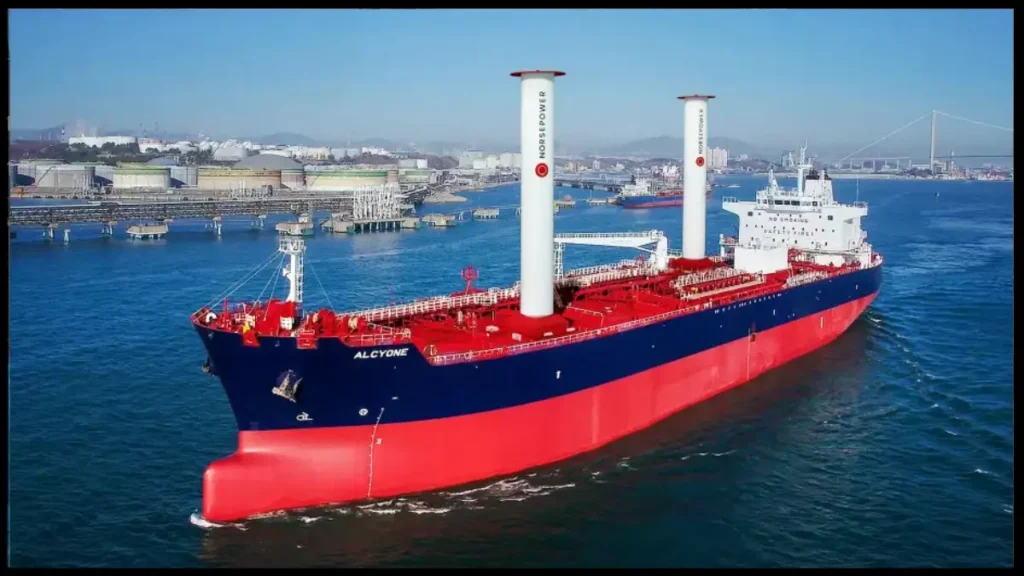
Idemitsu Tanker has ordered two methanol ready VLCC newbuilds in Japan that will each carry a pair of Norsepower rotor sails from delivery at the end of 2028, marking the first time VLCCs will be fitted with this type of wind assist. The 35 by 5 meter rotors are intended to cut fuel use and emissions by using the Magnus effect to add thrust, testing whether wind assist economics at VLCC scale can materially shift fuel bills, CII scores and charterer preferences for equipped ships.

Click here for 30 second summary

VLCC rotor sails in 30 seconds

Idemitsu Tanker’s decision to fit two new VLCCs with Norsepower rotor sails is the first full scale test of mechanical wind assist on very large crude carriers. The ships, due around 2028 and designed for methanol and other energy saving devices, will generate real operating data on how much fuel and emissions rotor sails can actually cut on long haul crude trades. The results will speak directly to CII compliance, voyage costs and how charterers rank equipped versus conventional VLCCs.

  • Fuel and emissions: Even modest percentage savings translate into large absolute tonnes of fuel and COβ‚‚ per year on long VLCC routes, especially if speeds stay in the 12 to 13 knot band.
  • Regulation and ratings: Lower effective fuel burn improves CII and other efficiency metrics, which can preserve trading flexibility as rules tighten and reduce the need for later speed or operational constraints.
  • Charter and asset values: If verified savings are clear and repeatable, rotor equipped VLCCs may gain a small premium in charter selection and resale pricing, while weak data would keep wind assist as a niche add on rather than a mainstream specification.
Bottom line: these first rotor equipped VLCCs turn wind assist from theory into a live benchmark for the large crude fleet. How they perform on fuel, ratings and employment will heavily influence whether mechanical sails become a standard feature on future VLCC orders or remain a specialised option used on selected routes.
Norsepower rotor sails move into VLCCs: finance and charter signal from Idemitsu
Item Summary Business mechanics Bottom line effect
Deal outline Norsepower and Idemitsu Tanker have agreed to equip two newbuild VLCCs with rotor sails, the first time this technology has been specified on crude carriers of this size. The ships will be built by Japan Marine United and Nihon Shipyard, with first delivery targeted for end 2028. The order extends Norsepower’s track record from MR, LR and gas carriers into the VLCC segment and locks in wind assist at the design stage rather than as a retrofit, improving integration and deck layout planning. πŸ“ˆ Shows a first tier energy major is willing to test wind assist on flagship crude tonnage. πŸ“‰ Commercial and technical results on these two ships will heavily shape whether other VLCC owners follow.
Rotor sail hardware Each VLCC is planned to carry two explosion proof Norsepower Rotor Sails about 35 meters high and 5 meters in diameter, installed on deck. The units use the Magnus effect from spinning cylinders to generate additional thrust. Power is taken from the ship to spin the rotors; control systems optimise use based on wind angle, speed and route. Net benefit depends on wind conditions, speed profile and how often the rotors can be used without clashing with cargo or navigational constraints. πŸ“ˆ Mechanical sails offer an additional lever on fuel consumption without enlarging the main engine. πŸ“‰ Added complexity, weight and maintenance have to be offset by measurable savings in real service.
Fuel and emissions case Norsepower cites typical fuel and COβ‚‚ savings in the 5 to 25 percent range across its fleet, depending on route and operating profile. Actual performance on these VLCCs will only be clear after service trials on long haul crude runs. On a VLCC burning tens of tonnes of fuel per day, even low double digit percentage gains translate into large absolute tonnes of fuel and emissions avoided over a year, especially on windy trades such as North Atlantic or Southern Ocean influenced routes. πŸ“ˆ Successful fuel savings at VLCC scale directly lower voyage OPEX and GHG output. πŸ“‰ Underperformance versus modelled savings would slow payback and make charterers sceptical of paying any premium.
Methanol and future fuel ready The VLCC pair is being designed as methanol capable dual fuel tonnage with additional energy saving devices, positioning the ships to use lower carbon fuels plus wind assist as they become commercially available. Combining a more expensive fuel like methanol with wind assist can make the economics more attractive by cutting total fuel demand, supporting both compliance and cost control under tightening emissions rules and carbon pricing schemes. πŸ“ˆ Stronger CII and emissions profile can keep these ships in the top compliance bands for longer. πŸ“‰ Higher capex relative to conventional VLCCs must be recovered through better earnings or lower lifetime fuel spend.
CII and compliance trajectory Wind assist lowers effective fuel consumption per tonne mile, which feeds directly into Carbon Intensity Indicator scores and other efficiency metrics that regulators and some charterers are watching closely. If independently verified savings match expectations, these VLCCs could maintain stronger ratings and avoid future speed caps or operational restrictions that might be applied to less efficient peers. πŸ“ˆ Better compliance headroom can preserve trading flexibility and long haul employment options. πŸ“‰ If rules tighten faster than expected, non equipped VLCCs may see steeper discounts in the resale and charter markets.
Charter and asset value impact Charterers increasingly assess fuel and emissions cost over the voyage, not just day rate. Proven rotor sail savings could support preferential employment or slightly stronger fixtures for equipped VLCCs, especially under time charters with fuel clauses. Asset values for wind equipped ships will depend on how transparent and repeatable the savings data becomes. Third party verification and charterer experience are likely to shape whether the market prices a premium for these hulls. πŸ“ˆ Demonstrated performance could create a small but real green premium in both period rates and resale value. πŸ“‰ If data is inconsistent or hard to attribute, the market may treat rotor sails as neutral add ons with limited pricing power.
Route and trade suitability Wind assist delivers the best returns on routes with consistent, favourable wind angles. The VLCC pair will show how well rotor sails work on common long haul crude trades in and out of Asia, such as Middle East to Far East or Atlantic Basin flows. Operators may adjust routing, speeds and loading windows to maximise wind benefit without disrupting cargo programmes, balancing meteorology with commercial schedules and port slot availability. πŸ“ˆ Optimised routes can deepen fuel savings and improve voyage economics where wind conditions cooperate. πŸ“‰ On less favourable or highly constrained trades, realised gains may sit toward the lower end of the expected range.
Signal to wider VLCC and tanker fleet Wind assist is already in use on smaller tankers and bulkers. Taking the step into VLCC newbuilds sends a signal that large owners are willing to test mechanical sails on core crude transport assets, not just niche or pilot projects. Positive results could trigger more specifications on future VLCC, Suezmax and Aframax orders, while disappointing data might confine rotor sails to selected ship types and routes where conditions are clearly favourable. πŸ“ˆ A successful trial broadens the investable universe for wind assist across the large tanker fleet. πŸ“‰ A weak outcome would reinforce caution and keep most newbuilds anchored in more familiar efficiency technologies.
Notes: Details based on announcements from Norsepower, Idemitsu and trade press as of early December 2025. Final performance will depend on actual routes, operating profiles, verification of savings and the evolution of fuel and carbon pricing over the ships’ working lives.

VLCC rotor sails: when wind starts to move the numbers

Idemitsu’s two new VLCCs bring Norsepower’s rotor sails into the very large crude carrier segment, turning what has been a niche technology for smaller ships into a live test on long haul crude trades.

Wind assist at VLCC scale
Fuel, CII and charter signals
Fuel economics

Fuel burn sensitivity

Even single digit percentage savings mean hundreds of tonnes of fuel per year per VLCC on long haul routes, especially at 12–13 knots.

Traders and charterers will focus on verified sea trial data, not just modelled ranges.

Regulation

CII and future rules

Lower effective fuel use improves CII scores and gives more headroom as efficiency bands tighten, reducing the risk that VLCCs slip into weaker categories.

Performance on these hulls will feed straight into design choices for the next VLCC wave.

Commercial

Charterer and asset signal

More charterers now compare voyage fuel and emissions across candidates, not just the day rate, especially on longer contracts.

Consistent savings could support differentiated vetting or employment for rotor equipped tonnage.

Routes where VLCC rotor data will matter most

Middle East Gulf – Far East Core shuttle trade with relatively stable wind regimes.
Atlantic Basin – Asia Longer legs and more weather variation; larger absolute savings if results are robust.
Regional / shorter hauls Less distance and more port time, so lower total impact even if percentage savings hold.

Upside signals if the trial works

How a strong performance story could reshape VLCC planning.

  • Documented fuel and emissions savings at VLCC scale would strengthen the business case for pairing wind assist with higher cost fuels such as methanol.
  • Rotor equipped VLCCs could become preferred candidates for programme business where charterers repeat the same voyages and track emissions closely.
  • Independently verified data from these ships would reduce technology risk for banks and investors structuring green or transition linked deals.

Friction points and open questions

Where the market will look for weak spots before scaling up.

  • Real world savings on complex trades may land at the lower end of the expected range once weather, routing constraints and port windows are included.
  • Additional capex, deck space and maintenance will be measured against simpler efficiency measures such as hull form optimisation or propeller upgrades.
  • If data and reporting are patchy, valuations may not yet draw a clear line between rotor equipped and conventional VLCCs in the resale market.

How different parts of the market are likely to read the project

Oil majors and charterers Focus on whether voyage emissions and fuel use align with internal targets, and if rotor equipped VLCCs consistently outperform baseline ships on comparable routes.
Owners and operators Look at payback period, operational flexibility and any impact on port operations or deck layout when deciding if rotor sails belong in wider newbuilding or retrofit plans.
Lenders and investors Treat the project as a reference case when designing green or transition products for large tankers and when judging whether wind assist materially changes climate risk.

With the first rotor equipped VLCCs now on order, wind assist is moving from concept slides into hard numbers on core crude routes. How these two ships perform on fuel, CII and charter uptake will go a long way in deciding whether the next VLCC orderbook leans more heavily toward mechanical sails or sticks mainly with conventional efficiency upgrades.

We welcome your feedback, suggestions, corrections, and ideas for enhancements. Please click here to get in touch.
By the ShipUniverse Editorial Team β€” About Us | Contact