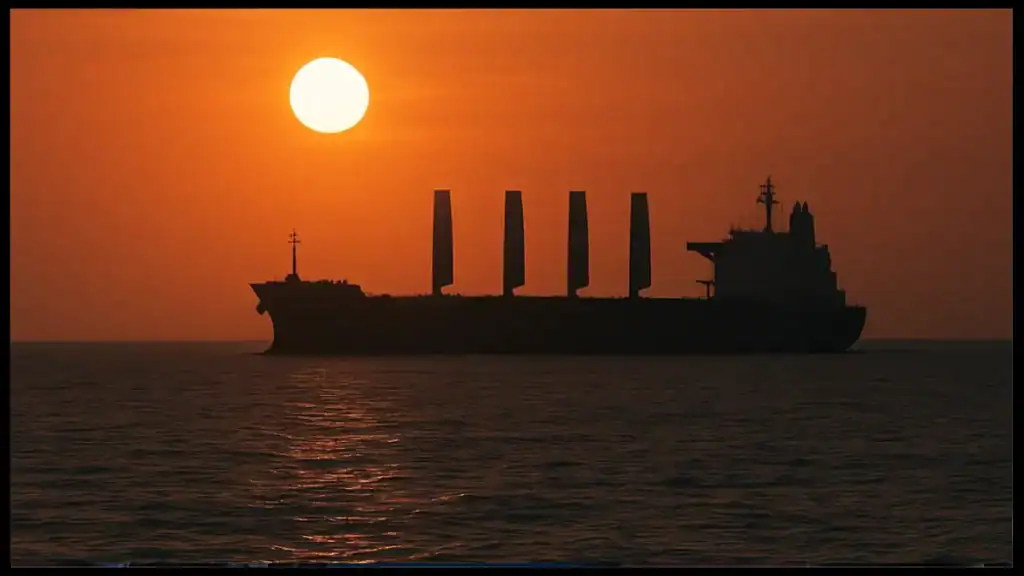
Wind propulsion is gaining serious traction in the maritime industry, evolving from niche experiments into powerful tools for decarbonization and efficiency. Renewable wind energy is increasingly embedded into new ship designs and refits, marking a pivotal shift toward greener shipping. From public funding for tech innovation to landmark orders and prototype launches, the industry is marshaling serious resources toward wind-assisted systems. The latest developments below show just how rapidly this movement is advancing.
Wind Propulsion Developments
Development
Details
Strategic Significance
Next Steps
BAR Technologies WindWings Order
BAR Technologies confirmed WindWings installations on two new 820-ft LR2 dual-fuel tankers (*Suzuka* and *Long Beach*), each equipped with 123-ft rigid wingsails.
Represents one of the first large-scale commitments to integrate wind-assist technology into deep-sea tankers, cutting annual CO₂ by ~2,300 tons per vessel.
Steel cutting begins late 2025; both tankers expected to enter service by 2027, providing crucial real-world performance data.
WindWings Global Media Spotlight
International coverage compared the emissions savings to removing 500 passenger cars per ship, amplifying public recognition of WindWings.
Elevates wind propulsion from technical niche to mainstream decarbonization narrative, influencing investor confidence and public policy debates.
BAR Technologies will use heightened visibility to market WindWings to other tanker and bulker owners.
GT Wings Funding Award
GT Wings secured £1 million under the UK’s Clean Maritime Demonstration Competition (CMDC6) to advance its AirWing Jet Sail with adaptive control and weather-routing automation.
Funding strengthens GT Wings’ position as an emerging competitor, focusing on software-driven efficiency rather than purely mechanical solutions.
Next R&D cycle will test automation algorithms and integration on medium-sized cargo vessels before scaling to larger fleets.
Anemoi Folding Rotor Sail Prototype
Anemoi is developing a 3.5-m folding rotor sail under UK government funding, allowing bulk carriers to retract sails when passing under bridges or during port calls.
Addresses a major barrier to rotor sail adoption—port infrastructure restrictions—making the technology more compatible with global trade routes.
Prototype testing expected post-funding; if successful, rollout could follow across bulkers with challenging port access profiles.
Econowind VentoFoil Expansion
Econowind surpassed the 100-unit milestone for its VentoFoil devices, which are now fitted on tankers, bulkers, and general cargo vessels across Europe.
Crossing 100 units signals commercial maturity of compact wind-assist systems, proving shipowners are willing to retrofit for immediate efficiency gains.
Further expansion expected into Asia and North America as more owners seek quick, scalable decarbonization tools.
Oceanbird Wingsail Progress
Wallenius Marine’s Oceanbird project is preparing its second full-scale wingsail for installation aboard the car carrier *Tirranna*, aiming for up to 90% emissions reduction.
Represents the most ambitious wind-powered shipping concept to date, designed for transoceanic routes with minimal reliance on conventional fuel.
Prototype installation planned for early 2025; results will determine feasibility of scaling to entire newbuild car-carrier fleets.
Note: Information is based on verified company press releases, government funding announcements, classification society updates, and various industry sources.
Industry Impact Overview
The rise of wind propulsion is reshaping how shipping companies plan investments, how insurers underwrite risk, and how regulators frame decarbonization pathways. As more fleets adopt rotor sails, wingsails, and other wind-assist systems, the industry is moving from pilot projects to scalable business models. This shift is altering cost structures, training requirements, and competitive dynamics across global shipping.
Key Impacts
Financing Pressure: Investors increasingly view wind propulsion as a visible decarbonization step, raising the bar for fleet owners to adopt proven solutions.
Operational Economics: Fuel savings from wind assistance directly affect freight competitiveness on long-haul routes.
Design Priorities: Shipbuilders are incorporating autonomy-ready and wind-ready designs in newbuilds to stay ahead of demand.
Insurance Adjustments: Underwriters are drafting new clauses for mechanical reliability and performance guarantees of wind systems.
Workforce Transition: Crew training now includes sail deployment, automated controls, and emergency procedures specific to wind-assisted vessels.
Port Infrastructure: Ports are evaluating clearance, berthing logistics, and safety zones to handle taller rigs and wings.
Strategic Industry Reactions to Wind Propulsion
Sector
Response
Opportunities
Challenges
Ship Finance
Banks and leasing firms now ask about retrofit or wind-ready plans in loan assessments.
Access to green finance pools and lower interest rates for wind-equipped fleets.
Higher upfront CAPEX and uncertainty over payback in volatile fuel markets.
Ports & Infrastructure
Harbors reviewing berthing approaches and clearance requirements for taller rigs.
Potential to market as “green hubs” that facilitate next-gen vessels.
Retrofit costs for cranes, berths, and safety systems to accommodate wingsails.
Insurance & Risk
Specialized cover evolving for wind propulsion reliability and system downtime.
Premium incentives possible if claims data show lower accident rates.
Unclear liability division between shipowners and tech suppliers when failures occur.
Shipbuilding & Design
Yards are integrating modular bases and reinforced decks for sail retrofits.
First-mover advantage for builders offering wind-ready newbuilds.
Balancing traditional layouts with new aerodynamic and stability considerations.
Crew & Training
Maritime academies introducing courses on wind-assist operation and safety drills.
Creation of specialized roles in sail management and hybrid propulsion oversight.
Resistance from older crews unfamiliar with new systems and added responsibilities.
Note: Information reflects verified company press releases, classification society publications, and established maritime industry reporting.
Wind propulsion is no longer an experiment on the fringes of shipping, it is becoming a practical part of the industry’s decarbonization strategy. We’ve seen banks, shipbuilders, regulators, and operators begin to align around these solutions, which shows that adoption is moving faster than many expected. The challenges are real, from infrastructure constraints to upfront costs, but the opportunities are even greater. As we continue to track these developments, wind propulsion is standing out as one of the most visible and impactful innovations shaping the next generation of maritime transport.