Washington Keeps Two Chokepoint Warnings Fully Active
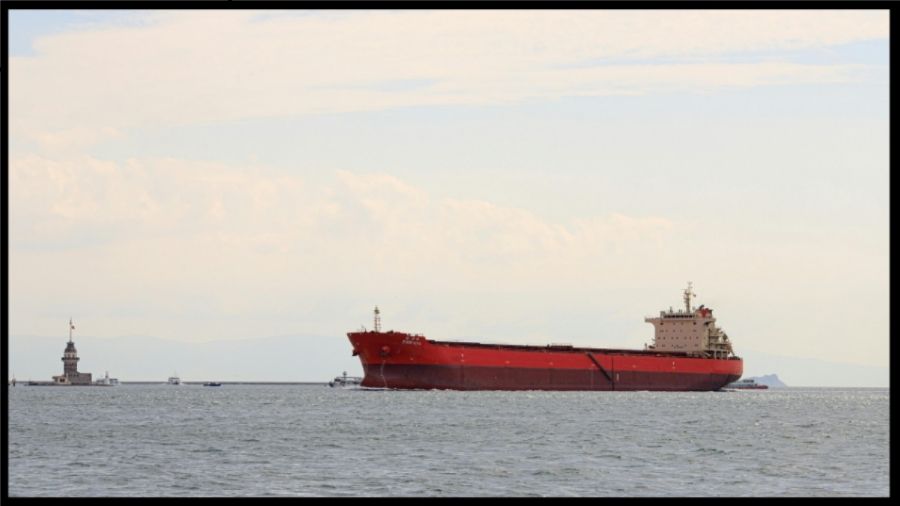
The United States is actively maintaining separate MARAD security advisories for the Red Sea theater and the Hormuz region, with each notice spelling out a different threat picture and a different operating response for U.S.-flagged shipping. Advisory 2026-004, effective March 13, 2026, covers the Persian Gulf, Strait of Hormuz, and Gulf of Oman and warns that Iranian threats to commercial vessels include direct missile attacks, armed unmanned aerial vehicles, armed unmanned surface vessels, coercive diversion attempts, and significant GNSS interference, spoofing, and jamming. Advisory 2026-006, effective March 26, 2026, covers the Red Sea, Bab el Mandeb Strait, Gulf of Aden, Arabian Sea, and Somali Basin and states that although the Houthis have not attacked commercial ships since the October 2025 Israel-Gaza ceasefire, they continue to pose a threat to U.S. assets, including commercial vessels, with elevated risk for ships tied to Israeli, U.S., or UK associations. The Red Sea notice advises operators to reduce electronic visibility, switch off AIS when safe, avoid repeated routing patterns, stay clear of Yemen when possible, and ignore diversion attempts by Houthis or entities claiming to be Yemeni authorities. The Hormuz notice tells U.S.-flagged vessels to keep a 30 nautical mile standoff from U.S. warships, answer coalition VHF calls, coordinate with NAVCENT NCAGS, disregard Iranian diversion instructions, and rely more heavily on radar ranges, visual bearings, and secondary navigation checks because positional integrity remains degraded. Together, the two advisories show that Washington is not treating these as stale legacy warnings, but as active, distinct maritime security environments requiring different bridge, routing, and voyage-control decisions.
Subscribe to the Ship Universe Weekly Newsletter
Click here for 30 second summary of the full piece ▶
Washington keeps both maritime warning zones fully live
The U.S. is actively maintaining one MARAD advisory for the Red Sea and one for Hormuz, and the two notices are not interchangeable. The Red Sea warning still centers on Houthi association-based targeting, lower electronic visibility, and route variation. The Hormuz warning centers on Iranian attack risk, diversion attempts, and navigation fallback under spoofing and jamming.
- Red Sea posture AIS shutdown when safe, reduced emissions, route variation, and high caution for vessels with certain associations.
- Hormuz posture coalition coordination, no compliance with Iranian diversion calls, and stronger reliance on radar and visual navigation checks.
- Operator takeaway the U.S. is treating these as two separate live risk environments, not one blended war-risk zone.
The strongest signal in the current U.S. advisory posture is that Red Sea and Hormuz voyages now require different security habits, different bridge priorities, and different assumptions about how ships are detected, challenged, or attacked.
| Fast reader take | Red Sea and Bab el Mandeb posture | Hormuz and Gulf of Oman posture | Operational difference | Shows up first | Closest stakeholders |
|---|---|---|---|---|---|
| The U.S. is keeping both threat theaters fully active rather than rolling them into one generic warning |
MARAD 2026-006 remains active for the Red Sea system and explicitly says the Houthi threat to U.S. assets, including commercial vessels, remains live.
2026-006 active
Houthi threat
|
MARAD 2026-004 remains active for the Persian Gulf, Strait of Hormuz, and Gulf of Oman and warns that Iranian attacks on commercial vessels remain a high risk.
2026-004 active
Iranian attacks
|
Operators are being told these are separate security environments with different bridge habits, routing logic, and communications responses. | Distinct voyage plans, different AIS handling, and different crew briefing priorities. | U.S.-flagged operators, security teams, masters, charterers, insurers, naval liaison teams. |
| Red Sea guidance is built around targeting exposure and emissions control |
The advisory says vessels with Israeli, U.S., or UK associations may be at high risk and strongly advises shutting off AIS when safety allows.
association risk
AIS off when safe
|
Hormuz guidance does not focus on going dark first. It focuses on coordination, answering coalition calls, and rejecting Iranian diversion attempts. | Red Sea behavior leans toward reducing detectability and predictability over a longer corridor. | Route variation, speed changes, hourly position emails if AIS is secured, and tighter emissions discipline. | Liner operators, bulkers, tankers, ship managers, bridge teams. |
| Hormuz guidance is built around short-range kinetic risk plus bad positional integrity |
Red Sea warnings still include missile, UAV, USV, UUV, explosive boat, small-boat, boarding, and seizure scenarios.
multi-vector threat
boarding risk
|
The Hormuz advisory adds direct missile attack, armed UAV, armed USV, and significant spoofing, jamming, and GNSS interference.
missile risk
spoofing
jamming
|
Hormuz behavior leans toward verifying every digital input and preserving maneuvering discipline in a dense, high-consequence corridor. | Heavier radar cross-checking, visual bearings, secondary navigation checks, and closer coalition communication. | Tanker operators, pilots, masters, bridge teams, port coordinators. |
| Both advisories reject hostile diversion attempts, but from different actors |
In the Red Sea, U.S.-flagged ships are told to ignore Houthi or false Yemeni-authority diversion instructions if safe to continue.
ignore diversion
false authority risk
|
In Hormuz, U.S.-flagged ships are told to ignore Iranian VHF or email instructions to divert or provide voyage data. | The common thread is that unauthorized redirection is now part of the threat picture in both theaters. | More scrutiny of VHF traffic, stricter reporting discipline, and faster NCAGS updates when anomalies occur. | Masters, security officers, fleet ops desks, naval coordination teams. |
| The U.S. is effectively telling operators to run two different playbooks | Red Sea transit advice emphasizes low visibility, route variability, distance from Yemen, and extra vigilance when slow, anchored, or constrained. | Hormuz advice emphasizes distance from Iran, distance from U.S. warships, coalition voice coordination, and fallback navigation methods. | A ship can be compliant in one corridor and still be poorly prepared for the other if it uses a one-size-fits-all posture. | Corridor-specific security checklists, bridge-team drills, and different voyage-risk approvals. | Shipowners, technical managers, P&I, war-risk underwriters, cargo interests. |
Dual-corridor security gauge
This scorecard turns the current U.S. advisory posture into a working transit picture. It helps operators judge when the Red Sea and Hormuz can be handled through disciplined planning and when the combined threat environment starts to demand a much harder security stance.
The controls that now matter most
- Association exposure matters because the Red Sea advisory still treats company ties and vessel affiliations as part of targeting risk.
- Navigation integrity matters because the Hormuz advisory explicitly warns of spoofing, jamming, and degraded positional trust.
- Electronic visibility matters because the Red Sea notice warns that AIS, commercial transmissions, reefer data, weather data, and Wi-Fi emissions can assist hostile tracking.
- Coalition coordination matters because both theaters rely heavily on NAVCENT NCAGS, but the exact response pattern is different in each corridor.
Interactive transit score
Move the sliders to test whether the current advisory posture points to manageable controlled transit or a much more severe operating environment.
The current U.S. advisory posture does not describe a single uniform war-risk lane. It describes two separate high-risk corridors that demand different operating habits, different bridge priorities, and different assumptions about how an attack or coercive event is most likely to unfold.
We welcome your feedback, suggestions, corrections, and ideas for enhancements. Please click here to get in touch.