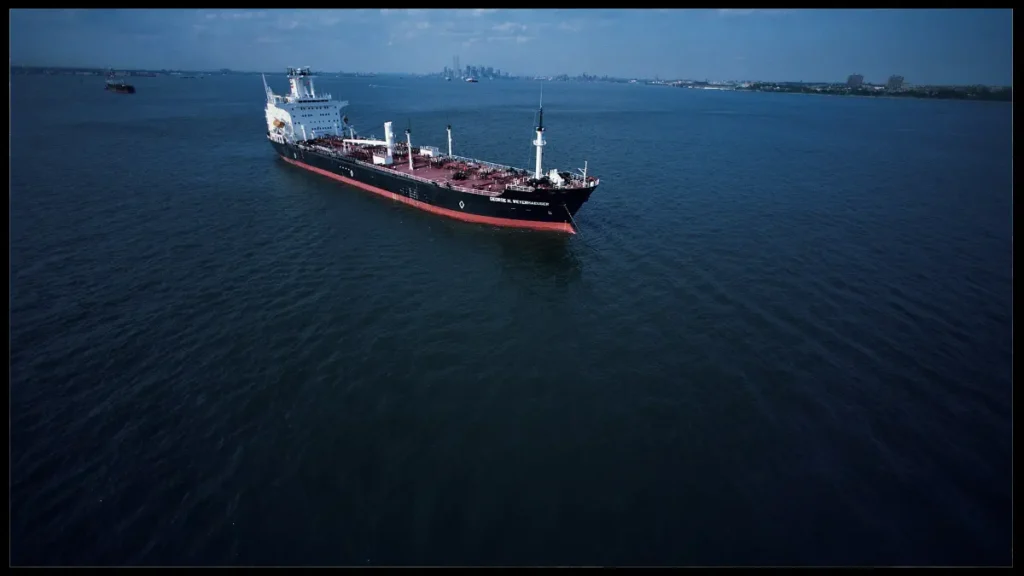
Benchmark crude routes have broken higher, with the VLCC-led rally pushing the ClarkSea Index to a two-year peak. The TD3C Middle East to China lane printed around W108, roughly the strongest since late 2022, while some Atlantic routes flirted with six-figure daily earnings. Drivers include higher Iraqi exports as OPEC+ eases cuts, plus routing friction around the Baltic after recent disruptions. The result is fewer prompt VLCCs, longer average hauls, and faster pass-through into Suezmax and Aframax pricing.
Maritime P&L — VLCC Spot Rates Ripping Higher
Item
What Happened & Who’s Affected
Business Mechanics
Bottom-Line Effect
VLCC benchmarks jump
TD3C Middle East to China prints around W108, strongest levels since late 2022, with some Atlantic routes near six-figure daily earnings.
Thin prompt lists, brisk fixing pace, spillover into Suezmax and Aframax segments.
📈 Immediate TCE uplift for crude owners, 📉 higher voyage costs for charterers and refiners.
Higher Middle East liftings
Iraq increases exports as OPEC+ unwinds part of its cuts, Kuwait signals more capacity coming onstream.
More VLCC programs from the Gulf, stronger vessel utilization through Q4.
📈 Days-on-hire rise for owners, ↔ refinery margins depend on crack versus freight.
Baltic disruption risk
Drone damage and repairs at Primorsk created delays and routing reshuffles toward Ust-Luga and Black Sea load ports.
Added days in transit, tighter usable capacity, insurance and compliance checks lengthen cycle time.
📈 Marginal support for global crude rates, 📉 reliability risk for Baltic-linked cargo programs.
Atlantic barrels pulled East
Asian buyers source more from U.S. Gulf, Brazil, West Africa when spreads allow.
Longer tonne-miles, triangulation opportunities, more repositioning demand.
📈 Earnings leverage on long legs, 📉 tighter tonnage for short-haul moves.
Product tanker read-through
Refinery runs adjust to crude slate and freight, product flows lengthen on arbitrage.
Aframax and MR demand benefits where refining hubs pivot.
📈 Supportive for clean-tankers on select lanes, ↔ depends on crack spreads.
Owner mix matters
Modern eco tonnage and scrubber-equipped VLCCs secure premium employment first.
Lower fuel burn and HSFO spread capture widen netbacks at the same Worldscale.
📈 Outperformance for efficient fleets, ↔ older high-consumption units lag.
Charterer exposure
Refiners and traders face tighter laycans, substitution risk, and more variable freight budgets.
Greater use of options and longer notice periods, demurrage accrues faster with congestion.
📉 Margin compression if higher freight is not passed through rapidly.
Near-term outlook
Analysts flag elevated prints into early 2026 if Gulf exports stay strong and Atlantic-to-Asia pulls persist.
Orderbook timing offers limited near-term relief, utilization remains sensitive to MEG cadence.
📈 Visibility improves for owners, 📉 charterers manage wider variance in landed crude costs.
Note: Snapshot reflects current VLCC spot prints, OPEC+ export signals, and routing adjustments reported in the last week. Figures can revise with fresh fixtures and terminal status updates.
📈 Winners
📉 Losers
Spot VLCC owners: rate surge flows straight into higher TCEs and cash generation.
Short-haul arbitrage players: tonnage drawn to long-haul routes reduces local availability.
Fixed-rate TC owners below market: locked-in hires cap upside during spot spikes.
Small refiners with limited pass-through: budget stress where freight cannot be recovered.
The VLCC rally is classic capacity math: more liftings and longer average hauls meeting a thinner prompt list. Cash benefits accrue fastest to modern, fuel-efficient fleets and scrubber users, while charterers face tighter schedules and higher landed costs. If Middle East export cadence holds and Atlantic-to-Asia pulls persist, elevated prints can carry into the next quarter, keeping earnings momentum on the owner side and budget volatility on the buyer side.