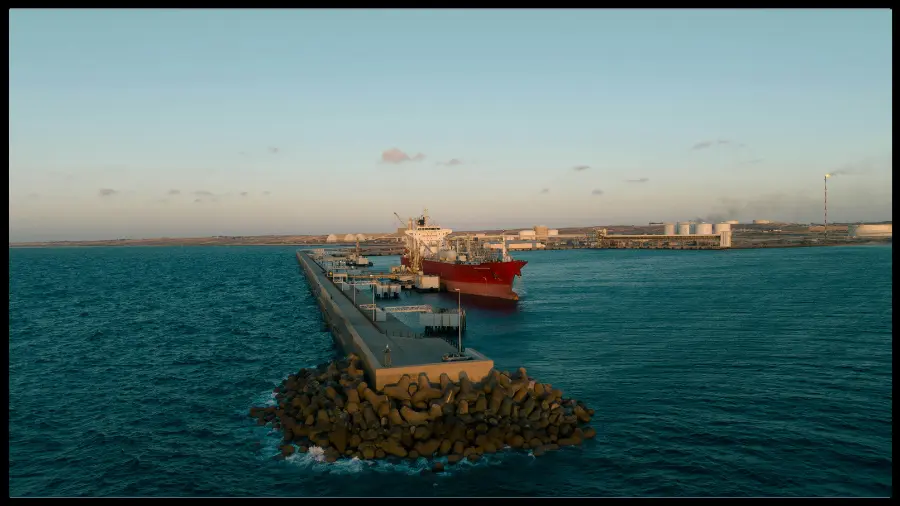
Ukraine’s maritime campaign widened beyond the Black Sea in mid December 2025 after a drone strike hit the crude oil tanker Qendil in the Mediterranean, off Libya. Ukrainian security service sources said the tanker was part of Russia’s sanctions-evading “shadow fleet,” and that it was empty when struck and suffered critical damage. Reuters noted the timing and location details were not fully disclosed, and that the operation was described as involving “multi-stage” measures.
Click here for 30 second summary
Mediterranean risk signal: Ukraine claims drone strike on tanker off Libya
Ukraine’s security service source said Ukrainian aerial drones struck the crude tanker Qendil in the Mediterranean Sea, described as a Russia-linked “shadow fleet” vessel.
Reporting said the ship was empty at the time and suffered critical damage, with the strike occurring more than 2,000 km from Ukraine.
Geography shift
A claimed strike off Libya moves war-linked shipping risk perception beyond the Black Sea and into a high-throughput transit basin.
Immediate commercial friction
Even one event can trigger tighter counterparty screening, slower fixture cycles, and more sensitivity around war-risk assumptions for higher-risk tanker profiles.
Spill tail
“Empty at the time” reduces the worst-case environmental scenario compared with a laden tanker casualty, even though off-hire and salvage exposure can still be material.
Bottom line
The key takeaway is reach. If the Mediterranean is now within the envelope of claimed war-linked tanker actions, documentation and risk pricing can tighten quickly, especially for vessels tied to opaque trading chains.
Ukraine strikes a Russia-linked “shadow fleet” tanker off Libya
Item
Summary
Business mechanics
Bottom-line effect
Event snapshot
Ukraine said aerial drones struck the crude oil tanker Qendil in the Mediterranean Sea, marking its first publicly reported tanker strike in that basin.
The signal to markets is geographic: risk tied to the Russia-Ukraine maritime conflict is no longer confined to the Black Sea theater if tanker-linked actions can occur far offshore.
📉 Expanded perceived risk area can raise caution, re-checks, and insurance sensitivity for owners trading near North Africa and key East-West routes.
📈 For compliant operators, clearer differentiation between well-documented voyages and opaque trading can strengthen vetting value.
Target and status
Reuters reported the Qendil was described by a Ukrainian security-service official as part of Russia’s “shadow fleet,” and the tanker was said to be empty at the time of the strike.
“Shadow fleet” trading often features complex ownership, frequent flag changes, and riskier operating practices, making compliance screening and counterparty confidence more fragile.
📉 Even when empty, a casualty can mean off-hire, tow and salvage exposure, and reputational fallout for owners, managers, and chartering chains.
📈 Empty status reduces immediate spill risk versus a laden casualty, limiting the worst-case environmental and cleanup tail.
Where and timing
Reuters said MarineTraffic data showed the vessel off Libya’s coast around 13:30 GMT on December 19, 2025, and noted the exact strike time and exact strike position were not disclosed.
Partial information is itself operationally relevant: uncertainty increases conservatism in voyage planning, port readiness, and insurer assumptions until details settle.
📉 “Unknowns” can widen underwriting margins and increase the number of additional questions asked in fixture and renewal processes.
📈 Better transparency from tracking and investigation can later narrow spreads once the facts are established.
Method and reach
Reuters described this as the first time Ukraine used aerial drones against a tanker in the Mediterranean and said the operation involved “multi-stage” measures, without detailing launch points.
Aerial drones extend targeting options compared with sea drones alone. That complicates “safe-distance” assumptions that were built around earlier Black Sea patterns.
📉 Wider threat envelope increases risk modeling complexity for shipowners and marine insurers beyond the traditional war-zone polygons.
📈 May accelerate investment in hardening, watchkeeping, and response playbooks for high-risk trades.
Trade lane exposure
The Mediterranean is a transit-heavy basin linking Suez approaches, Gibraltar flows, and multiple refinery hubs. A visible incident can quickly ripple through perception.
Even isolated attacks can trigger questions from cargo owners, banks, and charterers about routing, counterparty screening, and contingency plans.
📉 Higher friction costs can show up as slower fixture cycles, more clauses, and occasional voyage re-optimisation.
📈 Operators with strong documentation and clear compliance posture can win business when counterparties turn more selective.
Sanctions backdrop
The strike landed amid tightening action on Russia-linked tanker activity, including expanded EU vessel sanctions and Ukraine’s own large vessel-sanctions package.
More listings and enforcement attempts raise the operational burden: port access, services, insurance, and payments can be blocked or delayed for designated ships and their facilitators.
📉 Compliance headaches and service denials can strand tonnage and disrupt scheduling for opaque trading networks.
📈 Clearer enforcement can reduce unfair competition against fully compliant operators over time.
Notes: “Shadow fleet” is a commonly used term for sanctions-evasion trading networks; classification and designation status can vary by jurisdiction and over time.
🧭
Mediterranean risk signal: a war-linked tanker strike far from the Black Sea
The Qendil incident matters because it shifts the map. The Mediterranean is a transit basin, and even a single high-profile event can change how counterparties price risk and ask questions on fixtures.
📍
Incident capsule (fast read)
Basin: Mediterranean
Area: off Libya (international waters reported)
Reach: reported 2,000+ km from Ukraine
Outcome: “critical damage” reported
Cargo: reported empty at time of strike
Verification note: Public accounts describe the strike as claimed by a Ukrainian security service source; independent verification of operational details is limited in early reporting, and some elements such as precise timing and exact coordinates were not fully disclosed at publication.
🌊
Business ripple (small moves that add up)
Pricing and underwriting
Negative: broader perceived risk can widen war-risk assumptions and increase extra questions at renewal or fixture stage.
Positive: clearer separation between well-documented trading and opaque trading can help compliant operators stand out.
Scheduling and ops
Negative: uncertainty tends to produce slower decision cycles on routing and port calls when counterparties wait for clarity.
Positive: if a vessel is confirmed empty, environmental tail risk is lower than a laden tanker casualty, which can reduce the most severe spill exposure.
🧩
Who feels it first
Tanker owners
Higher scrutiny on voyage history, flag, and management chain can add time and cost even before a ship loads. A high-profile casualty can also affect asset perception for similar profiles.
Charterers and traders
Fixture friction increases when counterparties need extra confirmations on sanctions posture and routing, especially for ships linked to high-risk networks.
Insurers
A new geography for claimed attacks can trigger model updates, revised assumptions on “safe distance,” and more cautious terms while facts are still forming.
Ports and service providers
Some ships may see more service denials or added checks when designation risk rises, which can delay bunkering, spares, and routine port services.
📄
Clause pocket: the paperwork pressure points that show up in tense periods
🛡️War-risk and additional premium language
Incidents outside the usual “war box” can prompt broader interpretation of where extra premium applies and how deviation is handled.
🧾Sanctions representations and counterparty screening
As enforcement activity rises, documentation around ownership, management, and cargo origin typically gets heavier and slower.
📡AIS and tracking expectations
Tracking anomalies tend to trigger questions. Even when legal, reduced transparency can increase perceived risk and complicate routine approvals.
⛑️Casualty response and port-of-refuge sensitivity
High-profile strikes can influence how quickly a casualty gets services, tugs, and a port option, especially for ships viewed as high-risk.
Sanctions backdrop: EU measures in mid-December 2025 added new restrictions aimed at shadow-fleet style operations, including parties linked to tanker ownership and management, reinforcing the compliance focus around this segment.
Ukraine’s claimed strike on a Russia-linked tanker off Libya pushes war-linked maritime risk perception into a basin that is usually treated as routine transit. Even if the event remains isolated, it can still raise friction in fixtures and underwriting for higher-risk profiles, while increasing the value placed on transparency and clean documentation for operators trading the Mediterranean and connected routes.